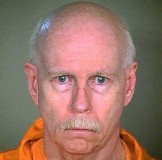
Thomas Arnold Kemp
Murderer Brian Kevin Rosenfeld
Murderer · USA · 1985
Brian Kevin Rosenfeld Brian Kevin Rosenfeld was sentenced to three concurrent l…
23 victims
Brian Kevin Rosenfeld
Murderer · USA · 1985
Brian Kevin Rosenfeld Brian Kevin Rosenfeld was sentenced to three concurrent l…
23 victims
 Russell Ellwood
Murderer · USA · 1991
Russell Ellwood was a former taxi driver. Authorities suspected him of killing…
20 victims
Russell Ellwood
Murderer · USA · 1991
Russell Ellwood was a former taxi driver. Authorities suspected him of killing…
20 victims
 Robert Martines Perez
Murderer · USA · 1994
Name: Robert Martines Perez · Other name used in proceedings: Robert Martinez P…
15 victims
Robert Martines Perez
Murderer · USA · 1994
Name: Robert Martines Perez · Other name used in proceedings: Robert Martinez P…
15 victims
 Billy Frank Vickers
Murderer · USA · 1993
Billy Frank Vickers Vickers was executed by lethal injection in Texas on Januar…
14 victims
Billy Frank Vickers
Murderer · USA · 1993
Billy Frank Vickers Vickers was executed by lethal injection in Texas on Januar…
14 victims
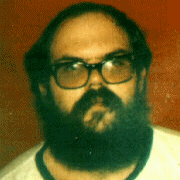 David Lawson
Murderer · USA · 1980
David Lawson was scheduled to be executed by the State of North Carolina using…
1 victim
David Lawson
Murderer · USA · 1980
David Lawson was scheduled to be executed by the State of North Carolina using…
1 victim
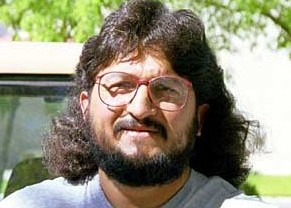 Robert Stewart Flores
Murderer · USA · 2002
Robert Stewart Flores Jr. was 41. He was a Gulf War veteran and worked at the S…
3 victims
Robert Stewart Flores
Murderer · USA · 2002
Robert Stewart Flores Jr. was 41. He was a Gulf War veteran and worked at the S…
3 victims
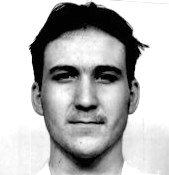 Jeffery Motley
Murderer · USA · 1984
Offender: Jeffery (Jeffrey Dean) Motley · Case number: 3 F.3d 781; Jeffrey Dean…
1 victim
Jeffery Motley
Murderer · USA · 1984
Offender: Jeffery (Jeffrey Dean) Motley · Case number: 3 F.3d 781; Jeffrey Dean…
1 victim
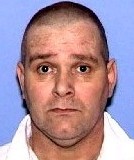 Keith Thurmond
Murderer · USA · 2001
Keith Thurmond was sentenced to death on November 14, 2002. He was executed by…
2 victims
Keith Thurmond
Murderer · USA · 2001
Keith Thurmond was sentenced to death on November 14, 2002. He was executed by…
2 victims
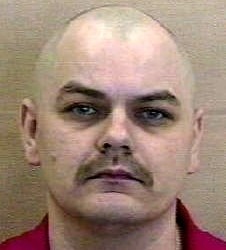 Jerry Wayne Conner
Murderer
Jerry Wayne Conner — defendant. In April 1991, Jerry Wayne Conner was convicted…
1990 victims
Jerry Wayne Conner
Murderer
Jerry Wayne Conner — defendant. In April 1991, Jerry Wayne Conner was convicted…
1990 victims
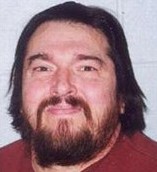 Daniel Dougherty
Murderer · USA · 1985
Daniel Dougherty Daniel Dougherty lived with a girlfriend at the time of the fi…
2 victims
Daniel Dougherty
Murderer · USA · 1985
Daniel Dougherty Daniel Dougherty lived with a girlfriend at the time of the fi…
2 victims
- Gender
- male
- Country
- USA
- Location
- Pima County, Arizona, USA
- Date of birth
- J une 2, 1948
- Age at first offence
- 44
- Characteristics
- kidnapping, robbery, rape
- Victim profile
- Hector Soto Juarez, 25
- Method of murder
- Shooting (.380 semi-automatic handgun)
- Date(s) of murder
- July 11, 1992
- Years active
- 1992
- Date of arrest
- —
- Status
-
Executed
Executed by lethal injection on 25 April 2012
Summary
Thomas Arnold Kemp was sentenced to death for felony first-degree murder, armed robbery, and kidnapping. Several days before the offence, Kemp purchased a .380 semi-automatic handgun and told Jeffrey Logan that he needed money to pay bills and was going to look for someone with money. On July 11, 1992, Kemp and Logan kidnapped the 25-year-old victim. Kemp used the victim’s ATM card to withdraw $200. Kemp and Logan then drove the victim to Silverbell Mine northwest of Tucson, and either Kemp or Logan shot the victim one or more times in the head.
Kemp was convicted of first-degree murder, kidnapping, and armed robbery. The trial court found aggravating circumstances including a prior crime of violence, pecuniary gain, and that the murder was committed in an especially cruel manner. The trial court did not find any mitigating circumstances sufficient to call for leniency. Kemp appealed, and the Arizona Supreme Court affirmed the convictions and death sentence. Kemp later sought federal habeas corpus relief, which was denied and the denial was affirmed on appeal. A warrant of execution was later issued and stays were issued before the execution ultimately took place.
Timeline
- July 10, 1992 — Logan went with Kemp to a pawn shop and helped him buy a .380 semi-automatic handgun.
- July 11, 1992 — Kemp and Logan kidnapped the victim from the parking area of his apartment complex; Kemp used the victim’s ATM card to withdraw approximately $200; Kemp drove the victim to the Silverbell Mine area near Marana; Kemp walked the victim 50 to 70 feet from the truck, forced him to disrobe, and shot him in the head twice.
- June 2, 1993 — Start of trial.
- June 7, 1993 — Verdict.
- July 9, 1993 — Sentencing to death.
- September 17, 2007 — The district court issued a Memorandum of Decision and Order denying remaining claims in Kemp’s habeas petition.
- October 27, 2008 — Kemp filed a timely notice of appeal.
- January 24, 2000 — Stay of Execution was issued.
- February 9, 2000 — Date set for execution in the warrant referenced in the record.
- 25 April 2012 — Kemp was put to death by lethal injection; “I regret nothing.” was reported as his last words.
Background
Kemp purchased a .380 semi-automatic handgun several days before the offence. He told Jeffrey Logan that he needed money to pay bills and was going to look for someone with money. Kemp later declined to seek executive clemency. At his sentencing, he said his only regret was not killing Jeff Logan when he had the chance and expressed contempt toward his victim.
The offence
Kemp and Jeffrey Logan kidnapped the 25-year-old victim on July 11, 1992. Kemp and Logan drove the victim to Silverbell mine northwest of Tucson. Either Kemp or Logan shot the victim one or more times in the head.
Kemp and Logan later drove to Flagstaff and sold Kemp’s truck. They met a couple travelling from California to Kansas, kidnapped the couple, and forced them to drive to Durango, Colorado, where Kemp forced the man to disrobe and sexually assaulted him. Later, Kemp, Logan, and the couple drove to Denver. Two weeks after the victim was abducted, the couple escaped. For reasons unclear of record, Logan left Kemp, contacted the Tucson police about the murder, and was arrested in Denver; with Logan’s help, police discovered the victim’s body. Later that day, police arrested Kemp at a homeless shelter in Tucson. Kemp was carrying the handgun purchased in Flagstaff and a pair of handcuffs.
Investigation and arrest
Kemp was arrested in Tucson at a homeless shelter while carrying the handgun purchased in Flagstaff and a pair of handcuffs. After being read his Miranda rights, Kemp answered some questions before he asked for a lawyer. Kemp admitted that he purchased a handgun with Logan on July 10. He said that on the day of the abduction and homicide he was “cruising” through apartment complexes and that there was a very good possibility he was at the Promontory Apartments. When confronted with the ATM photographs, he initially denied being the man in the picture. After being told Logan was in custody and again having been shown the photographs, Kemp said: “I guess my life is over now.”
While awaiting trial, Kemp made admissions to corrections officials. Kemp’s admissions included statements that he was in protective custody because “the guy I killed was Hispanic,” that the Hispanics in the jail were after him because they thought the crime was racially motivated, and that the whites would not protect him. Another comment attributed to Kemp said: “the guy I killed was a Mexican, the Mexicans in the pod I was in are after me. That is why I requested to be moved back here, for my own protection.”
Trial
Charges and verdict
A jury found Kemp guilty on all counts. Kemp was convicted in the Superior Court, Pima County, of first-degree felony murder, armed robbery, and kidnapping. The verdict was returned on June 7, 1993. Kemp’s trial was severed from Logan’s; Logan was tried first, convicted, and sentenced to life imprisonment for the murder.
Presiding judge and prosecutor
The presiding judge was Richard Nichols. The prosecutor was Kenneth Peasley.
Issues and rulings on appeal
The Arizona Supreme Court reviewed the case automatically. The court held that Kemp’s admissions were voluntary. It found that any error regarding admission of evidence of subsequent homosexual assault was harmless beyond a reasonable doubt. It held that the defense opened the door for admission of codefendant’s statements. It found evidence supported kidnapping and armed robbery verdicts. It also held that the jury was fair and impartial and that sentencing was proper. The convictions and death sentence were affirmed.
Evidence of kidnapping and armed robbery
The evidence supported that Kemp abducted the victim from the parking area of his apartment complex and that shortly afterward Kemp used the victim’s ATM card at a location between the abduction and the murder site. The court concluded the kidnapping and armed robbery convictions were supported.
Admission disputes (summarised facts with quotations preserved)
The court addressed Kemp’s admissions to jail officials. It quoted statements attributed to Officer Compton and Officer Jackson testimony. Compton testified that Kemp said:
“the guy killed was Hispanic and the Hispanic guys in the pod where he had previously been felt it was racially motivated. He says white guys can't help me so I have to be put in protective custody status so they couldn't get at him.”
Officer Jackson testified that Kemp said:
“the guy I killed was a Mexican, the Mexicans in the pod I was in are after me. That is why I requested to be moved back here, for my own protection.”
The court also reproduced Kemp’s sentencing remarks in part, including:
“The prosecutor, in his alleged wisdom, has portrayed me as being a killer without remorse or regret. This is a wholly inaccurate assessment. I feel a deep and abiding sense of remorse at having permitted friendship to stay my hand in the face of wiser counsel; thus electing not to kill Jeff Logan at a time when both instinct and circumstances demanded his death. You can rest assured that is a lapse of judgment I will never repeat and one which I will bend all my energies towards correcting in the not too distant future. Beyond that, I regret nothing ... The so-called victim was not an American citizen and, therefore, was beneath my contempt. Wetbacks are hardly an endangered species in this state. If more of them wound up dead, the rest of them would soon learn to stay in Mexico, where they belong. I don't show any mercy and I am certainly not here to plead for mercy. I spit on the law and all those who serve it ...”
Sentencing
Kemp was sentenced to death on July 9, 1993.
The trial court found three statutory aggravating factors:
- prior conviction of a felony involving the use or threat of violence against a person;
- the murder was committed with the expectation of pecuniary gain;
- the murder was committed in an especially heinous, cruel or depraved manner.
The trial court found no mitigating circumstances.
The court’s sentencing findings were reviewed on appeal. In the direct appeal, the Arizona Supreme Court affirmed Kemp’s death sentence after reviewing aggravating and mitigating factors and conducting independent review.
Appeals
State appeal
The case was decided as State v. Kemp, 185 Ariz. 52, 912 P.2d 1281 (1996). The Arizona Supreme Court affirmed Kemp’s convictions and sentences.
Federal habeas corpus
Kemp filed a federal habeas corpus petition after his conviction and capital sentence were affirmed on appeal. The petition was denied by the United States District Court for the District of Arizona but granted certificate of appealability. On appeal, the decision denying the petition was affirmed.
The federal habeas proceedings included claims that his Fifth, Sixth, and Fourteenth Amendment rights were violated when correctional officers asked him questions and incriminating statements were admitted at trial. The federal court also addressed Kemp’s claims regarding whether sufficient evidence supported death eligibility under Enmund and Tison if the statements were excluded, and whether he was denied due process through refusal to allow voir dire on possible homosexual bias. The federal appellate court affirmed the denial of habeas relief.
Post-conviction relief
In February 1999, Kemp filed a petition for post-conviction relief claiming ineffective assistance of counsel. The trial court denied the petition in May 1999, and in January 2000, the Arizona Supreme Court denied the petition for review.
Outcome and execution
A warrant of execution was issued for the execution of Thomas KEMP #99144 on February 9, 2000. A stay of execution was later issued on January 24, 2000 for that execution date.
On 25 April 2012, Kemp was put to death by lethal injection in Arizona. The report described his last words as:
“I regret nothing.”
Other details
Inmate information and sentence administration
Arizona Department of Corrections inmate information included:
- Inmate: KEMP THOMAS
- DOC#: 099144
- DOB: 06/02/1948
- Gender: Male
- Height 72"
- Weight 170
- Hair Color: Gray
- Eye Color: Blue
- Ethnic: Caucasian
- Sentence: DEATH
- Admission: 07/20/1993
- Conviction Imposed: MURDER 1ST DEGREE
- County: PIMA
- Case#: 0038226
- Date of Offense: 07-11-92
Additional reported statements and conduct
Kemp declined to petition the Arizona Board of Executive Clemency for a lighter sentence. He previously expressed contempt for his victims and for the legal system at sentencing and made comments disparaging the victim’s citizenship and directed remarks against immigrants.
Kemp wrote a handwritten note declining executive clemency, stating:
“I, Thomas Kemp, state that I decline to seek executive clemency due to the futility of that process. In light of the board's history of consistently denying requests for commutations, my impression is that a hearing in my case would be nothing short of a dog and pony show.”
Last meal
His last meal consisted of a bacon cheeseburger with fries, root beer, and a piece of boysenberry pie with strawberry ice cream.
Spotted an error, or have more information about this case?