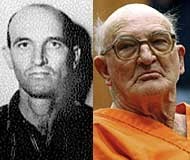
Edgar Ray Killen
Murderer Ervil LeBaron
Murderer · USA · 1972
Ervil Morrell LeBaron (1925 to August 16, 1981) was the leader of a polygamous…
35 victims
Ervil LeBaron
Murderer · USA · 1972
Ervil Morrell LeBaron (1925 to August 16, 1981) was the leader of a polygamous…
35 victims
 Charles Manson
Murderer · USA · 1969
Charles Milles Manson (born November 12, 1934) was an American criminal and mus…
9 victims
Charles Manson
Murderer · USA · 1969
Charles Milles Manson (born November 12, 1934) was an American criminal and mus…
9 victims
 Robert Reldan
Murderer · USA · 1974
Name: Robert Reldan Robert Reldan was sentenced to life in prison on two counts…
8 victims
Robert Reldan
Murderer · USA · 1974
Name: Robert Reldan Robert Reldan was sentenced to life in prison on two counts…
8 victims
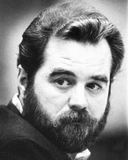 Dennis Duane Webb
Murderer · USA · 1973
Defendant: Dennis Duane Webb · Victims: John Rainwater and Lori Rainwater · Cou…
7 victims
Dennis Duane Webb
Murderer · USA · 1973
Defendant: Dennis Duane Webb · Victims: John Rainwater and Lori Rainwater · Cou…
7 victims
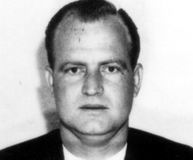 Gary Gene Tison
Murderer · USA · 1967
Gary Gene Tison was serving life sentences at the Arizona state prison. He had…
7 victims
Gary Gene Tison
Murderer · USA · 1967
Gary Gene Tison was serving life sentences at the Arizona state prison. He had…
7 victims
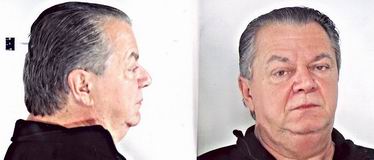 Joseph Massino
Murderer · USA · 1974
Joseph Charles “Big Joey” Massino (born January 10, 1943), also known as “The L…
7 victims
Joseph Massino
Murderer · USA · 1974
Joseph Charles “Big Joey” Massino (born January 10, 1943), also known as “The L…
7 victims
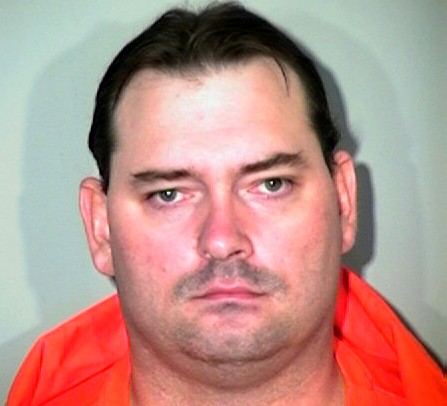 Robert Wayne Murray
Murderer · USA · 1991
Defendant: Robert Wayne Murray Victim(s): Dean Morrison; Jackie Appelhans Victi…
2 victims
Robert Wayne Murray
Murderer · USA · 1991
Defendant: Robert Wayne Murray Victim(s): Dean Morrison; Jackie Appelhans Victi…
2 victims
 Vanessa Williamson
Murderer · USA · 2010
Vanessa Kay Williamson was convicted by a Shasta County jury and was sentenced…
1 victim
Vanessa Williamson
Murderer · USA · 2010
Vanessa Kay Williamson was convicted by a Shasta County jury and was sentenced…
1 victim
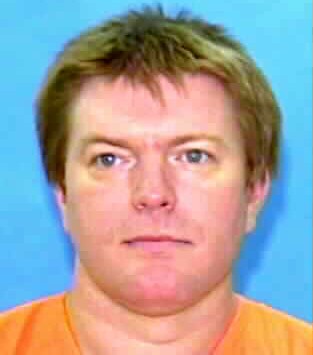 Jeffrey Lee Atwater
Murderer · USA · 1989
Jeffrey Lee Atwater was convicted and sentenced to death for the murder of Ken…
1 victim
Jeffrey Lee Atwater
Murderer · USA · 1989
Jeffrey Lee Atwater was convicted and sentenced to death for the murder of Ken…
1 victim
 Sandra Bridewell
Murderer? · USA · 1982
Sandra Bridewell used multiple names and aliases, including Sandra Camille (Pow…
2 victims
Sandra Bridewell
Murderer? · USA · 1982
Sandra Bridewell used multiple names and aliases, including Sandra Camille (Pow…
2 victims
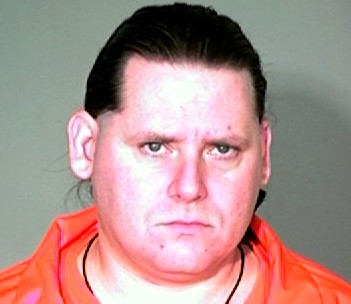 Darrel Pandeli
Murderer · USA · 1992
Darrel Pandeli was convicted of murder and sentenced to death, and his case ret…
2 victims
Darrel Pandeli
Murderer · USA · 1992
Darrel Pandeli was convicted of murder and sentenced to death, and his case ret…
2 victims
- Gender
- male
- Country
- USA
- Location
- Philadelphia, Mississippi, USA
- Date of birth
- January 17, 1925
- Age at first offence
- 39
- Characteristics
- —
- Victim profile
- Two Jewish New Yorkers, Andrew Goodman, 20, and Michael Schwerner, 24, and one black Mississippian, James Chaney, 21 (civil rights activists)
- Method of murder
- Shooting
- Date(s) of murder
- June 21, 1964
- Years active
- 1964
- Date of arrest
- January 6, 2005 (41 years later)
- Status
-
Imprisoned
Sentenced to 60 years in prison on June 23, 2005; conviction upheld on January 12, 2007
Background
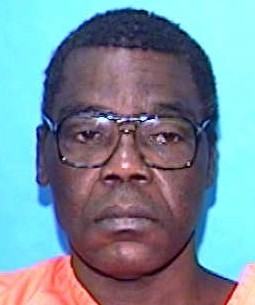
Edgar Ray “Preacher” Killen (born 17 January 1925) was an American former Ku Klux Klan organizer who conspired to kill three civil rights activists in 1964. He was a sawmill operator and a part-time Baptist minister. He also served as a kleagle, or klavern recruiter and organizer, for the Neshoba and Lauderdale County chapters of the Ku Klux Klan.
The offence
During the “Freedom Summer” of 1964, three civil rights activists were murdered in Philadelphia, Mississippi. They were James Chaney (21), Andrew Goodman (20), and Michael Schwerner (24).
The killings were carried out by a Ku Klux Klan mob after Killen and Cecil Price (then deputy sheriff of Neshoba County) had gathered a group of men who hunted down and killed the three civil rights workers.
The killings helped galvanize the civil rights movement and were the basis of the 1988 movie “Mississippi Burning”.
Investigation
The Mississippi Civil Rights Workers Murders galvanized the nation and helped bring about the passage of the 1964 Civil Rights Act. At the time of the killings, the state of Mississippi made little effort to prosecute the perpetrators.
The FBI directed a vigorous investigation, under President Lyndon Johnson and Attorney General Robert F. Kennedy. Federal prosecutor John Doar opened a grand jury in December 1964, circumventing dismissals by federal judges. In November 1965, Solicitor General Thurgood Marshall appeared before the Supreme Court to defend the federal government’s authority in bringing charges.
A journalist, Jerry Mitchell, an investigative reporter for the Jackson Clarion-Ledger, developed new evidence, found new witnesses, and pressured the State to take action. Mitchell had previously helped secure convictions in several other high profile Civil Rights Era murder cases, including the assassination of Medgar Evers, the Birmingham Church Bombing, and the murder of Vernon Dahmer.
Working with Mitchell were high school teacher Barry Bradford and a team of three students from Illinois. They got Killen to do his only taped interview (to that point) talking about the crime. The tape showed Killen clinging to segregationist views and being competent and aware. The students uncovered potential new witnesses, created a web site, lobbied Congress, and focused national media attention on the reopening of the case. Ben Chaney called them “Superhero Girls”.
Investigation (federal case history)
Eighteen men, including Killen, were arrested and charged with conspiracy to violate the victims’ civil rights in U.S. v. Cecil Price et. al.
The 1967 trial in federal court before an all-white jury convicted seven conspirators and acquitted eight others. For three men including Killen, the trial ended in a hung jury after jurors deadlocked 11-1 in favor of conviction. The lone holdout said she could never convict a preacher. The prosecution decided not to retry Killen and he was set free.
None of the men found guilty served more than six years.
Re-emergence of the case
In 2004, Killen declared that he would attend a petition-drive in his behalf, scheduled by the Nationalist Movement at the 2004 Mississippi Annual State Fair in Jackson, Mississippi. It opposed Communism, integration and non-speedy trials.
The Hinds County sheriff, Malcolm MacMillan, conducted a counter-petition calling for re-opening of the case against Killen.
Arrest
Killen was arrested for three counts of murder on January 6, 2005. He was freed on bond shortly thereafter.
His case was compared to that of Byron De La Beckwith, who was charged with the killing of Medgar Evers in 1963 and arrested in 1994.
Timeline
- January 6, 2005 — Killen was arrested for three counts of murder.
- January 6, 2005 — Killen was freed on bond shortly thereafter.
- April 18, 2005 — Killen’s trial was scheduled; it was deferred after he broke both of his legs chopping down lumber in his rural home in Neshoba County.
- June 13, 2005 — Killen’s trial began; he attended in a wheelchair.
- June 21, 2005 — Killen was found guilty of three counts of manslaughter.
- June 23, 2005 — Killen was sentenced by Circuit Judge Marcus Gordon to 60 years in prison.
- August 12, 2005 — Killen was released from prison on a $600,000 appeal bond.
- September 3, 2005 — The Clarion-Ledger reported a deputy sheriff saw Killen walking around “with no problem”.
- September 9, 2005 — A hearing took place where deputies testified seeing Killen driving in various locations.
- September 9, 2005 — The bond was revoked and Killen was ordered back to prison.
- March 29, 2006 — Killen was moved from his prison cell to a Jackson, Mississippi hospital for complications from the severe leg injury sustained in a logging accident in 2005.
- January 12, 2007 — The Mississippi Supreme Court upheld Killen’s punishment.
Trial
The trial began on June 13, 2005, with Killen attending in a wheelchair. The jury deliberated and rejected murder, finding him guilty on a lesser charge. On June 21, 2005, Killen was found guilty of three counts of manslaughter, 41 years to the day after the crime.
The jury included nine whites and three blacks. The jury rejected the charges of murder but found him guilty of recruiting the mob that carried out the killings.
Prosecutors had charged Killen with murder, and the conviction was on a lesser charge.
At trial, Mississippi Attorney General James Hood said the sentencing exposure ranged from one to 20 years per count.
Defense attorney Mitch Moran argued that “nothing in the record shows Edgar was there” during the ambush and killings.
Closing arguments and quotations
Neshoba County District Attorney Mark Duncan said:
- “Hold the defendant responsible for what he did.”
Duncan also stated:
- “What you do today when you go into that jury room is going to echo throughout the history of Neshoba County from now on,”
- “You can either change the history that Edgar Ray Killen and the Klan wrote for us, or you can confirm it.”
Duncan urged:
- “Find him guilty of murder,”
- “That’s the verdict that the state of Mississippi asks you to return.”
Duncan said:
- “Those three boys and their families were robbed of all the things that Edgar Ray Killen has been able to enjoy for the last 41 years. And the cause of it, the main instigator of it was Edgar Ray Killen and no one else,”
- “He was the man who led these murders. He is the man who set the plan in motion. He is the man who recruited the people to carry out the plan. He is the man who directed those men into what to do.”
Hood, who led the case, stated:
- “There's justice for all in Mississippi,”
Hood also said:
- “I wish some of my predecessors would have done their duty” by bringing charges against Killen.
- “Not good politics to bring this case up,”
- “politics and time should not get in the way of justice.”
- “venom” at the time of the killings and still does.
Hood stated:
- “That venom is sitting right there. It is seething behind those glasses,”
- “That coward wants to hide behind this thing and put pressure on you.”
Defense counsel Mitch Moran stated:
- “nothing in the record shows Edgar was there”
- “The '60s was a terrible era in a lot of ways. We do not need to relive them, and we do need to go forward,”
- “What I'm asking you to do is to look at this evidence and hold the state to the burden of proving this case beyond a reasonable doubt.”
Verdict context and narrative facts in trial coverage
On June 21, 1964, Chaney, Goodman, and Schwerner were on their way to investigate the burning of a black church when they were briefly taken into custody for speeding.
According to testimony, the Klan had burned the church to lure the three men back to Neshoba County.
After they were released from the county jail in Philadelphia, a KKK mob tailed their car, forced if off the road, and shot them to death.
Their bodies were found 44 days later buried in an earthen dam—in a trench dug in anticipation of the killings, according to testimony.
In a 1967 federal trial, an all-white jury deadlocked 11-1 in favor of convicting Killen. The lone holdout said she could not vote to convict a preacher. Seven other men were convicted of conspiring to violate the civil rights of the victims, namely their right to live. None served more than six years in prison.
At the time, no federal murder statutes existed, and the state never brought charges.
Sentencing
Killen was sentenced on June 23, 2005 by Circuit Judge Marcus Gordon to the maximum sentence of 60 years in prison. The sentence was 20 years for each manslaughter count, to be served consecutively.
At the sentencing, Judge Gordon stated:
- “each life lost was valuable”
- “the law made no distinction of age for the crime”
- “the maximum sentence should be imposed regardless of Killen's age.”
Appeals
Killen appealed the verdict. The Mississippi Supreme Court upheld his punishment on January 12, 2007.
Aftermath
On August 12, Killen was released from prison on a $600,000 appeal bond.
He claimed he could no longer use his right hand; he had used his left hand to place his right one on the Bible during his swearing-in, and he was permanently confined to his wheelchair.
Gordon said he was convinced by testimony that Killen was neither a flight risk nor danger to the community.
On September 3, the Clarion-Ledger reported that a deputy sheriff saw Killen walking around “with no problem”.
At a hearing on September 9, several deputies testified to seeing Killen driving in various locations. One deputy said that Killen shook hands with him using his right hand.
Gordon revoked the bond and ordered Killen back to prison, saying that he believed Killen committed a fraud upon the court.
On March 29, 2006, Killen was moved from his prison cell to a Jackson, Mississippi hospital to treat complications from the severe leg injury he sustained in a logging accident in 2005.
Spotted an error, or have more information about this case?