
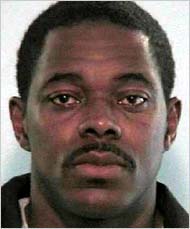
Dennis Duane Webb
Murderer Ervil LeBaron
Murderer · USA · 1972
Ervil Morrell LeBaron (1925 to August 16, 1981) was the leader of a polygamous…
35 victims
Ervil LeBaron
Murderer · USA · 1972
Ervil Morrell LeBaron (1925 to August 16, 1981) was the leader of a polygamous…
35 victims
 Marvin Gray
Murderer · USA · 1975
Marvin Gray was convicted killer who claimed responsibility for 23 slayings and…
23 victims
Marvin Gray
Murderer · USA · 1975
Marvin Gray was convicted killer who claimed responsibility for 23 slayings and…
23 victims
 Yahweh ben Yahweh
Murderer · USA · 1980
Yahweh ben Yahweh was born and legally named Hulon Mitchell Jr. (October 27, 19…
23 victims
Yahweh ben Yahweh
Murderer · USA · 1980
Yahweh ben Yahweh was born and legally named Hulon Mitchell Jr. (October 27, 19…
23 victims
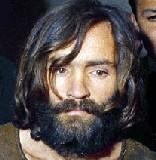 Charles Manson
Murderer · USA · 1969
Charles Milles Manson (born November 12, 1934) was an American criminal and mus…
9 victims
Charles Manson
Murderer · USA · 1969
Charles Milles Manson (born November 12, 1934) was an American criminal and mus…
9 victims
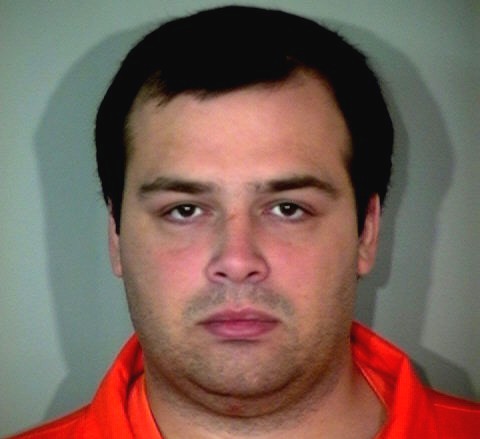 Kyle Sharp
Murderer · USA · 1995
Kyle Sharp was sentenced to death on April 7, 1997. Nine-year-old Brandon Cough…
1 victim
Kyle Sharp
Murderer · USA · 1995
Kyle Sharp was sentenced to death on April 7, 1997. Nine-year-old Brandon Cough…
1 victim
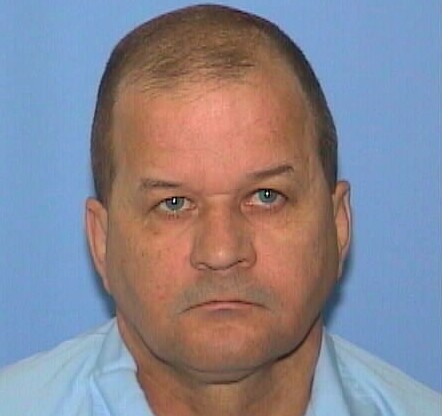 Luther Casteel
Murderer · USA · 2001
Luther Casteel was described by acquaintances as a divorced construction worker…
2 victims
Luther Casteel
Murderer · USA · 2001
Luther Casteel was described by acquaintances as a divorced construction worker…
2 victims
 Andrew Kokoraleis
Serial killer · USA · 1981
May 23, 1981 — Linda Sutton was abducted by persons unknown from Elmhurst. · Ju…
18 victims
Andrew Kokoraleis
Serial killer · USA · 1981
May 23, 1981 — Linda Sutton was abducted by persons unknown from Elmhurst. · Ju…
18 victims
 John Wheat
Murderer · USA · 1995
John Wheat was a church maintenance man who lived in the same apartment complex…
3 victims
John Wheat
Murderer · USA · 1995
John Wheat was a church maintenance man who lived in the same apartment complex…
3 victims
 Kelly Ellard
Homicide · Canada · 1997
Kelly Ellard was a juvenile in the relevant period. She was born August 9, 1982…
1 victim
Kelly Ellard
Homicide · Canada · 1997
Kelly Ellard was a juvenile in the relevant period. She was born August 9, 1982…
1 victim
 Aaron McKinney
Murderer · USA · 1998
Aaron McKinney was convicted in the 1998 beating death of Matthew Shepard. · Ma…
1 victim
Aaron McKinney
Murderer · USA · 1998
Aaron McKinney was convicted in the 1998 beating death of Matthew Shepard. · Ma…
1 victim
- Gender
- male
- Country
- USA
- Location
- Texas/California, USA
- Date of birth
- 1952
- Age at first offence
- 21
- Characteristics
- abduction, kidnapping, rape, robbery, torture
- Victim profile
- John Rainwater, 25, and his wife, Lori Rainwater, 22
- Method of murder
- Shooting
- Date(s) of murder
- 1973 - 1987
- Years active
- 1973–1987
- Date of arrest
- February 6, 1987
- Status
-
Sentenced to death
Sentenced to death in California in August 1988; judgment affirmed in its entirety
Case information
- Defendant: Dennis Duane Webb
- Victims: John Rainwater and Lori Rainwater
- Court: Superior Court of San Luis Obispo County (No. 14497)
- Judge: Warren C. Conklin
- Appellate outcome: The judgment was affirmed in its entirety.
Timeline
- February 4, 1987 — Dennis Duane Webb was last seen alive in the vicinity of the Rainwaters’ front door area; the neighbor Tim Clyde saw John and Lori standing with a large man in the beam of the porch light at their front door at about 9:45 p.m.
- February 5, 1987 — The Rainwaters were killed; around 6 a.m., residents of the complex were awakened by screams and gunshots; Lori Rainwater was found dead; John Rainwater’s body was found elsewhere on the grounds.
- February 6, 1987 — A local task force executed a narcotics search warrant at Sharon White Bear’s apartment and arrested defendant, Sharon, and one of Sharon’s adult sons at the scene.
- December 1993 — Appellant’s petition for a rehearing was denied on January 26, 1994.
- January 26, 1994 — Appellant’s petition for a rehearing was denied; Mosk and Kennard were of the opinion the petition should be granted.
- August 1988 — Webb was sentenced to die after conviction and after deliberations in the penalty phase.
Background
Dennis Duane Webb was a defendant convicted of capital crimes connected with the deaths of John Rainwater and Lori Rainwater. Webb moved into the San Luis Obispo County area to be near his girlfriend, Sharon White Bear, after moving from Utah.
The offence
Setting and victims
John and Lori Rainwater were a young married couple who lived in and managed an apartment complex in the city of Atascadero, San Luis Obispo County. On February 5, 1987, the day of the murders, the couple had:
- a 15-month-old daughter, and
- a week-old son.
Events on February 4–5, 1987
A neighbor, Tim Clyde, last saw John and Lori alive at about 9:45 p.m. on February 4. Clyde approached the complex from a phone booth nearby and saw John and Lori standing with a large man in the beam of the porch light at their front door. Clyde noticed that Lori had an unusual “frown” on her face and did not see the face of the large man. Clyde was certain the large man was at least 6 feet tall and weighed 200 to 220 pounds; the court record notes that the defendant fit this general description.
Around 6 a.m. on February 5, eight hours after the incident described by Clyde, residents of the complex were awakened by screams and gunshots. On a walkway outside the units:
- Lori was found lying face down and dead in a pool of blood; she was nude and had been shot once in the head at point-blank range.
- Her two children were found pinned underneath her body, essentially unharmed.
- Neighbors discovered John’s dead body elsewhere on the grounds, and it was also nude with gunshot wounds inflicted at close range to his head and chest.
- A trail of blood led from the Rainwaters’ apartment to the spot where each body was found.
Restraints, injuries, and condition of the bodies
The condition of the victims’ bodies suggested they had been held captive for some time before their deaths. A nylon stocking was tied as a gag through each victim’s mouth. On John, the stocking ran down his back and was wrapped around his hands, which were tied behind him with a cloth belt. Another stocking was tied around one of John’s ankles, and one of Lori’s wrists was similarly bound. Ligature marks were found on the victims’ unbound wrists and ankles. The autopsy physician opined that some of the bindings had been present for “at least several hours” before death. Residue consistent with adhesive tape was found on the back of John’s arms and neck. There was evidence the Rainwaters had been beaten during the ordeal, including several deep, blunt force lacerations on each victim’s scalp and miscellaneous abrasions and bruises on both bodies. Lori’s thighs were smeared with blood.
A foreign pubic hair was found on Lori’s vulva. The prosecution experts who examined the hair did not find it consistent with sample hairs taken from Lori’s husband or from defendant.
Two .38-caliber bullets of an uncommon variety were recovered from John’s body; the bullet that killed Lori was not recovered.
Shooting details and weapons evidence
The jury heard evidence about close-range gunshot wounds. John Rainwater was shot in the chest from within a 2-foot range and was then shot in the back of the head; the gun that caused that wound was just a few inches away. Lori Rainwater suffered one gunshot wound caused by a gun possibly touching her head when fired. The head wound killed John instantly, and the wound caused Lori immediate loss of consciousness and death within a few minutes.
When authorities arrived shortly after the shootings, the Rainwaters’ bed was burning. Expert testimony indicated that the fire burned for only a few minutes and could have been intentionally set.
Items seized from the apartment
Investigators found the apartment in disarray, with victims’ blood spattered on many surfaces. Seized items included:
- a roll and several yards of used duct tape,
- a label for “Shurtape Cloth Tape, K-Mart, $3.97,”
- two makeshift “mittens” made from socks wrapped with duct tape,
- a tan ski jacket bearing a Sears label,
- a pack of Camel Light cigarettes found inside a pocket of the jacket,
- a Camel Light cigarette butt found in the bed.
Investigators discovered a total of $307 in various places in the apartment. Other money belonging to the victims appeared to be missing.
Children found at the scene
When authorities arrived at the lodge, the Rainwater children—a 15-month-old girl and a 7-day-old baby boy—were found underneath their mother’s naked body. They were covered with dirt and broken glass; the girl was not injured and the boy had only slight scrapes to his head. The children lived with relatives after their parents were killed.
Investigation
Initial identification and witness observations
Clyde’s description placed a large man at the front door at about 9:45 p.m. on February 4. Defendant fit Clyde’s general description of height and weight.
Apartment searches and narcotics evidence linking defendant
The record described evidence of defendant’s activities around the time of the murders through the testimony of his girlfriend, Sharon White Bear.
Sharon testified that about a month or so before the crimes, defendant moved from Utah to San Luis Obispo County to be near her. Sharon lived in the town of Paso Robles, and defendant initially rented a motel room on a weekly basis in nearby Atascadero. He worked for low hourly wages at a local construction site and soon started searching for more affordable housing in the same area. Because of a vacancy sign out front, defendant and Sharon visited the Rainwaters’ complex four different times in the three weeks preceding the crimes. A resident of the complex testified that he directed them to the Rainwaters’ unit on one of these occasions.
Sharon testified that defendant spoke with Lori once and with Lori and John another time, and that during one visit defendant learned the couple collected rent from the tenants. Defendant ultimately rented an apartment elsewhere.
Several witnesses testified that defendant had Sharon’s .38-caliber Smith and Wesson revolver a few hours before the crimes on February 4. Between 5:30 and 6 p.m. on February 4, defendant retrieved the gun from Sharon’s sister, Davene, and took it to Sharon’s apartment, admired it in Sharon’s presence and her daughter Arlene’s presence, and then placed it in the storage room of Sharon’s carport. Defendant left in his car and did not return to spend the night with Sharon.
On February 5 between 7 and 7:30 a.m., about an hour or so after the Rainwaters were shot, Sharon testified that defendant arrived at Sharon’s apartment freshly showered, asking for a ride to work.
Narcotics search warrant at Sharon’s apartment
On February 6, the next day after February 5:
- a local task force executed a narcotics search warrant at Sharon’s apartment,
- officers seized over three pounds of marijuana, and
- discovered defendant flushing “bindles” of cocaine down the toilet,
- defendant, Sharon, and one of Sharon’s adult sons were arrested at the scene.
Officer Miller of the task force seized all three of Sharon’s handguns, including the .38-caliber Smith and Wesson revolver, which was found in the carport storage spot used by defendant two days earlier.
Officer Miller inadvertently left the revolver behind in Sharon’s apartment. It was later discovered that same evening by Sharon’s sister Davene and by Michael Rohde and his wife. Davene and Mrs. Rohde testified that Michael became “excited” when he saw the gun; he promptly took it home, buried it, and burned the evidence bag.
Michael told defendant over the phone the same night that the police “only got two [of Sharon’s guns]. Everything’s okay. Do you understand?”
Sharon was soon released on bail in the drug case, while defendant (a parolee) remained in custody for four months until his arrest in the present case.
Statements to Sharon and tape-recording by Sharon
Sharon testified that during the three months between her release and her first contact with police about the Rainwater case, defendant made various statements indicating he and possibly Michael were involved in the killings. The record described the first few statements concerned the .38-caliber revolver. Defendant repeatedly demanded over the phone that Sharon retrieve the gun from Michael and “break it down and get rid of it.” Sharon complied by removing handgrips and some screws and springs, but could not dismantle the gun. Sharon then drove alone to a coastal location known as Ragged Point and threw the gun over the cliff, with smaller pieces discarded at various places along the highway.
Defendant inculpated himself in the Rainwater crimes when Sharon visited him in jail. During that visit, defendant—described as visibly upset—confirmed that police had released a composite drawing of the killer. He stroked the spot on his shaven chin where a goatee had been at the time of the murders, pulled the imaginary trigger of a gun, and simultaneously said “boom” three times (the total number of gunshots sustained by the victims). Defendant later cautioned Sharon that they had left fingerprints and said, “Trust me. Just trust me. We wiped it down real good.”
In a subsequent phone conversation, defendant told Sharon that he had considered killing her but felt sympathy for her family. When Sharon asked whether “it” (presumably the capital crime) was motivated by sex or money, defendant said, “I’m no animal. It was money.”
Sharon learned from defendant that Michael Rohde had been arrested on unspecified charges. Sharon immediately contacted police about the Rainwater crimes. The lead investigator for the district attorney’s office, William Hanley, testified that Sharon provided information linking defendant to the crimes that was not known by the general public. Hanley testified that Sharon gave him the bullets she kept around her house at the time of the crimes.
At investigator Hanley’s request, Sharon agreed to secretly tape-record her phone conversations with defendant in the month before he was charged. Hanley approved elicitation topics and Sharon raised topics designed to elicit a response about the capital crimes. Defendant sometimes said he thought the phones were “bugged,” and he never directly inculpated himself. After Sharon’s false statement that police found her fingerprint at the crime scene, defendant said, “I told you there were no prints, what are you talking about?” The record notes that Sharon initiated dialogue about whether anyone saw her throw a “dead cat” into the water and about defendant’s retrieval of the “weed” from Davene. Sharon testified that these phrases were disguised references to the .38-caliber revolver. In the last phone call, defendant and Sharon discussed the “advertisement,” an apparent reference to a composite drawing due to release that day. Defendant responded to Sharon’s suggestion that her sister was suspicious by saying, “Well, I was with you, Honey.”
Forensic and physical evidence
Bullets and ammunition comparison
Firearm and ammunition experts testified that Sharon’s bullets were the same type as those recovered from John Rainwater’s body: Remington .38-caliber 95 grain semi-jacketed hollow point. The record states that only 3 percent of Remington’s .38-caliber ammunition fell into that category.
On information provided by Sharon, investigators searched Ragged Point and found Sharon’s partially dismantled Smith and Wesson revolver in a clump of bushes near the water at the base of the cliff.
Two expert witnesses testified that there were similarities between the gun and the fatal bullets, but because of rust and corrosion, they could not conclusively identify the gun as the murder weapon.
Duct tape fingerprint evidence
A fingerprint expert, Martin Collins, testified that, using a chemical and laser technique, he detected a partial print of defendant’s little finger on a crumpled piece of duct tape found at the scene.
Items found in defendant’s car
Investigator Hanley searched defendant’s car under a warrant. A roll of “Shurtape” similar to the duct tape and label found at the crime scene was found underneath the passenger’s seat. A local Kmart receipt was found in a bag in the trunk. The receipt indicated that two $3.97 items (presumably the rolls of duct tape) had been purchased from the home department about one hour before the Rainwaters were last seen alive, with the time on the receipt either “8:37 or 8:57 p.m.”
Clothing evidence
The record described that a few weeks before the crimes, defendant’s mother sent defendant a tan Sears jacket from Texas similar to the one found at the crime scene. Sharon and a sales clerk testified defendant tried to return the jacket at the Sears store in Paso Robles because it was too small for him. The return was not processed because the item could not be found in the California catalog.
Michael Rohde’s wife testified that defendant was wearing the same type of jacket when he and Michael left the Rohde home in defendant’s car no later than 7:15 p.m. on the evening of the crimes.
Defense and prosecution positions at trial
Prosecution case
The prosecution presented evidence tying defendant to the murders and the items found at the scene, including the duct tape, the .38-caliber revolver and bullets, and tape-recorded statements.
The record also stated that the jury convicted defendant of two counts of first-degree murder, one count of robbery, and one count of burglary.
The record describes special circumstances found true under the 1978 death penalty law:
- multiple murder,
- robbery-murder,
- burglary-murder.
Defense case
The defense sought to prove that someone else committed the crimes.
On cross-examination of investigator Hanley, the defense elicited testimony that a neighbor of the Rainwaters, Tim Lewis, claimed to have seen the killer and became the focal point of the investigation before Sharon became involved. Lewis apparently identified as many as three other men and then disavowed those identifications. The defense called witnesses to suggest that one of Lewis’s suspects, Anthony Bradley, might have been involved. A grocery store clerk testified she saw two trucks parked near the complex and that one of them had chains on the tailgate. A defense criminalist concluded foreign pubic hair recovered from Lori was consistent with a sample provided by Anthony Bradley, contradicting prosecution expert testimony that Bradley was excluded as a possible donor.
To undermine Sharon’s credibility, defendant offered drug dealer Reuben Rangel to dispute details of the drug transaction Sharon described. Defendant’s mother testified about the jacket found at the scene being similar to one she bought and mailed to defendant shortly before the crimes but without the initials she recalls writing inside.
Trial
Charges and jury findings
Webb was convicted by a jury of:
- two counts of first-degree murder,
- one count of robbery (§ 211),
- one count of burglary (§ 459).
The jury found that defendant personally used a firearm in the commission of each offense (§§ 12022.5, 1203.06). The record notes the statute relied on (Penal Code § 187 for murder; special circumstances under Penal Code § 190.2, subdivision (a)(3), and the other specified subdivisions).
Confessions during penalty phase and jury sentencing
During the penalty phase, the record states that Webb spoke and claimed responsibility for five other murders and asked for the death penalty. The record includes his statement:
“I’m not here because my conscience is bothering me,” he said. “I haven’t got any remorse. I don’t care.”
The record states Webb laughed at times during his testimony. It also states that he removed his shirt in court, displaying gang tattoos denoting his murders, and told the jury:
“I have no feelings, ladies and gentlemen. My heart is a block of ice.”
The record states the jurors deliberated for ninety minutes before recommending death.
Sentencing
In August 1988, Webb was sentenced to death.
Appeals
Issues addressed by the appellate court
The appellate opinion addressed multiple issues, including:
- Denial of a motion to change venue.
- Requests for disclosure of Sharon White Bear’s psychiatric records.
- A claim about preserving the .38-caliber revolver.
- Suppression arguments relating to the search of defendant’s car.
- A disqualification/peremptory challenge procedural issue.
- Admission of fingerprint evidence derived from the chemical and laser process.
- Admission of tape-recorded telephone conversations.
- Robbery and burglary evidentiary and sufficiency claims.
- Instruction on “reasonable doubt.”
- Validity of prior felony conviction introduced at penalty phase (burglary conviction entered upon guilty plea in Texas in 1972), including waiver of Boykin/Tahl rights.
- Instruction and prosecutorial misconduct claims regarding sentencing factors.
- Constitutionality of California’s death penalty law and vagueness arguments.
- Proportionality review.
Appellate disposition
The judgment was affirmed in its entirety. Lucas, C. J., Panelli, J., Arabian, J., and George, J., concurred.
Separate opinions
- Mosk, J., Concurring and Dissenting: Mosk concurred in the judgment and wrote separately regarding points on the majority’s analysis, including statements about the standard instruction defining “reasonable doubt.”
- Kennard, J., Concurring and Dissenting: Kennard concurred in affirming the conviction and sentence of death and dissented from the portion asserting (in dictum) that a defendant was not “likely” to have a constitutional right to compulsory process for discovery of psychiatric records in the prosecution witness situation.
Outcome
- Appellant’s petition for rehearing was denied on January 26, 1994.
- Mosk and Kennard were of the opinion the petition should be granted.
Other details
Evidence and money missing references
The record included footnotes describing money missing:
- A scorched greeting card was found but not six $20 bills that Rita Fernandez had enclosed and given to the Rainwaters while visiting on February 3.
- Lori’s mother, Charlotte Martinez, testified Lori developed a “system” of storing money in baby food jars and envelopes and that four baby food jars containing cash and coins were seen in the apartment on February 3; after the crimes, only two baby food jars marked “spending money” were found and both were empty.
- On February 4, Lori attempted to pay cash for a new apartment; the manager Vivian Perry testified Lori displayed a “roll of bills” that could have represented the security deposit ($315) or the entire move-in amount ($630), and Perry refused cash and Lori arranged to return with a check or money order for $630. Bank records showed a modest withdrawal ($86) but no deposit to the Rainwaters’ accounts that day.
Sharon White Bear’s psychiatric treatment and privilege
The opinion described sealed psychiatric records relating to psychotherapy Sharon White Bear underwent before contacting police and becoming a prosecution witness. The trial court reviewed the records in camera, found little relevant information, and concluded they were privileged in most respects. The record states the psychiatric materials showed chronic drug and alcohol abuse and a history of depression and anxiety for which tranquilizers had been prescribed, and the courts stated there was no indication Sharon suffered from “thought difficulties, ... delusions, hallucinations,” or other “mental illness that would in any way affect her ability to perceive, recollect or relate events that she had witnessed.” The magistrate also disclosed Sharon had told her therapist about defendant’s arrest in the capital case.
Juror and venue publicity details
The opinion described that San Luis Obispo was a moderately sized county with a total population of almost 200,000 prior to jury selection. It described that the record disclosed only a modest number of printed news stories (19 by the court’s count), mostly almost a year before jury selection and trial. It also described voir dire responses by jurors and the trial court’s finding that there was no reasonable likelihood defendant did not receive a fair trial.
Fingerprint methodology quotation
The opinion described Collins’s method and concluded the laser-derived fingerprint image could not properly have been excluded on grounds it was derived by scientifically unproven means.
Spotted an error, or have more information about this case?