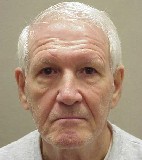
Robert Reldan
Murderer Ervil LeBaron
Murderer · USA · 1972
Ervil Morrell LeBaron (1925 to August 16, 1981) was the leader of a polygamous…
35 victims
Ervil LeBaron
Murderer · USA · 1972
Ervil Morrell LeBaron (1925 to August 16, 1981) was the leader of a polygamous…
35 victims
 Marvin Gray
Murderer · USA · 1975
Marvin Gray was convicted killer who claimed responsibility for 23 slayings and…
23 victims
Marvin Gray
Murderer · USA · 1975
Marvin Gray was convicted killer who claimed responsibility for 23 slayings and…
23 victims
 Yahweh ben Yahweh
Murderer · USA · 1980
Yahweh ben Yahweh was born and legally named Hulon Mitchell Jr. (October 27, 19…
23 victims
Yahweh ben Yahweh
Murderer · USA · 1980
Yahweh ben Yahweh was born and legally named Hulon Mitchell Jr. (October 27, 19…
23 victims
 Charles Manson
Murderer · USA · 1969
Charles Milles Manson (born November 12, 1934) was an American criminal and mus…
9 victims
Charles Manson
Murderer · USA · 1969
Charles Milles Manson (born November 12, 1934) was an American criminal and mus…
9 victims
 John Earl Bush
Murderer · USA · 1982
Defendant: John Earl Bush Victim: Frances Julia Slater Status: Executed by elec…
1 victim
John Earl Bush
Murderer · USA · 1982
Defendant: John Earl Bush Victim: Frances Julia Slater Status: Executed by elec…
1 victim
 Anibal Gonzalez Igonet
—
Aníbal González Igonet, apodado “El Loco del Martillo”, fue encarcelado tras un…
Anibal Gonzalez Igonet
—
Aníbal González Igonet, apodado “El Loco del Martillo”, fue encarcelado tras un…
 David Phillip Smith
Murderer · USA · 1995
David Phillip Smith was 20 years old when he was sentenced to death. He was sen…
1 victim
David Phillip Smith
Murderer · USA · 1995
David Phillip Smith was 20 years old when he was sentenced to death. He was sen…
1 victim
 Edward Ernest Hartman
Murderer · USA · 1993
Defendant: Edward Ernest Hartman DOC Number: 0172549 Date of birth: 08/25/1964…
1 victim
Edward Ernest Hartman
Murderer · USA · 1993
Defendant: Edward Ernest Hartman DOC Number: 0172549 Date of birth: 08/25/1964…
1 victim
- Gender
- male
- Country
- USA
- Location
- New Jersey, USA
- Date of birth
- J une 2, 1940
- Age at first offence
- 34
- Characteristics
- rape, convicted rapist, domestic violence, drugs
- Victim profile
- Mary Pryor, 17, and Lorraine Kelly, 16 / Doreen Carlucci, 14, and Joanne Delardo, 15 / Susan Reynes, 26 / Susan Reeve, 22 / Denise Evans, 15, and Carolyn Hedgepeth
- Method of murder
- Strangulation / Suffocation
- Date(s) of murder
- 1974 - 1975
- Years active
- 1974–1975
- Date of arrest
- October 31, 1975
- Status
-
Life imprisonment
Sentenced to life in prison on two counts (1979)
Case identification
Name: Robert Reldan
Status / disposition
Robert Reldan was sentenced to life in prison on two counts in 1979.
The offence
Between August 1974 and November 1975, residents of northern New Jersey were alarmed by a series of random, brutal homicides that claimed the lives of eight young women. The killings involved victims taken in pairs, with solitary targets in a pinch, and authorities said the methods were continually altered, including suffocation, strangulation, and gunshots.
Murder victims and circumstances
- Mary Pryor (17) and Lorraine Kelly (16) were reported missing from North Bergen on August 10, 1974. They were last seen on August 9, when they left Pryor’s home to do some shopping. Police believed they were hitchhiking when they met their killer that afternoon. Their bodies, raped and smothered, were recovered from a wooded area near Montvale four days later.
- Doreen Carlucci (14) and Joanne Delardo (15) vanished from a church youth center in Woodbridge on December 13, 1974. Their bodies were discovered two weeks later in Manalapan Township. One victim was beaten and strangled and was completely nude when found; the other was beaten and strangled and was dressed only in shoes and a sweater. The killer’s garrote, an electrical extension cord, was knotted tight around Carlucci’s neck.
- Susan Reynes (26) disappeared from her home in Haworth, New Jersey on October 6, 1975.
- Susan Reeve (22) vanished without a trace on the short walk home from her bus stop in Demarest on October 14, 1975.
- Denise Evans (15) and Carolyn Hedgepeth (15) disappeared from home in Wilmington, Delaware on October 24, 1975. Their bodies—shot execution-style—were recovered in Salem County, New Jersey, the following day.
- On October 27 and October 28, 1975, the remains of Reynes and Reeve were found seven miles apart in a wooded region of Rockland County, New York, just north of the New Jersey state line. Searchers were led to one corpse by an arrow scratched on a highway embankment above the name “Reeve.” Autopsies revealed that both women were strangled.
Murder counts leading to conviction
Reldan was charged with the murders of S.H. (count one) and S.R. (count two), which occurred on October 6, 1975 and October 14, 1975, respectively.
Reldan was convicted of second degree murder on count one and first degree murder on count two.
Investigation and police activity
Police initially were not linking Robert Reldan to the slayings. After Reldan was questioned about the murders of Reeve and Reynes, homicide detectives publicly announced on November 2, 1975, that he was “not considered a suspect” in the slayings. They had changed their tune by January 1986, according to the case narrative provided.
Arrest and custody status
On October 31, 1975, police arrested 35-year-old Robert Reldan in Closter, New Jersey, on a charge of attempted burglary. He was held without bond on the burglary charge.
Prior criminal history
A resident of Tenafly, Reldan was convicted of raping a woman at Teaneck in 1967 and served three years in prison before he was paroled.
Five months later, in 1971, he assaulted another woman in a hospital parking lot, pulling a knife on her moments after his latest therapy session. Authorities described him as a “model graduate” of Rahway prison’s rehabilitation program for sex offenders.
Trial and procedural history
Indictment and charging
Reldan was indicted on January 20, 1979, and charged with the two murders.
Before his murder conviction, a first jury trial ended in a mistrial. The second trial resulted in a guilty verdict on both murders, but that conviction was reversed due to errors in the admission of other crimes evidence, and remanded for a new trial. The reversal was reflected in State v. Reldan, 185 N.J. Super. 494 (App. Div. 1982), with certification denied at 91 N.J. 543 (1982).
After a suppression order was reversed in State v. Reldan, 100 N.J. 187 (1985), a third trial commenced on January 27, 1986, during which Reldan represented himself.
Reldan was again convicted of both murders, and his convictions were affirmed in State v. Reldan, A-4588-85, decided May 15, 1989, with certification denied at 121 N.J. 598 (1990).
DNA post-conviction proceedings
In March 2001, Reldan filed a motion requesting DNA testing of hair samples produced at trial. On the hearing dated November 12, 2002, the motion was denied by Judge Venezia on November 18, 2002.
On appeal, Reldan argued:
- I. The court was incorrect in determining that even if DNA testing showed that the hair samples were not that of the victims, it would not have changed the verdict as the evidence at trial had been overwhelming.
- II. The defendant's constitutional rights were violated, as it was fundamentally unfair for the court to deny his motion for DNA testing of relevant and exculpatory evidence that would potentially alter the result of his trial.
Evidence discussed in the DNA appeal
Judge Venezia concluded that he could consider certain evidence not presented at trial. He denied Reldan’s motion, concluding that the evidence at trial in 1986—including microscopic examination of materials obtained in the vacuuming of Reldan’s automobile—was overwhelming and the DNA test results would have little effect.
The decision referenced evidence presented at trial, including:
- testimony of the jeweler whom Reldan approached to try to sell the unique engagement ring purchased in London and assertedly identical to S.H.’s ring;
- testimony of Melvin Norman claiming Reldan approached him to try to sell him the same ring;
- statements by Reldan during police interviews linking him to the murders;
- numerous witness accounts linking Reldan to the victims; and
- testimony from a prison inmate that Reldan admitted killing the victims.
The judge also noted evidence not presented at trial, including:
- blood stains found in Reldan’s aunt’s garage that matched the blood of S.R.;
- police tracking dogs that detected the scent of both victims in Reldan’s car, garage, and home; and
- the account of a toll collector from the Port Authority indicating that Reldan was in the presence of one of the victims.
The judge concluded it was not reasonably probable that a new trial would be granted because the evidence of guilt made it unlikely to change the jury verdict.
The appellate court addressed the legal framework for DNA testing under N.J.S.A. 2A:84A-32a, describing requirements for the court to grant a motion and the discretion to consider evidence “whether or not it was introduced at trial.”
The appellate court held that the judge appropriately denied Reldan’s post-conviction motion for DNA testing because it would not have changed the jury’s verdict, and that Reldan did not establish with reasonable probability that a new trial would be granted. The court then affirmed.
The appeal included the statute’s discussion of “fundamental fairness” and quoted:
“an 'elusive concept . . . [where] exact boundaries are undefinable.'”
It also quoted:
“oppression, harassment, or egregious deprivation.”
The appellate decision stated:
“The court was denied”
and concluded: “Affirmed.”
Sentencing
Reldan was sentenced to:
- a mandatory term of life imprisonment for the first degree murder of S.R., to be served consecutively to sentences already imposed; and
- a consecutive thirty-year term of imprisonment for the second degree murder of S.H.
Separately, the case narrative stated that a first murder trial ended with a hung jury in June 1979, and a retrial was scheduled for October.
Escape attempt and recapture during proceedings
On October 15 (year in narrative context of the scheduled retrial), Reldan used a smuggled key to unlock his handcuffs, sprayed his guards with chemical Mace, and escaped from the courthouse in Hackensack. He was recaptured hours later at a hospital in Tuxedo, New York, after crashing his stolen getaway car into a ditch.
The narrative stated that despite the anonymous mailing of $100 bribes to several jurors, the trial resumed the next day, and on October 17 Reldan was convicted of two murders.
The narrative also stated that Reldan remained a suspect in six other homicides, although no further charges had been filed.
Appeals
Appellate court decision on DNA testing
Superior Court of New Jersey, Appellate Division, State of New Jersey (Plaintiff-Respondent) v. Robert Reldan (Defendant-Appellant).
Submitted: November 1, 2004 Decided: December 7, 2004 Judges: Petrella, Parker and Yannotti. Opinion delivered by PETRELLA, P.J.A.D.
The appellate decision addressed and rejected Reldan’s arguments concerning denial of DNA testing and affirmed the denial:
- the court held that favorable DNA testing would not have raised a reasonable probability of a new trial because it would not have disproved Reldan’s commission of the two murders; and
- the court held that the statute’s language permitted consideration of “any evidence whether or not it was introduced at trial.”
The appellate decision included a quoted statute provision:
“the requested DNA testing result would raise a reasonable probability that if the results were favorable to the defendant, a motion for a new trial based upon newly discovered evidence would be granted.”
and: “The court in its discretion may consider any evidence whether or not it was introduced at trial.”
It also quoted:
“any evidence whether or not it was introduced at trial.”
Finally, the appellate decision concluded:
Other details
- The narrative stated that Reldan was chosen for a television interview with David Frost, aired shortly before his parole in May 1975.
- The narrative stated that Reldan later tried twice to escape custody: in 1979 during his trial in Hackensack, and again two years later at St. Francis Medical Center, with his girlfriend waiting in the hospital lobby with a sawed-off shotgun in a shopping bag.
- A ruling in the narrative stated that the New Jersey Appellate Division rejected Reldan’s attempted name change while serving time at Trenton state prison, involving a court discussion of administrator Howard Beyer and an attorney general and Bergen County prosecutor objections.
- The narrative stated that parole would not be eligible until the year 2010, and described the man also known as the “Susan Strangler.”
Timeline
- August 9, 1974 — Mary Pryor (17) and Lorraine Kelly (16) were last seen leaving Pryor’s home to do some shopping; police believed they were hitchhiking when they met their killer.
- August 10, 1974 — Mary Pryor and Lorraine Kelly were reported missing from North Bergen.
- December 13, 1974 — Doreen Carlucci (14) and Joanne Delardo (15) vanished from a church youth center in Woodbridge.
- October 6, 1975 — Susan Reynes (26) disappeared from her home in Haworth.
- October 14, 1975 — Susan Reeve (22) vanished on the short walk home from her bus stop in Demarest.
- October 24, 1975 — Denise Evans (15) and Carolyn Hedgepeth disappeared from home in Wilmington, Delaware.
- October 31, 1975 — Police arrested 35-year-old Robert Reldan in Closter on a charge of attempted burglary.
- November 2, 1975 — Homicide detectives publicly announced Reldan was “not considered a suspect” in the slayings.
- January 20, 1979 — Reldan was indicted on two counts of murder.
- June 1979 — Reldan’s first murder trial ended in a hung jury.
- January 27, 1986 — A third murder trial commenced; Reldan represented himself.
- March 9, 2001 — Reldan filed a motion requesting DNA testing of hair samples.
- November 12, 2002 — Hearing on the motion requesting DNA testing.
- November 18, 2002 — Judge Venezia denied Reldan’s DNA-testing motion.
- May 15, 1989 — Reldan’s murder convictions were affirmed in State v. Reldan, A-4588-85.
- November 1, 2004 — DNA appeal submitted to the Appellate Division.
- December 7, 2004 — Appellate Division decided the DNA appeal and affirmed.

Spotted an error, or have more information about this case?