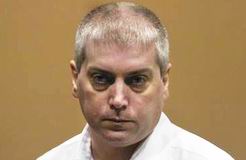
Michael King
Murderer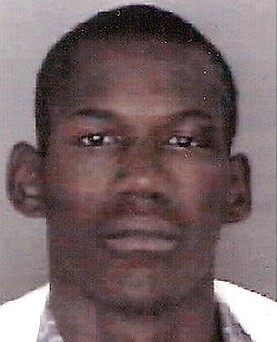 Joshua Wayne Andrews
Murderer · USA · 2000
Joshua Wayne Andrews was a serial killer accused of killing several people in V…
5 victims
Joshua Wayne Andrews
Murderer · USA · 2000
Joshua Wayne Andrews was a serial killer accused of killing several people in V…
5 victims
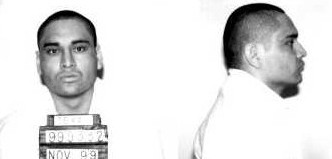 Juan Carlos Alvarez
Murderer · USA · 1998
Juan Carlos Alvarez, born on March 9, 1977, in San Luis, Mexico, was a Hispanic…
5 victims
Juan Carlos Alvarez
Murderer · USA · 1998
Juan Carlos Alvarez, born on March 9, 1977, in San Luis, Mexico, was a Hispanic…
5 victims
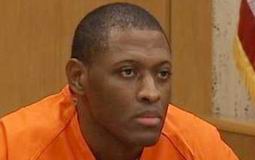 Leon Davis Jr.
Murderer · USA · 2007
Leon Davis Jr. was sentenced to death on April 29, 2011, for the execution-styl…
5 victims
Leon Davis Jr.
Murderer · USA · 2007
Leon Davis Jr. was sentenced to death on April 29, 2011, for the execution-styl…
5 victims
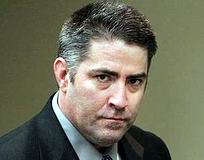 Raymond Lee Oyler
Murderer · USA · 2006
Raymond Lee Oyler was convicted for starting the 2006 Esperanza fire in Riversi…
5 victims
Raymond Lee Oyler
Murderer · USA · 2006
Raymond Lee Oyler was convicted for starting the 2006 Esperanza fire in Riversi…
5 victims
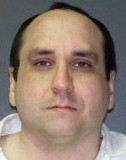 Terry Lee Hankins
Murderer · USA · 2000
Terry Lee Hankins was convicted by a jury of capital murder and was sentenced t…
5 victims
Terry Lee Hankins
Murderer · USA · 2000
Terry Lee Hankins was convicted by a jury of capital murder and was sentenced t…
5 victims
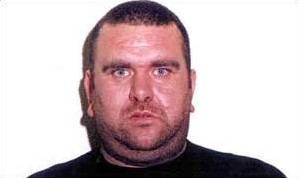 Philip John Smith
Spree killer · United Kingdom · 2000
Philip John Smith was a former fairground worker and taxi driver who was servin…
3 victims
Philip John Smith
Spree killer · United Kingdom · 2000
Philip John Smith was a former fairground worker and taxi driver who was servin…
3 victims
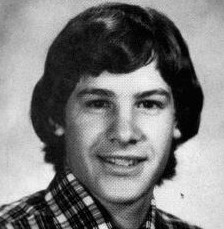 Matthew Beck
Mass murderer · USA · 1998
On March 6, 1998, Matthew Beck killed four of his supervisors at the Connecticu…
4 victims
Matthew Beck
Mass murderer · USA · 1998
On March 6, 1998, Matthew Beck killed four of his supervisors at the Connecticu…
4 victims
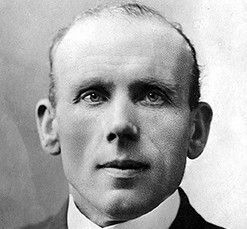 John Henry George Lee
Murderer · United Kingdom · 1884
John Henry George Lee, better known as John “Babbacombe” Lee (1864 – c. 1945),…
1 victim
John Henry George Lee
Murderer · United Kingdom · 1884
John Henry George Lee, better known as John “Babbacombe” Lee (1864 – c. 1945),…
1 victim
 Dedrick Owens
Homicide · USA · 2000
Perpetrator: Dedrick Owens (born in 1993), a 6-year-old first grader. · Victim:…
1 victim
Dedrick Owens
Homicide · USA · 2000
Perpetrator: Dedrick Owens (born in 1993), a 6-year-old first grader. · Victim:…
1 victim
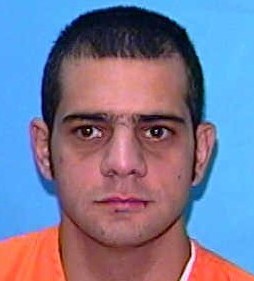 Anthony Farina
Murderer · USA · 1992
Anthony Farina (born 11/20/73) was tried in the Seventh Judicial Circuit, Volus…
1 victim
Anthony Farina
Murderer · USA · 1992
Anthony Farina (born 11/20/73) was tried in the Seventh Judicial Circuit, Volus…
1 victim
- Gender
- male
- Country
- USA
- Location
- North Port, Sarasota County, Florida, USA
- Date of birth
- 1971
- Age at first offence
- 37
- Characteristics
- kidnapping, rape
- Victim profile
- Denise Amber Lee, 21
- Method of murder
- Shooting
- Date(s) of murder
- January 17, 2008
- Years active
- 2008
- Date of arrest
- Same day
- Status
-
Sentenced to death
Sentenced to death on December 4, 2009
Overview
Michael King abducted Denise Amber Lee in the U.S. state of Florida on January 17, 2008. He drove her around, tied her up in his vehicle, and later raped and murdered her. After the murder, King buried Lee in a shallow grave. Her body was found on January 19, 2008. King was sentenced to death, with sentencing held on December 4, 2009.
Victims
Denise Amber Lee
Denise Amber Lee (née Goff) (August 6, 1986 – January 17, 2008) was born in Englewood, Florida. She was the daughter of Sgt. Rick Goff, of the sheriff's office in Charlotte County, Florida and Sue Goff. She had a $40 heart-shaped ring that her future husband, Nathan, bought her early in their relationship, and she never removed it. The ring later became key evidence connecting perpetrator and victim.
Denise Amber Lee was abducted from her home on January 17, 2008. She called Nathan Lee at 11:21 a.m. and the call was the last time the two spoke.
Lee was described as being 21 in the Florida Supreme Court account. She was cutting her son’s hair on the lanai of her home when King abducted her, and her two children were left alone at the home. Her sons were Adam, 2, and Noah, 3 1/2. She was bound with duct tape and repeatedly raped at King's home. She was later fatally shot at point-blank range and buried in a shallow grave in an undeveloped section of North Port.
Defendant
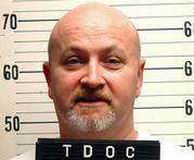
Michael King
Michael King (born 1971) trained as a plumber. He had been unemployed for several months prior to the crime and was facing foreclosure on his home in North Port. He was divorced.
Family members described to the court how King had had an accident while sledding as a child. An expert witness described the subsequent injury as a "divot" in his brain. A trial account also stated that King had a low IQ and that an expert described the injury as a "divot" in his brain.
In the sentencing account, the judge considered King’s low IQ, a past brain injury while sledding as a child, and the fact he was depressed due to a relationship break-up and a foreclosure on his home.
Timeline
- January 17, 2008 — Michael King abducted Denise Amber Lee from her home, drove her around and tied her up, later raped and murdered her, and buried her in a shallow grave.
- January 19, 2008 — Denise Amber Lee’s body was found off Toledo Blade, North Port, less than five miles from where Jane Kowalski last saw her.
- April 24, 2008 — The Senate Bill, CS/SB 1694, concerning the Denise Amber Lee Act, passed unanimously by the Florida Legislature.
- June 2008 — The Denise Amber Lee Foundation was established.
- August 24, 2009 — The trial of the State of Florida vs. Michael L. King officially began.
- August 28, 2009 — After deliberating for only two hours and five minutes, the jury found King guilty of kidnapping with intent to commit a felony, sexual battery, and first degree murder.
- September 4, 2009 — At 2:45 pm, the jury handed down the recommended sentence of death in a unanimous 12–0 vote.
- December 4, 2009 — Circuit Judge Deno Economou sentenced Michael King to die for the killing of Denise Amber Lee.
- February 9, 2012 — The Florida Supreme Court upheld King’s murder conviction and death sentence.
Background
Denise Amber Lee (née Goff) (August 6, 1986 – January 17, 2008) was born in Englewood, Florida and was the daughter of Sgt. Rick Goff and Sue Goff.
Michael King trained as a plumber. He was divorced. He had a childhood sledding accident. Family members described the accident to the court, and an expert witness described the subsequent injury as a "divot" in his brain.
The offence
On January 17, 2008, Michael King abducted Denise Amber Lee from her home. He drove her around and tied her up in his vehicle for quite some time; several people witnessed the journey.
Later, King raped and murdered Lee and buried her in a shallow grave. Police were unable to trace the location of the caller because it was made on a prepaid wireless phone. At some unknown time later, King shot Denise Lee in the head and buried her naked body in a 4 ft deep hole. King then proceeded to bury other evidence in areas close by.
Investigation and 9-1-1 calls
Phone calls and emergency response
Five 9-1-1 calls were placed that day between 3:29 p.m. and 6:30 p.m. on January 17, 2008 by five different people. Four were routed to operatives in Sarasota County, Florida, and the other was routed to operatives in neighboring Charlotte County, Florida.
The one routed to Charlotte County was allegedly mishandled. Charlotte County Dispatch Center was described as being understaffed in the Charlotte County Sheriff's Office Internal Affairs Report #08-01-003.
Several BOLOs (Be On Look Out reports) were issued by the Florida Highway Patrol and the North Port Police Department to 6 surrounding counties starting at 4:59 p.m. Charlotte County Sheriff's Office deputies were unaware of the BOLOs. Deputies in the field testified they were not made aware of a green Camaro until 6:45 p.m. and only after Sgt. Goff had listened to his daughter's call.
Police were never dispatched into the area where Jane Kowalski reported the sighting of King. As a result, police arrived too late to prevent Lee’s murder.
Calls placed during the incident
Nathan Lee placed the first 9-1-1 call at 3:29 p.m. after he became concerned that his wife was missing from their family home and left their children home alone. Nathan Lee said: "My kids were in the house and I don't know where she is"
Lee placed the second call at 6:14 p.m. from her abductor’s cellphone. Lee left the line open while she spoke with King. The state prosecutors presented it as key evidence. In the trial, Lee’s call included Lee attempting to cause King to implicate himself and surreptitiously dropping clues into the conversation for listening operatives. The call was several minutes long, and Lee pleaded for her life, with the narrative stating: "please" 17 times.
At 6:23 p.m., Sabrina Muxlow—daughter of King’s cousin, Harold Muxlow—placed the third call. She was concerned that King appeared to have a girl tied up in the back of his vehicle. She said: "He came over to my dad's house" "borrowed a shovel, a gas tank, and something else"
The call further included that when Lee tried to escape, "my dad's cousin went and put her back in the car".
At 6:30 p.m., Jane Kowalski called 9-1-1 while driving on U.S. Route 41. She said: "I was at a stoplight and a man pulled up next to me and there was a child screaming in the car"
She further said: "terrifying screaming" "never heard anything like that"
Kowalski believed she was witnessing a child abduction. She identified the car as a Camaro but stated the color as blue rather than green. She said she had made eye contact with the driver after which "a hand came up and started banging on the passenger window". After she crossed the county line into Charlotte, the call was routed to that state’s 9-1-1 call center. She later stated it was only after she saw the news the following day that she realized she had witnessed the abduction of Lee rather than that of a child. She explained that when she called the North Port Police Department to explain who she was and that she had made a 9-1-1 call, it became apparent that the call had not been forwarded to the correct authorities.
The narrative also stated that Kowalski’s call lasted 9 minutes and included cross streets, but Charlotte County Dispatch failed to dispatch a car and did not enter Kowalski’s information into the CAD until 6:42 p.m., twelve minutes after Kowalski’s call had begun.
At 6:50 p.m., Harold Muxlow placed the final 9-1-1 call. He was vague and attempted to hide his identity, but later investigations revealed he was indeed the caller. During the call, he said: "[I am] not sure exactly what the emergency is"
He explained he felt that "some one had been taken: "It didn't look like she wanted to be there"". He confirmed that his cousin had borrowed a gas can, a shovel, and a flashlight, and he was told those were to be used to fix a broken lawnmower stuck in a ditch. During the call, Muxlow said he had seen a woman in the car struggling with King, that the woman got out at one point and shouted "Call the cops", and that King replied "Don't worry about it" as he pushed her back into the vehicle and drove off.
Court treatment of the calls
Lee’s second 9-1-1 call was presented by state prosecutors as key evidence. Kowalski’s call was also presented as key evidence, including the contention that it was mishandled. During sentencing, the judge referred to unusual and rare circumstances of hearing the murder victim’s last words on a 9-1-1 recording, and included specific statements from the recording.
In the sentencing account, the judge paid special attention to Lee’s screams for help and pleadings for her life on a 911 recording. The account quoted: "I just want to see my family. I just want to see my family again, please," she said in a taped 911 call during her abduction.
Arrest and discovery
At 9:15 p.m., roughly six hours after Lee was first reported missing, Florida Highway Patrol Officer Eddie Pope pulled King’s Camaro over as King tried to enter I-75 from Toledo Blade and only a short distance from where Lee was buried.
Lee was found on January 19, 2008 off Toledo Blade, North Port, less than five miles from where Kowalski last saw her.
A neighbor saw a car arrive at Lee’s home around 2 p.m. The car was later identified as Michael King’s dark green 1994 Chevy Camaro.
Trial
Court and participants
The trial of the State of Florida vs. Michael L. King officially began on August 24, 2009. Lead prosecuting attorney was State Assistant Lon Arend. Lead defense attorney was Public Defender Carolyn Schlemmer. Presiding judge was Hon. Deno Economou. The trial took place in Sarasota County, Florida.
Evidence and witnesses
The prosecution presented DNA and other forensic evidence, including hair and personal articles of Lee found around and within the Camaro, King’s home, and the grave site. Additional evidence included King’s change of clothing, duct tape, a shell casing, the shovel, and King’s cell phone.
The prosecution called eye witnesses, including Jane Kowalski and King’s cousin.
Jane Kowalski’s call and other 9-1-1 calls were discussed as part of the evidence.
Defense
The defense attempted to provide reasonable doubt by bringing the jury’s attention to evidence tampering and contamination and by suggesting that one of King’s friends had committed the crime. The judge did not approve of the latter defense. The defense rested without calling any witnesses.
Verdict and sentencing
Verdict
On August 28, 2009, after deliberating for only two hours and five minutes, the jury found King guilty of:
- kidnapping with intent to commit a felony
- sexual battery
- first degree murder
Recommended sentence
On September 4, 2009, at 2:45 pm, the jury handed down the recommended sentence of death in a unanimous 12–0 vote.
Sentencing hearing and sentence imposed
On December 4, 2009, Circuit Judge Deno Economou sentenced Michael King to death for the killing of Denise Amber Lee.
Economou read his written ruling, described as about 45 pages, detailing how he weighed aggravating and mitigating factors. The sentencing account stated that the judge declared that aggravating factors supporting a death sentence outweighed mitigating factors that could have led to a sentence of life in prison.
The judge considered King’s low IQ, the past brain injury while sledding as a child, and that King was depressed due to a relationship break-up and a foreclosure on his home. The sentencing account stated the judge placed more weight on the heinous and premeditated nature of the crime, including that Lee was kidnapped and that she was murdered during the course of other felonies including rape.
Appeals
Florida Supreme Court
The Florida Supreme Court upheld King’s murder conviction and death sentence on February 9, 2012. The account stated that the Florida Supreme Court called his 2008 abduction and killing of North Port mother Denise Lee "unquestionably cold and cruel." The ruling was part of a mandatory appeal, where King’s attorneys argued that King did not get a fair trial and that brain injuries he suffered as a child meant he should not get the death penalty.
The opinion released on that date included quoted remarks: "As noted in the sentencing order, rarely is a court able to experience first-hand what a deceased victim encountered," "In this case, anyone who listens to the 911 call placed by Denise Lee will hear the abject terror she was experiencing plus her panicked, frantic pleas to the 911 dispatcher (for help) and King (to be returned home)."
The court also wrote that it was "in complete agreement" that the death penalty was appropriate in King’s case.
Aftermath and related legislation
Denise Amber Lee Act and legislation
On April 24, 2008, a Senate Bill, CS/SB 1694, concerning the Denise Amber Lee Act, passed unanimously by the Florida Legislature. The act provided for voluntary training for 9-1-1 operatives, and its passage into state law was described as continuing.
House Bill CS/HB 355 and Senate Bill CS/SB 742 were being considered in Tallahassee to address the fact that 9-1-1 operatives in the state were not required to undertake mandatory training. Lee’s husband Nathan Lee and her father Rick Goff continued to lobby in Tallahassee to get Denise’s Law passed, recommending mandatory training and certification for all 9-1-1 dispatchers.
A separate bill sponsored by Representative Robert C. Schenck would place significant limitations on 9-1-1 calls when played in public and was being considered by the Florida Legislature. The Lee family spoke against this bill. Governor of Florida Charlie Crist said: "not favorably inclined toward the bill" The bill was later dropped.
Denise Amber Lee Foundation
The narrative stated that due to issues identified in the 9-1-1 system connected to Jane Kowalski’s mishandled call, a non-profit organization was established in June 2008 in Lee’s name. The organization’s mission included: "To promote and support public safety through uniform training, standardized protocols, defined measurable outcomes, and technological advances in the 9-1-1 system."
Lee’s husband, father and father-in-law continued to manage the foundation, along with many other notable community leaders from the region.
Other details
Nathan Lee and Sgt. Rick Goff
Nathan Lee was at work on Thursday, January 17, 2008, when Denise Lee was at home with their young children. His 9-1-1 call was the first of the day related to the crime. Nathan Lee said he did not know where she was and that the children were in the house.
Sgt. Rick Goff listened to his daughter’s call and his intervention resulted in a countywide search for Lee, which was eventually widened to include neighboring counties.
Car and burial details
King used a dark green 1994 Chevy Camaro. Lee was bound and taken to King’s home in North Port, Florida, where the prosecution referred to setting up a "rape room". Duct tape and other evidence were found in that room.
Lee was then taken to King's cousin Harold Muxlow’s home, where King borrowed a shovel, a gas can, and a flashlight.
At one point, Lee took King’s cell phone and dialed 9-1-1. Her 9-1-1 call included her pretending to talk to King while answering the call taker’s questions. Police were unable to trace the location because it was made on a prepaid wireless phone.
The account stated that at some unknown time later, King shot Denise Lee in the head and buried her naked body in a 4 ft deep hole. King then buried other evidence in areas close by.
Juror and trial phase characterization
During the death penalty phase, the jury recommended death. One juror was quoted: "I think he gave her a death sentence when he got the shovel, and the flashlight, and the gas can," and the account stated jurors viewed King’s borrowing of burial items as showing he deserved to die.
Another juror, Pat O'Quinn, said this. Juror Marcia Burns said: "I don't know a normal person would be able to do that," and later added: "The family needs to be extremely proud." The narrative also quoted jury consultant Art Patterson: "You have a smoking gun. The emotion of hearing a woman plead for her life," and: "They get comfort in knowing this guy was so horrible and they know for sure what he was doing to her."
The account also quoted jury consultant Art Patterson on the emotion: "You almost feel like you're God," as attributed to juror Jean Burgess.
Named individuals in the case
Named individuals included Denise Amber Lee; Michael King; Nathan Lee; Sgt. Rick Goff; Sue Goff; Jane Kowalski; Sabrina Muxlow; Harold Muxlow; Deno Economou; Lon Arend; Carolyn Schlemmer; Eddie Pope; Terry Lewis; Charlie Crist; Robert C. Schenck; Robert C. Schenck’s bill; and additional family members mentioned in the narrative around King’s background and sentencing phase, including April King, Gary King, Jim King, Carrie, Matthew, Dawn Irving, Art Patterson, and Pat O'Quinn, Jean Burgess, Nancy Bates, Marcia Burns, and Anthony Cormier and Zac Anderson and Todd Ruger and Robert Eckhart and Peter Bernard as writers.

Spotted an error, or have more information about this case?