Norman Darnell Baxter
Murderer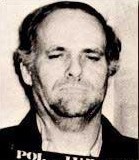 Ervil LeBaron
Murderer · USA · 1972
Ervil Morrell LeBaron (1925 to August 16, 1981) was the leader of a polygamous…
35 victims
Ervil LeBaron
Murderer · USA · 1972
Ervil Morrell LeBaron (1925 to August 16, 1981) was the leader of a polygamous…
35 victims
 Brian Kevin Rosenfeld
Murderer · USA · 1985
Brian Kevin Rosenfeld Brian Kevin Rosenfeld was sentenced to three concurrent l…
23 victims
Brian Kevin Rosenfeld
Murderer · USA · 1985
Brian Kevin Rosenfeld Brian Kevin Rosenfeld was sentenced to three concurrent l…
23 victims
 Marvin Gray
Murderer · USA · 1975
Marvin Gray was convicted killer who claimed responsibility for 23 slayings and…
23 victims
Marvin Gray
Murderer · USA · 1975
Marvin Gray was convicted killer who claimed responsibility for 23 slayings and…
23 victims
 Yahweh ben Yahweh
Murderer · USA · 1980
Yahweh ben Yahweh was born and legally named Hulon Mitchell Jr. (October 27, 19…
23 victims
Yahweh ben Yahweh
Murderer · USA · 1980
Yahweh ben Yahweh was born and legally named Hulon Mitchell Jr. (October 27, 19…
23 victims
 Maurice Lydell Harris
Murderer · USA · 1994
Maurice Lydell Harris was sentenced to death on December 20, 1996. The Californ…
1 victim
Maurice Lydell Harris
Murderer · USA · 1994
Maurice Lydell Harris was sentenced to death on December 20, 1996. The Californ…
1 victim
 Terri Rachals
Angel of Death? · USA · 1985
Terri Rachals was a nurse in the Surgical Intensive Care Unit of the Phoebe Put…
0 victims
Terri Rachals
Angel of Death? · USA · 1985
Terri Rachals was a nurse in the Surgical Intensive Care Unit of the Phoebe Put…
0 victims
 Rodney Alcala
Serial killer · USA · 1977
Rodney James Alcala (born August 23, 1943) was also known as Rodrigo Jacques Al…
100 victims
Rodney Alcala
Serial killer · USA · 1977
Rodney James Alcala (born August 23, 1943) was also known as Rodrigo Jacques Al…
100 victims
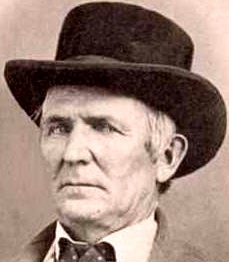 John Doyle Lee
Murderer · USA · 1857
Name: John Doyle Lee Lifespan: September 12, 1812 - March 23, 1877 Legal outcom…
120 victims
John Doyle Lee
Murderer · USA · 1857
Name: John Doyle Lee Lifespan: September 12, 1812 - March 23, 1877 Legal outcom…
120 victims
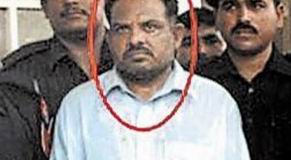 Muhammad Yousaf
Serial killer · Pakistan · 2010
Muhammad Yousaf was convicted in a notorious murder case registered by the Mura…
13 victims
Muhammad Yousaf
Serial killer · Pakistan · 2010
Muhammad Yousaf was convicted in a notorious murder case registered by the Mura…
13 victims
- Gender
- male
- Country
- USA
- Location
- Henry County, Georgia, USA
- Date of birth
- 1952
- Age at first offence
- 28
- Characteristics
- —
- Victim profile
- Kathryn June ''June Bug'' Moore, 22
- Method of murder
- Strangulation
- Date(s) of murder
- July 6, 1980
- Years active
- 1980
- Date of arrest
- —
- Status
-
Sentence of death imposed; conviction affirmed on direct appeal; sentence vacated and case remanded for resentencing (resentencing ordered after ineffective assistance of counsel at the sentencing phase); application for habeas corpus relief denied as to conviction
Case overview
Norman Darnell Baxter was sentenced to death in Henry County in November 1983 after a Henry Superior Court jury convicted him of the murder of Katherine June Moore, also known as “June Bug.” Her nude body was found a week after she was reported missing in July 1980. Her hands and feet were bound, and a ligature was tied around her throat; she had been strangled.
Baxter appealed his conviction and sentence. The Georgia Supreme Court affirmed his conviction and upheld his sentence, and it was later brought in federal habeas corpus proceedings. The United States Court of Appeals for the Eleventh Circuit affirmed denial of habeas relief as to Baxter’s conviction, vacated his sentence due to ineffective assistance of counsel at the sentencing phase, and remanded for resentencing.
Timeline
- July 5, 1980 — June Moore left her parent’s house in McDonough at about 11:00 p.m. to return to her room at the Safari Inn in Henry County.
- July 7, 1980 — Moore’s family filed a missing persons report with police after she did not appear at the Safari Inn pool as planned.
- July 13, 1980 — Tourists found Moore’s nude, partially decomposed body in a wooded area west of the Safari Inn.
- October 14, 1980 — Hunters found Moore’s car deep in the woods near the Safari Inn; the car had been partially stripped.
- Late July or August 1980 — Baxter took acquaintances and one brother to see a Ford Futura matching the description of the victim’s car; they testified Baxter had hidden the car deep in the woods near the Safari Inn.
- August 10, 1980 — A pawn ticket dated August 10, 1980 indicated Baxter had pawned a “white gold ring.”
- January 1983 — Two attorneys were appointed to represent Baxter.
- March 25, 1983 — A detective for Henry County Police and a Henry County Assistant District Attorney interviewed Baxter at the Chatham County Jail, where he was being held on charges unrelated to the Moore murder.
- October 7, 1983 — An assistant district attorney interviewed Baxter again in the presence of his Savannah attorney.
- September 1983 — Baxter’s case came to trial.
- November 14, 1983 — The transcript of evidence was filed.
- November 20, 1984 — The case was docketed in the Georgia Supreme Court.
- September 21, 1984 — The motion for new trial was heard and overruled.
- October 22, 1984 — Notice of appeal was filed.
- March 11, 1985 — The case was argued in the Georgia Supreme Court.
- July 3, 1985 — The Georgia Supreme Court decided the case and affirmed judgment. All the Justices concur.
- Feb. 9, 1995 — The Eleventh Circuit decided Baxter’s appeal from denial of his habeas corpus motion.
Background
June Moore left her parent’s house in McDonough at about 11:00 p.m. on Saturday, July 5, 1980 to return to her room at the Safari Inn in Henry County. After she did not appear at the Safari Inn pool the next day to meet her family, her family became concerned and filed a missing persons report when they could not locate her on July 7, 1980.
At the time of Moore’s disappearance, Baxter was staying at the Safari Inn with his girlfriend, Kathy Walker Anderson (“Anderson”). The state described the evidence as circumstantial, and it emphasized that there was no direct or physical evidence linking Baxter to Moore’s murder.
Baxter spent time in state mental hospitals and had prior criminal convictions.
The offence
On July 13, 1980, tourists found Moore’s nude, partially decomposed body in a wooded area west of the Safari Inn. Her hands and feet were bound, and a ligature was tied around her throat. She had been strangled.
On October 14, 1980, hunters found Moore’s partially stripped car deep in the woods near the Safari Inn.
Moore’s parents determined that a diamond ring, a .22 caliber pistol, a hot curler case, and a red dress were missing from her car and her room.
Investigation
The investigation involved identifying suspects including Don Bussey, whom Moore had been connected with prior to her disappearance.
Kathy Walker Anderson testified about Baxter’s actions around the time Moore went missing, including Baxter’s leaving the motel room and his return after dawn with various items. Anderson also testified that after a fight a few days later she left Baxter at a restaurant, and she threw items Baxter had placed in her car into a dumpster; those items were never recovered.
Police also recovered or examined evidence relating to pawn and car-related items:
- The state introduced a pawn ticket dated August 10, 1980 indicating Baxter had pawned a “white gold ring.”
- Three witnesses testified that Baxter had taken them to Moore’s car location near the Safari Inn to remove parts; the car matched a police photograph of Moore’s car.
In addition, while Baxter was incarcerated on unrelated charges, fellow inmates provided testimony about Baxter’s statements regarding Moore’s murder. James Green testified that Baxter told him he had strangled a girl at a motel outside Atlanta. Eugene Gadson testified that Baxter told him he had choked a girl in Northern Georgia. Timothy McWilliams testified that Baxter told him he had choked a girl as part of stealing her “mayonnaise jar full of cocaine” and that he bought Anderson a white Cadillac with the money.
The defense challenged the identification and implicated other suspects:
- The defense pointed to Phillip Kennedy, owner of a local gasoline station, and Bussey, Moore’s ex-boyfriend.
- Jane Bozeman testified that Kennedy told her shortly after Moore’s disappearance that he had murdered someone.
- A Henry County detective testified that a warrant had been issued for Kennedy in connection with Moore’s murder, but that following a commitment hearing the case against Kennedy was dismissed.
- The defense emphasized that Moore had told her parents she was going to meet Bussey, and that witnesses placed Bussey with Moore at approximately 11:00 p.m. on July 5, 1980.
- The defense introduced testimony concerning physical altercations between Moore and Julie Cream, and heated fights between Bussey and Moore.
Arrest
After investigating several suspects, including Bussey, police arrested Baxter for Moore’s murder and he was brought to trial in 1983.
Trial
Baxter was convicted in Henry County for the murder of Katherine June Moore. The jury found him guilty of murder, and he was sentenced to death.
A Henry Superior Court judge presided over the trial before Judge Whitmire.
Jury verdict and findings at sentencing
At the sentencing phase, the judge instructed the jury on two aggravating circumstances:
- The murder “was outrageously or wantonly vile, horrible, or inhuman in that it involved torture, depravity of mind, or an aggravated battery to the victim.”
- The murder was committed “for the purpose of receiving money or any other thing of monetary value.”
The jury found both aggravating circumstances and sentenced Baxter to death.
Evidence and witness testimony (high-level as presented)
The state relied on circumstantial evidence because it described no direct or physical evidence linking Baxter to Moore’s murder.
The record included:
- Testimony from Marvin Moore and Opal Moore, Moore’s father and stepmother, regarding Moore leaving around 11:00 p.m. on July 5, 1980 to meet Bussey and regarding items Moore had with her that night (an “engagement-type ring,” a .22 caliber pistol, a red dress, and a hair curlers’ case).
- Anderson’s testimony about Baxter’s statements and possession of items after dawn, including a “money making thing in the parking lot,” and his having a .22 caliber gun, bullets, a scarf, a diamond ring, a red shirt, and an electric curlers’ container that she said he did not have when he left the room.
- Testimony about the pawn ticket and about witnesses being taken to the victim’s car to remove parts.
- Testimony from fellow inmates about Baxter’s jail statements.
Voir dire and evidence rulings issues raised on appeal
Baxter raised numerous enumerations of error addressing:
- Refusal to grant funds for investigators and expert witnesses.
- Alleged Brady violations regarding rap sheets and summaries of Kathy Walker’s pre-trial statements, and issues about the state withholding Walker’s address and transcript access.
- Refusal to provide a daily transcript and refusal to allow a jury questionnaire before voir dire.
- Denial of a motion to suppress statements from interviews at the Chatham County Jail.
- Exclusion of certain proposed voir dire questions.
- Admission of photographs of the victim; admission of ligatures; admission of photographs related to the alleged dumpster disposal and landfill.
- Ordering production of the list of defense witnesses after sequestration.
- Sustaining objections to various lines of questioning.
- Refusal to strike identification testimony from Moore’s sister.
- Issues about whether inmate witnesses were agents of the state.
- Jury charge on inference from possession of stolen property.
- Admission of a pawn ticket bearing Baxter’s name.
- Evidentiary issues relating to testimony from Gene Couch and James Green.
- Refusal to give one requested charge.
- Denial of access to notes used by a witness to refresh memory.
- Sentencing-phase mitigation instructions and adequacy.
- Support for the two aggravating circumstances and review of death sentence requirements.
Sentencing
Baxter was sentenced to death following the jury’s finding of two aggravating circumstances at sentencing.
During sentence review by the Georgia Supreme Court, the court identified the jury’s aggravating circumstances as:
- The murder was committed for receiving things of monetary value under OCGA 17-10-30 (b) (4).
- The murder was outrageously and wantonly vile, horrible, and inhuman in that it involved torture to the victim and depravity of mind on the part of the defendant under OCGA 17-10-30 (b) (7).
Appeals
Direct appeal (Georgia Supreme Court)
Baxter’s case was heard on direct appeal for review under the Unified Appeal Procedure and for sentence review required by OCGA 17-10-35. The Georgia Supreme Court affirmed the judgment.
The Georgia Supreme Court addressed the aggravating circumstances and sentence review, including:
- Evidence supporting the (b)(4) aggravating circumstance, including testimony that Baxter sold the victim’s ring, stripped the car, attempted to sell various parts, and took her pistol after murdering her, and Walker’s testimony that Baxter left the motel room on the night of the murder in search of a “money making thing.”
- Evidence supporting the (b)(7) aggravating circumstance, including strangling with a ligature, removing clothes, binding hands and feet, and dumping the body in a secluded area, and inference that hands and feet were bound and clothes removed before the murder.
- Review of death sentence excessiveness and proportionality under OCGA 17-10-35 (c).
- Determination that the death sentence was not imposed under the influence of passion, prejudice, or any other arbitrary factor under OCGA 17-10-35 (c)(2).
- Review of the prosecutor’s closing argument at sentencing and a determination of no error.
Federal habeas corpus appeal (Eleventh Circuit)
Baxter filed a writ of habeas corpus in the United States District Court for the Northern District of Georgia challenging his conviction and death sentence. The district court denied relief without an evidentiary hearing, and the appeal followed.
The United States Court of Appeals for the Eleventh Circuit:
- AFFIRMED the district court’s denial of relief as to Baxter’s conviction.
- VACATED Baxter’s sentence due to ineffective assistance of counsel at the sentencing phase.
- REMANDED for resentencing.
Outcome
The Georgia Supreme Court affirmed Baxter’s conviction and upheld the death sentence after direct appeal and sentence review.
In the federal appeal, the Eleventh Circuit affirmed denial of habeas relief as to Baxter’s conviction, but it vacated his sentence and remanded for resentencing based on ineffective assistance of counsel at sentencing.
Aftermath
Baxter’s death sentence was vacated and the case was remanded for resentencing following the Eleventh Circuit’s holding that his counsel was ineffective at the sentencing phase.

Spotted an error, or have more information about this case?