
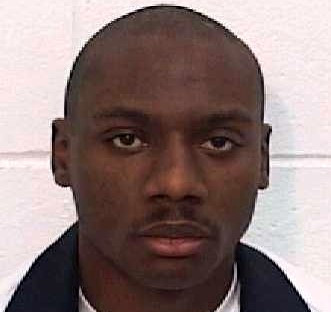
Terry Lynn King
Murderer Brian Kevin Rosenfeld
Murderer · USA · 1985
Brian Kevin Rosenfeld Brian Kevin Rosenfeld was sentenced to three concurrent l…
23 victims
Brian Kevin Rosenfeld
Murderer · USA · 1985
Brian Kevin Rosenfeld Brian Kevin Rosenfeld was sentenced to three concurrent l…
23 victims
 Marvin Gray
Murderer · USA · 1975
Marvin Gray was convicted killer who claimed responsibility for 23 slayings and…
23 victims
Marvin Gray
Murderer · USA · 1975
Marvin Gray was convicted killer who claimed responsibility for 23 slayings and…
23 victims
 Yahweh ben Yahweh
Murderer · USA · 1980
Yahweh ben Yahweh was born and legally named Hulon Mitchell Jr. (October 27, 19…
23 victims
Yahweh ben Yahweh
Murderer · USA · 1980
Yahweh ben Yahweh was born and legally named Hulon Mitchell Jr. (October 27, 19…
23 victims
 Russell Ellwood
Murderer · USA · 1991
Russell Ellwood was a former taxi driver. Authorities suspected him of killing…
20 victims
Russell Ellwood
Murderer · USA · 1991
Russell Ellwood was a former taxi driver. Authorities suspected him of killing…
20 victims
 Ivon Ray Stanley
Murderer · USA · 1976
Ivon Ray Stanley was convicted in the Decatur County, Georgia Superior Court of…
1 victim
Ivon Ray Stanley
Murderer · USA · 1976
Ivon Ray Stanley was convicted in the Decatur County, Georgia Superior Court of…
1 victim
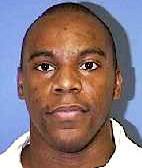 Alvin Braziel
Murderer · 1993
Alvin Braziel, also named Alvin Avon Braziel Jr., was convicted of capital murd…
1 victim
Alvin Braziel
Murderer · 1993
Alvin Braziel, also named Alvin Avon Braziel Jr., was convicted of capital murd…
1 victim
 Jesus Delgado
Murderer · USA · 1990
08/29/90 — Date of offense. · 08/30/90 — Marlene McField witnessed the Rodrigue…
2 victims
Jesus Delgado
Murderer · USA · 1990
08/29/90 — Date of offense. · 08/30/90 — Marlene McField witnessed the Rodrigue…
2 victims
 Alexander Rey Martinez
Murderer · USA · 2001
Alexander Rey Martinez was convicted in the trial court, Harris County, Susan B…
1 victim
Alexander Rey Martinez
Murderer · USA · 2001
Alexander Rey Martinez was convicted in the trial court, Harris County, Susan B…
1 victim
 John Dwayne Freeman
Murderer · USA · 1986
John Dwayne Freeman was sentenced to death on November 2, 1988. The case involv…
2 victims
John Dwayne Freeman
Murderer · USA · 1986
John Dwayne Freeman was sentenced to death on November 2, 1988. The case involv…
2 victims
 Serge Fortin
Mass murderer · France · 1999
October 2001 — His sentence was commuted to 30 years in prison. · October 2003…
4 victims
Serge Fortin
Mass murderer · France · 1999
October 2001 — His sentence was commuted to 30 years in prison. · October 2003…
4 victims
- Gender
- male
- Country
- USA
- Location
- Knox County, Tennessee, USA
- Date of birth
- June 14, 1962
- Age at first offence
- 21
- Characteristics
- rape, robbery
- Victim profile
- Diana Kay Smith, 31
- Method of murder
- Shooting
- Date(s) of murder
- July 31, 1983
- Years active
- 1983
- Date of arrest
- Same
- Status
-
Sentenced to death
Sentenced to death on February 6, 1985
Background
Terry Lynn King was convicted of murder in the first degree while in the perpetration of a simple kidnapping by confinement and armed robbery, and he was sentenced to death by electrocution on the felony murder conviction. He was also sentenced to serve a term of 125 years on the armed robbery conviction. King’s convictions and sentences were affirmed on direct appeal. A petition for rehearing was denied.
The offence
Diana K. Smith, 31, was kidnapped, shot in the back of the head, and then dumped in a quarry in East Knox County quarry.
Mrs. Smith left her home on Sunday afternoon, July 31, 1983, to go to a nearby McDonald's to get food for her family. Her automobile, a 1979 Camaro, was found on August 4, 1983, off the road in a heavily wooded area near Blaine, Tennessee.
A later investigation established the death was from one or more shots fired into the back of Mrs. Smith's head from a high-powered weapon.
Investigation
On August 6, 1983, Mrs. Donna Allen went to the Asbury quarry in Knox County to swim. She noticed a strange odor coming from a yellow tarpaulin in the water near the bank and reported the circumstance to the sheriff's office. Officers found the body of a white female in an advanced state of decomposition. The body was later identified as being that of Mrs. Smith.
The attention of officers focused on Terry King and Randall Sexton when Jerry Childers, an acquaintance of King, reported a conversation he had had with King and what he had found when he followed up on the conversation.
Jerry Childers testified that Terry King came to his house on the afternoon of Monday, August 1, 1983, and inquired as to whether Childers knew anyone that wanted to buy parts from a 1979 Camaro. Childers testified that King told him he had killed the woman who owned the automobile after she threatened to charge defendant with rape. Childers testified that King told him:
- King made the woman get out of the car trunk where he had confined her and lie face down on the ground
- the woman faced the defendant and begged him not to shoot her and offered money
- King ordered her to turn her head away from him
- when she did, he shot her in the back of the head
- King took forty dollars from the woman as well as taking her automobile
On the following Friday, which was August 5, 1983, Childers related defendant's story to Mr. Buford Watson.
On Sunday, Childers went to the location defendant had described as the place of the killing and found something with hair on it. Childers then gave the information he had to Detective Herman Johnson of the Knox County Sheriff's Department and T.B.I. agent, David Davenport.
In following up the report, officers met Childers near Richland Creek and searched the area, finding pieces of bone, hair, and bloodstains. A later more thorough search turned up bullet fragments and additional bone fragments.
After their arrests, both Sexton and King made statements to the police after waiving their rights. Both men were tried together. Neither defendant testified in the guilt phase of the trial, but their statements were introduced in evidence.
Agent Davenport testified that after making his statement, the defendant took him and other officers to:
- the place where the Camaro was hidden
- where he had hidden the automobile license plate in a hollow tree
- the place where he had placed the body in the quarry
- the location of the shooting
Tommy Heflin, a firearms examiner for the Tennessee Bureau of Investigation, testified that he examined the .30 Marlin rifle belonging to Sexton, the metal bullet jacket, and fragments recovered from the scene of the killing. Heflin opined that the intact metal jacket had been fired from Sexton's rifle and that the fragments were fired from a rifle with the same rifling characteristics as Sexton's rifle. He also was of the opinion that at least two bullets had been fired.
Dr. Joseph Parker performed an autopsy on the body of Mrs. Smith and testified that death was due to an extensive head injury consistent with gunshot wounds from a high-powered rifle.
Over objection, the State presented evidence through Lori Eastman Carter that defendant had attempted to kill her on October 13, 1982. Carter testified that King hit her with a slapstick numerous times while repeatedly asking her "how it felt to be dying, so that the next woman he killed he would know how she felt." Carter testified that she lost consciousness and that when she came to, she was still in her automobile with her hair rolled up in the window. Carter testified that she heard defendant tell his cousin that he had killed her and wanted James King to help him put her in a quarry and burn her automobile. James King disputed Carter's version of events, saying that defendant came to King's home to get him to follow defendant to St. Mary's Hospital as Mrs. Carter was ill and needed treatment. Karen Greeg, Lori Carter's sister, testified that Mrs. Carter can not be believed, even under oath.
Arrest
Following their arrests, both Sexton and King made statements to the police after waiving their rights.
Trial
Both defendants were tried together.
Charges and verdicts
King was convicted of:
- murder in the first degree in killing Diana K. Smith in the perpetration of a simple kidnapping by confinement
- murder in the first degree while in the perpetration of a simple kidnapping by confinement and armed robbery (as described in the direct appeal)
- armed robbery
Jury instructions and voir dire issues
King argued on appeal that the trial judge did not include a charge on murder in the second degree, nor did he include a charge on voluntary or involuntary manslaughter. The appellate court found no prejudicial error because the record of the guilt phase was devoid of evidence permitting an inference of guilt of second-degree murder or other lesser included offenses, noting the uncontradicted State proof of premeditation and deliberation and that the killing occurred during the commission of a felony, including confessions to Childers and to the police.
King argued that the jury commenced deliberations prior to the trial judge's instructions, depriving him of a fair and impartial jury. The appellate court found no merit, stating that before the case was submitted, jurors requested to “see all paper evidence,” and concluding that this did not show that jurors were discussing, analyzing, and weighing the evidence with a view to reaching a verdict without proper instructions.
King also argued that the trial court unduly restricted questions on voir dire. The appellate court found no abuse of discretion. Two questions were excluded upon the State's motion:
- "Mrs. Kincer, if you had a vote right now, how would you vote?"
- ". . .oes anyone have the opinion or think that if a sentence of life is meted out, that the defendant will not serve the rest of his natural life in prison?"
The appellate court held those exclusions were proper, describing how asking a juror how he would vote tends to exact a pledge from the juror, and that the question about how long a life sentence would be served was improper for the jury.
Evidence admission issues
King argued that testimony of Lori Eastman Carter was not relevant to a contested issue. The appellate court stated that evidence of other crimes is usually not admissible as irrelevant but may be admitted when relevant to a matter actually in issue. The appellate court held admission was harmless beyond a reasonable doubt and could not have affected results of the trial or the sentence.
King argued that the trial court erred by refusing to compel the State to disclose Jerry Childers’ criminal record. The appellate court found no error, explaining that the State had no duty under Tennessee Rules of Criminal Procedure or decisional law to provide such information. It also stated the defense suffered no prejudice because the record reflected the defense had this information regarding the 19 year old Georgia auto theft conviction.
King argued the trial court erred in refusing to sever the defendants for trial and in admitting the confession of Randall Joe Sexton, a non-testifying co-defendant, citing Bruton v. United States. The appellate court addressed Bruton and interlocking confessions, stating Bruton was not violated where the defendant confesses and his confession “interlocks” in material aspects with the co-defendant confession. The appellate court found no Bruton violation and held that the confessions were admissible and that the trial court did not err in failing to grant severance.
Statements and alleged facts of the killing
In King’s and Sexton’s statements introduced in evidence, King's statement was more comprehensive and covered the entire period of time he was with Mrs. Smith.
King stated that he and his cousin, Don King, picked up Mrs. Smith at the Cherokee Dam on Sunday, July 31, 1983. King drove Mrs. Smith in her automobile to his cousin Don King's trailer, arriving there around 7:00 p.m. Don King drove his own automobile to the trailer. Shortly after arriving, King called Eugene Thornhill, who came to the trailer and left with King to obtain LSD and quaaludes. King stated he and Mrs. Smith took the drugs.
King stated that Don King, Eugene Thornhill, and he had sex with Mrs. Smith. After staying at the trailer for several hours, King and Mrs. Smith left in her automobile, with King driving, and went to a wooded area where they again had sex. From there, they went to a service station for gas. Mrs. Smith got out of the automobile and grabbed the keys. King told her to get back in the automobile and she did so. The defendant drove Mrs. Smith back to the wooded area, where they again had sex and King took forty dollars from Mrs. Smith.
King stated that Mrs. Smith then asked, “why did you all rape me?” King stated he knew what he was going to do. King told Mrs. Smith to get into the trunk of the automobile. When she did, King drove to Sexton's house, spoke with Sexton, and told Sexton he had a woman in the trunk and needed Sexton's help. King obtained Sexton’s rifle and a shovel. King and Sexton left Sexton’s home in separate automobiles.
The statement described a stop at a Publix station to purchase gas, and then defendant and Sexton drove to a wooded area near Richland Creek in Knox County. King drove the 1979 Camaro off the road and became stuck. He then made Mrs. Smith get out of the automobile trunk and pointed the loaded rifle at her. King made Mrs. Smith lie down on the ground, assuring her he was not going to kill her and that others were coming to have sex with her. While Sexton left in his automobile to return a funnel to the gas station, King shot Mrs. Smith in the back of the head.
After Sexton's return and after getting the Camaro unstuck, King and Sexton went through Mrs. Smith’s effects and burned her identification. They attempted to bury the body but gave up because of the hardness of the ground. The next morning, King and Sexton wrapped Mrs. Smith's body in a tent, weighted it with cinder blocks, and dumped it in the Asburn quarry. Mrs. Smith's automobile was hidden near Sexton's house.
Other trial-related issues
The defendant offered no other evidence in the guilt phase of the trial.
The appellate court affirmed both convictions because it found no material error in the guilt phase and that the evidence supported the jury's verdict of murder in the first degree in killing Diana K. Smith during the perpetration of a simple kidnapping by confinement and armed robbery.
Sentencing
The State relied on evidence introduced during the guilt phase.
In addition, the State introduced evidence that King and Sexton had been convicted previously of murder in the first degree by use of a firearm in perpetration of armed robbery and of aggravated kidnapping, committed on July 2, 1983, less than a month before the defendants killed Mrs. Smith. The State also introduced evidence that King had been convicted of an assault with intent to commit aggravated kidnapping committed only three days after the killing of Mrs. Smith.
King called numerous witnesses who testified that he had been a heavy user of drugs and alcohol for a number of years and that their use could be expected to and did affect his judgment and actions. There was expert medical proof that the effect of LSD and quaaludes, which King claimed to have taken on July 31, 1983, could be expected to continue for 8 to 12 hours after ingestion. The defense also presented evidence that King was remorseful, had caused no disciplinary problems at the prison, and had been moved from close security to medium security.
King and Sexton testified in the sentencing phase, and their testimony substantially followed the police statements they gave.
King denied forming the intent to kill Mrs. Smith before he went to Sexton's house, insisting he went there only for advise on what to do. King testified he got the rifle at Sexton's direction and formed the intent to kill Mrs. Smith after he took her to the place she was shot. King testified he related the events of Mrs. Smith's death to Jerry Childers because it was bothering him. He denied telling Childers that Mrs. Smith begged for her life.
On cross-examination, King admitted committing two armed robberies in January, 1980, when he was a juvenile.
Sexton testified generally in accord with his statement. He denied advising King to kill Mrs. Smith but admitted that he gave King the weapon used in the murder and accompanied him to the death scene, knowing Mrs. Smith was confined in the trunk of the automobile driven by King. Sexton testified he helped try to dispose of the automobile, destroyed Mrs. Smith's identification, and disposed of her body.
The jury returned a death sentence against King. The appellate record stated Sexton was sentenced to life imprisonment, evidently because he was not present at the moment of the killing and did not shoot Mrs. Smith.
In imposing the sentence of death, the jury expressly found:
- King was previously convicted of one or more felonies, other than the present charge, which involved the use of threat of violence to the person.
- the murder was especially heinous, atrocious or cruel in that it involved torture or depravity of mind.
- the murder was committed for the purpose of avoiding, interfering with, or preventing a lawful arrest of King or another.
- the murder was committed while King was engaged in committing, or was an accomplice in the commission of, or was attempting to commit, or was fleeing after committing or attempting to commit, any rape, robbery, larceny or kidnapping.
The jury also found that there was no mitigating circumstance sufficiently substantial to outweigh the statutory aggravating circumstances found by the jury.
King argued that the trial court erred in restricting argument by defense counsel and in failing to give requested instructions as to aggravating and mitigating circumstances. The appellate court addressed the restrictions, finding no error where the trial court sustained objections to argument directed to the history and morality of the death penalty because King’s argument was not predicated on evidence in either the guilt or penalty phase and was irrelevant.
Mitigating instructions request
King requested an instruction that fourteen different circumstances not listed in the statute were to be considered mitigating circumstances. The trial judge refused. The appellate court found the instructions complied with precedent by requiring the jury to consider statutory mitigating circumstances raised by the evidence and to weigh and consider any other fact or circumstance in mitigation.
Definitions requested
King requested definitions for “to aggravate” and “torture.” The appellate court found no error in refusing to specifically define “to aggravate,” since it was a term in common use. The appellate court also found no prejudicial error in failing to define “torture,” noting the evidence supported the aggravating circumstance as the defendant shot the victim in the head after she begged for her life and offered money to let her go.
Jury punishment instruction
King challenged an instruction stating: “Your verdict must be unanimous as to either form of punishment.” The appellate court found no basic error in the instruction because if the jury could not agree as to punishment, the judge would dismiss the jury and impose a life sentence under T.C.A. § 39-2-203(h), and the statute also directed the judge not to instruct the jury on the effect of failure to agree and attorneys not to comment on it.
Aggravating circumstance instruction (rape and larceny)
King argued the trial court erred in instructing the jury on the aggravating circumstance that applied when the murder occurred while King was engaged in committing or attempting to commit certain felonies, specifically contesting rape and larceny. The appellate court rejected the argument, stating that King’s confession stated the victim accused him of raping her and that King had taken a gold cigarette lighter belonging to Mrs. Smith, justifying submission of the instruction in its complete form. The appellate court also concluded inclusion could not have materially affected the jury’s finding given overwhelming proof supporting murder in the first degree in perpetration of simple kidnapping and armed robbery.
Challenge to juvenile evidence in sentencing
King also raised an issue related to cross-examination where the State showed he committed two armed robberies in January 1980 while a juvenile. The State conceded error under T.C.A. § 37-1-133(b) and State v. Dixon, but the appellate court found the error harmless because the evidence overwhelmingly established four statutory aggravating circumstances and they were not outweighed by substantial mitigating circumstances, and the key finding about prior violent felonies was not dependent on juvenile crimes. The court also referenced Rule 36(b) of the Tennessee Rules of Appellate Procedure.
Appeals
Supreme Court of Tennessee review and decision
The appeal proceeded as a direct appeal of a death penalty sentence. The Supreme Court of Tennessee affirmed convictions and the sentence of death after concluding no reversible error occurred in either the convicting or sentencing phase and that the verdicts and sentences were sustained by the evidence. The appellate court concluded the death sentence under the circumstances of the convictions was not arbitrary or disproportionate and affirmed the convictions and the sentence of death.
The appellate court described the procedure and outcome as follows: it affirmed the conviction of murder in the first degree in the perpetration of a simple kidnapping and sentence of death, and it also affirmed the conviction of armed robbery and a 125-year sentence. It stated the death sentence would be carried out on the 7th day of October, 1986, unless stayed by appropriate authority, and that costs were adjudged against the defendant. The appellate court further stated that Chief Justice Brock concurred in the affirmance of conviction but dissented from the imposition of the death penalty for the reasons expressed in his dissent in State of Tennessee v. Dicks, 615 S.W.2d 126, 132 (Tenn. 1981). Robert E. Cooper, Justice, delivered the opinion, with concurrence by Fones, Harbison, and Drowota, JJ., and concurrence and dissent by Brock, C.J.
The appellate court also stated: “The petition for Rehearing Denied October 27, 1986.”
Petition to rehear
In the petition to rehear, King insisted the court erroneously ruled on several issues or failed to consider them. The court stated that all material issues were considered and properly decided.
One issue based on admission of fragments of the victim’s skull was addressed in the petition ruling. The parties stipulated prior to trial that Mrs. Smith's death resulted from a shot in the back of the head from a high-powered rifle. King argued that in light of the stipulation, introduction of skull and skull fragments was improper. The appellate court found the evidence admissible, stating the State introduced the skull fragments in lieu of a picture of the body in its decomposed state. The examining pathologist, Dr. Bass, used the skull to indicate to the jury where the bullet entered and used fragments to demonstrate that they contained lead splatters consistent with an injury from a bullet fired from a high-powered rifle at close range. The appellate court also stated the fragments could help the jury visualize the massive injury and had bearing on proving deliberation and premeditation, which King would not concede. The court held the evidence relevant to issues decided by the jury was admissible, and that if comments were improper, they could not have affected the jury’s verdict in either phase. The petition to rehear was denied at the cost of the appellant.
Outcome
King’s convictions and sentence were affirmed. The death sentence was imposed and appellate review did not result in reversal. The petition for rehearing was denied.
Other details
The appellate court described the trial as involving indictments for common law murder and two counts of felony murder, and it stated all counts were submitted to the jury for decision.
In the guilt phase, the jury found King and Randall Sexton guilty of murder in the first degree in killing Diana K. Smith in the perpetration of a simple kidnapping by confinement and armed robbery.

Spotted an error, or have more information about this case?