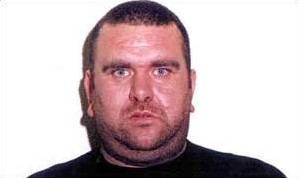
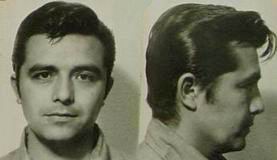
Philip John Smith
Spree killer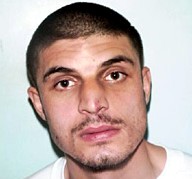 Daniel Gonzalez
Spree killer · United Kingdom · 2004
Daniel Gonzalez (1980 - 9 August 2007) was an offender who was sentenced to lif…
4 victims
Daniel Gonzalez
Spree killer · United Kingdom · 2004
Daniel Gonzalez (1980 - 9 August 2007) was an offender who was sentenced to lif…
4 victims
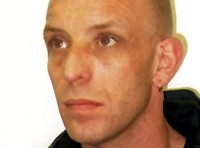 Mark Hobson
Spree killer · United Kingdom · 2004
Mark Hobson was a British spree killer who killed his girlfriend and her twin s…
4 victims
Mark Hobson
Spree killer · United Kingdom · 2004
Mark Hobson was a British spree killer who killed his girlfriend and her twin s…
4 victims
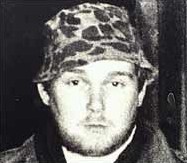 Michael Robert Ryan
Spree killer · United Kingdom · 1987
Michael Robert Ryan was an unemployed local labourer. He lived in Hungerford, B…
16 victims
Michael Robert Ryan
Spree killer · United Kingdom · 1987
Michael Robert Ryan was an unemployed local labourer. He lived in Hungerford, B…
16 victims
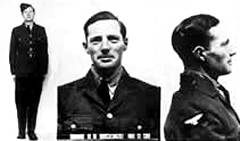 Gordon Cummins
Spree killer · United Kingdom · 1942
Gordon Frederick Cummins was called “The Count” due to his claims of noble birt…
4 victims
Gordon Cummins
Spree killer · United Kingdom · 1942
Gordon Frederick Cummins was called “The Count” due to his claims of noble birt…
4 victims
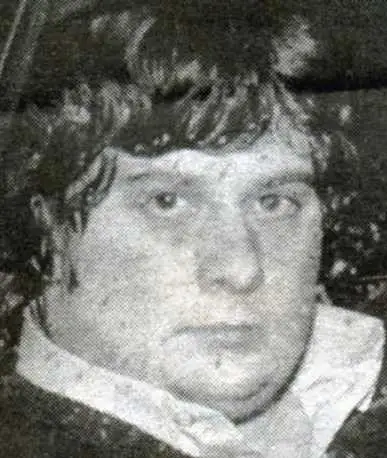 Kevin Weaver
Spree killer · United Kingdom · 1987
Kevin Weaver was sentenced to closed psychiatric confinement on March 28, 1988.…
4 victims
Kevin Weaver
Spree killer · United Kingdom · 1987
Kevin Weaver was sentenced to closed psychiatric confinement on March 28, 1988.…
4 victims
 Patrick Henry Sherrill
Mass murderer · USA · 1986
Patrick Henry Sherrill Patrick Henry Sherrill committed suicide by shooting him…
14 victims
Patrick Henry Sherrill
Mass murderer · USA · 1986
Patrick Henry Sherrill Patrick Henry Sherrill committed suicide by shooting him…
14 victims
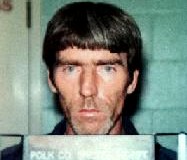 Daniel Joseph Blank
Serial killer · USA · 1996
Daniel Joseph Blank was a mechanic and was described as a gifted mechanic and a…
6 victims
Daniel Joseph Blank
Serial killer · USA · 1996
Daniel Joseph Blank was a mechanic and was described as a gifted mechanic and a…
6 victims
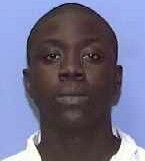 Raphael Leon Holiday
Murderer · USA · 2000
Raphael Leon Holiday (TDCJ Number 999419) was born on 07/20/1979 and was 22 whe…
3 victims
Raphael Leon Holiday
Murderer · USA · 2000
Raphael Leon Holiday (TDCJ Number 999419) was born on 07/20/1979 and was 22 whe…
3 victims
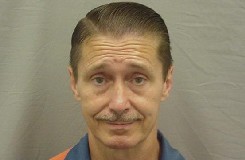 Donald Gene Miller
Serial killer · USA · 1977
Donald Gene Miller was a graduate in criminal justice from Michigan State Unive…
4 victims
Donald Gene Miller
Serial killer · USA · 1977
Donald Gene Miller was a graduate in criminal justice from Michigan State Unive…
4 victims
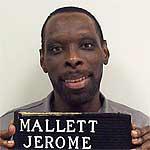 Jerome Mallett
Murderer · USA · 1985
Jerome Mallett was executed by lethal injection in Missouri on May 23, 2001. ·…
1 victim
Jerome Mallett
Murderer · USA · 1985
Jerome Mallett was executed by lethal injection in Missouri on May 23, 2001. ·…
1 victim
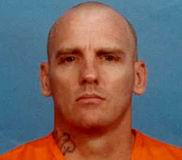 Phillup Partin
Murderer · USA · 1987
Phillup Alan Partin was sentenced to death by a 9-3 vote on December 1, 2008 fo…
2 victims
Phillup Partin
Murderer · USA · 1987
Phillup Alan Partin was sentenced to death by a 9-3 vote on December 1, 2008 fo…
2 victims
- Gender
- male
- Country
- United Kingdom
- Location
- Birmingham, West Midlands, England, United Kingdom
- Date of birth
- J uly 10, 1965
- Age at first offence
- 35
- Characteristics
- arson, dismemberment, mutilation
- Victim profile
- Jodie Hyde, 21 / Rosemary Corcoran, 25 / Carol Jordan, 39
- Method of murder
- Strangulation - Beating
- Date(s) of murder
- November 9-12, 2000
- Years active
- 2000
- Date of arrest
- —
- Status
-
Life imprisonment
Sentenced to life imprisonment in August 2001
Case overview
Philip John Smith was a former fairground worker and taxi driver who was serving life imprisonment after he admitted murdering three women in November 2000. Senior detectives from six police forces met to discuss possible links between unsolved murders and a jailed serial killer.
Timeline
- November 2000 — Philip Smith strangled and burned the body of Jodie Hyde, battered to death Rosemary Corcoran, and ran over Carol Jordan in a car before beating her so severely that she had to be identified from dental records.
- 9 November — Patrolling police officers found the smouldering body of 21-year-old Jodie Hyde near a recreation ground off Golden Hillock Road in the Sparkbrook area of Birmingham.
- 12 November — The landlord of the Robin Hood pub at Rashwood, near Droitwich Spa, Worcestershire, discovered the body of Rosemary Corcoran, 25, in a wooded lane near a nursing home.
- 12 November (same day) — Several hours later Carol Jordan was found dead in Lea Bank, Birmingham.
- Two weeks before 9 November — Patricia Lynott’s body was found in her flat in Bordesley Green, Birmingham.
- July 2001 — Smith was jailed at Leicester Crown Court.
- Tuesday, 17 July, 2001 — A court heard that police tampered with evidence in the case against Smith.
- Wednesday, 18 July, 2001 — Police investigated whether a man jailed for life for murdering three women could be linked to unsolved killings.
- 25 October — A meeting took place at the headquarters of West Mercia Police near Worcester.
- Monday, 29 October 2001 — A report followed the police probe into the killer’s past.
- August 2001 — Smith was jailed for life at Leicester Crown Court.
Background
Philip John Smith lived in the Sparkbrook area of Birmingham, at Braithwaite Road, Sparkbrook, Birmingham. He was 22 stone and was 35 during the July 2001 reporting and 36 during later reporting.
Smith had no previous convictions for violence.
Jodie Hyde was 21. Rosemary Corcoran was 25. Carol Jordan was described as 39 and also as mother-of-six. The court was told that Carol Jordan was a care worker.
Smith had befriended Jodie Hyde and Rosemary Corcoran in The Rainbow pub in Digbeth, Birmingham, where he found casual work and operated as an unlicensed taxi driver for customers.
The offence
The unexplained killing spree was described as starting on 9 November with the discovery of Jodie Hyde’s body.
Jodie Hyde’s body was found smouldering and barely recognisable near a recreation ground off Golden Hillock Road in the Sparkbrook area of Birmingham. A post-mortem examination identified her by fingerprints and showed she had been strangled before being rolled up in a carpet and set on fire.
Rosemary Corcoran was beaten to death. Her battered body was found in a wooded lane by a pub landlord off the A38 near Droitwich Spa. Smith had befriended her in The Rainbow pub in Digbeth, Birmingham.
Carol Jordan was knocked over by Smith’s car as she walked to work at a care home. He then beat her so severely that she had to be identified from dental records. The prosecution described this as a killing in the context of the four-day period.
The court was told that Smith had mutilated the three women almost beyond recognition. Prosecuting counsel said the murders were carried out by Smith and that the idea that more than one person was responsible was “frankly an absurdity.” The prosecution said the scientific evidence would link Smith to the killings, with “powerful and compelling” evidence.
Treatment of victims and investigation narrative elements
Prosecutor Tim Raggatt QC told the court details including that Jodie Hyde’s naked body was bundled into the back of Smith’s Volvo car and driven to open land at Ackers Trust, an adventure play area in Birmingham. He said Smith wrapped the body in a blanket and bound it with a green rope. The jury heard her body had received 60% burns and had to be identified by her fingerprints.
Regarding Rosemary Corcoran, the court was told she was beaten with such ferocity that she was physically unrecognisable, with Mr Raggatt describing that “He literally shattered her face.” It was said identification was only possible through fingerprints and dental records after her jaw was put back together.
Regarding Carol Jordan, Mr Raggatt said it was described as a serious accident because the police were bound to attend, and that Carol Jordan had to die and she did die.
Investigation
Experts from the Forensic Science Service (FSS) in Birmingham analysed evidence that led to Smith’s conviction. The team was headed by Martin Whittaker, who worked closely with detectives from West Mercia Police and counterparts at the neighbouring West Midlands force.
The investigation to catch Smith involved more than 100 detectives and 50 support staff from West Mercia and West Midlands Police. The operation to catch Smith was codenamed Operation Green and was led by the Chief Constable of West Midlands Police Sir Edward Crew.
Forensic evidence
Forensic science played a key role in catching triple murderer Philip Smith. The FSS team gathered evidence, and the results linked Smith to each victim.
After Smith’s arrest, two FSS scientists visited his home in Braithwaite Road, Sparkbrook, Birmingham, while another examined his battered Volvo car.
At Smith’s shabby terraced home, the FSS found a bath full of murky, brown water that contained apparently bloodstained clothing.
Laboratory analysis established links between the three cases. Blood matching each of the three victims was found on Smith’s belongings. The reporting included that blood matching Carol Jordan and Rosemary Corcoran was found on a pair of steel toe cap working boots. Evidence also described a pair of ladies’ trousers found at Smith’s home that could be directly linked to Rosemary Corcoran through DNA.
A pink fibre found at Smith’s home and in his car matched fibres from the blanket in which Jodie Hyde’s body was wrapped.
In Smith’s car, the reporting included: Rosemary Corcoran’s blood on the outside offside tyre and mud flap and the rear offside wing; smears of blood on the back of one of the front seat head rests that matched Jodie Hyde; and a partial DNA profile of Rosemary Corcoran recovered from an apparent fingermark in blood found on one of the back windows. Examinations of tyre impressions were described as matching the marks on the inside of one of Rosemary Corcoran’s arms with tyre pattern elements, and tyre impressions at the scene where her body was found were also described as matching Smith’s car tyres.
Paint was described as found on Carol Jordan’s trousers and matched paint from the suspect’s car.
Investigative uncertainties and broader links
Investigations would go back 20 years across several forces. Detectives said Smith was not being positively linked with any unsolved crimes at the time of reporting.
There were reports that detectives were examining possible links between Smith and the death of Patricia Lynott, a barmaid at the Digbeth pub in Birmingham where Smith occasionally worked. Her body was found in her flat in Bordesley Green, Birmingham, two weeks before Smith strangled Jodie Hyde.
Police were unsure of a motive for the killings but believed lack of permanent sexual relationships may have been a factor.
Arrest
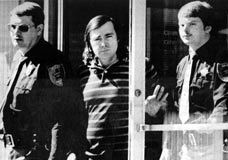
Smith was jailed at Leicester Crown Court in July 2001 and was jailed for life at Leicester Crown Court in August 2001.
Midway through giving evidence during his trial at Leicester Crown Court, Smith changed his plea to guilty.
Trial
At the time of the court case, Chief Superintendent Ellie Baker from West Midlands Police said: "Philip Smith is already a triple killer and we would be wrong to leave it at that, we need to search further."
Rachel Brand QC defended Smith. Rachel Brand QC told the judge that Smith had indicated to her that he wanted to change his plea and that he wanted the charges read to him again.
As the clerk of the court read out charges, Smith answered “guilty” to each charge, prompting tears from some of the relatives of victims in the public gallery.
Quotes from relatives included statements from James Taylor, Carol Jordan’s brother:
"The devastation and the heartache that Philip Smith has caused will never fade.
"The last eight months have been a nightmare for all of us, especially Carol's husband and children.
"The past is now over but not forgotten.
"We are all hoping that Philip Smith will never - and I mean never - be allowed into the outside world ever again."
Evidence dispute in court
Police tampered with evidence was heard in court. Philip John Smith, of Braithwaite Road, Sparkbrook, Birmingham, made the claim after it was put to him that blood from two of his alleged victims was found on jeans discovered soaking in a bath.
Mr Smith denied murdering Jodie Hyde, Rosemary Corcoran, and Carol Jordan between 8 and 12 November last year.
Defence counsel Rachel Brand QC asked Mr Smith if he had formed any idea of how blood from Rosemary Corcoran and Carol Jordan had been found on jeans. Mr Smith replied: "The police may have tampered with it or something like that."
He gave the same explanation when asked why there was blood from Miss Corcoran and Ms Jordan on boots he was wearing the night they were murdered.
The court heard that a pair of size 10 women's trousers, which the prosecution claimed belonged to Miss Corcoran, were also found soaking in the bath at Mr Smith’s flat. Mr Smith claimed the trousers were among clothes he stole from outside an Oxfam charity shop in the middle of the night. He told the court:
"There are bags that are left outside shops that I pick up and take back to my flat at night time."
Sentencing
Mrs Justice Rafferty sentenced Smith to life imprisonment and made remarks in court.
She said:
"You robbed three innocent ladies of their lives. "I suspect that their families will suffer the more as they simply don't understand why you did. "The brutality of these ladies' deaths, designed by you to evade discovery, showing the coldness with which you dispatched them, is appalling. "You should clearly have faced up like a man at the overwhelming nature of the Crown's case against you but you chose to put the victims' families through misery which you compounded by this trial."
Appeals
No appeal outcome was stated.
Outcome
Smith was convicted and was serving life imprisonment after admitting murdering three women. Police continued to investigate possible links to unsolved killings.
At the meeting under the auspices of West Midlands Police, representatives from six forces took part at the headquarters of West Mercia Police near Worcester.
Quotes from Chief Constable Sir Edward Crew included:
"I would like to record my thanks to all those involved in this inquiry and hope that its success in putting an evil and dangerous man behind bars for life will bring some comfort to the victims' families"
Quotes from Martin Whittaker included:
"A team of forensic scientists from different specialities worked really hard to gather everything they could. "The team pulled together every strand of forensic evidence to create a kind of 'spider's web' and in the centre of it all ... was Philip Smith. "In 20 years of working for the FSS, I have never had to deal with so much evidence in relation to one suspect. It was quite overwhelming."
"Throughout the investigation, the FSS and police worked very closely together and the result is a tribute to that partnership."
Other quotes from Martin Whittaker included:
"A team of forensic scientists from different specialities pulled together every strand of forensic evidence to create a kind of 'spider's web' and in the centre of it all - linked to each one of the murdered women - was Philip Smith."
"This was a difficult case to deal with because there was so much evidence to look at. In 20 years of working for the FSS, I have never had to deal with so much in relation to one suspect - it was quite overwhelming. "But the results of our work gave police a very strong case against Smith. Throughout the investigation, the FSS and the police worked very closely together."
Aftermath
Relatives expressed hope Smith would never be released. At the time of reporting, it was said that investigations would search further and go back 20 years across several forces, while detectives said he was not being positively linked with any unsolved crimes.
Police continued to probe possible links to other deaths, including the death of Patricia Lynott.
Other details
Smith was described as a recovering butane gas addict in relation to the victim Jodie Hyde. The reporting also described that Smith was a former fairground worker and taxi driver.
The Rainbow pub in Digbeth, Birmingham, was described as a place where Smith worked casually and operated an unlicensed cab business, and where Jodie Hyde and Rosemary Corcoran frequented.
Jodie Hyde was described as having drug problems.
Jodie Hyde’s body was hidden near a recreation ground off Golden Hillock Road in the Sparkbrook area of Birmingham.
Rosemary Corcoran’s body was described as found near the Robin Hood pub in Droitwich, Worcestershire, in a wooded lane by a pub landlord off the A38 near Droitwich Spa.
Carol Jordan’s body was described as found in parkland in Lee Bank, Birmingham, and as having been viciously beaten.
Smith’s Volvo car and details of forensic findings from it were described, including tyres and paint transfer to trousers.
The meeting with representatives of six forces took place at West Mercia Police headquarters near Worcester on 25 October.
Spotted an error, or have more information about this case?