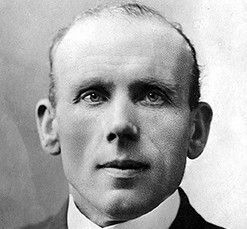
John Henry George Lee
Murderer Charles Peace
Murderer · United Kingdom · 1876
Charles Peace was executed by hanging in Leeds on February 25, 1879. Charles Pe…
2 victims
Charles Peace
Murderer · United Kingdom · 1876
Charles Peace was executed by hanging in Leeds on February 25, 1879. Charles Pe…
2 victims
 William Henry Bury
Murderer · United Kingdom · 1888
William Henry Bury was executed by hanging in Dundee on April 24, 1889. He was…
2 victims
William Henry Bury
Murderer · United Kingdom · 1888
William Henry Bury was executed by hanging in Dundee on April 24, 1889. He was…
2 victims
 Eugéne-Marie Chantrelle
Murderer · United Kingdom · 1878
Eugéne-Marie Chantrelle was a French-born school teacher who lived in Edinburgh…
1 victim
Eugéne-Marie Chantrelle
Murderer · United Kingdom · 1878
Eugéne-Marie Chantrelle was a French-born school teacher who lived in Edinburgh…
1 victim
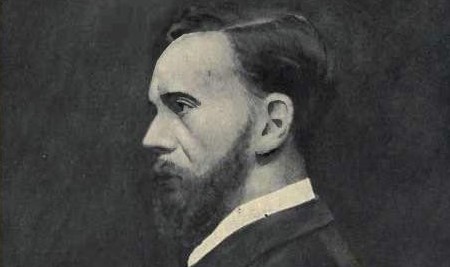 George Lamson
Murderer · United Kingdom · 1881
George Lamson was an English physician who, after the Crimean War, suffered fro…
1 victim
George Lamson
Murderer · United Kingdom · 1881
George Lamson was an English physician who, after the Crimean War, suffered fro…
1 victim
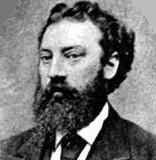 Henry Wainwright
Murderer · United Kingdom · 1874
Henry Wainwright was executed by hanging outside Newgate on 21st December 1875.…
1 victim
Henry Wainwright
Murderer · United Kingdom · 1874
Henry Wainwright was executed by hanging outside Newgate on 21st December 1875.…
1 victim
 Israel Lipski
Murderer · United Kingdom · 1887
Israel Lipski Israel Lipski (1865 - 1888) was born Israel Lobulsk. He was of Po…
1 victim
Israel Lipski
Murderer · United Kingdom · 1887
Israel Lipski Israel Lipski (1865 - 1888) was born Israel Lobulsk. He was of Po…
1 victim
 Sterling Spann
Murderer? · USA · 1981
Sterling Spann was a former death row inmate whose death sentence was overturne…
1 victim
Sterling Spann
Murderer? · USA · 1981
Sterling Spann was a former death row inmate whose death sentence was overturne…
1 victim
 Rhonda Orr
Murderer · USA · 2003
Name: Rhonda Orr Rhonda and James Orr married in 1999. James Orr required the u…
1 victim
Rhonda Orr
Murderer · USA · 2003
Name: Rhonda Orr Rhonda and James Orr married in 1999. James Orr required the u…
1 victim
 Jay Kelly Pinkerton
Homicide · USA · 1979
May 15, 1986 — Jay Kelly Pinkerton was executed by lethal injection in Texas. ·…
2 victims
Jay Kelly Pinkerton
Homicide · USA · 1979
May 15, 1986 — Jay Kelly Pinkerton was executed by lethal injection in Texas. ·…
2 victims
 James Joseph Wilkens
Murderer · USA · 1986
Name: James Joseph Wilkens (also given as James Joseph Wilkens Jr.) · December…
2 victims
James Joseph Wilkens
Murderer · USA · 1986
Name: James Joseph Wilkens (also given as James Joseph Wilkens Jr.) · December…
2 victims
 Floyd Allen Medlock
Murderer · USA · 1990
Floyd Allen Medlock was executed by lethal injection in Oklahoma on January 16,…
1 victim
Floyd Allen Medlock
Murderer · USA · 1990
Floyd Allen Medlock was executed by lethal injection in Oklahoma on January 16,…
1 victim
- Gender
- male
- Country
- United Kingdom
- Location
- Babbacombe Bay, Devon, England, United Kingdom
- Date of birth
- August 14, 1864
- Age at first offence
- 20
- Characteristics
- to avoid arrest, murder for hire
- Victim profile
- Emma Keyse (his employer)
- Method of murder
- St abbing with knife
- Date(s) of murder
- November 15, 1884
- Years active
- 1884
- Date of arrest
- —
- Status
-
Released
Sentence commuted to life in prison after surviving three attempted hangings on February 23, 1985; released in December 1907; died March 18, 1945
Summary
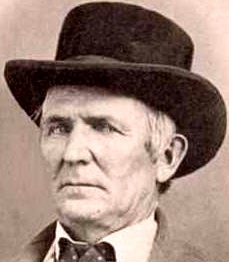
John Henry George Lee, better known as John “Babbacombe” Lee (1864 – c. 1945), survived three attempted judicial executions in England and became known as the man they could not hang. Lee was born in Abbotskerswell, Devon, served in the Royal Navy, and was a known thief. In 1885, he was convicted of the murder of his employer Emma Keyse at her home at Babbacombe Bay near Torquay on 15 November 1884. Despite his constant claim of innocence, the sentence was for hanging.
Background
Lee was born in Abbotskerswell, Devon. He served in the Royal Navy and had a known history as a thief. His criminal record included a prison sentence for theft. He was also described as known as a man they could not hang after surviving three attempted hangings.
The offence
In 1885, Lee was convicted of the murder of his employer Emma Keyse at her home at Babbacombe Bay near Torquay on 15 November 1884. Ellen Keyse was described as an elderly, wealthy spinster and as a former maid of honour to Queen Victoria. She was found by one of her servants after she had been severely beaten and with her throat cut. The morning of 15 November 1884 was described as the time the body was discovered in the pantry. A maid had been woken up with the smell of burning, and after fearing for her own safety investigated and found her mistress’s body saturated in oil and surrounded by burning paper.
Lee was described as 19 years old and as having had a job on the staff as the footman. It was stated that Lee’s knife had been used to cut the old woman’s throat.
The evidence against Lee was described as weak and circumstantial. The circumstantial elements included that Lee had been the only male in the house at the time of the murder, his previous criminal record, and his being found with an unexplained cut on his arm. Despite this, Lee was found guilty and sentenced to hang.
The motive for the murder was stated as being connected to wages: it was stated that Ellen Keyse had been disappointed with his behaviour, had reduced his wages, and had threatened to sack him.
Investigation
It amounted to little more than Lee having been the only male in the house at the time of the murder, his previous criminal record, and him being found with an unexplained cut on his arm.
Arrest
Lee was taken to the gallows at Exeter Gaol on 23 February 1885.
Trial
Lee was sentenced to hang. There was described as fierce controversy over the verdict and sentence. Lee continued to claim innocence.
Sentencing
Lee was taken to the gallows at Exeter Gaol on 23 February 1885, and three attempts were made to carry out his execution. All ended in failure as the trap door of the scaffold failed to open. It was stated that the trap had been carefully tested by James Berry, the executioner, beforehand. Following the failure, Home Secretary Sir William Harcourt commuted the sentence to life imprisonment.
Appeals
Lee continued to petition successive Home Secretaries.
Outcome
After Home Secretary Sir William Harcourt commuted the sentence to life imprisonment, Lee was released from gaol in 1907, in December. Lee was described as having spent 22 years in prison.
Timeline
- 15 November 1884 — Emma Keyse/Ellen Keyse was found severely beaten with her throat cut; the body was discovered in the pantry.
- 1885 — Lee was convicted of the murder of his employer Emma Keyse/Ellen Keyse and sentenced to hang.
- 23 February 1885 — At Exeter prison, three attempts were made to carry out his execution; all attempts failed when the trap door failed to open; James Berry tested the trap beforehand; Home Secretary Sir William Harcourt commuted the sentence to life imprisonment.
- December 1907 — Lee was released from gaol.
- March 18, 1945 — Lee died.
Aftermath
After his release, Lee petitioned successive Home Secretaries and supported himself through lecturing on his life. Lee became the subject of a silent film.
Accounts of Lee’s whereabouts after 1916 were described as somewhat confused. It was stated that one researcher speculated that in later years there was more than one man claiming to be Lee.
It was suspected that Lee died in the Tavistock workhouse sometime during World War II. Another line of research concluded that he died in the US under the name of “James Lee” in 1945. A claim was included that his gravestone was found at Forest Home Cemetery, Milwaukee.
In the 1970s, Dave Swarbrick (the fiddle-player in the English folk-rock band Fairport Convention) found a series of old newspaper articles about Lee and composed a rock opera entitled Babbacombe Lee, which was recorded and released by Fairport Convention as an LP. Folk song collector Gwilym Davies was given a notebook in 1971 by Mrs Hunt, of Greywell, Hampshire, in which the words of a poem, “The Death of John Lee,” were written. The words, with a composed tune, were published in 1972 by Gwilym Davies in “A Hampshire Garland”.
Execution attempts and mechanism details
On February 23, 1885, at Exeter prison, three attempts were made to carry out Lee’s execution. It was stated that when the time came for Lee to hang, the priest read a prayer and hangman Berry pulled the lever. The trapdoors did not swing down and did not plunge Lee to his death. Berry pushed the lever back and forth, and warders stamped on the trapdoors, but still nothing happened. Lee was carried clear with his legs still pinioned, and a carpenter was brought in to test the bolts. The carpenter could find nothing wrong, so he shaved away the edges of the trap. The drop was tested with a heavy weight and it worked first time. Lee was put back on the trap, the lever was pulled again, and the trap refused to budge. Lee was removed to his cell again.
Twenty minutes passed while a variety of workmen planed, oiled, and tested the apparatus; every time it worked perfectly. Lee was brought back again. Rev John Pitkin, the chaplain, intoned the prayers, and Berry pulled the lever again. The trap refused to open again. Lee was removed back to his cell and was reprieved within hours.
Gallows design and official explanation
The failure of the trapdoors was described as having more to do with bad carpentry than divine intervention. It was stated as believed that although the doors were tested with weights and worked, these weights were not the same as that of Lee himself; when he stood on the trapdoors his weight pushing down on the bolts prevented them from sliding.
Home Office papers were described as showing that the official report stated incorrect assembly of the gallows mechanism. The report stated that the trapdoor hinges rested upon an eighth of an inch of drawbar, preventing them from opening when the doors were weighted. This incident helped lead to a standard gallows design to prevent a repeat occurrence.
Other persons
It was stated that the only other known man in history to survive three hangings was Joseph Samuel.

Spotted an error, or have more information about this case?