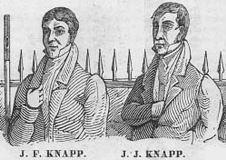
Francis & Joseph Knapp
Murderers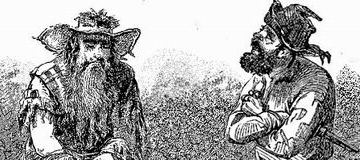 Harpe brothers
Murderers · USA
Micajah “Big” Harpe (1748? – August 1799) and Wiley “Little” Harpe (1750? – Feb…
50 victims
Harpe brothers
Murderers · USA
Micajah “Big” Harpe (1748? – August 1799) and Wiley “Little” Harpe (1750? – Feb…
50 victims
 Anthony & Damian Clemente
Murderers · USA · 1995
November 6, 1995 — Anthony and Damian went to the 99 Restaurant; Anthony used a…
4 victims
Anthony & Damian Clemente
Murderers · USA · 1995
November 6, 1995 — Anthony and Damian went to the 99 Restaurant; Anthony used a…
4 victims
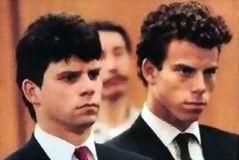 Lyle & Erik Menendez
Murderers · USA · 1989
Joseph Lyle Menendez (born January 10, 1968) and Erik Galen Menendez (born Nove…
2 victims
Lyle & Erik Menendez
Murderers · USA · 1989
Joseph Lyle Menendez (born January 10, 1968) and Erik Galen Menendez (born Nove…
2 victims
 Joan & Elizabeth Shannon
Murderers · USA · 2002
July 23, 2002 — Elizabeth Shannon shot and killed her father, Army Maj. David S…
1 victim
Joan & Elizabeth Shannon
Murderers · USA · 2002
July 23, 2002 — Elizabeth Shannon shot and killed her father, Army Maj. David S…
1 victim
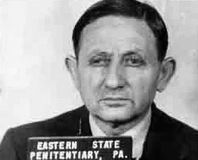 Morris Bolber
Serial killer · USA · 1932
Morris Bolber was prosecuted as part of a Philadelphia poison-murder ring invol…
50 victims
Morris Bolber
Serial killer · USA · 1932
Morris Bolber was prosecuted as part of a Philadelphia poison-murder ring invol…
50 victims
 Andrew Kehoe
Mass murderer · USA · 1927
Andrew P. Kehoe committed suicide the same day by killing himself in the explos…
44 victims
Andrew Kehoe
Mass murderer · USA · 1927
Andrew P. Kehoe committed suicide the same day by killing himself in the explos…
44 victims
 Diego Pillco
Murderer · USA · 2006
Diego Pillco pleaded guilty to manslaughter for the killing of Adrienne Shelly…
1 victim
Diego Pillco
Murderer · USA · 2006
Diego Pillco pleaded guilty to manslaughter for the killing of Adrienne Shelly…
1 victim
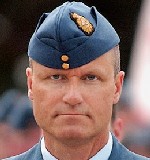 Russell Williams
Murderer · Canada · 2009
Russell Williams (born March 7, 1963) was convicted murderer and rapist and a f…
2 victims
Russell Williams
Murderer · Canada · 2009
Russell Williams (born March 7, 1963) was convicted murderer and rapist and a f…
2 victims
 Esequel Banda
Murderer · USA · 1986
December 11, 1995 — Esequel Banda was executed by lethal injection in Texas. ·…
1 victim
Esequel Banda
Murderer · USA · 1986
December 11, 1995 — Esequel Banda was executed by lethal injection in Texas. ·…
1 victim
- Gender
- male
- Country
- USA
- Location
- Salem, Massachusetts, USA
- Date of birth
- ???
- Characteristics
- murder for hire, inheritance
- Victim profile
- Captain Joseph White, 82 (their uncle)
- Method of murder
- Clubbed and stabbed
- Date(s) of murder
- April 6, 1930
- Years active
- 1930
- Date of arrest
- —
- Status
-
Executed
Francis: Executed by hanging on September 28, 1830; Joseph: Executed by hanging on December 31, 1830
Background
Francis Knapp and Joseph Jenkins Knapp were the brothers known as the Knapps.
They had a wealthy uncle, Captain Joseph White, who lived in Salem, Massachusetts. Captain White was 82 years old.
The Knapps were impatient to receive their anticipated inheritance and decided that they couldn't wait for Captain White to die naturally. They hired a hit man, 28-year-old Richard Crowninshield, to murder Captain White.
The offence
On the night of April 6, 1830, Crowninshield broke into Captain White's house and went into the bedroom where Captain White was asleep.
While Francis and Joseph Knapp waited in the street outside, approximately 300 feet away, Crowninshield clubbed and stabbed Captain White to death.
With the Knapp brothers' help, Crowninshield fled the house without being seen.
Investigation
The citizens of Salem were outraged by the murder of Captain White and formed a Committee of Vigilance to search for the killer. After two months of searching, the Committee had gotten nowhere.
The police in New Bedford arrested a pickpocket, who testified before a grand jury that he was a friend of Crowninshield and that Crowninshield told him that he killed Captain White.
Arrest
Crowninshield was promptly arrested, but he kept quiet since he could not implicate Francis or Joseph Knapp without confessing to his role in the murder.
Crowninshield told another criminal acquaintance, John Palmer, about the Knapps' involvement. Palmer wrote a blackmail letter to the Knapps, but it was received instead by the Knapps' father. The elder Knapp turned the letter over to the police, who arrested the Knapp brothers.
After Joseph Knapp confessed, Crowninshield realized that no hope was left and hung himself in his prison cell.
Trial
Francis and Joseph Knapp were charged with being accessories to murder.
Both Francis and Joseph Knapp were tried before the Salem division of the Massachusetts Supreme Judicial Court.
The judges were Marcus Morton, Samuel Putnam, and Samuel S. Wilde.
For their defense, Francis and Joseph Knapp were represented by F. Dexter and W.H. Gardiner.
Timeline
- April 6, 1830 — Richard Crowninshield entered Captain Joseph White's house, murdered him, and fled with help from Francis Knapp and Joseph Knapp; the Knapps waited outside about 300 feet away.
- July Term, 1830 — Francis Knapp was tried in the Salem division of the Massachusetts Supreme Judicial Court.
- November Term, 1830 — Joseph Jenkins Knapp was tried in the Salem division of the Massachusetts Supreme Judicial Court.
- September 28, 1830 — Francis Knapp was executed by hanging.
- December 31, 1830 — Joseph Jenkins Knapp was executed by hanging.
Francis Knapp trial (July Term, 1830)
Francis Knapp was to be tried first.
Webster’s difficulty lay in the fact that Richard Crowninshield, the actual murderer, had committed suicide before he could be tried and convicted. Under the ancient common law of England, which influenced the legal principles of American states, accessories to murder could not be convicted unless (1) the actual murderer had been convicted, or (2) the accessories had been present at the time of the murder. Crowninshield was dead, and the Knapps had been 300 feet away in the street at the time of the murder.
Webster described Captain White and argued to the jury. Webster said:
"A healthful old man to whom sleep was sweet, the first sound slumbers of the night held him in their strong embrace."
Webster then portrayed Crowninshield’s entry into White's home:
"With noiseless feet he paces the lonely hall half lighted by the moon; he winds up the ascent of the stairs … beholds his victim before him … the moon resting on the grey locks of this aged victim shows him where to strike."
On Crowninshield’s suicide, Webster told the jury:
"A vulture is devouring it.… It can ask no sympathy from Heaven or Earth."
Dexter and Gardiner tried to keep the trial focused on the legal requirements for conviction. They argued:
"Upon this evidence the prisoner cannot be convicted as a principal in the murder. A principal in the second degree, according to the law of England, is by our statutes an accessory before the fact, and cannot be tried until there has been a conviction of the principal."
Webster raised the question of whether Francis and Joseph Knapp could be legally considered as "present" during the murder so that they could be convicted. He argued:
"To constitute a presence, it is sufficient if the accomplice is in a place, either where he may render aid to the perpetrator of the felony, or where the perpetrator supposes he may render aid. If they selected the place to afford assistance, whether it was well or ill chosen for that purpose is immaterial."
He added:
"The perpetrator would derive courage and confidence from the knowledge that his associate was in the place appointed."
Dexter argued for a conservative approach that only physical presence could mean legal presence. Dexter said:
"To make a man a principal by aiding and abetting in a felony, he must be in such a situation at the moment when the crime is committed, that he can render actual and immediate assistance to the perpetrator; and that he must be there by agreement, and with the intent to render such assistance."
The jury initially could not reach a verdict, but ultimately it found Francis Knapp guilty by the close of the July Term.
Joseph Jenkins Knapp trial (November Term, 1830)
Joseph Knapp’s trial took place during the Court's November Term of 1830.
Joseph Knapp had testified against Crowninshield at the arraignment, but he refused to testify against his brother Francis at his trial. As a result, the state dropped its earlier promise to give Joseph Knapp immunity and put him before Webster to be prosecuted.
Since Dexter and Gardiner had lost the debate over the legal definition of presence at Francis Knapp's trial, their later attack in Joseph Knapp’s trial focused on whether the Knapps had been close enough to aid and abet Crowninshield.
The trial record stated:
"The prisoner's counsel now offered evidence in regard to the place at which the principal … was stationed during the perpetration of the murder, their object being to show that in that situation it was impossible for him to aid and abet the person who was actually striking the blow."
The jury rejected Dexter and Gardiner's attempt to save Joseph Knapp and, by the close of the November Term, found him guilty.
Sentencing
Both Francis Knapp and Joseph Jenkins Knapp were sentenced to death by hanging.
Outcome
Francis Knapp was executed by hanging on September 28, 1830.
Joseph Jenkins Knapp was executed by hanging on December 31, 1830.
Other details
The case was prosecuted by chief prosecutor Daniel Webster.
The defense attorneys were F. Dexter and W.H. Gardiner.
The Massachusetts attorney general used Daniel Webster to prosecute the Knapps.
Having convicted Francis and Joseph Knapp, Massachusetts also tried and convicted George Crowninshield, a brother of Richard's, of aiding and abetting Captain White's murder.
George Crowninshield had a minor role in the whole affair.
John Palmer wrote a blackmail letter to the Knapps, which was received by the Knapps’ father and then turned over to the police.
Spotted an error, or have more information about this case?