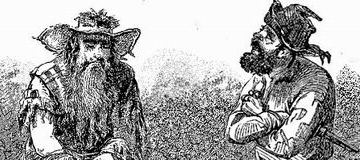
Harpe brothers
Murderers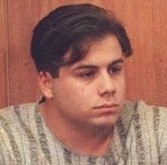 Anthony & Damian Clemente
Murderers · USA · 1995
November 6, 1995 — Anthony and Damian went to the 99 Restaurant; Anthony used a…
4 victims
Anthony & Damian Clemente
Murderers · USA · 1995
November 6, 1995 — Anthony and Damian went to the 99 Restaurant; Anthony used a…
4 victims
 Lyle & Erik Menendez
Murderers · USA · 1989
Joseph Lyle Menendez (born January 10, 1968) and Erik Galen Menendez (born Nove…
2 victims
Lyle & Erik Menendez
Murderers · USA · 1989
Joseph Lyle Menendez (born January 10, 1968) and Erik Galen Menendez (born Nove…
2 victims
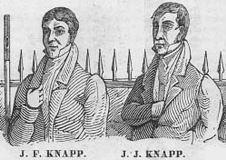 Francis & Joseph Knapp
Murderers · USA · 1930
Francis Knapp and Joseph Jenkins Knapp were the brothers known as the Knapps. T…
1 victim
Francis & Joseph Knapp
Murderers · USA · 1930
Francis Knapp and Joseph Jenkins Knapp were the brothers known as the Knapps. T…
1 victim
 Joan & Elizabeth Shannon
Murderers · USA · 2002
July 23, 2002 — Elizabeth Shannon shot and killed her father, Army Maj. David S…
1 victim
Joan & Elizabeth Shannon
Murderers · USA · 2002
July 23, 2002 — Elizabeth Shannon shot and killed her father, Army Maj. David S…
1 victim
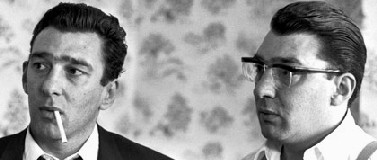 Ronald & Reginald Kray
Murderers · United Kingdom · 1966
Ronald “Ronnie” Kray and Reginald “Reggie” Kray were English gangsters who were…
2 victims
Ronald & Reginald Kray
Murderers · United Kingdom · 1966
Ronald “Ronnie” Kray and Reginald “Reggie” Kray were English gangsters who were…
2 victims
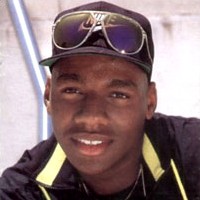 Christopher Roney
Murderer · USA · 1996
Christopher Roney (born December 15, 1969 in Philadelphia, Pennsylvania), known…
1 victim
Christopher Roney
Murderer · USA · 1996
Christopher Roney (born December 15, 1969 in Philadelphia, Pennsylvania), known…
1 victim
 Carolyn Riley
Murderer · USA · 2006
Carolyn Riley was convicted in Plymouth County Superior Court of second-degree…
1 victim
Carolyn Riley
Murderer · USA · 2006
Carolyn Riley was convicted in Plymouth County Superior Court of second-degree…
1 victim
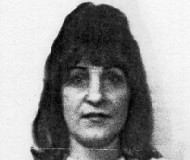 Cindy Lou Landress
Murderer · USA · 1988
Cindy Lou Landress — appellant/defendant · Leonard Fowler — victim, found dead…
1 victim
Cindy Lou Landress
Murderer · USA · 1988
Cindy Lou Landress — appellant/defendant · Leonard Fowler — victim, found dead…
1 victim
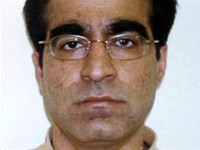 Zainulabedin Zaidi
Murderer · United Kingdom · 2000
Zainulabedin Zaidi murdered Shazia Zaidi and their children, Saba Zaidi and Zee…
3 victims
Zainulabedin Zaidi
Murderer · United Kingdom · 2000
Zainulabedin Zaidi murdered Shazia Zaidi and their children, Saba Zaidi and Zee…
3 victims
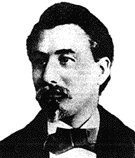 Louis Wagner
Murderer · USA · 1873
Louis Wagner had lived on Smuttynose Island with six Norwegian immigrants: Mare…
2 victims
Louis Wagner
Murderer · USA · 1873
Louis Wagner had lived on Smuttynose Island with six Norwegian immigrants: Mare…
2 victims
 Steven Sueppel
Mass murderer · USA · 2008
Steven Sueppel (charged former Hills Bank and Trust Company executive; resident…
5 victims
Steven Sueppel
Mass murderer · USA · 2008
Steven Sueppel (charged former Hills Bank and Trust Company executive; resident…
5 victims
- Gender
- male
- Country
- USA
- Location
- Tennessee, Kentucky, Illinois, and Mississippi, USA
- Date of birth
- Micajah: 1748 / Wiley: 1750
- Characteristics
- serial rapist, cannibalism, torture, kidnapping, rape, murder-suicide
- Victim profile
- Men, women, and children
- Method of murder
- Several
- Date(s) of murder
- Late 18th century
- Years active
- —
- Date of arrest
- —
- Status
-
Executed
Micajah “Big” Harpe was killed in Kentucky on August 24, 1799; Wiley “Little” Harpe was sentenced to death and executed by hanging in Mississippi on February 8, 1804
Case record: Harpe brothers
Background
Micajah “Big” Harpe (1748? – August 1799) and Wiley “Little” Harpe (1750? – February 8, 1804) were murderers, highwaymen, and river pirates who operated in Tennessee, Kentucky, Illinois, and Mississippi in the late 18th century. Their crimes appear to have been motivated more by blood lust than financial gain.
Many historians called them the United States’ first true serial killers.
They were said to have been brothers, though some sources said cousins. The Harpes were born in Orange County, North Carolina to Scottish parents. Their father or uncles were allegedly of Tory allegiance, who fought on the British side during the Revolutionary War.
Micajah “Big” Harpe was known as “Big Harpe” and also as Joshua Harper (before 1768, probably c. 1748). Wiley “Little” Harpe was known as “Little Harpe” and also as William Harper (before 1770, probably c. 1750).
Some accounts described the Harpes as first cousins named William and Joshua Harper (who would later take the alias Harpe). Their fathers were described as John and William Harper, who settled in Orange County, North Carolina between 1761 and 1763. The Harper patriarchs were described as loyal to the British Crown and were known as Royalists, Kings Men, Loyalists, and Tories, and may also have been regulators involved in the North Carolina Regulator War. Their neighbors described as anti-British Crown were known as Whigs, Rebels, and Patriots.
Around April or May 1775, the young Harper cousins left North Carolina and went to Virginia to find overseer jobs on a slave plantation.
At the outbreak of the American Revolution, little was known of the Harpes’ whereabouts. One account said they joined a Tory rape gang in North Carolina and took part in the kidnapping of three teenage girls, with a fourth girl being rescued by Captain Wood. The gangs were described as taking advantage of the war by raping, stealing, and murdering, and burning and destroying property, especially farms, of patriot colonists.
An interview was described as being conducted with the Patriot soldier Frank Wood, who was the son of Captain James Wood and whose sister was Susan Wood Harpe, later kidnapped and married by Micajah “Big” Harpe. Frank Wood claimed to have seen the Harpe brothers serving “loosely” as Tory militia under the command of Lieutenant Colonel Banastre Tarleton’s British Legion at the Battles of Blackstocks (November 20, 1780) and Cowpens (January 17, 1781). The Harpes were also described as appearing in the same supporting role at the Battle of King’s Mountain (October 7, 1780) under British commander Major Patrick Ferguson. Those battles were described as resulting in major Patriot victories.
After the British defeat at Yorktown in 1781, the Harpes were described as leaving North Carolina, dispersing with their Indian allies, the Chickamauga Cherokees, to Tennessee villages west of the Appalachian Mountains.
On April 2, 1781, the Harpes were described as joining war parties of four hundred Chickamauga and attacking the Patriot frontier settlement of Bluff Station at Fort Nashborough (now Nashville, Tennessee), which was described as being assaulted by them again on either July 20, 1788, or April 9, 1793.
A Captain James Leiper was described as being killed in the 1781 attack on the fort. A further account said he may have been related to the John Leiper who was later involved in the killing of Micajah “Big” Harpe in Kentucky in 1799.
On August 19, 1782, the Harpes were described as accompanying a British-backed Chickamauga Cherokee war party to Kentucky at the Battle of Blue Licks, where they helped defeat an army of Patriot frontiersmen.
During the Harpe brothers’ early frontier period among the Chickamauga Cherokee, they lived in the village of Nickajack near Chattanooga, Tennessee, for approximately twelve to thirteen years. During this span, they kidnapped Maria Davidson and later Susan Wood, and made them their women. In 1794, the Harpes and their women abandoned their Indian habitation before the main Chickamauga Cherokee village of Nickajack in eastern Tennessee was destroyed in a raid by American settlers.
They later relocated to Powell’s Valley around Knoxville, Tennessee, where they stole food and supplies from local pioneers.
The whereabouts of the Harpes were described as unknown between the summer of 1795 and spring of 1797. By spring they were described as dwelling in a cabin on Beaver’s Creek near Knoxville.
On June 1, 1797, Wiley Harpe married Sarah Rice, recorded in the Knox County, Tennessee marriage records.
In 1797, the Harpes began their trail of death in Tennessee, Kentucky, and Illinois.
The offence
One account described the Harpes as butchering anyone at the slightest provocation, even babies. R.E. Banta wrote that Micajah Harpe bashed his infant daughter’s head against a tree because her constant crying annoyed him, and described this as the only crime for which he later confessed genuine remorse.
During their time near Knoxville, Tennessee, the Harpes were described as being driven from the town after being charged with stealing hogs and horses. They were also accused of murdering a man named Johnson. His body was described as being found in a river, ripped open and weighted with stones, with the method described as becoming a characteristic of the Harpes’ murders.
The Harpes were believed to have murdered a peddler named Peyton, taking his horse and some of his goods. They were described as murdering two travelers from Maryland. The narrative also included a death of John Langford, described as traveling from Virginia to Kentucky, with a local innkeeper pointing authorities to the Harpes; the criminal pair was described as being pursued, captured, and jailed in Danville, Kentucky, but they escaped.
A posse sent after them was described as finding the young son of a man who assisted the authorities dead and mutilated in retaliation by the Harpes.
On April 22, 1799, Kentucky Governor James Garrard placed a three-hundred dollar reward on each of the Harpes’ heads.
After fleeing northward, the Harpes were described as killing two men named Edmonton and Stump. They were described as coming upon three men encamped near the mouth of the Saline River in southern Illinois and killing them.
The Harpes then made their way to Cave-in-The-Rock in southern Illinois, a stronghold of river pirate criminal gang leader Samuel Mason. They were described as holed up with the Samuel Mason Gang with their wives and three children in tow. After the Mason Gang was described as forcing the Harpes to leave, the Harpes returned to eastern Tennessee and continued a murder spree.
Specific deaths described in July 1798 included a farmer named Bradbury, a man named Hardin, and a boy named Coffey. Other bodies were described as being discovered including William Ballard, who was disemboweled and thrown in the Holton River; James Brassel, who was discovered on Brassel’s Knob with his throat slashed; and John Tully.
Additional deaths described included John Graves and his teenage son found dead with their heads axed in south central Kentucky. In Logan County, the Harpes were described as killing a little girl, a young slave, and an entire family they found asleep in their camp.
In August, a few miles northeast of Russellville, Kentucky, Big Harpe was described as bashing his infant daughter’s head against a tree because her constant crying annoyed him, described as the only crime for which he would later confess genuine remorse.
That same month, a man named Trowbridge was described as being found disemboweled in Highland Creek. When the Harpes were given shelter at the Stegall home in Webster County, they were described as killing an overnight guest named Major William Love and Mrs. Moses Stegall’s four-month-old baby boy, whose throat was slit when he cried. Mrs. Stegall was described as being murdered after she screamed at the sight of her infant being killed.
A further account described that the Harpes confessed to killing a confirmed thirty-nine people, and that an estimated combined total may have numbered more than fifty.
Investigation
In July 1799, John Leiper raised a posse to avenge the murder of Mrs. Stegal, including Moses Stegal, the victim’s husband. Leiper reached Harpe first and managed to shoot Big Harpe. After a scuffle with a tomahawk, Leiper overcame Harpe.
When Stegal arrived, the narrative described decapitation of Harpe and the placement of the head on a pole at a crossroads still known as “Harpe’s Head” or Harpe’s Head Road in Webster County, Kentucky.
Later, the narrative described that Little Harpe used an alias of John Setton until he was captured in 1803 in an effort to get a reward of his own on the head of an outlaw, Samuel Mason. Little Harpe was captured in 1803 and was tried and hanged on February 8, 1804.
Arrest
The narrative described that the posse called for the Harpes to surrender and that the Harpes attempted to flee.
Micajah Harpe was shot in the leg and back by Leiper. The narrative described that Leiper soon caught up with Big Harpe and pulled him from his horse, subduing the outlaw with a tomahawk in a scuffle.
Wiley Harpe successfully escaped the confrontation and rejoined the Mason Gang pirates at Cave-in-The-Rock.
A further account described that Little Harpe was executed in January 1804 and that his heads were cut off and placed high on stakes along the Natchez Trace as a warning.
Trial
Little Harpe and another gang member, Peter Alston, who went by the name “James May,” were described as trying to claim the reward for Samuel Mason. The narrative described that it was unclear whether Mason had died from the wounds sustained during the escape or whether Harpe had killed him.
The narrative described that as they presented the head, Harpe and Alston were recognized as outlaws and arrested. They were quickly recaptured, tried, and sentenced to be hanged.
Sentencing
The narrative described that Wiley Harpe was sentenced to death and executed by hanging in Mississippi on February 8, 1804.
It also described that the heads were cut off and placed high on stakes along the Natchez Trace as a warning to other outlaws.
Appeals
No appeal information was included.
Outcome
Micajah “Big” Harpe was killed in Kentucky on August 24, 1799.
Wiley “Little” Harpe was sentenced to death and executed by hanging in Mississippi on February 8, 1804.
Aftermath
After Micajah “Big” Harpe’s death, the Harpe women were described as apprehended and taken to the Russellville, Kentucky state courthouse and later released. One account stated that Sally Rice Harpe went back to Knoxville, Tennessee, to live in her father’s house. It described that Susan Wood Harpe and Maria Davidson (aka Betsey Roberts Harpe) lived in Russellville for a time.
One narrative described that Susan Wood remarried later and died in Tennessee, and that her daughter went to Texas. Another narrative described that Susan died in Tennessee and that Rothert believed her daughter eventually moved to Texas.
Betsey Roberts Harpe was described as remarrying on September 27, 1803 and later moving with her husband to Canada in 1828, having many children, and dying in the 1860s.
Another narrative described that in 1820 Sally Rice, who had remarried, traveled with her husband and father to their new home in Illinois via the Cave-In-Rock ferry.
A further account described that Betsey Roberts married John Huffstutler on September 27, 1803, and then lived as tenants on Colonel Butlers Plantation, moved to Hamilton County, Illinois in 1828, had many children, and died in the 1860s.
A narrative also described descendants changing their surname to hide the heritage of their infamous ancestors. It stated that the Harpes may have disguised their Tory past from their Patriot neighbors by changing their original name of “Harper” to “Harp,” and that some changed their name significantly. It stated that Wyatt Earp was a famous example said—though unconfirmed—to have been a member of the Harpe family. It stated that there were still descendants of the family today, including those who had changed their surname back to the original spelling.
Other details
Harpe women and later events
One account described the day Micajah Harpe was killed in August 1799, stating the women were left at camp and taken to Henderson and placed in an empty blockhouse. It described that on September 4 they were charged with being parties to the murders of Mary Stegal, her infant son, James, and Captain William Love, and that they were bound over for trial in Russellville but were tried and released in October.
Literature and popular culture
The Harpe saga was described as explored by historian Paul I. Wellman in his book Spawn of Evil, now no longer in print. It was also described that E. Don Harpe wrote books including born wolf DIE WOLF, The Last Rampage of the Terrible Harpes, and Resurrection: Rebirth of the Terrible Harpes, with a third book being written. It described his short work The True Story of America’s First Serial Killers.
A graphic novel described as being written in 2009 by Chad Kinkle and illustrated by Adam Show was titled Harpe America’s First Serial Killers.
The Harpe brothers were described as being among the characters in the stage musical The Robber Bridegroom, adapted by Alfred Uhry and Robert Waldman from the novel by Eudora Welty. The narrative described that in the musical Big Harp had already been decapitated at the beginning of the story, but his disembodied head was still alive, portrayed by an actor whose body was concealed behind scenery.
Robert Hayden’s poem “Theory of Evil” was described as taking the Harpe brothers’ crimes and Big Harpe’s demise as its explicit subject.
A 1941 film version of The Devil and Daniel Webster was described as including both Harpes among the jury the Devil calls, but not appearing in the original story.
Big and Little Harpe were described as appearing in Disneyland’s Davy Crockett miniseries.
The Harpe brothers were described as playing a key role in the Silver John book The Voice Of The Mountain by Manly Wade Wellman, with real-life accounts described as fictionalized and morphed into more supernatural abilities.
The Harpe brothers were described as inspiring Big and Little Drum in Lois McMaster Bujold’s The Sharing Knife: Passage.
Wiley Harpe was described as being the subject of a song on Bob Frank and John Murry’s 2006 album, World Without End.
In 2015, the Investigation Discovery series Evil Kin aired an episode about the Harpe brothers called “Something Wicked in the Woods.”
In the 1941 film The Devil and Daniel Webster (or All That Money Can Buy), Big and Little Harpe were described as part of the “jury of the damned” that Daniel must convince to free Jabez Stone.
The narrative also included earlier historical material credits: James Hall wrote the first histories about the characters in Shawneetown during the 1820s, with his introduction from his 1828 “Letters from the West” quoted as:
“Many years ago, two men, named Harpe, appeared in Kentucky, spreading death and terror wherever they went. Little else was known of them but that they passed for brothers, and came from the borders of Virginia. They had three women with them, who were treated as wives, and several children, with whom they traversed the mountainous and thinly settled parts of Virginia into Kentucky marking their course with blood. Their history is wonderful, as well from the number and variety, as the incredible atrocity of their adventures.”
One narrative included a quote from W. D. Snively Jr. in his book “Satan’s Ferryman” describing the execution scene:
“Suddenly, the outlaws in the cave became aware of terrified screams, hoof beats, and the clatter of dislodged rocks. They ran out of the cave, they could see the horse's neck extended, its legs galloping frantically against the thin air, and tied to its back the naked, screaming prisoner, stark horror on his face. In an instant horse and man were dashed against the rocks.”
People mentioned
- Micajah “Big” Harpe (also Joshua Harper)
- Wiley “Little” Harpe (also William Harper; also John Setton/John Sutton; also “John Setton” or “John Sutton”)
- Susan Wood Harpe
- Betsey Roberts Harpe (also Maria Davidson; also Betsey Roberts)
- Sally Rice Harpe (Sarah Rice)
- Captain James Wood
- Frank Wood
- Lieutenant Colonel Banastre Tarleton
- Major Patrick Ferguson
- Captain James Leiper
- Daniel Boone
- Moses Stegal
- John Leiper
- Mrs. Stegal / Mary Stegal
- Captain William Love (Major William Love)
- Peter Alston (also “James May”)
- Samuel Mason
- Moses Doss
- James Garrard
- Frank Wood (as described in multiple places)
- Frank Wood’s family member Susan Wood Harpe (as Susan Wood Harpe)
- James Hall
- Otto A. Rothert
- T. Marshall Smith
- Otto A. Rothert (as described as believing points about Susan Wood and her daughter)
- R.E. Banta
- Ralph Harrelson
- James Tompkins
- Silas McBee
- Colonel Butlers Plantation (as the plantation where Betsey Roberts and John Huffstutler lived as tenants)

Spotted an error, or have more information about this case?