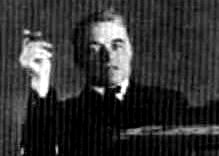
Andrew Kehoe
Mass murderer Leung Ying
Mass murderer · USA · 1928
Leung Ying (also known as Loy Yeung, Wong Gay, and Lim Onn) pleaded guilty to k…
11 victims
Leung Ying
Mass murderer · USA · 1928
Leung Ying (also known as Loy Yeung, Wong Gay, and Lim Onn) pleaded guilty to k…
11 victims
 Henry Layer
Mass murderer · USA · 1920
Henry Layer Henry Layer was born Heinrich C. Layer on November 12, 1884 in Eige…
8 victims
Henry Layer
Mass murderer · USA · 1920
Henry Layer Henry Layer was born Heinrich C. Layer on November 12, 1884 in Eige…
8 victims
 Charles Davis Lawson
Mass murderer · USA · 1929
Charles Davis Lawson was an American tobacco farmer from Stokes County, North C…
7 victims
Charles Davis Lawson
Mass murderer · USA · 1929
Charles Davis Lawson was an American tobacco farmer from Stokes County, North C…
7 victims
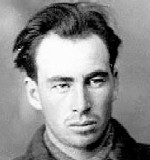 Charles Bannon
Mass murderer · USA · 1930
January 29, 1931 — A mob seized Charles Bannon from the Schafer jail and hanged…
6 victims
Charles Bannon
Mass murderer · USA · 1930
January 29, 1931 — A mob seized Charles Bannon from the Schafer jail and hanged…
6 victims
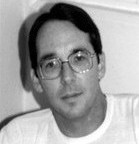 William Zeigler
Mass murderer · USA
William Thomas Zeigler Jr. was prosecuted in Florida for the murders of four pe…
1975 victims
William Zeigler
Mass murderer · USA
William Thomas Zeigler Jr. was prosecuted in Florida for the murders of four pe…
1975 victims
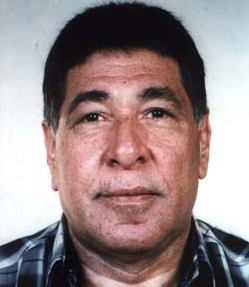 Gameel Al-Batouti
Mass murderer · USA · 1999
Gameel Al-Batouti (also rendered “Gamil ElBatouty” or “El Batouty” in U.S. offi…
216 victims
Gameel Al-Batouti
Mass murderer · USA · 1999
Gameel Al-Batouti (also rendered “Gamil ElBatouty” or “El Batouty” in U.S. offi…
216 victims
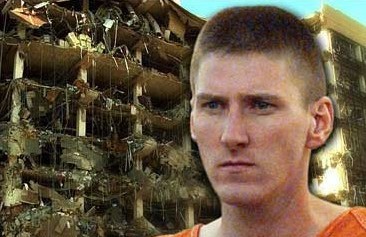 Timothy McVeigh
Mass murderer · USA · 1995
Timothy James McVeigh (April 23, 1968 – June 11, 2001) was a United States Army…
168 victims
Timothy McVeigh
Mass murderer · USA · 1995
Timothy James McVeigh (April 23, 1968 – June 11, 2001) was a United States Army…
168 victims
 Morris Solomon
Serial killer · USA · 1986
Morris Solomon was an Oak Park handyman and serial killer. He was convicted of…
7 victims
Morris Solomon
Serial killer · USA · 1986
Morris Solomon was an Oak Park handyman and serial killer. He was convicted of…
7 victims
 Mijailo Mijailovic
Murderer · Sweden · 2003
Mijailo Mijailović was sentenced to life imprisonment on December 2, 2004. Mija…
1 victim
Mijailo Mijailovic
Murderer · Sweden · 2003
Mijailo Mijailović was sentenced to life imprisonment on December 2, 2004. Mija…
1 victim
 Mario Swain
Murderer · USA · 2002
Mario Swain was a Black male. He had black hair and brown eyes. He was 5'7" tal…
1 victim
Mario Swain
Murderer · USA · 2002
Mario Swain was a Black male. He had black hair and brown eyes. He was 5'7" tal…
1 victim
 Guy Allen
Murderer · USA · 2002
Guy Allen was born on June 15, 1963. He is a male with black hair and brown eye…
2 victims
Guy Allen
Murderer · USA · 2002
Guy Allen was born on June 15, 1963. He is a male with black hair and brown eye…
2 victims
- Gender
- male
- Country
- USA
- Location
- Bath Township, Michigan, USA
- Date of birth
- February 1, 1872
- Age at first offence
- 55
- Characteristics
- child abuse, crime spree, school shooting
- Victim profile
- 3 men, 3 women (including his wife) and 38 children
- Method of murder
- Bombings ( dynamite and hundreds of pounds of pyrotol)
- Date(s) of murder
- May 18, 1927
- Years active
- 1927
- Date of arrest
- —
- Status
-
Died in custody
Kehoe committed suicide the same day by killing himself in the explosions.
Case record: Andrew Kehoe
Status
Andrew P. Kehoe committed suicide the same day by killing himself in the explosions.
The offence
On May 18, 1927, Andrew Kehoe blew up a school in Bath, Michigan, killing 45 people, including 37 children, and later killing 45 people and injuring 58. The bombings comprised the deadliest act of mass murder in a school in U.S. history, claiming more than three times as many victims as the Columbine High School massacre.
Most of the victims were children in second to sixth grades attending the Bath Consolidated School.
Kehoe was upset by a property tax that had been levied to fund the construction of the school building. He blamed the additional tax for financial hardships which led to foreclosure proceedings against his farm. These events provoked Kehoe to plan his attack.
On the morning of May 18, Kehoe first killed his wife and then set his farm buildings on fire. As fire fighters arrived at the farm, an explosion rocked the north wing of the school building, killing many people inside.
Kehoe used a detonator to ignite dynamite and hundreds of pounds of pyrotol that he had secretly planted inside the school. As rescuers started gathering, Kehoe drove up, stopped, and detonated a bomb inside his shrapnel-filled vehicle, killing himself and the school superintendent and killing and injuring several others.
During the rescue efforts, searchers discovered an additional 500 pounds (230 kg) of unexploded dynamite and pyrotol planted throughout the basement of the school’s south wing.
Kehoe’s actions included killing Superintendent Emory Huyck on the morning of May 18. The inquest also determined that the school was blown up as part of a plan and that Kehoe alone, without the aid of conspirators, murdered 43 people in total, including his wife Nellie.
Investigation
Investigators concluded that, based upon the activity at the school and the purchases of explosives, Kehoe’s plan had likely been underway for at least a year.
The reason why certain explosives failed to detonate could never be conclusively determined. Investigators speculated that the initial explosion may have caused a short circuit in the second set of bombs.
Unexploded materials and an alarm clock timed to go off at 9:45 a.m. were found in the south wing. The south-wing explosives were timed to the same time as the north-wing explosion.
Police and fire officials gathered at the Kehoe farm to investigate the fires.
On May 19, investigators identified Nellie Kehoe’s charred body among the ruins of the farm, and the body had been so disfigured it went unnoticed by hundreds who walked past it the previous day.
Investigators found a wooden sign wired to the farm’s fence with Kehoe’s last message, " CRIMINALS ARE MADE, NOT BORN ," written on it.
Arrest
No arrest was described. Kehoe died on May 18, 1927.
Trial
No criminal trial was described. A coroner’s inquest followed.
Coroner's inquest
A coroner arrived at the scene on the day of disaster and swore in six community leaders to serve as an investigative jury. A coroner’s inquest was held the following week.
Dozens of Bath citizens and law enforcement personnel testified before the jury, and the Clinton County Prosecutor conducted the examination.
Although there was never any doubt that Kehoe was the perpetrator, the jury determined whether the school board or its employees were guilty of criminal negligence.
Kehoe’s neighbor Sidney J. Howell testified that after the fire began, Kehoe warned him and three boys to leave the farm, telling them: "Boys, you're my friends. You'd better get out of here and go to the school house."
Three telephone linemen working near Bath testified that after first going to the farm and then to the school, Kehoe passed them en route, and they saw him reach the school right before them. The linemen testified that Kehoe’s car swerved to the right and stopped in front of the building, and that in the next instant the car blew up and one of the linemen was struck by shrapnel.
This testimony contradicted statements from others that Kehoe paused after stopping and called Superintendent Huyck over before blowing up the vehicle.
After more than a week of testimony, the jury exonerated the school board and its employees.
In its verdict, the jury concluded that Kehoe "conducted himself sanely and so concealed his operations that there was no cause to suspicion any of his actions; and we further find that the school board, and Frank Smith, janitor of the school building, were not negligent in and about their duties, and were not guilty of any negligence in not discovering Kehoe's plan."
The inquest determined that Kehoe murdered Superintendent Emory Huyck on the morning of May 18.
It was also the jury’s verdict that the school was blown up as part of a plan and that Kehoe alone, without the aid of conspirators, murdered 43 people in total, including his wife Nellie.
Suicide was adjudicated to be the cause of Andrew Kehoe’s death.
Outcome
The disaster involved a series of bombings in Bath Township, Michigan, on May 18, 1927.
Kehoe killed 45 people in total, including:
- 38 children at the school (with additional child deaths later attributed to the disaster), and
- seven adults.
In addition, 58 people were injured.
Kehoe died by suicide the same day.
Aftermath
Aid and relief
The American Red Cross took the lead in providing aid and comfort to victims. The Lansing Red Cross headquarters were kept open until 11:30 that night to answer telephone calls, update the list of dead and injured, and provide information and planning services for the following day.
The Red Cross managed donations to pay for medical expenses of survivors and burial costs of deceased.
In a few short weeks, $5,284.15 was raised through donations, including $2,500 from the Clinton County board of supervisors and $2,000 from the Michigan legislature.
Unlike the Columbine High School massacre, there was no legislative response by the state or federal governments aimed at preventing a recurrence, although pyrotol was quietly taken off the market.
Funerals and public response
Over the next few days, there were multiple funerals, with the most, eighteen, held on Saturday, May 22.
The disaster made the front pages of national newspapers until news of Charles Lindbergh’s completion of the first solo transatlantic flight broke on May 23, 1927.
Vehicles from outlying areas and surrounding states descended upon Bath by the thousands. Over 100,000 vehicles passed through on Saturday alone.
Some Bath citizens regarded this traffic as an unwarranted intrusion into their time of grief, but most accepted it as a show of sympathy and support from surrounding communities.
The Ku Klux Klan interjected that the Roman Catholic Kehoe’s actions were the result of his adherence to the stance of the Roman Catholic Church against "Protestant or godless schools".
Burial
Kehoe’s body was eventually claimed by his sister. Without ceremony, he was buried in an unmarked grave in an initially unnamed cemetery.
Later, it was revealed that Kehoe was buried in the paupers’ section of Mt. Rest Cemetery, St. Johns, in Clinton County.
Nellie Kehoe was buried in Mount Hope Cemetery in Lansing by her family under her maiden name of Price.
Memorials and rebuilding
Governor Fred Green created the Bath Relief Fund using money supplied by donors and the state and local governments. The school board began a separate fund for the repair of the school building.
School resumed on September 5, 1927, and for the 1927–28 school year was held in the community hall, township hall, and two retail buildings.
The board appointed O. M. Brant of Luther, Michigan, to succeed Huyck as superintendent.
Lansing architect Warren Holmes donated construction plans, and the school board approved the contracts for the new building on September 14.
On September 15, Michigan’s United States Senator James Couzens presented his personal check for $75,000 to the Bath construction fund to build the new school.
In 1928, artist Carlton W. Angell presented the board with a statue titled "Girl With a Kitten." The statue was dedicated to the courage and determination of the people of Bath. The sculpture was financed by penny donations from young students from the state of Michigan. It was rumored that the donated pennies were melted down to make the cast of the statue.
The board demolished the damaged portion of the school and constructed a new wing with the donated funds. The "James Couzens Agricultural School" was dedicated on August 18, 1928.
In 1975, the Couzens building was demolished and a small park dedicated to the victims replaced it. At the center of the park is the cupola of the building, the only part preserved. At the park entrance, a bronze plaque affixed to a white boulder bears the names of the adults and children killed.
Additional death attributed to the disaster
On August 22, some three months after the bombing, fourth-grader Beatrice Gibbs died following hip surgery and was counted as the 45th and final death directly attributable to the Bath School disaster.
Timeline
- May 18, 1927 — Kehoe detonated firebombs at approximately 8:45 a.m. and the north wing of the school exploded at 9:45 a.m.; Kehoe’s vehicle explosion and subsequent events killed Kehoe, Superintendent Emory Huyck, and others; suicide was adjudicated as the cause of Kehoe’s death.
- May 19, 1927 — Investigators identified Nellie Kehoe’s charred body among the ruins of the farm.
- May 22, 1927 — The most funerals occurred, with eighteen held on Saturday, May 22.
- May 23, 1927 — Charles Lindbergh’s completion of the first solo transatlantic flight broke on the national news front pages after the Bath disaster had been on front pages.
- September 5, 1927 — School resumed.
- September 14, 1927 — The school board approved contracts for the new building.
- September 15, 1927 — Senator James Couzens presented a personal check for $75,000 to the Bath construction fund.
- August 18, 1928 — The "James Couzens Agricultural School" was dedicated.
- April 22, 1999 — An interview described an elderly survivor, M. Josephine Vail, speaking publicly about her experience of the 1927 explosion.
- August 22 — Fourth-grader Beatrice Gibbs died following hip surgery and was counted as the 45th and final death directly attributable to the Bath School disaster.
- 1975 — The Couzens building was demolished and a small park dedicated to the victims replaced it.
Background
Bath Township and the school
Bath Township was described as a small community ten miles northeast of Lansing, Michigan, containing the unincorporated village of Bath. In the early 1920s, the area was primarily agricultural.
In 1922, Bath voters voted to form a district for the purpose of funding and constructing a consolidated school. The school opened with 236 students enrolled, ranging from the first to twelfth grades.
The early 20th century saw the disappearance of many small one-room schools where different grades shared the same classroom and teacher. Educators believed children received a better and more complete education if students attended a single school at one location, with grades age-divided into classes and facilities of higher quality.
After years of debate, when Bath Township created the district, it raised property taxes to pay for the project. New taxes were imposed on landowners, including Andrew Kehoe.
Andrew Kehoe’s life and role
Andrew Kehoe was born in Tecumseh, Michigan, on February 1, 1872, in a family of thirteen children. Kehoe’s mother died when he was young, and his father remarried.
It was reportedly said that Kehoe often fought with his stepmother. When Kehoe was fourteen, the family’s stove exploded while she was attempting to light it. The oil fueling the stove soaked her, and flames set her on fire. Andrew watched his stepmother burn for a few minutes before dumping a bucket of water on her. She later died from the injuries. The stove malfunction was left unresolved, and Kehoe was not charged.
Kehoe attended Tecumseh High School and Michigan State College (later Michigan State University), where he met his wife, Ellen "Nellie" Price, daughter of a wealthy Lansing family.
They married in 1912. They moved around until 1919, when the couple bought a 185-acre (75-hectare) farm outside the village of Bath from Nellie’s aunt for $12,000, paying $6,000 in cash and taking out a $6,000 mortgage.
Kehoe was regarded by neighbors as an intelligent man who grew impatient with those who disagreed with him. Neighbors recalled that Kehoe was always neat, dressed meticulously, and was known to change his shirt at midday or whenever it became even slightly dirty. Neighbors also recounted that Kehoe was cruel to his farm animals, having once beaten a horse to death.
M.J. "Monty" Ellsworth wrote: "He never farmed it as other farmers do and he tried to do everything with his tractor. He was in the height of his glory when fixing machinery or tinkering. He was always trying new methods in his work, for instance, hitching two mowers behind his tractor. This method at different times did not work and he would just leave the hay standing. He also put four sections of drag and two rollers at once behind his tractor. He spent so much time tinkering that he didn't prosper."
With a reputation for thriftiness, Kehoe was elected treasurer of the Bath Consolidated School board in 1924. While on the board, Kehoe fought for lower taxes. He blamed the previous property tax levy for his family’s poor financial condition and repeatedly accused superintendent Emory Huyck of financial mismanagement.
Kehoe was appointed Bath Township Clerk in 1925 but was unsuccessful in retaining the position in the election later that year.
During this time Nellie Kehoe was chronically ill with tuberculosis, and her frequent hospital stays may have played a role in putting the family into debt.
At the time of the bombing, Kehoe had ceased making mortgage and homeowner’s insurance payments, and the mortgage lender had begun foreclosure proceedings against the farm.
School board conflict and superintendent hostility
Kehoe openly opposed the creation of the consolidated school in 1924, believing it would create a heavy tax burden. During his time on the board, he clashed with the school superintendent and other board members.
He was described by those who knew him as "a surly and disliked character."
Purchase and planting of explosives
There was no clear indication as to when Kehoe conceived and planned the steps leading to the ultimate events. A subsequent investigation concluded that based upon activity at the school and purchases of explosives his plan had likely been underway for at least a year.
In the winter of 1926, the board asked Kehoe to perform maintenance inside the school building. He was regarded as a talented handyman and known to be familiar with electrical equipment, and he had free access to the building whose presence was never questioned because he was a board member appointed to conduct repairs.
Beginning in the summer of 1926, Kehoe purchased over a ton of pyrotol. Farmers used pyrotol for excavation during the era.
In November 1926, Kehoe drove to Lansing and purchased two boxes of dynamite at a sporting goods store.
Neighbors reported hearing explosions set off on the farm and recalled conversations where Kehoe explained he used dynamite for tree stump removal.
The day of the disaster: warning signs and preparations
There were warning signs prior to the events.
Kehoe passed out employee paychecks the prior week and told bus driver Warden Keyes: "My boy, you want to take good care of that check as it is probably the last check you will ever get."
Teacher Bernice Sterling telephoned Kehoe two days before the blast and asked to use his grove for a class picnic. Kehoe told her that if she "wanted a picnic she would better have it at once."
Prior to May 18, Kehoe loaded the back seat of his car with metal debris, including old tools, nails, pieces of rusted farm machinery, digging shovels, and anything else capable of producing shrapnel during an explosion. After filling the back seat, he placed a large cache of dynamite behind the front seat and a loaded rifle on the passenger’s seat.
Records at Lansing’s St. Lawrence Hospital reflected that Nellie Kehoe had been discharged on May 16. Between her release and the bombing two days later, Kehoe killed Nellie by blunt force trauma to the head with some unknown heavy object.
Nellie Kehoe’s body was found in a wheelbarrow located in the rear of the farm’s chicken coop. Piled around the cart were silverware, jewels, and a metal cash box. Ashes of several bank notes could be seen through a slit in the cash box.
Kehoe completely wired the farm, and inside every building inserted homemade pyrotol firebombs. Farm animals were found tied up in their enclosures, apparently to ensure their deaths in the subsequent fire.
At approximately 8:45 a.m., Kehoe detonated the firebombs. Neighbors noticed the fire and volunteer fire departments from all over the area began rushing to the scene.
At 9:45 a.m., an explosion was heard from the school building. Rescuers heading to the Kehoe fire turned back and headed toward the school. Parents in the rural community also rushed to the school.
Explosion at the school and vehicle detonation
First-grade teacher Bernice Sterling recounted the explosion to an Associated Press reporter, saying: "It seemed as though the floor went up several feet", and she added: "After the first shock I thought for a moment I was blind. When it came the air seemed to be full of children and flying desks and books. Children were tossed high in the air; some were catapulted out of the building."
The north wing collapsed. Parts of the walls crumbled, and the edge of the roof fell to the ground.
Monty Ellsworth recounted: "There was a pile of children of about five or six under the roof and some of them had arms sticking out, some had legs, and some just their heads sticking out. They were unrecognizable because they were covered with dust, plaster, and blood. There were not enough of us to move the roof." Ellsworth volunteered to drive back to his farm and obtain heavy rope from his slaughterhouse needed to pull the structure off the children’s bodies.
On the way back to his farm, Ellsworth reported seeing Kehoe in his car heading toward the school. Ellsworth reported that Kehoe "He grinned and waved his hand; when he grinned, I could see both rows of his teeth," and Ellsworth said he was heading in the opposite direction toward the school.
The scene was chaotic. Robert Gates recounted: "mother after mother came running into the school yard, and demanded information about her child and, on seeing the lifeless form lying on the lawn, broke into sobs. In no time more than 100 men were at work tearing away the debris of the school, and nearly as many women were frantically pawing over the timber and broken bricks for traces of their children."
About a half hour after the explosion, Kehoe drove up to the school and saw Superintendent Huyck. Kehoe summoned the superintendent over to his vehicle.
According to one eyewitness, when Huyck drew close, Kehoe pulled out his rifle and fired into the back seat. The resulting explosion killed Kehoe, the superintendent, Postmaster Glenn O. Smith, and Smith’s father-in-law Nelson McFarren, a retired farmer.
Cleo Claton, an eight-year-old second grader, had wandered out of the collapsed school building and was killed by shrapnel from the exploding vehicle.
Several others were injured by shrapnel that flew through the crowd.
After Kehoe’s car exploded, Ellsworth recounted: "I saw one mother, Mrs. Eugene Hart, sitting on the bank a short distance from the school with a little dead girl on each side of her and holding a little boy, Percy, who died a short time after they got him to the hospital. This was about the time Kehoe blew his car up in the street, severely wounding Perry, the oldest child of Mr. and Mrs. Hart."
O.H. Buck, foreman of the road crew, recalled: "I began to feel as though the world was coming to an end. I guess I was a bit hazy. Anyway, the next thing I remember I was out on the street. One of our men was binding up the wounds of Glenn Smith, the postmaster. His leg had been blown off. I went back to the building and helped with the rescue work until we were ordered to stop while a search was made for dynamite."
Rescue efforts and medical response
Telephone operators stayed at their stations for hours to summon doctors, undertakers, area hospitals, and others who might help.
The Lansing Fire Department sent three men and the city’s chemical truck. The local physician was Dr. J.A. Crum, and he and his wife, a nurse, had served in World War I and returned to Bath to open a pharmacy. After the explosion, the Crums turned their drugstore into a triage center.
The dead were removed to the town hall, now converted into a morgue. Private citizens used their automobiles as additional ambulances to take survivors and family members to area hospitals.
By the afternoon, some 13 ambulances were at the township hall to transport the dead to undertakers.
Eventually, 34 firefighters and the Chief of the Lansing Fire Department arrived on the scene, along with several Michigan State Police officers who managed traffic to and from the scene.
The injured and dying were transported to Sparrow Hospital and St. Lawrence Hospital in Lansing.
The construction of St. Lawrence Hospital had been financed in large part by Lawrence Price, Nellie Kehoe’s uncle and formerly an executive in charge of Oldsmobile’s Lansing Car Assembly.
Governor Fred Green arrived during the afternoon and assisted in relief work, carting bricks away from the scene. The Lawrence Baking Company of Lansing sent a truck filled with pies and sandwiches, which were served to rescuers in the township’s community hall.
The bombing destroyed the north wing of the school.
During the search, rescuers found an additional 500 pounds (230 kg) of dynamite Kehoe had placed in the south wing that failed to detonate. The search was halted so Michigan State Police could disarm the devices; after that was completed and a sweep of the building was made, recovery efforts recommenced.
Unexploded explosives
In the south wing, State Police found unexploded materials along with an alarm clock timed to go off at 9:45 a.m. Investigators were unable to conclusively determine why the explosives failed to detonate.
Victims: chronology and deaths
Died before the bombings
Nellie Kehoe, age 52, wife of Andrew Kehoe.
Arnold V. Bauerle, age 8, third grade student. Henry Bergan, age 14, sixth grade student. Herman Bergan, age 11, fourth grade student. Emilie M. Bromundt, age 11, fifth grade student. Robert F. Bromundt, age 12, fifth grade student. Floyd E. Burnett, age 12, sixth grade student. Russell J. Chapman, age 8, fourth grade student. F. Robert Cochran, age 8, third grade student. Ralph A. Cushman, age 7, third grade student. Earl E. Ewing, age 11, sixth grade student. Katherine O. Foote, age 10, sixth grade student. Margory Fritz, age 9, fourth grade student. Carlyle W. Geisenhaver, age 9, fourth grade student. George P. Hall Jr., age 8, third grade student. Willa M. Hall, age 11, fifth grade student. Iola I. Hart, age 12, sixth grade student. Percy E. Hart, age 11, third grade student. Vivian O. Hart, age 8, third grade student. Blanche E. Harte, age 30, fifth grade teacher. Gailand L. Harte, age 12, sixth grade student. LaVere R. Harte, age 9, fourth grade student. Stanley H. Francis O. Hoeppner, age 13, sixth grade student. Cecial L. Hunter, age 13, sixth grade student. Doris E. Johns, age 8, third grade student. Thelma I. MacDonald, age 8, third grade student. Clarence W. McFarren, age 13, sixth grade student. J. Emerson Medcoff, age 8, fourth grade student. Emma A. Nickols, age 13, sixth grade student. Richard D. Richardson, age 12, sixth grade student. Elsie M. Robb, age 12, sixth grade student. Pauline M. Shirts, age 10, fifth grade student. Hazel I. Weatherby, age 21, teacher. Elizabeth J. Witchell, age 10, fifth grade student. Lucile J. Witchell, age 9, fifth grade student. Harold L. Woodman, age 8, third grade student. George O. Zimmerman, age 10, third grade student. Lloyd Zimmerman, age 12, fifth grade student.
Killed by explosion of Kehoe's car
G. Cleo Claton, age 8, second grade student. Emory E. Huyck, age 33, superintendent. Andrew P. Kehoe, age 55, Bath School Board/perpetrator. Nelson McFarren, age 74, retired farmer. Glenn O. Smith, age 33, Postmaster.
Died later due to injuries from bombing
Beatrice P. Gibbs, age 10, fourth grade student.
Other details
Injury figure mentioned
The record included an injured count of "43+."
Quoted statements and survivor accounts
AdaBelle McGonigal, who was then 11 and in the fifth grade, remembered: "I don't remember hearing any noise, but I remember flying in the air and seeing things fly between me and the sun," and she added: "But I don't ever remember falling." Her ear was nearly torn off in the blast that killed 38 of her classmates.
In an interview described as being made publicly for the first time, M. Josephine Vail stated she was 13 when the bombing occurred and said: "the loud explosion and kids hollering . . . You never forget." Vail described painful memories of the 1927 explosion that killed 45 people. She also said: "You never forget." She added: "I don't like to go down there." When asked what comfort she could offer to the victims’ families, Vail said: "You gotta just have faith, you gotta be strong and go on, and take care of other people." She said survivors of the Columbine school rampage "will never forget it in their lifetime, but they just gotta go on."
Vail said she was injured and her 7-year-old brother, Ralph, was killed. Vail said she survived because she was outside the building, and her leg was hit by shrapnel when the bomber, Andrew Kehoe, detonated his dynamite-packed pickup truck minutes after the school exploded.
Vail described Kehoe as a former school board treasurer who was "real friendly" and often greeted children outside the school. She also stated that Kehoe clashed with the school superintendent and other board members and was angry about taxes on his farm that helped pay for the school built just four years before the blast.
Vail said her father was among those who rushed to the bloody scene to retrieve bodies, help the 58 injured, and remove "bushels of dynamite" that did not detonate. Vail said body parts were scattered around the site and that she was excused from classes, but she had accompanied her little brother to the building "so he wouldn't be lonely." She said she did not go inside because he was afraid of being teased.
Kehoe’s message on a fence
Kehoe painted on a fence at his farm: "Criminals are Made, Not Born.''
Spotted an error, or have more information about this case?