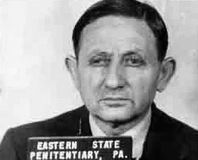
Morris Bolber
Serial killer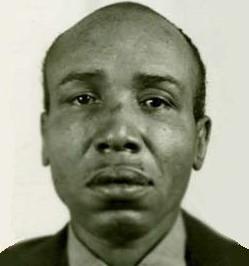 Jake Bird
Serial killer · USA · 1930
October 30, 1947 — Jake Bird broke into the home of Bertha Kludt and her daught…
44 victims
Jake Bird
Serial killer · USA · 1930
October 30, 1947 — Jake Bird broke into the home of Bertha Kludt and her daught…
44 victims
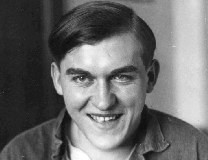 Gordon Northcott
Serial killer · USA · 1928
Gordon Stewart Northcott was a Canadian-born ranch owner who later murdered boy…
20 victims
Gordon Northcott
Serial killer · USA · 1928
Gordon Stewart Northcott was a Canadian-born ranch owner who later murdered boy…
20 victims
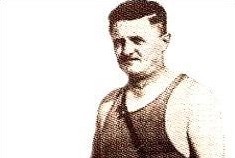 Joe Ball
Serial killer · USA · 1936
Joe Ball (January 6, 1896 – September 24, 1938) was an American serial killer.…
14 victims
Joe Ball
Serial killer · USA · 1936
Joe Ball (January 6, 1896 – September 24, 1938) was an American serial killer.…
14 victims
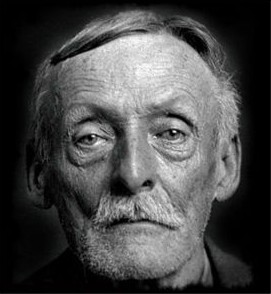 Albert Fish
Serial killer · USA · 1924
Albert Hamilton Fish (May 19, 1870 – January 16, 1936) was an American sado-mas…
10 victims
Albert Fish
Serial killer · USA · 1924
Albert Hamilton Fish (May 19, 1870 – January 16, 1936) was an American sado-mas…
10 victims
 Jarvis Catoe
Serial killer · USA · 1935
Jarvis Theodore Roosevelt Catoe was convicted of killing a woman in Washington…
8 victims
Jarvis Catoe
Serial killer · USA · 1935
Jarvis Theodore Roosevelt Catoe was convicted of killing a woman in Washington…
8 victims
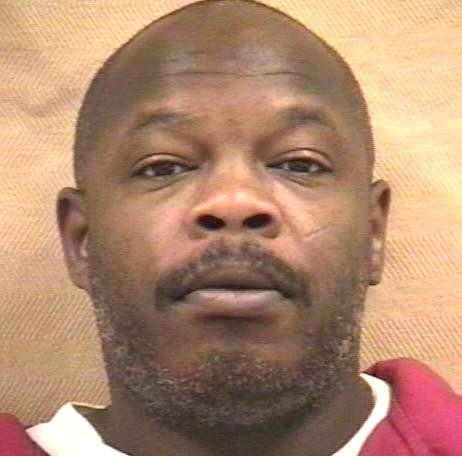 Glen Edward Chapman
Murderer? · USA · 1992
Defendant: Glen Edward Chapman Legal case references: In the Supreme Court of N…
2 victims
Glen Edward Chapman
Murderer? · USA · 1992
Defendant: Glen Edward Chapman Legal case references: In the Supreme Court of N…
2 victims
 Eladio Martinez-Chavez
Murderer · USA · 1984
Everette Amiotte drove Martinez Chavez and Reynaldo Rondon to a place near Alar…
1 victim
Eladio Martinez-Chavez
Murderer · USA · 1984
Everette Amiotte drove Martinez Chavez and Reynaldo Rondon to a place near Alar…
1 victim
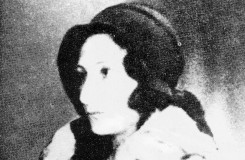 Anna Antonio
Murderer · USA · 1932
Anna Antonio, “Little Anna,” was an Italian woman who was 28 years old. She had…
1 victim
Anna Antonio
Murderer · USA · 1932
Anna Antonio, “Little Anna,” was an Italian woman who was 28 years old. She had…
1 victim
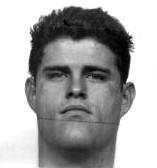 Mikel Derrick
Murderer · USA · 1980
Mikel Derrick was identified as Mikel James Derrick and as offender number #701…
1 victim
Mikel Derrick
Murderer · USA · 1980
Mikel Derrick was identified as Mikel James Derrick and as offender number #701…
1 victim
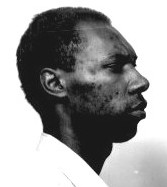 Larry Smith
Murderer · USA · 1978
Larry Smith (offender #643) Larry Smith was convicted for intentionally causing…
1 victim
Larry Smith
Murderer · USA · 1978
Larry Smith (offender #643) Larry Smith was convicted for intentionally causing…
1 victim
- Gender
- male
- Country
- USA
- Location
- Philadelphia, Pennsylvania, USA
- Date of birth
- January 3, 1886
- Age at first offence
- 46
- Characteristics
- drug dealer, history of mental illness, attempt to collect insurance money
- Victim profile
- Men and women
- Method of murder
- Several
- Date(s) of murder
- 1932 - 1939
- Years active
- 1932–1939
- Date of arrest
- May 1, 1939 (surrenders)
- Status
-
Died in custody
Sentenced to life in prison on May 25, 1939; died in prison on February 9, 1954
Case information
Morris Bolber was prosecuted as part of a Philadelphia poison-murder ring involving murder for hire and insurance fraud.
Timeline
- May 25, 1939 — Morris Bolber pled guilty to murder and was sentenced to life imprisonment.
- February 9, 1954 — Morris Bolber died in prison.
- October 27, 1938 — Ferdinando Alfonsi died under mysterious circumstances.
- January 1938 — Vincent P. McDevitt was assigned to a homicide case involving Ferdinando Alfonsi.
- February 2, 1939 — A grand jury indicted Herman and Paul Petrillo, Stella Alfonsi, and Maria Favato.
- February 17, 1939 — The grand jury reached its verdict.
- March 13, 1939 — Herman Petrillo’s trial began in Philadelphia’s City Hall.
- March 21, 1939 — The jury foreman read the verdict in Herman Petrillo’s trial.
- April 22, 1939 — Maria Favato halted her own trial and pleaded guilty to three counts of murder.
- May 21, 1939 — 21 arrests were made in connection with the poison ring.
- September 1939 — Paul Petrillo pled guilty.
- March 31, 1941 — The Commonwealth of Pennsylvania electrocuted Paul Petrillo.
- October 20, 1941 — Herman Petrillo met with the same fate.
- February 15, 1954 — Morris Bolber died of natural causes while awaiting his third parole petition.
Background
Herman and Paul Petrillo were cousins. Herman was an expert counterfeiter and arsonist, with contacts in the criminal world. Paul ran an insurance scam business from the back of his tailor’s shop.
The murder ring operated as a “murder for hire gang” in Philadelphia during the 1930s. The leaders were ultimately convicted of 114 poison-murders and were executed by electric chair in 1941. Paul’s cousin Morris Bolber was among the others in the gang who were sentenced to life imprisonment.
Herman and Paul Petrillo were involved in insurance fraud and counterfeit activity. The murders began in 1931, when Herman enlisted associate thugs to kill men he had arranged to insure in order to collect on double indemnity accident insurance. Herman described the killings euphemistically as “sending [them] to California”.
The gang involved superstitious practices associated with “fattuchieri/e” (wise women, witches). The group offered incantations, powders, and potions to adjust victims’ lives. These “love potions” were usually arsenic or antimony. The gang used life insurance policies on victims, sometimes made out in favor of gang members rather than supposed beneficiaries. Investigators later linked the ring’s activities to rapid succession deaths by arsenic and similar poisonings, often described as violent accidents or natural causes.
The offence
The ring’s operations involved murder and insurance fraud through poisonings. The planned homicide involving Ferdinando Alfonsi was intended to be made to look accidental by using a car and leaving clothing at the scene.
Morris Bolber was identified as part of the scheme that used insurance policies with double indemnity clauses and poisoned victims. The plan described in the case materials included arranging for an intended victim to be killed and then collecting insurance benefits.
Investigation
In early 1939, Assistant District Attorney Vincent P. McDevitt was assigned to the homicide case of Ferdinando Alfonsi, who had died on 27 October 1938. McDevitt received information from undercover detectives and agents Landvoight and Phillips. McDevitt had an informant, George Meyer, who ran a local upholstery cleaning business.
George Meyer encountered Herman Petrillo when Meyer sought money for his business. Petrillo offered to provide Meyer with a large sum of money—legal tender and counterfeit—if Meyer would perform a hit on Alfonsi. Meyer and Landvoight played along with the murder plot, with Meyer hoping for an advance and Landvoight hoping to bust Petrillo’s counterfeiting crimes.
The plan was to steal or buy a car, take Alfonsi out to a dark country road, hit him with the car, and make the murder look accidental. Herman Petrillo preferred stealing a car rather than buying one, while Landvoight and Phillips hoped to obtain money to buy a car so they could arrest Petrillo on counterfeit charges. Petrillo sold them fake tender, ostensibly for buying transportation.
The “play along” plan continued until Meyer visited the intended murder victim. Meyer learned at the front door that Alfonsi was gravely ill, and the agents returned with Phillips and Landvoight. They found Alfonsi with bulging eyes, immobility, and inability to speak. Agents contacted the Philadelphia police.
Investigators found that Ferdinando Alfonsi expired after being admitted to the National Stomach Hospital. The cause of death was heavy metal poisoning. The autopsy revealed tremendous arsenic levels.
Detectives Michael Schwartz, Anthony Franchetti, and Samuel Riccardi were assigned to the case. They thought of rumors about an organized arsenic killing spree and identified patterns: victims tended to be Italian immigrants and to have high levels of arsenic in their bloodstreams. Herman Petrillo and Mrs. Alfonsi were arrested. Mrs. Alfonsi had purchased a life insurance policy for her husband that he had been unaware of.
Arrest and prosecution
Herman Petrillo and Mrs. Alfonsi were arrested. The case proceeded with prosecutions connected to multiple poisonings and insurance fraud schemes.
On February 2, 1939, a grand jury indicted Herman and Paul Petrillo, Stella Alfonsi, and Maria Favato.
McDevitt questioned Petrillo, who provided a list of victims and conspirators, claiming that Paul Petrillo and Morris Bolber were behind the operation.
Petrillo named numerous individuals connected to the alleged poison-murders, including: Luigi LaVecchio, Sophie LaVecchio; Charles Ingrao, Maria Favato; Mollie Starace; Antonio Romualdo, Josephine Romualdo; John Woloshyn, Marie Woloshyn; Dominic Carina, Prospero Lisi, and Peter Stea, all related to Rose Carina; Joseph Arena, Anna Arena; Romaine Mandiuk, Agnes Mandiuk; Pietro Pirolli, Grace Pirolli; Salvatore Carilli, Rose Carilli; Jennifer Pino, Thomas Pino; Antonio Giacobbe, Millie Giacobbe; Guiseppi DiMartino, Susie DiMartino; Ralph Caruso, Christine Cerrone; Philip Ingrao, Maria Favato; Lena Winkleman, Joseph Swartz; Jennie Cassetti, Dominick Cassetti; and Ferdinando Alfonsi, Stella Alfonsi.
The investigations required proving allegations by exhuming victims. McDevitt had Alfonsi’s urine test results and proceeded with prosecuting the Alfonsi case.
Trial
Herman Petrillo trial
Herman Petrillo’s trial began on March 13, 1939 in Philadelphia’s City Hall. The presiding judge was Harry McDevitt (no relation to D.A. Vincent McDevitt). The judge was described as “Hanging Harry”.
Milton Leidner was the defense attorney for Petrillo.
Thomas Shearn testified about Petrillo taking him to see Ferdinando Alfonsi on February 9, 1939. Luigi Cissone testified that he helped Petrillo get insurance on the ailing Alfonsi. Secret Service informant Meyer and undercover agent Stanly Phillips testified about Petrillo’s attempts to have them kill Alfonsi. A druggist testified that Petrillo attempted to purchase typhoid germs and similar poisons. A physician testified about arsenic quantities found during an autopsy of Alfonsi.
Petrillo took the stand and denied the accusations, spending three hours and 15 minutes denying the state’s accusations.
On March 21, 1939, the jury foreman, 42-year-old Margaret Skeen, read the verdict. The jury found Petrillo guilty with a recommendation for death. The judge banged his gavel to bring order after the defendant became enraged and lunged toward the foreman.
When the courtroom settled down, Judge McDevitt addressed the jurors. He said:
“You can see how mean and vicious this man is, he told the jurors. You now realize that was the only verdict you could have returned.”
Judge McDevitt sentenced Herman Petrillo to die in Pennsylvania’s electric chair.
After the verdict, defense attorney Leidner apologized to the court. Leidner said:
“I'm sorry, he said. I wouldn't have defended this man if I had known he was such scum. There would be further justice carried out.”
Investigators announced to the press that 70 bodies would be exhumed and examined for signs of arsenic.
Maria Favato plea
Maria Favato was the next member to go to trial. She halted her own trial and pleaded guilty to three counts of murder, including both her stepson and her own husband. The New York Times reported “Woman Poisoner Confesses at Trial, blared The New York Times on April 22, 1939.” Maria’s confession included:
“I might just as well get it over with, she said. Let them send me to the chair. What have I got to live for?”
Paul Petrillo guilty plea and sentencing
After Maria Favato changed her plea, Herman Petrillo agreed to cooperate with the prosecution. By May 21, 1939, 21 arrests were made. Paul Petrillo pled guilty in September 1939. Paul was sentenced to die in the electric chair.
Sentencing
On May 25, 1939, Morris Bolber pled guilty to murder. His plea resulted in a life sentence. He was sentenced to life imprisonment.
Paul Petrillo was sentenced to die in the electric chair. The Commonwealth of Pennsylvania electrocuted Paul Petrillo on March 31, 1941.
Herman Petrillo was also sentenced to die in the electric chair. Herman Petrillo was electrocuted on October 20, 1941.
Rose Carina was found not guilty following a brief jury trial.
After convictions and guilty pleas, 13 men and women besides Bolber and the Petrillos were either convicted of or pled guilty to first-degree murder. Those convicted killers served long sentences, with the shortest being not less than 14 years.
Appeals
No appeal outcome was included for Morris Bolber.
Outcome
The poison ring involved a murder for hire gang and insurance fraud. The leaders’ convictions and executions occurred in 1941. Morris Bolber was sentenced to life imprisonment.
Aftermath
After the poison ring trials, District Attorney Vincent McDevitt built a career. He left public service in 1947 and later became vice president of the Philadelphia Electric Company.
Written accounts of the poison ring mentioned witchcraft and described the Petrillos and Morris Bolber as witchdoctors or cult leaders. The allegations were presented as not having merit and being described as likely invented by reporters of the time.
The motive described for the ring’s activities was money obtained by means of murder and insurance fraud. It was later estimated that the group netted at least $100,000 before the arrest of its members.
Other details
A matrimonial agency was described as being run by Herman Petrillo and Morris Bolber to find new husbands for widows of victims. After widows married new spouses, the members of the ring would do away with the insured and collect the money.
Ferdinando Alfonsi’s death involved heavy metal poisoning. The autopsy showed tremendous arsenic levels. The case included discussion of arsenic’s effects on the body, including heat and irritation in throat and stomach, vomiting, purging with rice-water stools, cramps in calf muscles, restlessness, convulsions, prostration, fainting, somnolence, dizziness, delirium, extreme prostration, and coma. It was also stated that while some cases could be treated if caught in time, the majority of victims succumbed to the poison and died.
A discrepancy in the prison death timing was present in the materials: Morris Bolber was said to die in prison on February 9, 1954, and separately to die of natural causes while awaiting his third parole petition on February 15, 1954.

Spotted an error, or have more information about this case?