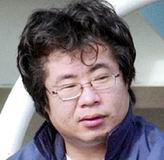
Kaoru Kobayashi
Murderer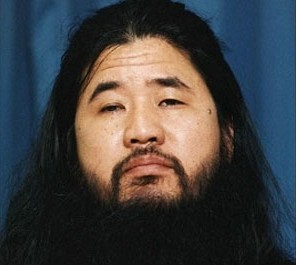 Shoko Asahara
Murderer · Japan · 1995
Shoko Asahara was the founder of Japan's controversial Buddhist religious group…
12 victims
Shoko Asahara
Murderer · Japan · 1995
Shoko Asahara was the founder of Japan's controversial Buddhist religious group…
12 victims
 Masahiro Kanagawa
Murderer · Japan · 2008
Masahiro Kanagawa (金川 真大; Kanagawa Masahiro; born 1983) was a Japanese man. · M…
2 victims
Masahiro Kanagawa
Murderer · Japan · 2008
Masahiro Kanagawa (金川 真大; Kanagawa Masahiro; born 1983) was a Japanese man. · M…
2 victims
 Lorraine Thorpe
Homicide · United Kingdom · 2009
Lorraine Thorpe was 15 at the time of the killings and was later 16. Desmond Th…
2 victims
Lorraine Thorpe
Homicide · United Kingdom · 2009
Lorraine Thorpe was 15 at the time of the killings and was later 16. Desmond Th…
2 victims
 Rutendra Raghunandan
Murderer · USA · 2003
Thursday, September 11, 2003 (11:50 PM) — Rutendra Raghunandan went to his wife…
3 victims
Rutendra Raghunandan
Murderer · USA · 2003
Thursday, September 11, 2003 (11:50 PM) — Rutendra Raghunandan went to his wife…
3 victims
 Jason Thomas Scott
Serial killer · USA · 2008
Jason Thomas Scott was a man dubbed as the "mother-daughter killer" after killi…
5 victims
Jason Thomas Scott
Serial killer · USA · 2008
Jason Thomas Scott was a man dubbed as the "mother-daughter killer" after killi…
5 victims
 James Malicoat
Murderer · USA · 1997
James Patrick Malicoat was executed in Oklahoma in August 2006 after being conv…
1 victim
James Malicoat
Murderer · USA · 1997
James Patrick Malicoat was executed in Oklahoma in August 2006 after being conv…
1 victim
 Wilbert Rideau
Murderer · USA · 1961
Wilbert Rideau (born February 13, 1942) was described by Life magazine in March…
1 victim
Wilbert Rideau
Murderer · USA · 1961
Wilbert Rideau (born February 13, 1942) was described by Life magazine in March…
1 victim
 Michael Worthington
Murderer · USA · 1995
Michael Worthington was convicted after pleading guilty to first-degree murder,…
1 victim
Michael Worthington
Murderer · USA · 1995
Michael Worthington was convicted after pleading guilty to first-degree murder,…
1 victim
- Gender
- male
- Country
- Japan
- Location
- Nara, Nara Prefecture, Kansai region, Japan
- Date of birth
- November 30, 1968
- Age at first offence
- 36
- Characteristics
- kidnapping, sexual assault
- Victim profile
- Kaede Ariyama, 7
- Method of murder
- Drowning
- Date(s) of murder
- November 17, 2004
- Years active
- 2004
- Date of arrest
- December 30, 2004
- Status
-
Executed
Executed by hanging at Osaka Detention Center on February 21, 2013
Case identification
Kaoru Kobayashi (小林 薫, Kobayashi Kaoru, November 30, 1968 – February 21, 2013) was a newspaper delivery man in Japan.
Background
Kobayashi was born in 1968 in Sumiyoshi-ku, Osaka. His family was poor, and he worked as a paperboy since his childhood. His mother died in 1978.
Kobayashi had prior convictions for sexual offending involving children. In 1989, he was convicted of sexually assaulting eight children and was sentenced to a suspended sentence of 2 years imprisonment. In October 1991, he attempted to kill a five-year-old girl and was sentenced to 3 years in prison. He was paroled on November 9, 1995 and officially released on July 23, 1996.
Kobayashi worked at a newsstand for Asahi Shinbun in the Tomio area between March and July 2000, which meant he knew his way around the Ikoma-Tomio area very well. At the time of the murder, he was employed as a newspaper deliveryman for Mainichi Shimbun in the Ikoma district of Nara Prefecture.
The offence
On November 17, 2004, in the Tomio section of Nara, Kobayashi kidnapped Kaede Ariyama, a student at Tomio North Elementary School, while she traveled from her school to her home.
Kobayashi used Kaede’s cellular phone. He sent a message to her mother that read: "I've got your daughter". A photograph of Kaede was included in the email sent from Kaede’s cellular phone to her mother on December 14, 2004.
Kobayashi murdered Kaede and dumped her body in the town of Heguri in the Ikoma District of Nara Prefecture. Her body was found that night. An autopsy revealed that the cause of death was drowning. The water collected in Kaede’s lungs was not dirty, which led to the assumption that Kobayashi drowned her in a sink or bathtub. The circumstances also indicated that Kobayashi undressed Kaede before murdering her and then re-dressed her after she was murdered. There were abrasions on Kaede’s hands and feet, and several of her teeth were missing. The abrasions were assumed to have been made post-mortem by the suspect, and the removal of the teeth was also performed post-mortem.
On December 14, 2004, Kobayashi sent an email from Kaede’s cellular phone to her mother’s cellular phone saying "I'll take her baby sister next." The email included an image of Kaede.
Police later believed Kobayashi abducted Kaede after offering a ride on Nov. 17, 2004, while she was on her way home from school in the city of Nara. The account described him taking her to his apartment in Sango, molesting her, and drowning her in his bathtub before dumping her mutilated corpse in a farm road gutter in the town of Heguri. Kobayashi was accused of deciding to kill Ariyama because he felt she was intelligent and would alert police if he freed her. Police believed there was no ransom demand.
Investigation
After the kidnapping, police received information tied to the cellular phone. Investigators believed the text message to Kaede’s mother was sent from Kaede’s cellular phone around the site where the body was later found. Records were used to analyze calls made to and from the handset, and police also analyzed messages sent from the phone.
On November 19, 2004, police said Kaede’s barefoot body was found by a motorist at 12:05 a.m. in a roadside ditch in Heguri, about 6 km from her home. The body was found face-down in a squatting position. Police said the girl’s body was dressed in the same clothes—"a red sweat shirt and dark blue denim skirt"—that she had worn to school, but her mobile phone, bag, shoes, socks, and a denim jacket were not found. Police suspected Kaede was slain elsewhere and the body was dumped at the site.
More than 100 police officers and local residents combed the area searching for the girl.
Police also said a junior high school student who was a neighbor of the Ariyamas saw an unfamiliar car parked near their home between Tuesday morning and Wednesday morning, and they were trying to identify the vehicle to see if it related to the incident.
Arrest
On December 30, 2004, Kobayashi, who lived in the town of Kawai in Kitakatsuragi District in Nara Prefecture, was arrested for kidnapping. Kobayashi had sent the victim’s photograph from her cellular phone to his own. His use of the victim’s phone helped speed his arrest because the local cell phone towers logged the messages sent from the phone.
Kobayashi was arrested after he had finished his morning paper route, distributing news that the suspect would be arrested soon. Police confiscated from his room a video and a magazine containing child pornography. Kaede’s cellular phone and randosel were discovered. In his room, police found a considerable amount of underwear that had been stolen between June and December 2004.
A witness saw Kaede walking to Kobayashi’s car, suggesting that they knew each other. Kobayashi said: "I would have kidnapped anybody."
Prosecution and trial
On January 19, 2005, Kobayashi was prosecuted for kidnapping. Because he had previous sexual offenses involving girls, public attention turned to passing a law in Japan similar to Megan’s Law in the United States.
Kobayashi’s trial began on April 18, 2005. He pleaded guilty. He told the court: "I want to be executed quickly," and he also told the court he wanted "to be sentenced to death as quickly as possible" and to "leave a legacy among the public as the next Tsutomu Miyazaki or Mamoru Takuma." The statement included the line that Miyazaki and Takuma killed many children and were regarded as insane murderers.
Kobayashi’s psychiatrist diagnosed him as suffering from antisocial personality disorder and pedophilia, but sane enough to be responsible for his actions. He was described as potentially having been influenced by a sense of guilt.
Kaede’s identity had been withheld by Japanese media when the media learned of his sex crime; the bereaved released her name and photograph in September 2006.
Kobayashi’s counsel made and then retracted an appeal. The defense made an appeal on the same day as the sentencing and retracted it on October 10, 2006. His new lawyer later claimed in June 2007 that the withdrawal was invalid. The Nara district court declined that claim on April 21, 2008. The Osaka high court upheld the decision on May 22, 2008. On July 7, 2008, the Supreme Court of Japan upheld the decision.
During the trial, the focus was whether he would get the death penalty. Prosecutors sought the gallows over the murder of Kaede Ariyama, and they said he cannot be rehabilitated.
A professor in charge of a psychiatric analysis concluded he was highly likely to be a repeat offender. The trial was suspended in July while he underwent psychiatric analysis. The trial included consideration of eight criminal counts against Kobayashi, and the presiding judge stated that: "There are no extenuating circumstances." The judge ruled he committed all eight criminal counts against him.
During sentencing, presiding Judge Tetsuya Okuda of the Nara District Court gave the decision. The ruling described prosecutors calling the actions "coldblooded and vicious" and included the judge’s statement that: "There are no extenuating circumstances." The account also stated Okuda told Kobayashi to "face the seriousness of the crime." Okuda read out reasons for the sentence to Kobayashi.
Prosecutors’ position included that society should not partially blame his crime on upbringing, while Kobayashi’s counsel argued for a lighter sentence claiming society was partially to blame for his crime because he had an unfortunate upbringing that turned him into a pedophile. The decision treated him as needing the death sentence.
Sentencing
On September 26, 2006, Kobayashi was sentenced to death by hanging by the Nara district court.
The defense made an appeal on the same day and then retracted it on October 10, 2006. Kobayashi’s new lawyer claimed in June 2007 that the withdrawal was invalid; the Nara district court declined the claim on April 21, 2008. On May 22, 2008, the Osaka high court upheld the decision.
Appeals
The defense made an appeal on September 26, 2006 and retracted it on October 10, 2006. A later claim that the withdrawal was invalid was declined by the Nara district court on April 21, 2008. The Osaka high court upheld the decision on May 22, 2008, and the Supreme Court of Japan upheld the decision on July 7, 2008.
Outcome
Kobayashi was executed by hanging at Osaka Detention Center on February 21, 2013.
Justice Minister Sadakazu Tanigaki commented after the executions: "All of these cases were extremely brutal; the precious lives of the victims were robbed for very selfish reasons," and he said: "I decided to order the executions after carefully going over all of the various aspects.”
Other details
Mainichi Shimbun In the wake of the arrest, it came out that the manager of the newspaper delivery agency in Higashisumiyoshi Ward had made a report to the police that a newspaper subscription fee of 230,000 yen had been stolen. The thief was identified as Kobayashi, who was then working in Kawai. The judge had issued an arrest warrant for Kobayashi for the embezzlement reported by the manager on November 17, 2004, the day of the kidnapping. The manager did not inform the police because he was promised that the suspect would repay him for the stolen money with monthly payments. As a result, the police were not able to arrest Kobayashi at that time. After Kobayashi’s prosecution on January 19, 2005, Mainichi Shimbun announced it would terminate its contracts with two delivery agents in Kawai and Higashisumiyoshi Ward in Osaka on January 31.
Keiki and Masahiro mentioned in execution coverage On February 21, 2013, Japan hanged three convicted killers, including Kobayashi. The other two inmates were identified in Japanese media as Masahiro Kanagawa, convicted in a string of stabbings five years ago, and Keiki Kano, sentenced for murdering a bar owner.
Reaction and school community remarks Hirohiko Tanaka, the principal of Ariyama’s elementary school, told reporters after the ruling it was only natural that Kobayashi be hanged but added that it would never ease the family’s sorrow. Tanaka said: "For the children and parents, the case will never end," and also noted that even though nearly two years had passed since the killing, parents still accompanied their children to and from the school and teachers and parents laid flowers on Ariyama’s desk, which was moved to the principal’s office.
Otaku-related discussion Japanese journalist Akihiro Otani suspected that Kobayashi’s crime was committed by a member of the figurine collector sub-culture even before his arrest. Kobayashi was described as not being an otaku and not owning any figurines. Nobuto Hosaka criticized a lot of the hype. The discussion included increased targeting of otaku by law enforcement as possible suspects for sex crimes and calls from persons in local governments for stricter laws controlling the depiction of eroticism in materials such as erotic manga and erotic videogames.
Kaede Ariyama’s family and timeline details from police Kaede Ariyama lived with her parents and her 2-year-old sister in a house 500 meters southeast of Higashiyama Station on the Ikoma Line of Kinki Nippon Railway Co. Police said Kaede’s mother was Eri, 28. Police said Kaede disappeared after calling her mother around 1:40 p.m. Wednesday to say she was returning home for her bike to ride back to school to watch her mother’s volleyball practice. She left school at around 1 p.m. A girl at the school saw a man drive away with Kaede in his car near her house shortly before 2 p.m., and she told police that Kaede got into the car after having a conversation with the man while he sat in the vehicle and that she had never seen the man before. The mother tried to reach Kaede around 2:30 p.m. but could not get through. The mother received the text message around 8 p.m. and reported Kaede missing after she did not return home for her bicycle.

Spotted an error, or have more information about this case?