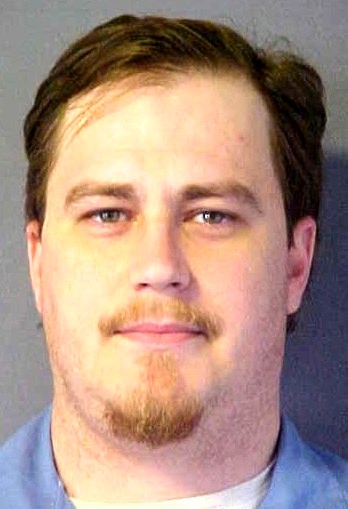
James Malicoat
Murderer Russell Ellwood
Murderer · USA · 1991
Russell Ellwood was a former taxi driver. Authorities suspected him of killing…
20 victims
Russell Ellwood
Murderer · USA · 1991
Russell Ellwood was a former taxi driver. Authorities suspected him of killing…
20 victims
 Robert Martines Perez
Murderer · USA · 1994
Name: Robert Martines Perez · Other name used in proceedings: Robert Martinez P…
15 victims
Robert Martines Perez
Murderer · USA · 1994
Name: Robert Martines Perez · Other name used in proceedings: Robert Martinez P…
15 victims
 Billy Frank Vickers
Murderer · USA · 1993
Billy Frank Vickers Vickers was executed by lethal injection in Texas on Januar…
14 victims
Billy Frank Vickers
Murderer · USA · 1993
Billy Frank Vickers Vickers was executed by lethal injection in Texas on Januar…
14 victims
 David John Copeland
Murderer · United Kingdom · 1999
David John Copeland was born in Isleworth, in the London Borough of Hounslow, a…
3 victims
David John Copeland
Murderer · United Kingdom · 1999
David John Copeland was born in Isleworth, in the London Borough of Hounslow, a…
3 victims
 Christopher Hudson
Murderer · Australia · 2007
Christopher Hudson was a member of the Hells Angels Motorcycle Club and was des…
1 victim
Christopher Hudson
Murderer · Australia · 2007
Christopher Hudson was a member of the Hells Angels Motorcycle Club and was des…
1 victim
 Marc Lepine
Mass murderer · Canada · 1989
Marc Lépine committed a shooting at the École Polytechnique engineering school…
14 victims
Marc Lepine
Mass murderer · Canada · 1989
Marc Lépine committed a shooting at the École Polytechnique engineering school…
14 victims
 Shaun Thrower
Murderer · United Kingdom · 1994
Shaun Thrower was convicted of the murder of 17-year-old Amanda Wagg and was se…
1 victim
Shaun Thrower
Murderer · United Kingdom · 1994
Shaun Thrower was convicted of the murder of 17-year-old Amanda Wagg and was se…
1 victim
 Udo Proksch
Mass murderer · Indian Ocean · 1977
Udo Proksch was an Austrian businessman and industrialist. He was convicted of…
6 victims
Udo Proksch
Mass murderer · Indian Ocean · 1977
Udo Proksch was an Austrian businessman and industrialist. He was convicted of…
6 victims
 Amber Richardson
Murderer · USA · 2013
Amber Richardson was an Alderson woman convicted of conspiring to kill her husb…
1 victim
Amber Richardson
Murderer · USA · 2013
Amber Richardson was an Alderson woman convicted of conspiring to kill her husb…
1 victim
- Gender
- male
- Country
- USA
- Location
- Grady County, Oklahoma, USA
- Date of birth
- May 4, 1975
- Age at first offence
- 22
- Characteristics
- parricide, abuse, rape?, torture
- Victim profile
- Tessa Leadford, his 13 month old daughter
- Method of murder
- Beating
- Date(s) of murder
- February 21, 1997
- Years active
- 1997
- Date of arrest
- Same day
- Status
-
Executed
Executed by lethal injection in Oklahoma on August 31, 2006
Case overview
James Patrick Malicoat was executed in Oklahoma in August 2006 after being convicted for the beating death of his 13-month-old daughter, Tessa Leadford.
Timeline
- February 2, 1997 — Tessa and Mary Ann Leadford began living with Malicoat.
- February 21, 1997 — At about 8:25 p.m., Malicoat and Mary Ann Leadford brought their 13-month-old daughter, Tessa Leadford, to the county hospital emergency room; staff determined she had been dead for several hours.
- February 21, 1997 — Malicoat was condemned for the murder of Tessa Leadford for injuries inflicted while the girl’s mother was at work.
- January 1998 — Malicoat was tried by jury and convicted of first degree murder after an earlier mistrial in September 1997.
- June 19, 2006 — The Court of Criminal Appeals issued a unanimous ruling that lethal injection was constitutional and that the lethal injection process “comports with contemporary standards of decency.”
- June 5, 2006 — The State of Oklahoma filed an Application for Execution Date with the Oklahoma Court of Criminal Appeals; Malicoat filed an Objection to Setting of an Execution Date.
- August 1, 2006 — The five-member Pardon and Parole Board unanimously denied clemency to Malicoat.
- August 31, 2006 — Malicoat was executed at 6:09 p.m. CDT; he was pronounced dead four minutes after receiving a lethal dose of drugs.
The offence
Malicoat beat his 13-month-old daughter, Tessa Leadford, to death.
At the time of death, Tessa’s face and body were covered in bruises. She had a large mushy closed wound on her forehead and three human bite marks on her body. The medical examiner concluded that Tessa died from a combination of head injury and internal bleeding from abdominal injuries, with two subdural hematomas from the head injury and severe internal injuries including broken ribs, internal bruising and bleeding, and a torn mesentery.
Investigators said the extensive bruising on Tessa’s body, bite marks and two broken ribs indicated she had been abused repeatedly for days prior to her death.
Malicoat admitted hitting Tessa’s head on a dresser a few days before her death and punching her in the stomach so hard that she stopped breathing on the day of her death. He admitted punching Tessa twice in the stomach, hard, about 12:30 p.m. on February 21, while Mary Ann Leadford was at work. Malicoat stated that Tessa stopped breathing and that he gave her CPR. When she began breathing again, he gave her a bottle and went to sleep next to her. When he awoke around 5:30 p.m., he noticed Tessa was dead. He put her in her crib, covered her with a blanket, spoke briefly with Leadford, and went back to sleep in the living room.
When Mary Ann Leadford returned from work and found the girl not breathing, she and Malicoat rushed Tessa to a hospital emergency room. Hospital staff determined that Tessa had been dead for several hours. Malicoat tried to resuscitate Tessa, but when he was unable to revive her he laid her in her crib and went to bed.
Investigation and evidence
The medical examiner’s report concluded that Leadford died from two subdural hematomas and abdominal bleeding caused by injuries inflicted as Malicoat cared for the child while her mother was at work.
The court proceedings described expert medical testimony about Tessa’s injuries and the likely pain and suffering she would have experienced from the head and abdominal injuries. The medical examiner described internal and external injuries and testified that the abdominal injuries were “non-survivable”. The medical examiner opined that symptoms from the injuries would have included brief loss of consciousness, fussy behavior, poor eating, restlessness and eventually sleepiness sliding into a coma. The medical examiner also testified that chest injuries would have been quite painful, including difficulty breathing from bruises to the lungs, painful breathing from a bruised diaphragm, and very painful broken ribs whenever she breathed or moved. The medical examiner further testified that ruptured mesentery and bleeding in the liver and kidneys would have been extremely painful when inflicted and would have continued to cause cramping and probably dull aching pain associated with tearing and gradual loss of blood.
In addition to the injuries described around the time of death, the trial involved evidence including photographs of Tessa’s corpse and photographs of the victim prior to the crime. The appeal also addressed evidence of injuries not contemporaneous with death, including biting, shoving, pushing and poking, with evidence of biting being relevant because biting was charged in the information.
Arrest
No arrest-specific details were provided.
Trial
Charges and conviction
Malicoat was tried by jury and convicted of first degree murder in violation of 21 O.S.1991, § 701.7(C) in the District Court of Grady County, Case No. CF-97-59.
A first trial ended in a mistrial after four days of voir dire examination in September 1997. He was tried again by jury in January 1998 and convicted.
Jury findings on aggravating circumstances
The jury found two aggravating circumstances:
- the murder was especially heinous, atrocious or cruel; and
- the existence of a probability that Malicoat would commit criminal acts of violence constituting a continuing threat to society.
In accordance with the jury’s recommendation, the Honorable Joe Enos sentenced Malicoat to death.
Legal issues raised on appeal (as described in appellate holdings)
The direct appeal proceedings included rulings that:
- the trial court properly exercised its discretion to expedite proceedings during voir dire;
- challenged jurors were not subject to removal for cause;
- the decision to postpone Malicoat’s opening statement until after the State had presented its entire case was within the court’s discretion;
- improper expert testimony that the victim suffered “intentional abuse” was harmless;
- an instruction on a lesser included offense of second-degree depraved mind murder was not warranted;
- evidence supported aggravating circumstances of a continuing threat to society, and an especially heinous, atrocious, or cruel murder;
- prosecutor conduct during closing argument did not rise to the level of plain error;
- other acts evidence was properly admitted during the penalty phase;
- improper admission of a photograph of the victim prior to the crime was harmless;
- photographs of the victim’s corpse were properly admitted;
- Malicoat did not receive ineffective assistance; and
- the sentence was not the result of passion and was supported by evidence.
The Court of Criminal Appeals affirmed the judgment and sentence.
Sentencing
The Honorable Joe Enos imposed the death sentence in accordance with the jury’s recommendation.
During sentencing review, the Court of Criminal Appeals assessed whether the sentence was imposed under the influence of passion, prejudice, or any other arbitrary factor and whether the evidence supported the jury’s findings of aggravating circumstances. The court concluded it could not say that the sentence was imposed because the jury was influenced by passion, prejudice, or any other arbitrary factor contrary to 21 O.S.1991, § 701.13(C). The court found the sentence of death to be factually substantiated and appropriate.
The appellate proceedings described that the jury was instructed on and found the existence of two aggravating circumstances and was instructed on nine mitigating factors.
Appeals
State post-conviction and execution-date objection involving lethal injection protocol
After affirmance of the death sentence, Malicoat filed challenges related to execution by lethal injection and sought a stay of execution.
The Oklahoma Court of Criminal Appeals held that Oklahoma’s execution protocol, setting forth lethal injection procedures, did not violate the Eighth Amendment prohibition against cruel and unusual punishment. The court addressed the protocol established by statute requiring “continuous, intravenous administration of a lethal quantity of an ultrashort-acting barbiturate in combination with a chemical paralytic agent until death is pronounced by a licensed physician according to accepted standards of medical practice.”
The court described that since 2003 the Department of Corrections had administered sodium thiopental, vecuronium bromide, and potassium chloride in the execution process and that throughout the execution a licensed physician was present to monitor the defendant. The court described that a licensed phlebotomist inserted intravenous lines into each arm and that the defendant was first given sodium thiopental, followed by vecuronium bromide and potassium chloride, with another dose of sodium thiopental during the procedure. The court noted that the drugs were compounded by a licensed pharmacist for the Department of Corrections and that the total amount of sodium thiopental administered throughout the procedure was 2400 milligrams.
The Court of Criminal Appeals rejected claims that the protocol was facially unconstitutional and denied a stay, setting an execution date.
The court stated:
- “The question before us is whether Oklahoma's execution protocol is constitutional, and we have found that it is.”
- “Malicoat is not entitled to a stay of execution while that litigation is pending.”
- “We must conclude that Oklahoma's execution protocol is constitutional on its face.”
The court ended with: “IT IS SO ORDERED. WITNESS OUR HANDS AND THE SEAL OF THIS COURT this 19th day of June, 2006.”
Federal habeas corpus
In Malicoat v. Mullin, 426 F.3d 1241 (10th Cir. 2005), the Court of Appeals affirmed denial of habeas relief. The holdings described that:
- the trial judge’s refusal to cover inscription reading “an eye for an eye and a tooth for a tooth” was not structural error;
- Malicoat was not entitled to a jury instruction on lesser included offense of second-degree depraved mind murder;
- imposition of the death penalty did not violate Eighth Amendment rights based on argument that the jury did not find intent to kill;
- state appellate court’s determination that prosecutor’s closing argument conduct was not unreasonable was upheld;
- state appellate court’s rejection of plain error from prosecutorial denigrating comments calling the defendant “evil” and a “monster” was upheld; and
- trial counsel’s decision to waive opening statement during guilt phase of capital murder trial did not constitute deficient performance.
The federal appellate decision also discussed Malicoat’s arguments about the “AN EYE FOR AN EYE AND A TOOTH FOR A TOOTH” inscription.
Outcome
Malicoat was executed by lethal injection in Oklahoma on August 31, 2006.
He was pronounced dead at 6:09 p.m. CDT, four minutes after receiving a lethal dose of drugs.
When the curtains were lifted, Malicoat was strapped to a gurney and wearing glasses; he turned his head to the witness room, smiled, and gave a small wave.
In his final words, Malicoat expressed remorse and delivered the following statements verbatim:
“I just want to tell everyone how sorry I am that this had to have happened, any of it,” Malicoat said to the witnesses, who including two of his spiritual advisers, three of his attorneys and two other people connected to him.
“I'm sorry I caused the death of another human, but there's nothing I can do to change it. Contrary to what some people believe, I have spent very many years going over it in my head and it's never left me. I hope someday people involved in it will move on.”
He thanked the witnesses who came to support him, then said, “That's just about it.”
He smiled at the witnesses again, then turned his head and looked at the ceiling as the drugs began being administered. He took two deep breaths and closed his eyes, and appeared to stop breathing moments later.
Grady County District Attorney Bret Burns, who helped prosecute Malicoat and attended the execution, stated:
“He died within a few seconds of injection,” said Grady County District Attorney Bret Burns.
“You can't say that for his victim. Tessa took 19 days to die.”
Aftermath
Clemency
On August 1, the five-member state Pardon and Parole Board unanimously denied clemency to Malicoat. Family members, including Tessa’s mother Mary Ann Leadford, pleaded with the board to spare Malicoat’s life.
Statements from Mary Ann Leadford
Mary Ann Leadford, convicted of first-degree murder and sentenced to life in prison for her daughter’s death, said in a videotape that Malicoat should spend the rest of his life in prison and live with his pain. She stated:
“As hard as it is, I have forgiven him. I don't think he should die.”
Final meal
For his final meal request, Malicoat asked for fried chicken, mashed potatoes and gravy, corn on the cob, biscuits, Dr Pepper and an apple pie. Another account described the final meal as fried chicken, mashed potatoes, corn on the cob, biscuits, a large Dr Pepper and a mini apple pie.
Scheduled execution date and related stays
Malicoat’s execution had been scheduled for Aug. 22, but the Oklahoma Court of Criminal Appeals delayed it to allow Malicoat to give a deposition in the competency hearing for another death-row inmate, Garry Thomas Allen.
Additional remarks from authorities
Oklahoma Attorney General W.A. Drew Edmondson requested an execution date after the U.S. Supreme Court rejected Malicoat’s final appeal. Edmondson stated:
“It is the practice of this office, before an execution date is requested, to examine each case to determine if the testing of DNA evidence should occur,” said Edmondson.
“We have determined, after a thorough review of this case, that DNA testing would be of no value and would have no relevance as to actual innocence. I see nothing that should stand in the way of this execution being carried out.”
Edmondson requested that an execution date be set for “60 days after June 5, 2006, or at the earliest date this Court deems fit.”
Other details
People
- James Patrick Malicoat — defendant; executed on August 31, 2006.
- Tessa Leadford — victim; 13-month-old daughter; death described as beating-related injuries.
- Mary Ann Leadford — victim’s mother; convicted of first-degree murder and sentenced to life in prison.
- Joe Enos — judge who sentenced Malicoat to death.
- Bret Burns — Grady County District Attorney who helped prosecute Malicoat and attended the execution.
- Jerry Massie — Corrections Department spokesman who described Malicoat’s final meal request.
- Reta Luther — Malicoat’s mother figure; did not attend the execution.
- W.A. Drew Edmondson — Oklahoma Attorney General; requested an execution date and made statements about DNA testing.
- Garry Thomas Allen — death-row inmate whose competency hearing was referenced in the delay of Malicoat’s execution.
- Eric Allen Patton — another death-row inmate executed in Oklahoma two days before Malicoat; described as convicted of the December 1994 murder of Charlene Elizabeth Kauer in Oklahoma City.
- Chickasha man executed By Murray Evans — described as a report header; not a distinct person.
Court case identifiers and statutes referenced
- Malicoat v. State, 992 P.2d 383 (Okla.Crim.App. 2000) (Direct Appeal).
- Malicoat v. State, 137 P.3d 1234 (Okla.Crim.App. 2006) (PCR).
- Malicoat v. Mullin, 426 F.3d 1241 (10th Cir. 2005) (Habeas).
- 21 O.S.1991, § 701.7(C) — cited as the violation under which Malicoat was convicted.
- 21 O.S.1991, § 701.12(4) and (7) — referenced as aggravating circumstances.
- 21 O.S.1991, § 701.13(C) — referenced as governing passion, prejudice, or arbitrary factor review.
- 22 O.S.2001, § 1014 and Department of Corrections execution protocol language — referenced in the lethal injection challenge.
Spotted an error, or have more information about this case?