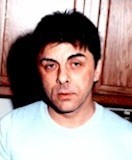
Robert Kosilek
Murderer Brian Kevin Rosenfeld
Murderer · USA · 1985
Brian Kevin Rosenfeld Brian Kevin Rosenfeld was sentenced to three concurrent l…
23 victims
Brian Kevin Rosenfeld
Murderer · USA · 1985
Brian Kevin Rosenfeld Brian Kevin Rosenfeld was sentenced to three concurrent l…
23 victims
 Yahweh ben Yahweh
Murderer · USA · 1980
Yahweh ben Yahweh was born and legally named Hulon Mitchell Jr. (October 27, 19…
23 victims
Yahweh ben Yahweh
Murderer · USA · 1980
Yahweh ben Yahweh was born and legally named Hulon Mitchell Jr. (October 27, 19…
23 victims
 Russell Ellwood
Murderer · USA · 1991
Russell Ellwood was a former taxi driver. Authorities suspected him of killing…
20 victims
Russell Ellwood
Murderer · USA · 1991
Russell Ellwood was a former taxi driver. Authorities suspected him of killing…
20 victims
 Robert Martines Perez
Murderer · USA · 1994
Name: Robert Martines Perez · Other name used in proceedings: Robert Martinez P…
15 victims
Robert Martines Perez
Murderer · USA · 1994
Name: Robert Martines Perez · Other name used in proceedings: Robert Martinez P…
15 victims
 Douglas McArthur Buchanan
Mass murderer · USA · 1987
Douglas McArthur Buchanan Jr. was convicted in Virginia of capital murder for k…
4 victims
Douglas McArthur Buchanan
Mass murderer · USA · 1987
Douglas McArthur Buchanan Jr. was convicted in Virginia of capital murder for k…
4 victims
 Nixzaliz Santiago
Murderer · USA · 2006
Nixzmary Brown was a seven-year-old child who died after being abused and murde…
1 victim
Nixzaliz Santiago
Murderer · USA · 2006
Nixzmary Brown was a seven-year-old child who died after being abused and murde…
1 victim
 Mark Edward Gardner
Murderer · USA · 1985
Mark Edward Gardner (c. 1956 – September 8, 1999) was executed at the age of 43…
3 victims
Mark Edward Gardner
Murderer · USA · 1985
Mark Edward Gardner (c. 1956 – September 8, 1999) was executed at the age of 43…
3 victims
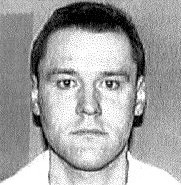 Michael Patrick Moore
Murderer · USA · 1994
Michael Patrick Moore was executed by lethal injection in Texas on January 9, 2…
1 victim
Michael Patrick Moore
Murderer · USA · 1994
Michael Patrick Moore was executed by lethal injection in Texas on January 9, 2…
1 victim
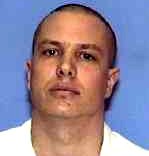 Charles Victor Thompson
Murderer · USA · 1998
Charles Victor Thompson was an American criminal. Thompson was born 13 June 197…
2 victims
Charles Victor Thompson
Murderer · USA · 1998
Charles Victor Thompson was an American criminal. Thompson was born 13 June 197…
2 victims
- Gender
- male
- Country
- USA
- Location
- Boston, Massachusetts, USA
- Date of birth
- 1949
- Age at first offence
- 41
- Characteristics
- parricide, history of mental illness, torture
- Victim profile
- Cheryl Kosilek, 36 (his wife)
- Method of murder
- Strangulation
- Date(s) of murder
- May 20, 1990
- Years active
- 1990
- Date of arrest
- 4 days after
- Status
-
Life imprisonment
Sentenced to life imprisonment in 1993
Case record: Robert Kosilek
Robert Kosilek was convicted of first-degree murder for the death of his wife, Cheryl Kosilek.
Background
Robert Kosilek was diagnosed with a gender identity disorder. He legally changed his name to Michelle in 1993 and lived his life as a woman in an all-male prison.
During the course of his prison confinement, Kosilek received female hormone therapy, laser hair therapy and psychotherapy. He wore women’s clothing in prison. He had long hair tucked behind his ears and had developed larger breasts since beginning hormone treatments.
The offence
The victim’s body was discovered in the back seat of her automobile in a shopping mall parking lot in North Attleborough on the evening of Sunday, May 20, 1990, after the mall had closed for the evening.
Cheryl Kosilek had been strangled with a rope and a wire.
During the period leading up to the killing, Robert Kosilek stated that he and the victim had been in an argument. He stated that the victim threw boiling tea into his face, and that he knocked the victim down. He stated that the victim grabbed a butcher knife and chased him into another room, threatening to kill him. He stated that he picked up a piece of wire that had been on a table, and that this was all he was able to recall until he woke up days later in the hospital. He stated: "probably, because of the trauma of it . . . went into a black out at that moment." He also stated, "Apparently, I did take her life. It was probably in self-defense."
At trial, the evidence described that Robert Kosilek wrapped a wire around his wife’s neck three times, strangled her, dumped her in the back of a car, and left her at a mall.
Investigation
After the killing, police in North Attleborough received a telephone call from the defendant stating that his wife had not come home that evening and asking whether there had been any report of an automobile accident in which she might have been involved.
Police told the defendant they had located his wife’s automobile and asked him to come to the police station, which he agreed to do.
Lieutenant Michael Gould informed the defendant that "a body was found in the back seat" of his wife’s automobile.
The police questioned the defendant about his actions and the victim’s actions during the day.
Police told the defendant that they had spoken with the victim’s son, Timothy McCaul, who had lived with the defendant and the victim.
During a second interview, Gould advised the defendant that he was a suspect and informed him of his Miranda rights.
During the second interview, the defendant stated that Timothy often dialed wrong numbers and suggested that he may have been in the shower at the time of the call and failed to hear it.
During the second interview, the defendant excused himself to go downstairs for cigarettes, then called up to the officers that he was going to get a lawyer, and left.
Arrest
On May 22, 1990, shortly after midnight, the defendant was involved in an automobile accident in Bedford. When a police officer arrived at the scene, the officer observed the defendant, dressed in women’s clothing, seated in his vehicle, which had crashed into a stop sign and some shrubs.
The officer administered field sobriety tests, determined that the defendant was not intoxicated, and called a taxi to drive the defendant home.
Two days later, on the afternoon of May 24, 1990, police in New Rochelle, New York stopped the defendant for speeding. The officer observed a bottle of vodka, two-thirds full, and two cans of beer in the automobile, and smelled alcohol on the defendant’s breath.
The officer arrested the defendant for driving while intoxicated and brought him to the police station.
At some point after the arrest, the defendant remarked to the arresting officer, "You would be drunk too if the police thought you killed your wife."
At the New Rochelle police station, the defendant stated, "Look, I had a fifteen year old son and a wife. I can't call my wife. I murdered my wife. Now, I need to call a psychiatrist now."
The defendant was taken to the psychiatric unit of a New York hospital and subsequently was brought back to Massachusetts by the Massachusetts State police.
Trial
Conviction and charges
Robert Kosilek was convicted of murder in the first degree under theories of premeditated and deliberate murder and extreme atrocity or cruelty for the death of his wife, Cheryl Kosilek.
The defendant contended that his conviction must be reversed principally because of:
- errors in jury instructions;
- limitation of cross-examination on the issue of self-defense; and
- improper statements in the prosecutor’s closing argument.
He also challenged the Judge’s denial of his motion for a required finding of not guilty and alleged ineffective assistance of trial counsel.
The Supreme Judicial Court stated it had considered these arguments and reviewed the entire record pursuant to G. L. c. 278, § 33E (1994 ed.). The court affirmed the conviction.
Evidence presented
An audiotape recording of one of the defendant’s recorded interviews to a television news reporter was played for the jury. The interviews were recorded in October of 1992.
In those interviews, the defendant stated the circumstances of the argument with the victim, the boiling tea, being knocked down, the victim chasing him with a butcher knife, and his recalling a black out.
The defendant stated that: "probably, because of the trauma of it . . . went into a black out at that moment." He also said, "Apparently, I did take her life.
In the trial, evidence included that there were burns on his hands that were consistent with his story about the boiling tea.
Jury instructions issues addressed on appeal
On appeal, the defendant challenged multiple alleged mistakes in jury instructions.
Deliberate premeditation instruction mistakes
The jury instructions for deliberate and premeditated murder included a statement that "Deliberation may be a matter of days, hours, or indeed, seconds. First the deliberation and premeditation, then the decision to kill, and lastly, the killing in furtherance of that decision. All of this may occur within a few seconds. However, it does not exclude action that is taken so quickly that there is no time to think about the action and then determine to do it " (emphasis added). The Supreme Judicial Court stated that the emphasized portion was incorrect as a matter of law.
The court also addressed a second mistake in the premeditation instruction, in which the Judge stated, in part: "You should weigh the defendant's mental impairment, if any, in evaluating any evidence that he formed a plan to kill the victim after deliberation and reflection. The Commonwealth does not have to prove that the defendant was entirely free of mental impairment, but the Commonwealth does have to prove that the defendant was so impaired that he lost the ability to deliberately premeditate " (emphasis added). The court stated that the emphasized portion was incorrect as a matter of law.
The court found that supplementary instruction and the instructions taken as a whole satisfied the requirements to consider mental impairment, and it found no prejudice creating a substantial likelihood of a miscarriage of justice.
Extreme atrocity or cruelty instruction
The Judge gave an instruction on extreme atrocity or cruelty that had been disapproved in Commonwealth v. Hunter. The defendant did not object. The Supreme Judicial Court evaluated for substantial likelihood of miscarriage of justice and stated it was highly unlikely that the defendant was prejudiced because the jury found him guilty on theories that included premeditated and deliberate murder as well as extreme atrocity or cruelty.
Voluntariness-humane practice
The defendant argued error in the instruction on voluntariness of inculpatory statements because it failed to enumerate factors, especially intoxication. The Supreme Judicial Court found the instruction sufficient in light of the evidence at trial and found no substantial likelihood of a miscarriage of justice.
Prior inconsistent statements instruction
The Judge told the jury: "The present statement is relevant only to the witness's credibility, and you may not take it as proof of any fact contained in it" (emphasis added). The Supreme Judicial Court stated it would have been accurate if the word "prior" substituted for the word "present." The court described the mistake as relatively innocuous, noting there was no evidence of prior inconsistent statements, and found no substantial likelihood of a miscarriage of justice.
Self-defense cross-examination limitation
The defendant claimed he had been acting in self-defense. He told a television news reporter in an audiotaped interview (played for the jury) that, on the day of his wife’s death, she had attacked him with a pan of boiling tea and a large kitchen knife.
Defense counsel sought to cross-examine the victim’s son about arguments the son may have had with his mother to elicit testimony that she had reacted violently in some instances.
The Commonwealth objected. At sidebar, the Judge sustained the objection and noted that the fact that a mother may have hit her son while disciplining him was not relevant to the self-defense issue.
The Supreme Judicial Court stated the Judge had broad discretion to determine the extent of cross-examination and to exclude evidence of limited probative value, and found no error.
Prosecutor closing argument issue
In closing statement, the prosecutor referred to the defendant as a "liar" who had constructed a "cunning charade" to mislead the police. There was no objection.
The defendant argued that this constituted improper personal opinion of guilt and credibility. The Supreme Judicial Court stated that prosecutors may not assert personal opinions as to the credibility of witnesses or guilt, but that they may comment on evidence and draw reasonable inferences. The court concluded that in context the error was not so prejudicial as to create a substantial likelihood of a miscarriage of justice.
Sufficiency of the evidence
The defendant argued that there was insufficient evidence for a guilty finding on either the premeditated and deliberate murder theory or the extreme atrocity theory, asserting the Judge erred by denying his motion for a required finding of not guilty.
The Supreme Judicial Court stated there was ample evidence.
With regard to deliberate premeditation, the court stated the evidence permitted a rational jury to infer that the defendant waited until the victim's son was at work, approached his wife from behind with a wire, and strangled her by tightening the wire around her neck.
With regard to extreme atrocity or cruelty, the court stated that the prosecution’s expert testified that:
- there were multiple wounds on the victim's body;
- she was strangled by a wire and then a rope;
- she was conscious for at least fifteen seconds after strangulation began and remained alive for three to five minutes; and
- there were indications of a conscious struggle.
The court stated these facts supported findings of murder by extreme atrocity or cruelty.
Appeal outcome
The Supreme Judicial Court declined to exercise its extraordinary power to reverse the conviction or reduce the degree of guilt and affirmed the judgment.
Sentencing
Robert Kosilek was sentenced to life imprisonment in 1993.
He was serving a life sentence.
Later proceedings regarding medical treatment in prison
Federal court treatment determination
In 2002, U.S. District Judge Mark Wolf ruled that Kosilek—now going by the name Michelle—was entitled to treatment for gender identity disorder, but the ruling stopped short of ordering the state to pay for the sex-change operation.
After Wolf’s ruling, the corrections department allowed Kosilek to receive female hormones and laser hair removal. He was also given access to female undergarments and some makeup.
Kosilek later sued the Department of Correction for the second time, arguing that numerous psychiatrists who examined him, including two of the DOC’s own experts, had determined that a sex-change operation was "medically necessary." Kosilek argued that gender identity disorder should be treated like any other medical condition.
Kosilek’s attorney, Frances Cohen, said: "We ask that gender identity disorder be treated like any other medical condition,"
Trial proceedings in federal court
Kosilek opted to have the case heard by Wolf instead of a jury.
Kosilek sat quietly in court while opening statements were made by his attorney and by the state Department of Correction’s attorney, Richard McFarland.
The DOC’s attorney stated that DOC Commissioner Kathleen Dennehy made the decision to deny surgery for Kosilek based on "significant safety and security concerns."
McFarland stated officials feared that if Kosilek had surgery and returned—as a woman—to the all-male, medium-security prison in Norfolk where he was serving his sentence, he could be a target for assault by male inmates. McFarland stated that if he were transferred to the women’s prison in Framingham, there were concerns he would pose a risk to female inmates there.
McFarland stated that two psychiatrists would testify that Kosilek functions "at a very high level" and that a sex-change operation is not medically necessary.
Neither side gave an estimate on the costs of the sex-change operation.
Kosilek’s attorney told Wolf that the DOC could argue that the surgery should be covered by the DOC’s provider under its overall mental health contract.
Psychiatric testimony about suicide risk
Dr. George Richard Brown testified as a psychiatrist who said he had treated more than 1,000 patients with gender identity disorder since 1979.
Brown acknowledged that Kosilek’s depression and anxiety improved since he began receiving female hormones, and stated that the improvement was based on Kosilek’s sense of hope that he would be allowed to become a woman.
Brown testified: "I believe that she would kill herself" when asked by Kosilek’s attorney what would happen if Kosilek did not have a sex-change operation.
Brown also stated: "I don't believe she would consider life worth living without hope for completion of her treatment plan," (sic as provided in the record).
Additional trial testimony and claims
Kosilek testified during the 2002 trial that he had suffered from gender identity disorder since the age of 3. He stated that he had twice tried to kill himself and also tried to castrate himself.
In later federal trial testimony, Kosilek said the female hormones and other treatments had not been enough to relieve his suffering, and that he would likely commit suicide if he did not get the surgery.
Former Commissioner Kathleen Dennehy testified that allowing Kosilek to complete the transformation into a woman would present a security problem and that, whether Kosilek stayed in a male prison or was transferred to a female prison, he could become a target for sexual assault.
Dennehy testified: "The safety and security concerns are enormous."
Dennehy also stated: "The department does not negotiate or respond to threats of harm or suicide in an effort to barter," and "You couldn't run a prison with that kind of leveraging going on."
Other expert witnesses and cost figures
A review described that experts and associated costs in the case were discussed, including spending for experts to testify about an operation that was described as costing about $20,000.
In the federal court proceedings described, two experts retained by the Massachusetts Department of Correction were described as saying the surgery was not medically necessary, and other experts associated with the health provider were described as believing the surgery was medically necessary.
The record also described that two psychiatrists who testified for Kosilek recommended the surgery.
A Boston law firm representing Kosilek for free paid for those experts but did not disclose the cost.
Claim about medical necessity
Kosilek argued that numerous psychiatrists determined that a sex-change operation was "medically necessary."
Kosilek also argued that gender identity disorder should be treated like any other medical condition.
In addition, Kosilek claimed his condition was equivalent to "biological claustrophobia." He stated that the universally accepted treatment for his disorder involved psychotherapy, hormone therapy, and finally "surgical correction of the offending genitalia."
Attorney and prosecution statements in the context described
John Moses, identified as an Assistant District Attorney who prosecuted Kosilek, stated that prisoners were not supposed to be sexual in prison and said he was surprised by Kosilek’s lawsuit.
Moses stated: "He is doing life without parole for murder. The fact that he is serving a sentence, anybody serving a sentence is deprived of certain choices in his life. He was 41 years old when he killed Sheryl Kosilek. He didn't try to get a sex change operation at that time. Now he's 53 years of age, and he wants the state to pay for that?"
Republican state Sen. Scott Brown stated it was not appropriate for public money to be used for inmates’ surgery, and said Kosilek was incarcerated for murder.
Brown stated: "They are prisoners. They are there because they've broken the law."
Brown also stated: "Other folks, people who want to get these types of surgeries, they have to go through their insurance carrier or save up for it and do it independently. Yet if you are in prison, you can do it for nothing? That doesn't make a lot of sense."
Brown also stated: "I just think it would be deemed a luxury for him to have that operation. He is in there because he murdered his wife," and "There are no luxuries that are supposed to be available."
Cole Thaler stated the duty belonged to the prison to fulfill constitutional obligations, and said: "The duty belongs to the prison to figure out how to fulfill its constitutional obligations to both provide adequate medical care and provide a fundamental security for all inmates."
Shannon Minter stated: "People often have a knee-jerk reaction that public money shouldn't be spent on this," and "If people are not treated, they suffer tremendously," and "It's just as cruel to withhold treatment for gender identity disorder as it is to withhold treatment for any other medical issue."
Dr. James Michaud stated: "medically necessary," in discussing whether surgery was needed, and was quoted: "There are certainly people who are transgendered who want surgery and who want to appear different, but I don't think that makes it medically necessary,".
Other contextual material involving other jurisdictions
Courts in several other states had been described as ordering prison systems to allow transgendered inmates to receive psychotherapy and, in some cases, hormone shots, and it was described that no inmate in the country had succeeded in getting a court to order a sex-change operation, according to advocates.
The record described that some states allow inmates to continue hormone treatments if they were already on hormones when their sentences began, and that most do not allow inmates to initiate hormone therapy while in prison.
The record described that an "Inmate Sex Change Prevention Act" was introduced after Wisconsin inmate Scott Konitzer filed a lawsuit seeking a sex-change operation, and that the law took effect in January and was being challenged by the American Civil Liberties Union and Lambda Legal.
The record described Colorado inmate Christopher "Kitty" Grey, who was serving 16 years to life for molesting an 8-year-old girl, suing the state to provide him with a gender specialist to determine that he needed a sex-change operation. It stated that Colorado Department of Corrections officials said sex-change operations would create security concerns.
Grey stated: "For all intents and purposes, I am a woman in a man's prison," and "That's like putting a cat in a dog kennel."
It also described that Dr. James Michaud, chief of mental health for the Colorado DOC, did not believe sex-change operations were "medically necessary."
A law firm representing Kosilek had been described as paying for experts for the case without disclosing their cost.
Outcome
Robert Kosilek’s conviction for murder in the first degree was affirmed on appeal.
Other details
Robert Kosilek was described as having twice attempted suicide and once tried to castrate himself.
The record included that Kosilek’s beard and dress as a man at the time he killed his wife, that at trial he came to court dressed in women’s clothing with fingernails long and painted, and that after conviction he changed his name legally to Michelle.
A taxicab driver testified that he picked up the defendant from the same mall on the afternoon of May 20 and drove him to a store about one-half mile from the defendant’s house in Mansfield.
During police investigation, a witness described the defendant’s statements and actions at the station and later events, including his accident in Bedford and his arrest in New Rochelle for driving while intoxicated.
The defendant’s age was stated as 57 during the federal court proceedings and 58 in one described federal court update.
Spotted an error, or have more information about this case?