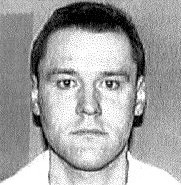
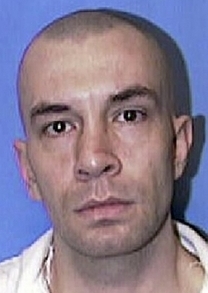
Michael Patrick Moore
Murderer Brian Kevin Rosenfeld
Murderer · USA · 1985
Brian Kevin Rosenfeld Brian Kevin Rosenfeld was sentenced to three concurrent l…
23 victims
Brian Kevin Rosenfeld
Murderer · USA · 1985
Brian Kevin Rosenfeld Brian Kevin Rosenfeld was sentenced to three concurrent l…
23 victims
 Russell Ellwood
Murderer · USA · 1991
Russell Ellwood was a former taxi driver. Authorities suspected him of killing…
20 victims
Russell Ellwood
Murderer · USA · 1991
Russell Ellwood was a former taxi driver. Authorities suspected him of killing…
20 victims
 Robert Martines Perez
Murderer · USA · 1994
Name: Robert Martines Perez · Other name used in proceedings: Robert Martinez P…
15 victims
Robert Martines Perez
Murderer · USA · 1994
Name: Robert Martines Perez · Other name used in proceedings: Robert Martinez P…
15 victims
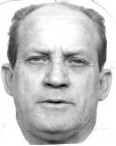 Billy Frank Vickers
Murderer · USA · 1993
Billy Frank Vickers Vickers was executed by lethal injection in Texas on Januar…
14 victims
Billy Frank Vickers
Murderer · USA · 1993
Billy Frank Vickers Vickers was executed by lethal injection in Texas on Januar…
14 victims
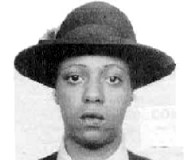 Corrine Sykes
Murderer · USA · 1944
Corrine Sykes was 20 years old when she worked as a housemaid for Mrs. Wodlinge…
1 victim
Corrine Sykes
Murderer · USA · 1944
Corrine Sykes was 20 years old when she worked as a housemaid for Mrs. Wodlinge…
1 victim
 Mark Hutt
Murderer · Canada · 2009
Mark Hutt was convicted of first-degree murder in connection with the death of…
1 victim
Mark Hutt
Murderer · Canada · 2009
Mark Hutt was convicted of first-degree murder in connection with the death of…
1 victim
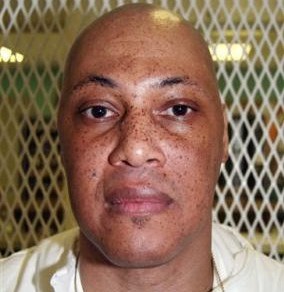 Frank Moore
Murderer · USA · 1994
Frank Moore became involved in a confrontation with Samuel Boyd and Patrick Cla…
2 victims
Frank Moore
Murderer · USA · 1994
Frank Moore became involved in a confrontation with Samuel Boyd and Patrick Cla…
2 victims
 Joseph Lesurques
Murderer? · France · 1796
Joseph Lesurques was executed by guillotine on October 3, 1796. In late eightee…
2 victims
Joseph Lesurques
Murderer? · France · 1796
Joseph Lesurques was executed by guillotine on October 3, 1796. In late eightee…
2 victims
 Connie Williams
Murderer · USA · 1974
Connie Williams murdered and dismembered his wife, Francesca. The Supreme Court…
2 victims
Connie Williams
Murderer · USA · 1974
Connie Williams murdered and dismembered his wife, Francesca. The Supreme Court…
2 victims
 Daniel Camargo Barbosa
Serial killer · Colombia / Ecuador · 1974
Daniel Camargo Barbosa was a psychopathic serial killer from Colombia. It was b…
72 victims
Daniel Camargo Barbosa
Serial killer · Colombia / Ecuador · 1974
Daniel Camargo Barbosa was a psychopathic serial killer from Colombia. It was b…
72 victims
- Gender
- male
- Country
- USA
- Location
- Coryell County, Texas, USA
- Date of birth
- September 16, 1963
- Age at first offence
- 31
- Characteristics
- stalker, robbery
- Victim profile
- Christa E. Bentley (female, 35)
- Method of murder
- St abbing with knife
- Date(s) of murder
- February 26, 1994
- Years active
- 1994
- Date of arrest
- Same day
- Status
-
Executed
Executed by lethal injection in Texas on January 9, 2002
Case overview
Michael Patrick Moore was executed by lethal injection in Texas on January 9, 2002 for the capital murder of Christa E. Bentley, which occurred during a burglary in Copperas Cove, Texas, on Feb. 26, 1994.
Moore was convicted of capital murder by a jury in October 1994, and the court sentenced him to death on November 3, 1994. The Texas Court of Criminal Appeals affirmed the conviction and sentence in October 1996, and denied rehearing on December 18, 1996. The United States Supreme Court denied Moore’s petition for certiorari review on May 12, 1997, and later denied certiorari review again on March 26, 2001.
Timeline
- March 31, 1994 — Moore was indicted in the 52nd District Court of Coryell County for the capital offense of murdering Christa E. Bentley during the course of committing and attempting to commit robbery on Feb. 26, 1994.
- October 31, 1994 — A jury found Moore guilty of capital murder.
- November 3, 1994 — Following a punishment hearing, the court sentenced Moore’s to death.
- October 16, 1996 — Texas Court of Criminal Appeals affirmed conviction and sentence.
- December 18, 1996 — Texas Court of Criminal Appeals denied rehearing.
- May 12, 1997 — The United States Supreme Court denied Moore’s petition for certiorari review.
- December 2, 1997 — Moore filed an application for state writ of habeas corpus.
- May 27, 1998 — State habeas application denied by the Court of Criminal Appeals.
- November 4, 1998 — Moore filed habeas petition in federal district court.
- August 31, 1999 — The district court denied federal habeas relief.
- August 23, 2000 — The United States Court of Appeals for the Fifth Circuit denied permission to appeal.
- October 26, 2000 — The Fifth Circuit court denied rehearing.
- January 24, 2001 — Moore filed writ of certiorari in the United States Supreme Court.
- March 26, 2001 — The Supreme Court denied certiorari review.
- March 26, 2001 — Moore filed a second state habeas petition.
- March 27, 2001 — The Court of Criminal Appeals granted a stay of execution.
- November 21, 2001 — The Court of Criminal Appeals dismissed Moore’s successive state habeas petition as an abuse of the writ.
- November 29, 2001 — The trial court set Moore for execution on January 9, 2002.
- January 9, 2002 — Moore was executed by lethal injection in Texas.
Background
Moore was born in 1963 and was reported as 38 at the time of execution. He was described as emotionally disturbed in discussions of his case. During the punishment phase, the State introduced records from the Conners Children Home where Moore resided during part of his childhood. Those records indicated Moore twice set fire to his house and once to the Children’s Home, he threatened to kill his parents and blame their deaths on his younger brother, and he tried to stab his younger brother with a pair of scissors. The State also introduced evidence that as a child, Moore continuously exhibited violent and improper sexual behavior.
In addition, while serving in the Navy, Moore was on unauthorized absence three times and was convicted of larceny. Moore also admitted to being involved in a physical altercation while in jail.
The offence
On the evening of February 26, 1994, after drinking heavily at a local bar and playing pool in a nightclub, Moore left to “look into getting some income” since he was broke and behind in rent.
Moore confessed that he had previously seen a photograph of Christa Bentley’s daughter, “T.R.” Bentley, in a High School yearbook and had looked up her address. Moore said that he got to the Bentley house sometime after 2 a.m. Dressed in black clothing, he approached the home carrying a crowbar, a pistol in a holster on his belt, and a “large knife” in a scabbard. He found the back door unlocked, laid the crowbar down on the porch, and entered the Bentley residence armed with his gun and knife.
Moore removed his black shirt and laid it in a chair in the dining room before heading toward the bedrooms. He heard a female voice that sounded half asleep calling out a name and mumbled something back. Moore went into the bathroom and saw someone get out of bed through a partly open door. Christa Bentley opened the bedroom door and started screaming. Moore stated he tried to push her back into the bedroom, but she grabbed him and kept screaming. Moore stabbed Christa several times in the chest and eventually lost his knife. Moore then drew his revolver and shot her.
Moore ran out of the house, got into his car, and drove off. He was later pulled over by police for driving without headlights. He led police on a high speed chase, then slowed and jumped out of the car. Moore was apprehended shortly thereafter. The confession later described that after fleeing the crime scene, Moore saw police lights behind him and thought he was being chased because the police must have known he had stabbed and shot a woman.
Christa’s 14-year-old son awoke and found her body and called 911. Medical examiner Joanie McClain later testified during the guilt/innocence stage. She described the murder as “overkill” and “particularly brutal.” She described that one fingernail on Bentley’s left hand had been completely bent backwards and broken and stated that such a wound was a defensive injury. She described eight separate, sharp force entries to the body. Dr. McClain estimated the weapon was a 6-inch long blade and that the maximum amount of time Bentley could have survived was “somewhere in the minutes range.” The cause of death was determined to be multiple stab wounds.
Moore’s confession also stated that he had stolen the knife and gun used in the crime from two different residences in Copperas Cove. Moore admitted choosing the Bentley home because he had seen “T.R.” Bentley standing outside and therefore knew she lived there, and he said he assumed that “T.R.” Bentley was at home on the night of the crime even though she was at a friend’s house.
Investigation and arrest
A patrol car officer spotted Moore driving at night with his headlights off and speeding. The officer followed him and turned his police lights on. Moore did not stop and led police on a car chase with speeds up to 80 mph. Moore slowed down and jumped out of the car, stumbled and tried to flee on foot, but police apprehended him. Moore gave a complete confession to police.
Trial
Charges and conviction
Moore was indicted in the 52nd District Court of Coryell County for the capital offense of murdering Christa E. 26, 1994. A jury found Moore guilty of capital murder on October 31, 1994.
Evidence at the guilt/innocence stage
Medical examiner Joanie McClain testified during the guilt/innocence stage of the trial and described the murder as “overkill” and “particularly brutal.”
Trial testimony from officers stated that they followed Moore because he did not have on his car headlights. Moore led the police on a car chase with speeds up to 80 mph, then jumped out of the car and attempted to flee on foot.
Evidence at the punishment phase
During the punishment phase, the State introduced a notebook written by Moore entitled “The Girls of Copperas Cove.” In it, he listed the names and addresses of 300 teenage girls of Copperas Cove. Many of these girls, including Christa’s daughter, testified that Moore stalked, harassed, and threatened them. Moore wrote letters to several of the girls in which he threatened to rape them.
The State introduced evidence of various extraneous offenses, including several burglaries that often took place while the victims were home and were perpetrated against the girls listed in the notebook. Moore’s notebook also contained the license plate numbers of a Coryell County Justice of the Peace and a Copperas Cove police sergeant.
The State introduced records from the Conners Children Home in which Moore’s childhood conduct was described as including setting fires, threatening to kill his parents and blame his younger brother, and attempting to stab his younger brother with scissors.
The State called psychiatrist Dr. Richard Coons, who testified about Moore’s future danger to society, noting that Moore lacked a conscience, was a continuing threat to society, and would be manipulative, vindictive, and a threat to smaller prisoners.
Sentence
Following a punishment hearing, the court sentenced Moore to death on November 3, 1994. A jury gave Moore the death sentence.
Appeals
State habeas and direct appellate review
Moore filed an application for state writ of habeas corpus on December 2, 1997. The Court of Criminal Appeals denied the state habeas application on May 27, 1998.
On March 26, 2001, Moore filed a second state habeas petition. On March 27, 2001, the Court of Criminal Appeals granted a stay of execution. On November 21, 2001, the Court of Criminal Appeals dismissed Moore’s successive state habeas petition as an abuse of the writ.
Federal habeas and federal appellate review
Moore filed a habeas petition in federal district court on November 4, 1998. On August 31, 1999, the district court denied federal habeas relief. On August 23, 2000, the United States Court of Appeals for the Fifth Circuit denied permission to appeal. On October 26, 2000, the Fifth Circuit court denied rehearing.
Supreme Court certiorari
The United States Supreme Court denied Moore’s petition for certiorari review on May 12, 1997. Moore filed a writ of certiorari on January 24, 2001. On March 26, 2001, the Supreme Court denied certiorari review.
Outcome
Moore’s conviction and death sentence were affirmed by the Texas Court of Criminal Appeals in October 1996. The Court of Criminal Appeals denied rehearing on December 18, 1996. The United States Supreme Court denied certiorari review on May 12, 1997, and later denied certiorari review again on March 26, 2001. Moore’s state habeas application was denied on May 27, 1998. The district court denied federal habeas relief on August 31, 1999, and the Fifth Circuit denied permission to appeal on August 23, 2000 and denied rehearing on October 26, 2000. The Court of Criminal Appeals granted a stay of execution on March 27, 2001 and later dismissed Moore’s successive state habeas petition as an abuse of the writ on November 21, 2001.
Moore was executed by lethal injection on January 9, 2002 in Huntsville, Texas at 6:32 p.m.
Aftermath
At execution, Moore apologized to the victim’s relatives. He delivered the following last statement:
“I'll star by saying I love all of you. I will be waiting for your arrival, don't disappoint me by not showing up. I will be there with the give of Christ. We'll all be there. I promise I'll go up smiling. I am sorry. If I could think of a word in the vocabulary stronger, you need to hear something stronger, you deserve it. I'm sorry, I can't take back what I have done. I have asked Christ for forgiveness, and I ask that you forgive me. And I understand your feelings. God bless all of you. I will be waiting for your arrival. Do not disappoint me by not showing up. God bless everybody.”
As the lethal injection was flowing into Moore’s body, his family sang “Amazing Grace.” Moore was pronounced dead at 6:32 p.m. Final Meal: None. Final Words: Moore apologized to the victim’s relatives and stated “I'll start by saying I love all of you,” followed by “I am sorry. If I could think of a word in the vocabulary stronger -- you need to hear something stronger -- you deserve it. I'm sorry. I can't take back what I have done. I have asked Christ for forgiveness and I ask that you forgive me.”
Other details
Moore was listed with offender number #999126. His last statement included references to “the give of Christ,” “We’ll all be there,” and “I promise I'll go up smiling.” He was scheduled to be executed on January 9, 2002 after 6 p.m.
Moore’s confession described him as having been out drinking and playing pool in a nightclub in Killeen, Texas on the evening of Feb. 25, 1994 and staying at the bar until last call before driving back to Copperas Cove. He said he was broke, behind in rent, and had “10 or so outstanding bad checks.” He described his decision as: “look into getting some income.”

Spotted an error, or have more information about this case?