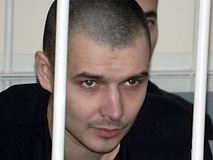
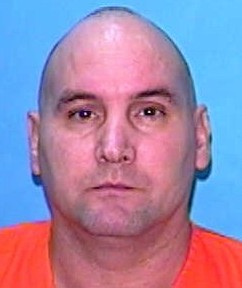
Yevgeny Krasnoshchok
Murderer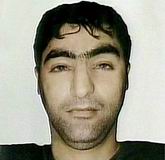 Farda Gadirov
Murderer · Azerbaijan · 2009
Farda Gadirov (also given as Farda Asad oglu Gadirov; Azeri: Fərda Qədirov; Geo…
12 victims
Farda Gadirov
Murderer · Azerbaijan · 2009
Farda Gadirov (also given as Farda Asad oglu Gadirov; Azeri: Fərda Qədirov; Geo…
12 victims
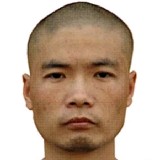 Zhou Kehua
Murderer · China · 2004
Zhou Kehua (simplified Chinese: 周克华 ; traditional Chinese: 周克華 ; pinyin: Zhōu K…
10 victims
Zhou Kehua
Murderer · China · 2004
Zhou Kehua (simplified Chinese: 周克华 ; traditional Chinese: 周克華 ; pinyin: Zhōu K…
10 victims
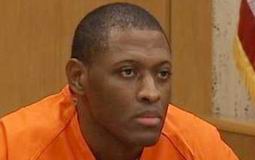 Leon Davis Jr.
Murderer · USA · 2007
Leon Davis Jr. was sentenced to death on April 29, 2011, for the execution-styl…
5 victims
Leon Davis Jr.
Murderer · USA · 2007
Leon Davis Jr. was sentenced to death on April 29, 2011, for the execution-styl…
5 victims
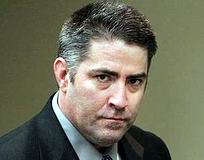 Raymond Lee Oyler
Murderer · USA · 2006
Raymond Lee Oyler was convicted for starting the 2006 Esperanza fire in Riversi…
5 victims
Raymond Lee Oyler
Murderer · USA · 2006
Raymond Lee Oyler was convicted for starting the 2006 Esperanza fire in Riversi…
5 victims
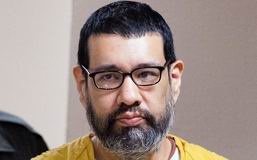 Anthony Garcia
Murderer · USA · 2008
Anthony Garcia was a former doctor who was found guilty on all counts including…
4 victims
Anthony Garcia
Murderer · USA · 2008
Anthony Garcia was a former doctor who was found guilty on all counts including…
4 victims
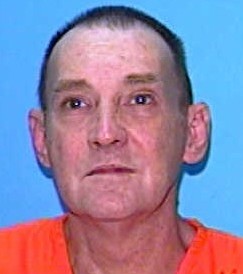 Robert Ira Peede
Murderer · USA · 1983
Robert Ira Peede was prosecuted in the Ninth Judicial Circuit, Orange County, F…
1 victim
Robert Ira Peede
Murderer · USA · 1983
Robert Ira Peede was prosecuted in the Ninth Judicial Circuit, Orange County, F…
1 victim
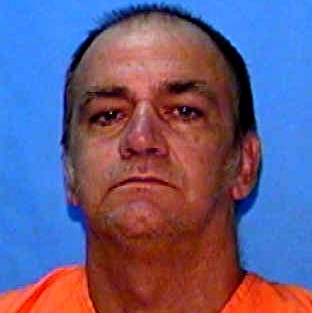 Gary Lawrence
Murderer · USA · 1994
Gary Lawrence (DOB: 06/29/57) was tried in the First Judicial Circuit, Santa Ro…
1 victim
Gary Lawrence
Murderer · USA · 1994
Gary Lawrence (DOB: 06/29/57) was tried in the First Judicial Circuit, Santa Ro…
1 victim
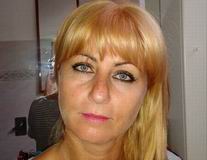 Edlira Dobrushi
Murderer · Italy · 2014
Edlira Dobrushi, aged 37, killed her 3 children in their beds in Lecco near Mil…
3 victims
Edlira Dobrushi
Murderer · Italy · 2014
Edlira Dobrushi, aged 37, killed her 3 children in their beds in Lecco near Mil…
3 victims
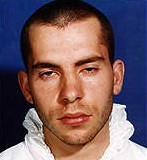 David John Copeland
Murderer · United Kingdom · 1999
David John Copeland was born in Isleworth, in the London Borough of Hounslow, a…
3 victims
David John Copeland
Murderer · United Kingdom · 1999
David John Copeland was born in Isleworth, in the London Borough of Hounslow, a…
3 victims
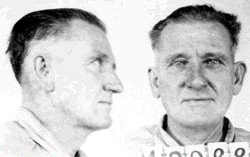 Lee Albert Smith
Murderer · USA · 1944
Lee Albert Smith, white, was executed by asphyxiation-gas in Arizona on April 6…
1 victim
Lee Albert Smith
Murderer · USA · 1944
Lee Albert Smith, white, was executed by asphyxiation-gas in Arizona on April 6…
1 victim
- Gender
- male
- Country
- Ukraine
- Location
- Mykolaiv, Ukraine
- Date of birth
- 1988
- Age at first offence
- 24
- Characteristics
- kidnapping, rape, necrophilia
- Victim profile
- Oksana Serhiyivna Makar, 18
- Method of murder
- Strangulation
- Date(s) of murder
- March 8, 2012
- Years active
- 2012
- Date of arrest
- 3 days after
- Status
-
Life imprisonment
Sentenced to life in prison on November 27, 2012
Background
Oksana Makar (Oksana Serhiyivna Makar) was born on 11 June 1993 and died on 29 March 2012. She spent a significant part of her childhood in an orphanage after both her father and her stepfather were imprisoned for dealing drugs, and after her mother was convicted of robbery and sentenced to three years. She completed only six years of schooling, ran away from the orphanage, and lived by herself at various locations being abandoned by her parents. From the age of 11, she engaged in petty theft and prostitution, which affected her employability.
Yevgeny Krasnoshchok left home at 17 and worked in various low ranking jobs. He lived in a hostel with his wife and one-year-old daughter. Krasnoshchok remained in police custody since his arrest on 11 March.
Maxim Prisyazhnyuk worked as a lawyer in the Department of Culture for the Mykolaiv City Council. His adopted mother was a head of the Yelanetsk District council prior to her retirement in 2009. Yelanetsk was located 60 miles from Mykolaiv. Prisyazhnyuk had been a member of the youth wing of the Party of Regions, but had been expelled from their ranks in 2010. He continued his political career as a member of the United Centre, but that party stated that he had never been a member and had only worked with them on a voluntary basis during the 2010 local elections.
Artem Pogasyan’s father had reportedly worked in the past as a senior official in the district prosecutor’s office in Mykolaiv. According to the police, his father worked as a manual laborer and died in January 2012, and his mother is a librarian.
The offence
Oksana Makar, aged 18, was attacked allegedly by three men in Mykolaiv on the night of 8–9 March 2012. There were conflicting accounts on the details of how the suspects and victim knew each other and what occurred on the evening of the murder, but it was not disputed that Makar met at least two of her attackers in the Rybka pub in Mykolaiv, and that they all went to an apartment belonging to one of the alleged attackers.
It had been alleged that Prisyazhnyuk knew Makar before they met on 8 March and planned the crime, although this allegation was denied by Makar’s mother.
Three men raped Makar at the apartment and attempted to strangle her with a cord. They then took her, moved her to a nearby construction site, wrapped her in a blanket, and set her on fire. The fire was burning during the whole night. She was discovered the next morning, still conscious, by a passing motorist and taken to a hospital.
Makar suffered burns to 55 percent of her body and received lung damage due to smoke inhalation.
Investigation
Makar was transferred to the Donetsk Burn Center. A Swiss surgeon operated on her. Her right arm and both of her feet were amputated to stop gangrene from spreading.
On 29 March 2012, Makar died from her injuries. She was buried on 30 March in Luch. Since she died unmarried, she was buried in a wedding dress in accordance with local tradition.
Three men—Yevgeny Krasnoshchok (23), Maxim Prisyazhnyuk (24), and Artem Pogasyan (22)—were arrested on 11 March. Prisyazhnyuk and Pogasyan were released on police bail.
After this release, it was claimed in the media that the parents of Prisyazhnyuk and Pogasyan were ex-government officials from the Mykolaiv area and were connected to local politicians. It was reported that Prisyazhnyuk was the adopted son of a former head of district council, and that Pogasyan was the son of the regional prosecutor. In a police statement, the police confirmed the claim with respect to Prisyazhnyuk, but stated that Pogasyan’s mother was a librarian and his father was a manual laborer before his death in January 2012.
After protests in the streets of Mykolaiv and other cities against the police bail of Prisyazhnyuk and Pogasyan, Ukrainian President Viktor Yanukovych intervened. An investigating team from Kiev, Ukraine’s capital, visited Mykolaiv. Prisyazhnyuk and Pogasyan, who had been released on police bail, were re-arrested, and at least four local law-enforcement officials were sacked.
On 29 March, a Ministry of Internal Affairs spokesman announced that all three men had been charged with Oksana Makar’s rape and murder and faced life in jail.
Arrest
Krasnoshchok was arrested on 11 March 2012 and remained in police custody. Prisyazhnyuk was arrested on 11 March 2012, released on police bail, and was rearrested following public protests. Pogasyan was arrested on 11 March 2012, released on police bail, and was rearrested following public protests.
Trial
On 24 May 2012, an open court trial began at Mykolaiv’s Tsentralnyi Raion court.
During the trial, Prysiazhniuk claimed that sex with Makar was on mutual consent. He and Pogosian claimed that it was Krasnoshchiok who smothered the girl and then raped her again. Prysiazhniuk and Pogosian believed she was already dead when they carried her to the basement.
On 30 October 2012, the prosecutor called for a life sentence for Krasnoshchiok, 15 years of imprisonment for Prysiazhniuk, and 14 years of imprisonment for Pogosyan.
Sentencing
On 27 November 2012, the Central Regional Court of Mykolaiv sentenced the man tagged as the lead offender in the case, Yevhen Krasnoschok, to life imprisonment. Co-offender Maksym Prysiazhniuk received a 15-year prison sentence, and the third offender, Artem Pohosian, received 14 years’ jail time.
Appeals
Outcome
Krasnoshchok was sentenced to life imprisonment on 27 November 2012.
Aftermath
Public protests occurred in Mykolaiv, Kharkiv, Lviv, and Odessa after the police bail was criticized and after the death of Makar.
Makar’s case was linked with “bigwig crimes,” crimes committed by either the children of public officials or by officials themselves. Victim’s mother Tatiana Surovitskaya said her connections within one of the central TV channels in Ukraine helped ensure widespread initial media coverage. Surovitskaya posted footage of Makar in hospital on YouTube after medics had been forced to amputate one of her arms and both her feet; the amputations were visible in the video.
Ukrainian billionaire and member of parliament Renat Akhmetov aided the transfer of Makar to the Donetsk Burn Center and paid for the Swiss surgeon. Governor of the Mykolaiv province Nikolai Kruglov blamed, among others, the family of the injured girl:
“The question of control of the child - it's family issues. This is a minor child, in our 18 years in school learning - I am at this point I say”
Raisa Bohatyryova (Deputy Prime Minister and concurrently Minister of Health) held talks with Nikolai Kruglov and asked him to provide all the necessary medical care for Oksana.
The Ukrainian Presidential adviser Marina Stavniychuk voiced support to the residents of Mykolaiv and opposed the initial release of suspects. She said:
“The presidential adviser further expressed her personal disbelief over the release of suspects.”
Member of parliament Serhiy Sobolev said that:
“the spokesman of the Mykolaiv regional police department is frankly lying”
Sobolev said he was shocked that Olga Perederenko still held her position:
“Sobolev was shocked that Olga Perederenko still holds her position.”
During the plenary session of the Verkhovna Rada on 14 March, Gennady Zadyrko said Ukraine should:
“bring back the death penalty”
Deputy Oleg Lyashko urged colleagues to donate one day’s salary to Makar’s medical treatment and said they should:
“castrate pedophiles”
Secretary of the National Security and Defense Council of Ukraine Andriy Klyuyev expressed confidence that the perpetrators would be punished with the full extent of the law. He said:
“the government must adequately respond to any crime - no one has to avoid punishment, regardless of affiliation or social status”
Angelica Rudnitskaya, an Honored Artist of Ukraine, stated she did not believe in the execution of President Viktor Yanukovych’s order to ensure a full and impartial investigation of rape Oksana Makar. She said:
“If the law enforcement system is not able to protect its citizens and punish those responsible, the people themselves must all available legal means to force her to do it”
After Makar died on 29 March 2012, President Viktor Yanukovych and Prime Minister Mykola Azarov were among the first to offer condolences. Azarov wrote on his blog:
“No compromises. Only with the knowledge that punishment is inevitable will these monsters fear to encroach on people’s lives and rights.”
On 13 March, after the rearrest following public protests, rallies continued, including funds gathering and blood donation.
On the morning of 13 March, dozens of Mykolaiv residents went to a first rally next to the Central police station. The rally moved to the Prosecutor’s Office of the Mykolaiv province. Another protest was held at Lenin Square.
On 15 March, another rally was held in the central area of Mykolaiv near Lenin Square in support of Oksana Makar with a few thousand participants.
Due to the resonance of the Oksana Makar assault, another similar criminal case was revealed involving another teenager, Aleksandra Popova, who was hospitalized on the same day and was unconscious for weeks. The rally supported both Oksana Makar and Aleksandra Popova. Demonstrators gathered in Lenin Square collected 7,511 hryvnia for the treatment of Oksana Makar and collected 6,652 hryvnia for Aleksandra Popova. The general public donated over 1 million hryvnia for the treatment of Makar, according to her mother.
Between 14 and 15 March, more than 150 Mykolaiv residents donated blood for Oksana Makar. After she was moved to Donetsk, over 60 Donetsk residents donated blood, plus 150 Donetsk policemen.
Spotted an error, or have more information about this case?