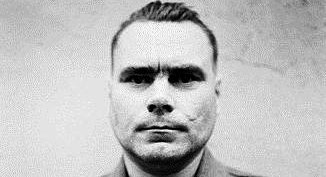
Josef Kramer
Homicide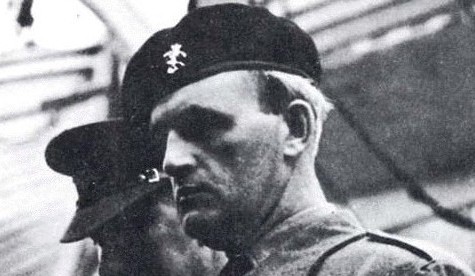 Frederick Emmett-Dunne
Homicide · Germany · 1953
Defendant: Frederick Emmett-Dunne Victim: Sergeant Reginald Watters Other named…
1 victim
Frederick Emmett-Dunne
Homicide · Germany · 1953
Defendant: Frederick Emmett-Dunne Victim: Sergeant Reginald Watters Other named…
1 victim
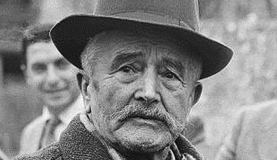 Gaston Dominici
Homicide · France · 1952
Gaston Dominici was convicted of the triple murder of three Britons in France i…
3 victims
Gaston Dominici
Homicide · France · 1952
Gaston Dominici was convicted of the triple murder of three Britons in France i…
3 victims
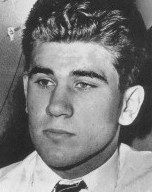 William Heirens
Homicide · USA · 1945
William George Heirens (born November 15, 1928 in Evanston, Illinois) was an Am…
3 victims
William Heirens
Homicide · USA · 1945
William George Heirens (born November 15, 1928 in Evanston, Illinois) was an Am…
3 victims
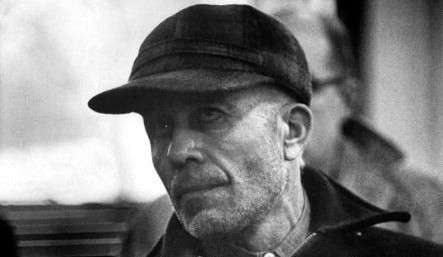 Edward Gein
Homicide · USA · 1954
Edward Gein was sentenced to life imprisonment in 1968. He was found not guilty…
2 victims
Edward Gein
Homicide · USA · 1954
Edward Gein was sentenced to life imprisonment in 1968. He was found not guilty…
2 victims
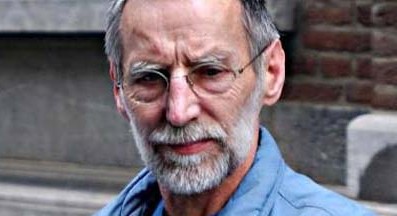 Michel Fourniret
Serial killer · France / Belgium · 1987
Michel Fourniret (born Sedan, 4 April 1942) was a French serial killer who conf…
10 victims
Michel Fourniret
Serial killer · France / Belgium · 1987
Michel Fourniret (born Sedan, 4 April 1942) was a French serial killer who conf…
10 victims
 Richard Allen Moran
Murderer · USA · 1984
Richard Allen Moran was executed by lethal injection in Nevada on March 30, 199…
3 victims
Richard Allen Moran
Murderer · USA · 1984
Richard Allen Moran was executed by lethal injection in Nevada on March 30, 199…
3 victims
 Jacques Mécislas Charrier
Murderer · France · 1922
Jacques Mécislas Charrier was a French anarchist illégaliste. He was executed b…
1 victim
Jacques Mécislas Charrier
Murderer · France · 1922
Jacques Mécislas Charrier was a French anarchist illégaliste. He was executed b…
1 victim
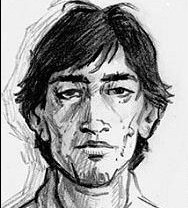 Erno Soto
Serial killer? · USA · 1972
Erno Soto was found incompetent for trial and was committed to a mental institu…
4 victims
Erno Soto
Serial killer? · USA · 1972
Erno Soto was found incompetent for trial and was committed to a mental institu…
4 victims
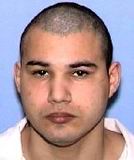 John Allen Rubio
Murderer · USA · 2003
John Allen Rubio was a Hispanic male born August 12, 1980. His education level…
3 victims
John Allen Rubio
Murderer · USA · 2003
John Allen Rubio was a Hispanic male born August 12, 1980. His education level…
3 victims
- Gender
- male
- Country
- Germany
- Location
- Bergen, Lower Saxony, Germany
- Date of birth
- November 10, 1906
- Age at first offence
- 38
- Characteristics
- —
- Victim profile
- Men and women
- Method of murder
- Several
- Date(s) of murder
- 1944 - 1945
- Years active
- 1944–1945
- Date of arrest
- April 15, 1945
- Status
-
Executed
Executed by hanging on December 31, 1945
Case identification
Josef Kramer (November 10, 1906 – December 13, 1945) was the Commandant of the Bergen-Belsen concentration camp.
Background
Kramer was born in Munich and joined the Nazi Party in 1931 and the SS in 1932. His SS training led him into work as a prison guard and, after the outbreak of war, as a concentration camp guard. In 1934, he was assigned as a guard at Dachau. His promotion was rapid, obtaining senior posts at Sachsenhausen and Mauthausen concentration camps.
He became assistant to Rudolf Höß, the Commandant at Auschwitz in 1940, and later the Commandant of Natzweiler concentration camp in April 1941. In 1940, he accompanied Rudolf Höß to inspect Auschwitz as a possible site for a new synthetic coal oil and rubber plant, described as a vital industry in Germany given its shortage of oil. Kramer was promoted to the rank of Hauptsturmführer in 1942. In May 1944, he was put in charge of the gas chambers at the Auschwitz-Birkenau compound, holding that position until December 1944, when he was transferred out as Commandant of Belsen.
At Auschwitz, Kramer became notorious among his subordinates as a harsh taskmaster. One of the defendants at the Frankfurt Trial, Dr. Franz Lucas, testified that he tried to avoid assignments given him by Kramer by pleading stomach and intestinal disorders. Dr. Lucas objected strenuously when he saw that his name had been added to the list of selecting physicians for a large group of inmates transferred from Hungary. Kramer reacted sharply:
"I know you are being investigated for favouring prisoners. I am now ordering you to go to the ramp, and if you fail to obey an order, I shall have you arrested on the spot"
In August 1943 Kramer received 80 inmates who were to be killed with gas. Kramer had the women stripped and, once naked, had them herded into the gas chambers. Kramer later testified:
"When the door closed they began to scream. I put in a small amount of salt through a tube and looked through a peephole to see what happened. The women breathed about a minute before they fell to the floor."
Kramer repeated this until all were dead. When asked how he felt about this, he said:
"I had no feelings in carrying out these things because I had received an order."
The offence
Gas chamber responsibility at Auschwitz-Birkenau
Kramer held responsibility for the gas chambers at the Auschwitz-Birkenau compound from May 1944 until December 1944.
Kramer was also described as being charged with selecting prisoners to be sent to the gas chamber. Neither Kramer nor Dr. Fritz Klein denied that prisoners had been gassed at Birkenau; both denied being responsible for selecting the victims.
The most serious charges against Kramer were that he had selected prisoners to be sent to the gas chamber.
Conditions and deaths at Bergen-Belsen
In December 1944, Kramer was transferred from Birkenau to Belsen near the village of Bergen. Belsen had originally served as a temporary camp for those leaving Germany, but during the war had been expanded to serve as a convalescent depot for the ill and displaced people from across north-west Europe. Although it had no gas chambers, Kramer’s rule was described as so harsh that he became known as “The Beast of Belsen”.
As Germany collapsed, administration of the camp broke down, but Kramer remained devoted to bureaucracy. On March 1, 1945, Kramer filed a report stating that of the 42,000 inmates in his camp, 250–300 had died from typhus. On March 19, the number of inmates rose to 60,000 as the Germans continued to evacuate camps that were soon to be liberated by the Allies. As late as the week of April 13, some 28,000 additional prisoners were brought in.
With the collapse of administration and many guards fleeing to escape retribution, roll calls were stopped and inmates were left to their own devices. Corpses rotted everywhere, and rats attacked the living too weak to fight them off. Kramer remained even when the British arrived to liberate the camp. He remained indifferent and callous and took them on a tour of the camp to inspect the “scenes”. Piles of corpses were described as lying all over the camp, mass graves were described as filled in, and huts were described as filled with prisoners in every stage of emaciation and disease.
Investigation and arrest
Kramer remained at Bergen-Belsen until it was liberated. Josef Kramer was arrested on April 15, 1945, the same day that British Army troops entered the Bergen-Belsen concentration camp and the adjacent German Army Training Center, after a cease-fire agreement had been voluntarily negotiated by the German Army in order to allow the British to take control of the camp. Although most of the camp personnel had escaped the day before, 80 of the staff members remained at their posts in order to help the British, including Commandant Kramer.
On April 17, 1945, 47 other staff members at Bergen-Belsen were arrested, including 12 of the Kapos trusted prisoners appointed by the guards as camp supervisors. The next day, the staff members, now prisoners themselves, were forced to bury dead bodies lying around the camp.
Twenty of these 80 guards died after the British took control, according to Eberhard Kolb, the Chairman of the Academic Advisory Council for the Extension and Redevelopment of the Memorial Bergen-Belsen. Kolb said that most died of typhus, and others died of ptomaine poisoning from eating food provided by the British.
Trial
Josef Kramer and 44 other camp staff (including 15 women) were tried in the Belsen Trial by a British military court at Lüneburg. The trial lasted several weeks from September to November 1945.
The charges against three staff members (Nikolas Jenner, Paul Steinmetz, and Walter Melcher) were dropped. Kramer and 44 others were brought before a British Military Tribunal on September 17, 1945 at Lüneburg. One of the 44 staff members, Ladislaw Gura, fell ill and was not tried by this court, leaving only Kramer and 43 others in the dock at Lüneburg.
The defendants were charged with war crimes by a British Military Court under a Royal Warrant of June 14, 1945. Bergen-Belsen was described as the only camp which came under the control of the British Army, and it was stated that British Occupation did not have jurisdiction over war criminals who worked in other camps.
All defendants at the Belsen Trial were provided with defense counsel. Eleven of the defense attorneys were British and one was Polish.
Charge counts
There were two counts listed in the charge sheet:
- Count One for crimes committed at Bergen-Belsen.
- Count Two for crimes committed while the guards were previously working at Auschwitz Birkenau.
Kramer, who was the commandant at Birkenau (the Auschwitz II camp) prior to being transferred to Bergen-Belsen in December 1944, was charged under both counts, as were 11 others who had worked under him at Birkenau.
Out of the 12 defendants charged under Count Two, only one defendant, Stanislawa Staroska, was not also charged with Count One. Staroska was found guilty of Count Two and sentenced to 10 years in prison.
The 12 defendants charged under both counts were Josef Kramer, Dr. Fritz Klein, Peter Weingartner, George Kraft, Franz Hoessler, Juana Bormann, Elisabeth Volkenrath, Herta Ehlert, Irma Grese, Ilse Lothe, Hilde Lohbauer, and Heinrich Schreirer.
Two of these 12 defendants acquitted of all charges were George Kraft and Ilse Lothe.
Thirty-two of the 44 defendants were charged only under Count One. Of these 32, 12 were acquitted. The total number of defendants acquitted of all charges was 14.
Thirty of the 44 defendants were found guilty.
Individuals acquitted and convicted
The 12 who were charged only with Count One and were acquitted were Josef Klippel, Oscar Schmedidzt, Fritz Mathes, Karl Egersdorf, Walter Otto, Eric Barsch, Ignatz Schlomoivicz, Ida Forster, Klara Opitz, Charlotte Klein, Hildegard Halmel, and Anton Polanski.
Of the 30 found guilty, 6 were found guilty on both Counts One and Two: Josef Kramer, Dr. Fritz Klein, Peter Weingartner, Elizabeth Volkenrath, and Irma Grese; Hilde Lohbauer was the sixth.
Hilde Lohbauer was sentenced to 10 years in prison. Five defendants were hanged: Josef Kramer, Dr. Fritz Klein, Peter Weingartner, Elizabeth Volkenrath, and Irma Grese.
Twenty-four of the 30 guilty defendants were found guilty of only one count. Four were found guilty of only Count Two (crimes committed at Birkenau): Franz Hoessler, Juana Bormann, Heinrich Schreirer, and Stanislawa Staroska.
- Schreirer was sentenced to 15 years in prison.
- Staroska was sentenced to 10 years in prison.
- Hoessler and Bormann were both hanged.
The 20 found guilty only of Count One (crimes at Bergen-Belsen) were: Herta Ehlert, Karl Flrazich, Otto Calesson, Anchor Pinchen, Franz Stofel, Wilhelm Dorr, Erich Zoddel, Ilse Forster, Herta Bothe, Frieda Walter, Irene Haschke, Gertrud Fiest, Gertrud Sauer, Hilde Lisiewitz, Johanne Roth, Anna Hempel, Helena Kopper, Vladislav Ostrowoski, Medislaw Burgraf, and Antoni Aurdzeig.
Of the 20 convicted only on Count One, four were hanged: Karl Flrazich, Franz Stofel, Anchor Pinchen, and Wilhelm Dorr.
Only one prisoner, Erich Zoddel, was sentenced to Life in Prison; he was convicted only under Count One.
The shortest sentence was given to Hilde Lisiewitz for crimes committed at Bergen-Belsen; she was sentenced to one year in prison.
Three defendants were sentenced to 15 years for crimes committed at Bergen-Belsen: Herta Ehlert, Otto Calesson, and Helena Kopper. Heinrich Schreirer was also sentenced to 15 years for crimes committed at Auschwitz-Birkenau.
Eight defendants were sentenced to 10 years in prison: Hilde Lohbauer, Ilse Forster, Herta Bothe, Irene Haschke, Gertrud Sauer, Johanne Roth, Anna Hempel, and Antoni Aurdzeig.
- Of those who received 10 years, only Hilde Lohbauer was convicted of both Counts One and Two.
- The other seven were convicted only of Count One.
Frieda Walter was sentenced to 3 years imprisonment for crimes at Bergen-Belsen and Gertrud Fiest was sentenced to 5 years, also for crimes committed at Bergen-Belsen.
Trial timeline and sentencing
Sentences were handed down on November 17, 1945. The sentences were then reviewed by Field-Marshall Montgomery, the commanding officer of the British Occupation, and clemency was denied to all those who had been found guilty. There was no appeal process.
Evidence and testimony relevant to Kramer
Deposition of Ilona Stein
A deposition of Ilona Stein regarding Irma Grese was included regarding selections for the gas chamber. The deposition included this statement:
"Whilst at Birkenau I have seen Grese making selections with Dr. Mengele of people to be sent to the gas chamber. On these parades Grese herself chose the people to be killed in this way. In one selection about August, 1944, there were between 2000 and 3000 selected. At this selection Grese and Mengele were responsible for selecting those for the gas chamber. People chosen would sometimes sneak away from the line and hide themselves under their beds. Grese would go and find them, beat them until they collapsed and then drag them back into line again. I have seen everything I describe. It was general knowledge in this camp that persons selected in this way went to the gas chamber."
Defence arguments
An excerpted and edited closing argument of Major Winwood in defense of Commandant Josef Kramer and Dr. Klein was included. It stated that Major Winwood did not dispute that Kramer, Klein and Weingartner were, for certain periods, members of staff at both camps and therefore to a certain degree responsible for administration. It also distinguished between Auschwitz and Belsen: at Auschwitz thousands of people were killed in the gas chamber and at Belsen thousands of people died.
Counsel arguments included that orders regarding the gassing of victims at Auschwitz came, not from Kramer as Kommandant of Birkenau but from the Kommandant of Auschwitz No. 1, with a political department at Auschwitz No. 1 described as responsible for incoming transports and evidence that a member of this department used always to be present at the selections. It was argued that Kramer had no authority over “disposal”.
The excerpt also described an argument that orders and responsibility were compared with a Commanding Officer of a transit camp, with responsibility confined to administration inside the camp until a posting order was received. It stated that counsel referred to evidence of Kramer, Dr. Klein, Dr. Bendel and Hoessler in support.
Counsel stated that on behalf of Klein, superior orders were pleaded. The excerpt stated that the accused admitted that acting on orders by his superior officer, he made selections of incoming transports, and that he never protested against people being sent to the gas chamber while denying he had agreed with it, stating:
"One could not protest when in the Army."
The excerpt stated that defense argued Kramer admitted he often stopped and watched selections and denied categorically that he himself made the selections, including on behalf of his SS staff. It also stated that counsel claimed beatings were done without Kramer’s authority and without his knowledge.
Counsel invited the court to consider difficulties arising during roll-calls and to accept Kramer’s word against uncorroborated allegations contained in Rosenthal’s affidavit. The excerpt also described counsel’s position on Kramer's responsibility for conditions at Belsen, arguing that the court had sufficient evidence to picture Belsen from December 1944 until liberation, when order changed into disorder and disorder changed into chaos.
Counsel argued that Belsen was an example of what was happening to Germany as a whole country, more people being sent to the camp while Kramer was inadequately provided with medical facilities. It was argued that when he closed the camp to avoid further sick people contracting typhus, he was ordered to keep it open. It stated that on March 1, he realized nothing would be done and wrote a dispatch to his superior officer, Glücks, telling him the present position and prophesying a catastrophe. The excerpt stated that Volkenrath’s evidence supported Kramer's claim to have written this letter.
The excerpt also described arguments about food shortage and responsibility for distribution once food left the cookhouse, and arguments about roll-calls being part of concentration camp life and the only way of making out strength returns for rations. It described a defense position that roll-calls were not unreasonably frequent or oppressively administered, and described counsel arguments about beatings being necessary to restrain internees when shortage of food came. It also stated that the story of Bimko and Hammermasch regarding kicking four Russians and possible death of one was argued as being a pure invention thought out for revenge on Kramer, and for this reason witnesses accused him of taking an active part in the selections at Auschwitz.
The excerpt described arguments about Klein being a locum at Belsen for ten days in January and returning under Horstmann's orders, and that Klein was not senior doctor. It also stated that only three days before the British came, Klein became chief medical officer and the only medical officer at Belsen concentration camp.
It further stated that both Kramer and Dr. Klein were convicted on both Counts One and Two, and both were sentenced to death by hanging, and that they were both hanged at Hamelin Prison on December 13, 1945.
Irma Grese testimony and related material
The trial narrative included Irma Grese’s prominence as a defendant. It provided testimony excerpts under direct examination and included extensive quoted material.
Irma Grese: background quote
The trial included quoted testimony under direct examination. It stated:
I was born on 7th October, 1923.
In 1938 I left the elementary school and worked for six months on agricultural jobs at a farm, after which I worked in a shop in Luchen for six months.
When I was 15 I went to a hospital in Hohenluchen, where I stayed for two years. I tried to become a nurse but the Labour Exchange would not allow that and sent me to work in a dairy in Fürstenburg.
In July, 1942, I tried again to become a nurse, but the Labour Exchange sent me to Ravensbrück Concentration Camp, although I protested against it. I stayed there until March, 1943, when I went to Birkenau Camp in Auschwitz. I remained in Auschwitz until January, 1945.
Irma Grese: direct examination on selection parades
Under direct examination, Major Cranfield asked about the order for “selection parades”, and Grese responded. The excerpt included:
Cranfield: Where did the order come from for what we call "selection parades"?
Grese: That came by telephone from a RapportFührerin or from Oberaufseherin Dreschel.
Cranfield: When the order came were you told what the parade was for?
Grese: No.
Cranfield: What were the prisoners supposed to do when the whistle went?
Grese: Fall in fives, and it was my duty to see that they did so. Dr. Mengele then came and made the selection. As I was responsible for the camp my duties were to know how many people were leaving and I had to count them, and I kept the figures in a strength book. After the selection took place they were sent into "B" Camp, and Dreschel telephoned and told me that they had gone to another camp in Germany for working purposes or for special treatment, which I thought was the gas chamber. I then put in my strength book either so many for transfer to Germany to another camp, or so many for S.B. (Sonder Behandlung). It was well known to the whole camp that S. B. meant the gas chamber.
Cranfield: Were you told anything about the gas chamber by your senior officers?
Grese: No, the prisoners told me about it.
Cranfield: You have been accused of choosing prisoners on these parades and sending them to the gas chamber. Have you done that?
Grese: No; I knew that prisoners were gassed.
Cranfield: Was it not quite simple to know whether or not the selection was for the gas chamber, because only Jews had to attend such selections?
Grese: I myself had only Jews in Camp "C."
Cranfield: Then they would all have to attend the selection for the gas chamber, would they not?
Grese: Yes.
Cranfield: As you were told to wait for the doctors you would know perfectly well what it was for?
Cranfield: When these people were parading they were very often paraded naked and inspected like cattle to see whether they were fit to work or fit to die, were they not?
Grese: Not like cattle.
Cranfield: You were there keeping order, were you not, and if one ran away you brought her back and gave her a beating?
Major Cranfield closing address excerpt
An excerpt described Major Cranfield’s closing address on behalf of Klippel, Grese, Lohbauer and Lothe, including arguments about charge sheet names and vagueness/generalities, plus references to evidence about specific victims. The excerpt stated:
- It asserted that Meyer was shot by a man not before the Court.
- It asserted that Anna Kis was killed deliberately by a man not before the Court and that, if she was a Hungarian, she could not be an Allied National.
- It argued that the dates of death and the alleged dates of death in the Belsen charge contained cases where dates were before accused came to Belsen.
- It stated that it was agreed that the names of Kohn, Glinovjechy and Konatkevicz had been wrongly included in the Belsen charge.
- It described counsel asking to disbelieve Szafran’s story about the shooting of the two girls and other credibility challenges, including questioning whether roll-calls went on from six to eight hours each day and asking about the strength of evidence on alleged killings and beatings.
Sentencing
Kramer was sentenced to death on November 17, 1945 and was hanged at Hameln jail by Albert Pierrepoint on December 13, 1945.
After the trial, 11 sentenced to death (8 men and 3 women) were taken to Hamelin jail in Wesfalia to await execution. An execution chamber was constructed right in the prison by Royal Engineers of the British Army, located at the end of the corridor where the condemned prisoners were held in a row of tiny cells. It was decided that Irma Grese, as the youngest, would go first.
The 3 women were hanged separately, first Grese, then Volkenrath, then Bormann. The 8 men were hanged in pairs to save time. The hanging was described as finished just in time for the mid-day meal.
Albert Pierrepoint, an experienced professional hangman, was flown from Great Britain to hang the 11 condemned prisoners. On December 12, 1945, the condemned were weighed and measured so the hangman could calculate how to adjust the gallows for each one.
Aftermath and additional quoted material
The narrative included quotations from Albert Pierrepoint’s autobiography concerning the execution of Irma Grese. Two quoted paragraphs were included.
"At last we finished noting the details of the men, and RSM O'Neil ordered 'bring out Irma Grese. She walked out of her cell and came towards us laughing. She seemed as bonny a girl as one could ever wish to meet. She answered O'Neil's questions, but when he asked her age she paused and smiled. I found that we were both smiling with her, as if we realised the conventional embarrassment of a woman revealing her age. Eventually she said 'twenty-one,' which we knew to be correct. O'Neil asked her to step on to the scales. 'Schnell!' she said - the German for quick."
"The following morning we climbed the stairs to the cells where the condemned were waiting. A German officer at the door leading to the corridor flung open the door and we filed past the row of faces and into the execution chamber. The officers stood at attention. Brigadier Paton-Walsh stood with his wrist-watch raised. He gave me the signal, and a sigh of released breath was audible in the chamber. I walked into the corridor. 'Irma Grese,' I called. The German guards quickly closed all grills on twelve of the inspection holes and opened one door. Irma Grese stepped out. The cell was far too small for me to go inside, and I had to pinion her in the corridor. 'Follow me,' I said in English, and O'Neil repeated the order in German. At 9.34 a.m. she walked into the execution chamber, gazed for a moment at the officials standing round it, then walked on to the centre of the trap, where I had made a chalk mark. She stood on this mark very firmly, and as I placed the white cap over her hand she said in her languid voice 'Schnell'. The drop crashed down, and the doctor followed me into the pit and pronounced her dead. After twenty minutes the body was taken down and placed in a coffin ready for burial."
The narrative also included testimony excerpts for other defendants at the Belsen Trial, including Elizabeth Volkenrath and Juana Bormann, describing parts of their employment and their testimony regarding allegations of selections and beatings, as well as their convictions and role in the executions:
- Elizabeth Volkenrath testified under direct examination about arriving at Auschwitz No. 1 in March 1942, being transferred to Birkenau in December 1942, working in the parcel office and bread store until September 1944, and being in charge of a working party in Auschwitz No. 1 from then until January 18. It stated she denied having herself made gas chamber selections, and that she testified she arrived at Belsen on February 5, 1945, went to hospital, and returned to work on March 23, and that at Belsen she was an Oberaufseherin tasked with detailing Overseers to duties. It stated she said she never did more than slap prisoners’ faces and described the events referred to by witness Hammermasch as involving Kramer beating a prisoner brought back from an attempt to escape, with Volkenrath present but not beating the girl. It also stated Volkenrath was found guilty of war crimes in both camps (Auschwitz-Birkenau and Bergen-Belsen), and that she was the second person to be hanged on December 13, 1945 following execution of Irma Grese.
- Juana Bormann denied being present at gas chamber selections, admitted she had a dog at Auschwitz but said it never attacked anyone and claimed she might have been mistaken for another Overseer named Kuck who also had a dog. It stated she worked at Birkenau from May 15, 1943 to the end of December 1943, came to Belsen in the middle of February 1945 to look after a pigsty, did not come in contact with prisoners beyond her own party, and that when prisoners disobeyed orders she boxed their ears or slapped their faces but never violently. It stated that on December 12, 1945, when the hangman made calculations, Bormann was measured at 5 feet tall and weighed 101 pounds. It stated she was acquitted on charges of beating prisoners at Bergen-Belsen but convicted of war crimes at Auschwitz-Birkenau, and that she was the last of the women to be hanged right after the execution of Elisabeth Volkenrath.
Other details
The narrative included a description of trial press attention and that there was a “no appeal process”.
The narrative also included contextual statements about Allied leaders and war crimes policy, including:
- An assertion that President Franklin D. Roosevelt first voiced the idea of bringing Nazi war criminals to justice on October 7, 1942 and his declaration quoted:
- On December 17, 1942, British Foreign Secretary Anthony Eden told the House of Commons:
"The German authorities are now carrying into effect Hitler's oft repeated intention to exterminate the Jewish people of Europe."
"It is our intention that just and sure punishment shall be meted out to the ringleaders responsible for the organized murder of thousands of innocent persons in the commission of atrocities which have violated every tenet of the Christian faith."
- An assertion that on October 26, 1943 the United Nations War Crimes Commission met in London with 15 Allied nations to discuss trials.
- A statement that Roosevelt, Churchill and Stalin issued a joint statement called the Moscow Declaration agreeing to bring German war criminals to justice.
It also stated that British charges against Belsen defendants differed from American charges at Dachau, with Belsen defendants charged with murdering specific individuals listed by name, while Nuremberg and Dachau involved “common plan” charges and other specific charges without murder of a specific individual charge for the defendants.
The narrative included detailed charge descriptions for Count One and Count Two, including named victims, their nationalities, and the asserted date ranges for the alleged crimes:
- Count One alleged ill-treatment causing deaths of Keith Meyer, Anna Kis, Sara Kohn, Heinrich Glinovjechy, Maria Konatkevicz, Marcel Freson de Montigny, Maurice Van Eijnsbergen, Maurice Van Mevlenaar, Jan Markowski, Georgej Ferenz, Salvatore Verdura, Therese Klee, and other Allied nationals whose names were unknown, with physical suffering alleged for other persons including Harold Osmund le Druillenec, Benec Zuchermann, Korperova, Hoffmann, Luba Rormann, Isa Frydmann, Alexandra Siwdowa, and other Allied nationals whose names were unknown.
- Count Two alleged ill-treatment causing deaths of Rachella Silberstein and other Allied nationals whose names were unknown, with physical suffering to other persons, including Eva Gryka and Hanka Rosenwayg.
The narrative described that the two most important defendants in the Belsen Trial were Commandant Josef Kramer and Dr. Fritz Klein, each charged under Counts One and Two, and that both had worked at Birkenau before being transferred to Bergen-Belsen in December 1944.
The narrative included references to Major Winwood’s closing argument excerpted and edited from trial documentation and to Major Cranfield’s closing address excerpted and edited from trial documentation.
Irma Grese was described as a cult figure among neo-Nazis in recent years, being considered by them a heroine and martyr due to perceptions of her courage and death, and the narrative stated that they did not believe she was the sadistic, sexually-deprived killer portrayed by accusers.
Spotted an error, or have more information about this case?