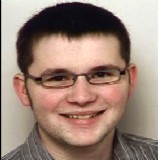
Tim Kretschmer
Mass homicide Stephan Letter
Serial killer · Germany · 2003
Stephan Letter was a German serial killer who was known to be responsible for t…
28 victims
Stephan Letter
Serial killer · Germany · 2003
Stephan Letter was a German serial killer who was known to be responsible for t…
28 victims
 Robert Steinhäuser
Mass murderer · Germany · 2002
Robert Steinhäuser committed suicide by shooting himself the same day. The Erfu…
16 victims
Robert Steinhäuser
Mass murderer · Germany · 2002
Robert Steinhäuser committed suicide by shooting himself the same day. The Erfu…
16 victims
 Stephen Lawrence Anderson
Mass homicide · New Zealand · 1997
1995 — Stephen Lawrence Anderson was diagnosed with schizophrenic. · 8 February…
6 victims
Stephen Lawrence Anderson
Mass homicide · New Zealand · 1997
1995 — Stephen Lawrence Anderson was diagnosed with schizophrenic. · 8 February…
6 victims
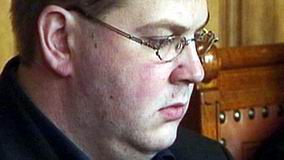 Olaf Däter
Serial killer · Germany · 2001
Olaf Däter (born September 25, 1969 in Bremerhaven) was a German serial killer…
5 victims
Olaf Däter
Serial killer · Germany · 2001
Olaf Däter (born September 25, 1969 in Bremerhaven) was a German serial killer…
5 victims
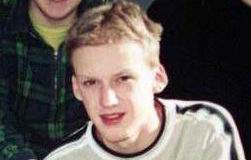 Martin Peyerl
Mass murderer · Germany · 1999
August 11, 1983 — Martin Peyerl was born to Rudolf and Theresa Peyerl. · Novemb…
4 victims
Martin Peyerl
Mass murderer · Germany · 1999
August 11, 1983 — Martin Peyerl was born to Rudolf and Theresa Peyerl. · Novemb…
4 victims
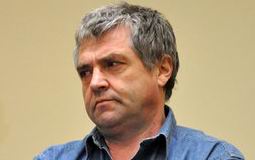 Thomas Selmayr
Murderer · Germany · 2011
March 21, 2011 — Police investigated the deaths of two girls, aged eight and 11…
2 victims
Thomas Selmayr
Murderer · Germany · 2011
March 21, 2011 — Police investigated the deaths of two girls, aged eight and 11…
2 victims
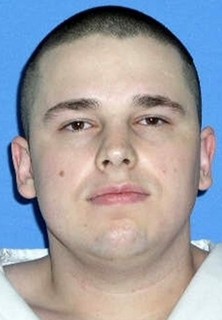 Ryan Dickson
Murderer · USA · 1994
Ryan Dickson was executed by lethal injection in Texas on April 26, 2007. Ryan…
2 victims
Ryan Dickson
Murderer · USA · 1994
Ryan Dickson was executed by lethal injection in Texas on April 26, 2007. Ryan…
2 victims
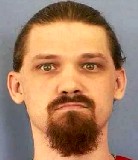 Blayde Grayson
Murderer · USA · 1996
Blayde Grayson (also known as Blayde N. Grayson and Blayde Nathaniel Grayson, a…
1 victim
Blayde Grayson
Murderer · USA · 1996
Blayde Grayson (also known as Blayde N. Grayson and Blayde Nathaniel Grayson, a…
1 victim
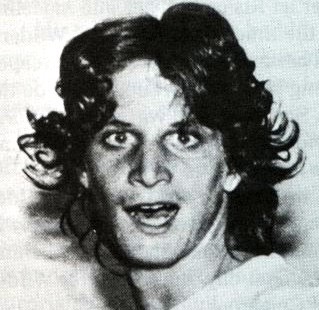 Ricky Kasso
Homicide · USA · 1984
Ricky Kasso (March 1967 - July 7, 1984) was a juvenile. Ricky Kasso was the son…
1 victim
Ricky Kasso
Homicide · USA · 1984
Ricky Kasso (March 1967 - July 7, 1984) was a juvenile. Ricky Kasso was the son…
1 victim
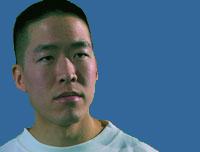 Wayne Lo
Murderer · USA · 1992
Wayne Lo (born November 14, 1974) was a Taiwanese-American who perpetrated a sc…
2 victims
Wayne Lo
Murderer · USA · 1992
Wayne Lo (born November 14, 1974) was a Taiwanese-American who perpetrated a sc…
2 victims
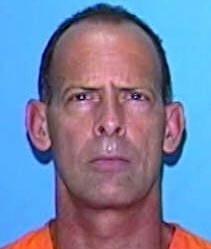 Jerry William Correll
Mass murderer · USA · 1985
Jerry William Correll was convicted and sentenced to death for the murders of h…
4 victims
Jerry William Correll
Mass murderer · USA · 1985
Jerry William Correll was convicted and sentenced to death for the murders of h…
4 victims
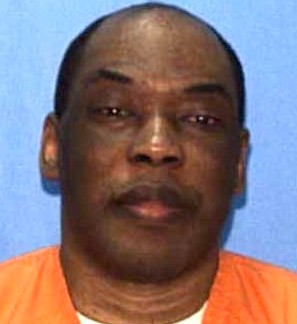 Sonny Boy Oats
Murderer · USA · 1979
Name: Sonny Boy Oats, Jr. DOB: 05/25/57 Case identifiers: DC# 051769, Fifth Jud…
2 victims
Sonny Boy Oats
Murderer · USA · 1979
Name: Sonny Boy Oats, Jr. DOB: 05/25/57 Case identifiers: DC# 051769, Fifth Jud…
2 victims
- Gender
- male
- Country
- Germany
- Location
- Winnenden, Baden-Württemberg, Germany
- Date of birth
- J uly 26, 1991
- Age at first offence
- 18
- Characteristics
- juvenile (17), school shooting
- Victim profile
- 11 women and 4 men
- Method of murder
- Shooting (9mm Beretta semi-automatic pistol)
- Date(s) of murder
- March 11, 2009
- Years active
- 2009
- Date of arrest
- —
- Status
-
Died in custody
Committed suicide by shooting himself in the head the same day
Overview
Tim Kretschmer (26 July 1991 – 11 March 2009) was a 17-year-old graduate of the Albertville Realschule in Winnenden, Germany. He committed a mass murder at the Albertville Realschule and then continued a shooting spree in the surrounding area, including two policemen. Kretschmer committed suicide after being cornered and shot in the legs by police officers. He was active on the internet under the pseudonym “JawsPredator1”.
Timeline
- 09:30 (CET) — Kretschmer opened fire at the Albertville Realschule.
- 09:33 a.m. local time — A student sent an emergency call; three police officers reached the scene two minutes later and entered the school.
- 12:04 — Kretschmer hijacked a Volkswagen Sharan minivan at a car park in Winnenden.
- about 12:00 — The hostage steered the car onto the grass verge and jumped from the vehicle towards a police patrol car.
- about 12:30 — Kretschmer emerged and shot at a passing car; a shootout began after police started to arrive.
- 11:00 — Police raided the Kretschmer family house on the day of the shooting.
- Five days after the event — Prosecutors initiated preliminary proceedings against Kretschmer’s father for negligent homicide.
- 12 March 2009 — BBC News published a profile: “Profile: Tim Kretschmer BBC News Thursday, 12 March 2009”.
- 13 March (Friday) — All German flags were flown on half-staff until Friday 13 March in honour of the victims.
- Three weeks before the shooting — Kretschmer wrote a letter to his parents saying that he was suffering and couldn’t go on.
- March 12 — In a press conference, police reported that Kretschmer had announced his killing spree several hours ahead of time on the Internet.
- The next day — Police determined that the internet message had not been written on Kretschmer’s computer and was a forgery.
- March 13, 2009 — Carter Dougherty’s New York Times portrait article was published (“By Carter Dougherty - The New York Times March 13, 2009”).
- in 2008 — Kretschmer graduated from Albertville Realschule with relatively poor grades; he also had treatment repeatedly for clinical depression on an out-patient basis in 2008.
- 2000 to 2003 — Marko Habijanec coached Kretschmer at the Erdmannhausen sports club.
- 2002 — Educators worked out a coded alert after the Erfurt school shooting of 2002.
- October 1990 — Wolfgang Schäuble was partly paralyzed by a bullet to the spine in an assassination attempt.
The offence
Albertville Realschule shooting
At approximately 09:30 (CET), Kretschmer opened fire at the Albertville Realschule. Eyewitness reports stated that he started on the first upstairs floor and went directly to two classrooms and a chemistry laboratory. In those rooms, he killed seven students and a female teacher. He fired more than 60 rounds at the school. The school principal broadcasted a coded announcement that alerted teachers and caused them to lock classroom doors; the coded alert had been worked out by German educators after the Erfurt school shooting of 2002. After receiving an emergency call from a student at 09:33 a.m. local time, three police officers reached the scene two minutes later and entered the school, interrupting the shooting spree. Kretschmer shot at them and fled the building. Two female teachers were killed in the hall as he departed.
Killing of a gardener in a nearby psychiatric institution park
After fleeing the school, Kretschmer confronted and killed a 56-year-old gardener in the park of a nearby psychiatric institution where he had received treatment in 2008.
Car hijacking and escape towards Wendlingen
At 12:04, Kretschmer hijacked a Volkswagen Sharan minivan at a car park in Winnenden. From his position on the rear seat, he ordered the driver to drive towards Wendlingen. Shortly before the Wendlinger junction to the A8 autobahn, the hostage steered the car onto the grass verge and jumped from the vehicle towards a police patrol car. It was shortly after 12:00.
The journey first took Kretschmer and his hostage westwards into the suburbs of Stuttgart, traveling through Waiblingen, Fellbach, and Bad Cannstatt, and then onto the B14 through the Heslach Tunnel onto the A81 autobahn towards Böblingen and Tübingen. The two then drove onto the B27 before leaving on the B313 to Nürtingen. Shortly before the Wendlinger junction to the A8 autobahn, the hostage jumped as described.
Wendlingen car showroom shootings and shootout
Kretschmer left the car immediately and ran towards the nearby industrial area, entering a Volkswagen car showroom through the main entrance. He threatened a salesperson and demanded a key for one of the vehicles. The salesperson managed to escape while Kretschmer was distracted. Kretschmer then shot and killed another salesperson and a customer, firing 13 bullets into the bodies. As he reloaded, another salesperson and a visitor fled through the rear exit.
Kretschmer emerged at about 12:30 and shot at a passing car; the driver escaped without injury. Police began arriving and a shootout began. One officer fired 8 shots at Kretschmer, hitting him once in each leg. Kretschmer returned to the car showroom and took 12 shots from within the building at police from nearby Nürtingen who were gradually surrounding the building. He then left the rear of the building and ran across a yard to a neighbouring business complex. There he shot and injured two police officers in an unmarked police car.
According to police reports, Kretschmer continued to fire at random at nearby buildings and people. Witnesses described observing the 17-year-old as he reloaded his pistol before shooting himself in the head. The final seconds of the shootout were captured with a cell phone video camera. According to forensic evidence, during the whole shooting spree, Kretschmer fired a total of 112 rounds. His last moments up to and including the suicide were recorded on video with a mobile phone.
Investigation
Police raided the Kretschmer family house at about 11:00 on the day of the shooting. Prosecutors and police described the case as involving internet activity and multiple reports about messages posted online, including later findings that at least one such message was a forgery.
A press conference on March 12 reported that Kretschmer had announced his killing spree several hours ahead of time on the Internet. The next day, police determined that this message had not been written on Kretschmer’s computer and was a forgery.
Separately, an imageboard message had been widely reported as announced by police the day after the shooting, but it was later determined to be forgeries.
In a New York Times portrait piece published March 13, 2009, police disputed the authenticity of a reported posting to a chat room warning of an attack on the school in Winnenden. A police spokesman, Nikolaus Brenner, said: “there was no indication that the purported warning had originated on Mr. Kretschmer’s personal computer.” The same piece quoted Brenner as saying there “might have been a ‘communications error’ in the initial assessment.”
In that portrait piece, a state official identified Heribert Rech was quoted: “Some crazy person sent a false message to the world.” The posting “must have been constructed after the event,” he said.
The New York Times portrait also contained the chatroom message that was attributed to the purported warning: “I have weapons and will go to my old school and really burn them up. I might get out alive, but you will certainly hear about me tomorrow. Remember the name Winnenden.”
The report also described that investigators had not discussed any specific motive and that Kretschmer had been described as a “classic case of a conflicted young man” who “wreaked havoc in real life after savoring imaginary violence in the digital world.” It included the quote: “If we had known this in advance, we would have called him a prototype of a rampager,” said Erwin Hetger, the chief of police in Baden-Württemberg, the southwestern German state where the crimes took place.
Arrest / Police actions
Police began arriving during the Wendlingen shootout and one officer fired 8 shots at Kretschmer, hitting him once in each leg. After the police arrived and the shootout escalated, Kretschmer fled and ran into a neighbouring business complex, where he shot and injured two police officers in an unmarked police car. Kretschmer then shot himself in the head.
Perpetrator information
Identity and background
Kretschmer was described as a 17-year-old resident of the neighbouring municipality of Leutenbach and a graduate of Albertville Realschule in 2008. His failing grades had prevented him from an apprenticeship, so he attended a commercial high school (Donner + Kern) in Waiblingen to prepare for a commercial career.
He was described by a friend as “a lonely and frustrated person who felt rejected by society.” An anonymous friend described him as “a quiet student who began to withdraw from his peers.”
Interests and behaviour
Kretschmer was an avid table tennis player and had hoped to become a professional player. Marko Habijanec, a Croatian table tennis player who coached Kretschmer at the Erdmannhausen sports club between 2000 and 2003, remembered him as being “a bit spoiled”, with “his mother fulfilling many of his demands.”
Habijanec said Kretschmer had “great difficulties accepting defeat” and would have “a temper tantrum, yelling and throwing his racket.” Habijanec stated that Kretschmer openly denigrated his teammates. When Habijanec discussed Tim’s attitude with his mother, he said he was “at disbelief to discover her siding fully with her son.”
Media reports said Kretschmer enjoyed playing Counter-Strike and playing with airsoft guns. Commentators noted: “game addiction is a symptom of something wrong and not a cause”. Kretschmer also shot his guns in the forest behind his home and in the basement of his house.
On his last day alive, Kretschmer played the video game Far Cry 2 online as “JawsPredator1.” He had profiles at “MyVideo.de”, Kwick.de and other websites. He often played poker with classmates in the “Cafe Tunix” after school hours in Waiblingen.
After inspection of his computer, officers found that he was interested in sadomasochistic scenes where a man is bound and humiliated by women. He also viewed such a movie the evening before the crime.
Kretschmer did not have a criminal record.
In the New York Times portrait, Siegfried Mahler of the Stuttgart prosecutors’ office was quoted about violent computer games, including: “violent computer games — in which, experts say, players digitally clothe and arm themselves for combat — plus brutal videos and play weapons that fire small yellow pellets”.
Mental health and reporting disputes
The press reported claims that in 2008 Kretschmer received inpatient treatment at a psychiatric clinic near Heilbronn and that after being discharged he was supposed to continue as an outpatient in Winnenden but broke it off. The parents’ solicitor refuted these claims.
According to police and clinic staff, Kretschmer had been treated repeatedly for clinical depression on an out-patient basis in 2008. His family rejected these claims and maintained that he never received psychiatric treatment.
A psychiatric report prepared for the prosecutor’s office said Kretschmer met five times with a therapist and talked about his growing anger and violent urges; the therapist then informed Kretschmer’s parents.
Victims and harm
There were 15 victims killed. The source listed nine students and additional victims including people working at or connected to the psychiatric institution and the car dealership.
The victims named were:
- Jacqueline Hahn, 16
- Ibrahim Halilaj, 17
- Franz Josef Just, 57 (worked at the psychiatric hospital)
- Stefanie Tanja Kleisch, 16
- Michaela Köhler, 26 (trainee teacher)
- Selina Marx, 15
- Nina Denise Mayer, 24 (trainee teacher)
- Viktorija Minasenko, 16
- Nicole Elisabeth Nalepa, 17
- Denis Puljic, 36 (worked in the car dealership in Wendlingen)
- Chantal Schill, 15
- Jana Natascha Schober, 15
- Sabrina Schüle, 24 (trainee teacher)
- Kristina Strobel, 16
- Sigurt Peter Gustav Wilk, 46 (Wendlingen victim)
In addition, the shooting resulted in nine others being wounded, including two policemen.
The Winnenden shooting occurred on the morning of 11 March 2009 at a secondary school in Winnenden in south-west Germany, followed by a shootout at a car dealership in nearby Wendlingen. The shooting spree resulted in 16 deaths, including the perpetrator’s suicide. Several people were injured.
Other proceedings involving Kretschmer’s father
Five days after the event, prosecutors initiated preliminary proceedings against Kretschmer’s father for negligent homicide because the gun had not been properly locked away as required by law.
Kretschmer’s father legally owned 15 guns as a member of a local marksmen club (“Schützenverein” in German). One 9 mm Beretta handgun was found missing along with several hundred rounds of ammunition. Fourteen guns were kept in a gun safe, while the Beretta had been kept unsecured in the bedroom. The 14 remaining guns were confiscated, and the father announced that he would voluntarily relinquish his gun ownership authorization.
In November 2009, the Public Prosecutor’s Department in Stuttgart announced that the father had been indicted on charges of negligent homicide, bodily injury caused by negligence, and violation of the weapons law.
Prosecutors said they could file criminal charges against the shooter’s parents for failing to secure the pistol that he used, as required by German law.
Response and aftermath
An obituary was issued by the state of Baden-Württemberg and published in major local newspapers.
German President Horst Köhler said he was “appalled and saddened” by the killings. Köhler and his wife expressed their condolences to the victims and their families and friends.
Chancellor Angela Merkel described the shootings as “incomprehensible.” She told reporters: “It is unimaginable that in just seconds, pupils and teachers were killed - it is an appalling crime,” she told reporters. “This is a day of mourning for the whole of Germany,” she continued.
Baden-Württemberg Minister-President Günther Oettinger travelled to the scene of the crime by helicopter shortly after the news broke. Oettinger spoke of a “horrible and in no way explainable crime.” He also expressed his condolences to the victims, students and families. He said: “This has touched all of Baden-Württemberg. The school, the town, the future, education, and raising children - to destroy these things like that is especially cruel.”
The European Parliament held a minute of silence to honour the dead.
An ecumenical Church service was held in Winnenden the evening of the shooting, attended by a Protestant, a Catholic, and a Muslim cleric.
All German flags were flown on half-staff until Friday 13 March, in honour of the victims.
In the days following the event, some politicians called for legal consequences, including:
- a total prohibition of all shooting video games,
- a better monitoring of gun club members,
- a directive to have all ammunition deposited with police,
- and a provision to have gun club members store their weapons at the club house. Others dismissed such demands as mere “placebos”.
Media response included that TV stations MTV and VIVA both cut programming and replaced it with music videos to remember those lost. Both channels had a scrolling banner in German: “Angesichts der tragischen Ereignisse in Winnenden ändert MTV/VIVA das aktuelle Programm. In Gedanken sind wir bei den Angehörigen der Opfer.” VIVA also had a video loop with local presenter Klaas along with phone numbers to call.
Other details
Kretschmer had a profile at “MyVideo.de”, Kwick.de and other websites. On his last day alive, he played Far Cry 2 online as “JawsPredator1.”
The BBC profile included comments from table-tennis coach Eckehard Weiss: “He was a normal kid. Not aggressive,” Eckehard Weiss said. “Sometimes he could be quite arrogant, but then he was one of the better players, so that's understandable. He dressed like a normal boy, and the way he dealt with his team-mates was normal, too,” he said.
It also included comments from Marcel Rupp: “He was quiet but he had friends. He was funny,” Marcel Rupp said.
In the same BBC profile, it also quoted Jutta Lautenschlager: “Tim never mentioned having any arguments at home. They seemed like a happy family,” Mr Weiss said. “They were very friendly. They had a lot of money and a big Mercedes,” Jutta Lautenschlager was quoted as saying.
The BBC profile included a chatroom message attributed to Kretschmer and included in the summary narrative: “I've had enough. I'm fed up with this horrid life... Always the same. People are laughing at me... No-one sees my potential... I am scared, I have weapons here, and I will go to my former school tomorrow and then I will really do a grilling.”
The New York Times portrait described prosecutors as possibly filing charges against Kretschmer’s parents and described the gun as a 9-millimeter Beretta pistol kept unsecured in his father’s bedroom, while other firearms owned by his father were under lock and key.
The New York Times portrait included Christine Alt’s comment: “But it seems we will never find a recipe that is 100 percent effective.” It also included Volker Kauder’s comment: “We need to recognize that there is no such thing as absolute security; that we cannot simply prevent everything,” Volker Kauder told German public radio.
It also included a psychologist’s advocacy statement: “These games basically program the minds of young men a thousand times over,” said Alina Wilms, a psychologist involved in treating people affected by the Erfurt shooting, who advocates a ban. “If ever it were going to be possible,” she said, “then now.”
Spotted an error, or have more information about this case?