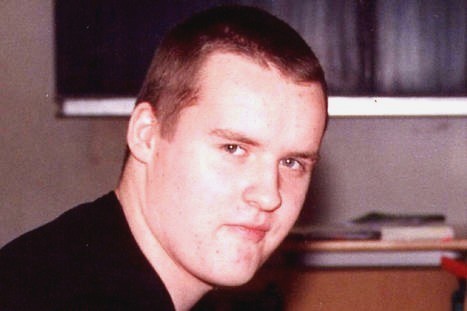
Robert Steinhäuser
Mass murderer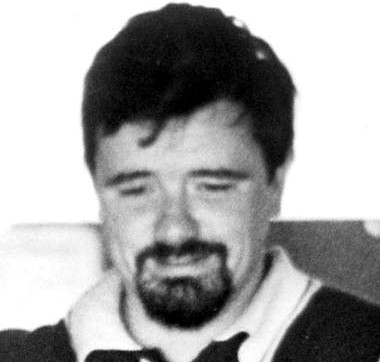 Erwin Mikolajczyk
Mass murderer · Germany · 1994
Erwin Mikolajczyk killed himself by detonating a homemade bomb the same day as…
6 victims
Erwin Mikolajczyk
Mass murderer · Germany · 1994
Erwin Mikolajczyk killed himself by detonating a homemade bomb the same day as…
6 victims
 Martin Peyerl
Mass murderer · Germany · 1999
August 11, 1983 — Martin Peyerl was born to Rudolf and Theresa Peyerl. · Novemb…
4 victims
Martin Peyerl
Mass murderer · Germany · 1999
August 11, 1983 — Martin Peyerl was born to Rudolf and Theresa Peyerl. · Novemb…
4 victims
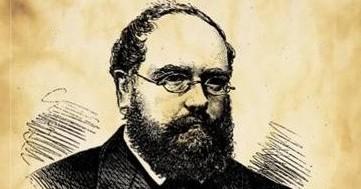 Alexander Keith
Mass murderer · Germany · 1875
Alexander “Sandy” Keith Jr. (1827–1875) was known by the assumed name of Willia…
88 victims
Alexander Keith
Mass murderer · Germany · 1875
Alexander “Sandy” Keith Jr. (1827–1875) was known by the assumed name of Willia…
88 victims
 Gundolf Köhler
Mass murderer · Germany · 1980
Gundolf Köhler (August 27, 1959 – September 26, 1980) was a German right-wing e…
12 victims
Gundolf Köhler
Mass murderer · Germany · 1980
Gundolf Köhler (August 27, 1959 – September 26, 1980) was a German right-wing e…
12 victims
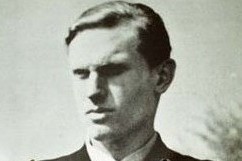 Walter Seifert
Mass murderer · Germany · 1964
Committed suicide by poisoning himself with cyanide the same day; died next day…
10 victims
Walter Seifert
Mass murderer · Germany · 1964
Committed suicide by poisoning himself with cyanide the same day; died next day…
10 victims
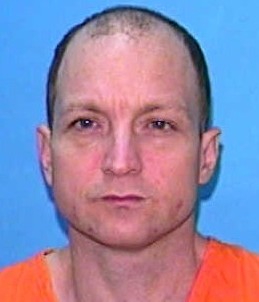 Randall Scott Jones
Murderer · USA · 1987
Randall Scott Jones was indicted in the Seventh Judicial Circuit, Putnam County…
2 victims
Randall Scott Jones
Murderer · USA · 1987
Randall Scott Jones was indicted in the Seventh Judicial Circuit, Putnam County…
2 victims
 Liam Reid
Murderer · New Zealand · 2007
Liam Reid was convicted of rape and murder and later described by a sentencing…
1 victim
Liam Reid
Murderer · New Zealand · 2007
Liam Reid was convicted of rape and murder and later described by a sentencing…
1 victim
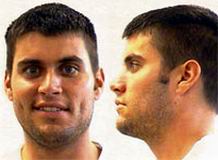 Andrew Paul Witt
Murderer · USA · 2004
Andrew Paul Witt (born 1982) was a former Senior Airman in the United States Ai…
2 victims
Andrew Paul Witt
Murderer · USA · 2004
Andrew Paul Witt (born 1982) was a former Senior Airman in the United States Ai…
2 victims
 Marco Antonio Montez
Murderer · USA · 1987
Marco Antonio Montez was convicted of aggravated murder and sentenced to death,…
1 victim
Marco Antonio Montez
Murderer · USA · 1987
Marco Antonio Montez was convicted of aggravated murder and sentenced to death,…
1 victim
 Susan Hendricks
Mass murderer · USA · 2006
Susan Hendricks was accused of killing four members of her own family in order…
5 victims
Susan Hendricks
Mass murderer · USA · 2006
Susan Hendricks was accused of killing four members of her own family in order…
5 victims
 John Thomas Noland
Murderer · USA · 1982
John Thomas Noland was executed in North Carolina by lethal injection on Novemb…
2 victims
John Thomas Noland
Murderer · USA · 1982
John Thomas Noland was executed in North Carolina by lethal injection on Novemb…
2 victims
- Gender
- male
- Country
- Germany
- Location
- Erfurt, Thuringia, Germany
- Date of birth
- January 22, 1983
- Age at first offence
- 19
- Characteristics
- school shooting
- Victim profile
- 13 faculty members, 2 students, and one police officer
- Method of murder
- Shooting
- Date(s) of murder
- April 26, 2002
- Years active
- 2002
- Date of arrest
- —
- Status
-
Died in custody
Committed suicide by shooting himself the same day
Case record: Robert Steinhäuser — Erfurt massacre (Gutenberg-Gymnasium)
Status
Robert Steinhäuser committed suicide by shooting himself the same day.
The offence
The Erfurt massacre occurred on April 26, 2002 at the Gutenberg-Gymnasium in Erfurt, Germany.
Robert Steinhäuser, a 19-year-old expelled student, shot and killed sixteen people. The deaths comprised 13 faculty members, 2 students, and one police officer. An additional seven people were injured either directly or indirectly from the shootings.
The gunman armed himself with a 12-gauge pump-action shotgun and a 9mm Glock 17 before leaving his residence at his usual time. When he entered the campus, he went into the lavatories to change his clothes and then donned a black ninja-style outfit.
The shooting started at approximately 11:05 a.m. Steinhäuser moved from classroom to classroom, pausing briefly each time in the doorway to shoot the teacher, then moving on to the next room. According to students, he ignored them and aimed only for the teachers. Two students were killed by shots fired through a locked door.
Five minutes after the shooting began, police arrived outside the school. Soon after, Steinhäuser aimed from a window and fatally shot a police officer in the head.
Steinhäuser fired 71 rounds throughout the whole series of shootings.
Before committing suicide, he was confronted by one of his teachers, Rainer Heise, who walked into the demasking shooter. Pausing and having established deep eye-contact with Steinhäuser, Heise said: "Du kannst mich jetzt erschießen." ("You can shoot me now.") Steinhäuser answered, "Herr Heise, für heute reicht's ("Mr. Heise, enough for today")."
Heise then talked to Steinhäuser for a short amount of time, luring him into the doorway of an empty room. When Steinhäuser was in the doorway, Heise pushed Steinhäuser into the room and quickly locked the door. Steinhäuser committed suicide shortly after. His body was found by police a few hours after the shooting.
Background
While the motive was unknown, it was believed to be related to Steinhäuser's expulsion from school without qualifications and his subsequent feeling of victimhood and hopelessness regarding his future job opportunities.
Robert Steinhäuser was a student of the Gutenberg Gymnasium until early Oct 2001. At the end of September 2001 he spent a few days away from school and presented a medical certificate that was quickly identified as a forgery. Because of this forgery, Steinhäuser was expelled.
Due to regulations used in Thuringia at the time, after expulsion Steinhäuser had no qualifications at all, resulting in very limited job prospects.
In the weeks leading up to his expulsion for failing to meet A-level standards, he falsified many sick notes to spend days off firing his gun collection on the range at the local club.
In addition, Steinhäuser systematically kept his parents in the dark about his expulsion from school for forging a doctor's note. Hours before the massacre, he told his parents he was going to take a maths exam. Officials said his mother wished him good luck when he left the house. Police chief Rainer Grube later said the parents thought he was going to school every day and was successfully moving toward his high school diploma.
A quirk of Germany's education system was described as contributing to the tragedy: Thuringia denied even an intermediate diploma to students who went beyond 10th grade but then failed twice to pass final exams. Officials said Steinhäuser had failed the last year, and his expulsion deprived him of the second and last chance for a full diploma necessary to attend a university or get a decent job. This situation was described as special to Thuringia.
Investigation and police response
Within minutes of the shooting starting, local police logged a call from the school's janitor at 11.05 a.m. reporting gunfire on the premises. Two officers arrived almost immediately in a patrol car. Steinhäuser opened fire, fatally injuring one officer outside the school, before fleeing back inside the building.
A school secretary phoned police saying a teenager had taken people hostage and was waving a gun around. Later, when local reporters called the school for confirmation of the shootings, the secretary told them: "All hell has broken lose here. You must get off the lines!"
Police initially believed there was a second gunman. They retook the school room-by-room rather than storming the entire building. Commandos combed the building and found the scene of carnage on the first floor.
A special forces squad surrounded the school. The school was evacuated, and parents began registering their children’s names to verify who was alive.
Police continued to secure clues at least through the Sunday after the massacre. Investigators said Steinhäuser managed to keep his parents in the dark about his expulsion for forging a doctor's note.
Police confiscated from Steinhäuser's home violence-laden comics and a number of computer games that featured "intensive weapons usage." Police chief Rainer Grube later said the teacher’s confrontation and locking of Steinhäuser in a room most probably prevented a far worse massacre.
Police said authorities believed Steinhäuser had a Web site and were investigating a home page bearing his name and picture. Police chief Grube said someone changed the page 12 hours after his death, raising the possibility that the current version was bogus.
Police also investigated possible links to Satanism and heavy metal. Police admitted there was little evidence so far that he was a so-called Satanist, but they were following up available clues. One clue was a compact disc found in Steinhäuser’s room. The disc, School Wars, contained the line: "Shoot down your naughty teachers with a pump gun." Police also said that in computer chatrooms Steinhäuser sometimes signed off as "Son of Satan", although he also used other pseudonyms.
Inquiries began into whether Steinhäuser used a simulation game common in gun clubs and in the German Army to create a virtual massacre. Police said the speed of the shooting suggested preparation.
A police spokesperson characterized the attack as: "It was an incredibly cruel and calculating execution of innocent people. 'Teachers were the main target and the two pupils who died probably just got in his way.'"
Rainer Grube, president of the Erfurt police, later said: "When the special troops arrived, they systematically searched the building and found a picture of horror -- corpses in the corridors, in the classrooms and in the lavatory."
One police spokesperson described what patrol officers encountered at the scene: "Police called to the scene found a scene of horror. There were dead people in the corridors, in the classrooms, one was found in the toilet."
Another police officer described the incident as: “It was truly a bloodbath because blood was flowing down the corridors like water spilled from a bucket.”
Arrest
No arrest occurred because Steinhäuser died at the scene by suicide.
Trial
No trial occurred.
Sentencing
No sentencing occurred.
Aftermath and reactions
Coincidentally on the day of the massacre, the German government was discussing raising the legal age level on firearm ownership from 18 to 21, while others pushed for a ban of firearms.
It was stated that, except for hunters, the legal age for firearm ownership above .22 LR caliber (and 200 Joule) was raised to 21, with an additional medical and psychological test under 25. Pump-action shotguns with pistol-shaped grip were banned.
Due to pressure by the families of the victims, the state of Thuringia put exams for lower school graduations in the curriculum of higher school forms.
Steinhäuser’s family issued a statement to news sources and said that it "will forever be sorry that our son and brother has brought such horrifying suffering to the victims and their relatives, the people of Erfurt and Thuringia, and all over Germany."
The United States Secretary of Education Rod Paige offered condolences to the German people.
The German Chancellor Gerhard Schroeder said it was a "tragedy on an unparalleled scale".
Foreign Minister Joschka Fischer placed a bouquet and consoling the tearful school principal.
Officials cancelled classes for at least a week and said students would receive counseling at Erfurt's city hall. The school remained sealed as police continued to secure clues.
Crowds continued to gather at the school entrance, with flowers overflowing from the steps and candles sputtering in the rain.
The city also placed candles outside the school spelling out the word 'Why?'.
Some people considered Rainer Heise to be a hero because he locked Steinhäuser in a room and stopped the killing; later, Heise began to receive backlash from the public.
A very controversial book titled Für heute reicht's ("(this) is enough for today") about the massacre was written by Ines Geipel, who alleged that there were several mistakes made by the police on the case. Geipel and relatives of some of the victims criticized police for the initial speed of their response. Police believed there was a second gunman, leading them to retake the school room-by-room rather than storm the entire building.
People involved
Perpetrator
- Robert Steinhäuser — 19-year-old expelled student; carried out the shootings and then committed suicide.
Confrontation and teacher
- Rainer Heise — history teacher; confronted Steinhäuser, talked to him, pushed him into a room, and locked the door before Steinhäuser committed suicide.
- Heise said: "Du kannst mich jetzt erschießen." ("You can shoot me now.")
- Steinhäuser responded: "Herr Heise, für heute reicht's ("Mr. Heise, enough for today")
Injured and killed
The massacre killed 16 people: 13 faculty members, 2 students, and one police officer. An additional seven people were injured either directly or indirectly.
The two teenage victims were a 14-year-old girl and a 15-year-old boy, and they were killed when Steinhäuser fired through a closed door.
A police officer was killed by a fatal shot to the head.
Timeline
- September 2001 (end of September) — Steinhäuser presented a medical certificate that was identified as a forgery, leading to his expulsion.
- Early October 2001 — Steinhäuser was described as being a student of the Gutenberg Gymnasium until this time.
- February (expelled in February) — Steinhäuser was described as being expelled from the school for disruptive behaviour.
- April 26, 2002 (approx. 11:05 a.m.) — Steinhäuser began the shootings at Gutenberg-Gymnasium.
- April 26, 2002 (after police arrived) — Steinhäuser fatally shot a police officer in the head.
- April 26, 2002 (after confrontation with Rainer Heise) — Heise pushed Steinhäuser into a room and locked the door; Steinhäuser committed suicide shortly after.
- April 26, 2002 (a few hours after the shooting) — Steinhäuser’s body was found by police.
Other details
Steinhäuser arrived at Johann Gutenberg High School on Friday morning with a bag containing a pump-action shotgun, a pistol, and more than 500 rounds of ammunition. He entered a bathroom, donned a ski mask, took out three magazines each with 17 bullets, and left the bag with most of the ammunition. He emerged dressed in black in a ninja style.
On the day of the shooting, he reportedly went into the lavatories to change his clothes and then donned a black ninja-style outfit.
Steinhäuser was described as having ignored students and aiming for teachers as he moved between classrooms.
A teacher described an earlier incident involving Steinhäuser: when Hans Lippe caught Steinhäuser smoking a cigar on a field trip in 2000, Steinhäuser became confrontational. The teacher said Steinhäuser pointed pretend pistol fingers and said: 'Rat-a-tat-a-tat-a-tat, you're dead.' The same account said the student was drunk.
A student named Filip Niemann described hearing a shooting sound and seeing the gunman: “We were sitting in class doing our work and we heard a shooting sound,” said Filip Niemann. “We joked about it and the teacher smiled. “The teacher let us go out and see what was happening and when we left the classroom, three to four metres in front of us there was a masked person in black holding his gun at his shoulder. He stretched out his gun and fired. We saw a teacher fall to the ground. We just turned and ran.”
Survivors described students being trapped and hiding, including under desks and behind bookcases.
One 13-year-old survivor sent her mother this text message: "GUNMANSHOOTS HEREMANYDEADMESAFECALLCOPS!!!!!!!!!!"
German radio played a frantic mobile phone call made by a child to her mother: "We're all crammed into one room. The teacher's one of the dead. Everyone's crying."
A sign held by a child at a window bore the word "Hilfe" (help).
A witness described the gunman: "The gunman shot people one by one. "It was an incredibly cruel and calculated execution of innocent people.
Erich Sixtmann, described as a friend of Steinhäuser's father, said: "Robert was a troubled youth but it was a trouble that he largely masked," and described him as rude with teachers and introverted from about the age of 12.
Cassandra Mehlhorn said: "He pretended to make a pistol out of his hand and was full of hatred as he took aim at the teacher. The teacher was extremely angry. Robert got a reprimand for that. He said he was just fooling around."
Another classmate, Thomas Rethfeldt, said: "He was reserved -- I never thought he was capable of violence."
Isabell Hartung said: “One day, I want everyone to know my name and I want to be famous.”
Steinhäuser’s last words were also described as being the title of the book Für heute reicht's.
A police spokesman Manfred Etzel said: "A courageous teacher involved the assailant in a discussion and most probably prevented a far worse massacre," which referred to Rainer Heise.
A separate account reported that in interviews with German media, Rainer Heise said: "I said, 'Pull the trigger. If you shoot me now, then look in my eyes.' So he looks at me, lowers the pistol and says: 'That was enough for one day, Mr. Heise'."
In one account, Steinhäuser’s death scene was described as him shooting himself in the head shortly after being locked into a room.
A BBC-related account described Steinhäuser as having acquired both weapons and ammunition legally, with licenses for an Austrian-made Glock pistol and for the pump-action shotgun.
The police described Steinhäuser’s firearms possession as including licences and a membership in two separate gun clubs.
Volker Beck, described as the Greens’ influential spokesman for legal affairs, said: "The Erfurt tragedy has destroyed the basic assumption underlying our weapons laws," and asked: "Should adolescents be given free access to weapons? Are the quantities of ammunition found in the school normal?"
Police union remarks included that an unprotected 42-year-old policeman was among the victims.
A crowd scene included a teacher being described as the hero of Erfurt, and the narrative described flowers and carnations and candles at the school.
A journalist’s account quoted a teacher at the school and other survivors, including: "Go ahead and shoot me," and a second line attributed to Steinhäuser: "That's it for today."
Police described Steinhäuser as almost certainly acting alone.
A statement attributed to Steinhäuser’s family said they wrote an open letter to a local newspaper, including: "The sorrow, despair and helplessness of our family are immeasurable," and "We are infinitely sorry that our son and brother carried out such a horrific act on the victims, their relatives, the people of Erfurt and Thuringia and on the whole of Germany."
The same family statement said: "Until this brutal act of madness, we were a totally normal family," and "They say they had no idea of his plans."

Spotted an error, or have more information about this case?