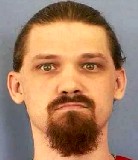
Blayde Grayson
Murderer Russell Ellwood
Murderer · USA · 1991
Russell Ellwood was a former taxi driver. Authorities suspected him of killing…
20 victims
Russell Ellwood
Murderer · USA · 1991
Russell Ellwood was a former taxi driver. Authorities suspected him of killing…
20 victims
 Robert Martines Perez
Murderer · USA · 1994
Name: Robert Martines Perez · Other name used in proceedings: Robert Martinez P…
15 victims
Robert Martines Perez
Murderer · USA · 1994
Name: Robert Martines Perez · Other name used in proceedings: Robert Martinez P…
15 victims
 Billy Frank Vickers
Murderer · USA · 1993
Billy Frank Vickers Vickers was executed by lethal injection in Texas on Januar…
14 victims
Billy Frank Vickers
Murderer · USA · 1993
Billy Frank Vickers Vickers was executed by lethal injection in Texas on Januar…
14 victims
 William Speer
Homicide - Murderer · USA · 1991
William Speer William Speer had a prior prison record of #668485: a life senten…
2 victims
William Speer
Homicide - Murderer · USA · 1991
William Speer William Speer had a prior prison record of #668485: a life senten…
2 victims
 Kermit Gosnell
Murderer · USA · 2006
Kermit Barron Gosnell was an American physician from Philadelphia. He ran an ab…
4 victims
Kermit Gosnell
Murderer · USA · 2006
Kermit Barron Gosnell was an American physician from Philadelphia. He ran an ab…
4 victims
 Leonel Torres Herrera
Murderer · USA · 1981
Leonel Torres Herrera was executed by lethal injection in Texas on May 15, 1993…
2 victims
Leonel Torres Herrera
Murderer · USA · 1981
Leonel Torres Herrera was executed by lethal injection in Texas on May 15, 1993…
2 victims
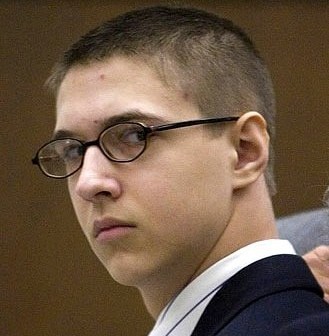 Eric Hainstock
Homicide · USA · 2006
Eric Hainstock was 15 years old when he shot principal John Klang at Weston Hig…
1 victim
Eric Hainstock
Homicide · USA · 2006
Eric Hainstock was 15 years old when he shot principal John Klang at Weston Hig…
1 victim
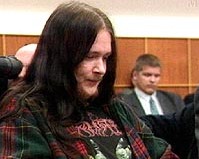 Jarno Elg
Murderer · Finland · 1998
Jarno Sebastian Elg was a Finnish satanist. He was sentenced to life in prison…
1 victim
Jarno Elg
Murderer · Finland · 1998
Jarno Sebastian Elg was a Finnish satanist. He was sentenced to life in prison…
1 victim
- Gender
- male
- Country
- USA
- Location
- George County, Mississippi, USA
- Date of birth
- September 25, 1975
- Age at first offence
- 21
- Characteristics
- robbery, drugs
- Victim profile
- Minnie Smith, 78
- Method of murder
- Stabbing with knife
- Date(s) of murder
- May 5, 1996
- Years active
- 1996
- Date of arrest
- May 17, 1996
- Status
-
Sentenced to death
Sentenced to death on August 8, 1997; conviction and death sentence were affirmed by the Mississippi Supreme Court on November 8, 2001; U.S. Supreme Court upheld the conviction in 2005; on remand from the U.S. Supreme Court, the case was remanded by the Mississippi Supreme Court for a new sentencing hearing
Case record: Blayde Grayson
Background
Blayde Grayson (also known as Blayde N. Grayson and Blayde Nathaniel Grayson, and also known as Blayde N. Amodeo) was indicted in the George County Circuit Court for capital murder pursuant to Miss. Code Ann. § 97-3-19(2)(e) (2000), while in the commission of the crime and felony of burglary as defined by Miss. Code Ann. § 97-17-23 (2000).
He was later convicted and sentenced to death by lethal injection.
Blayde Grayson was on death row for George County murder and filed a post-conviction petition seeking consideration by the Mississippi Supreme Court.
The offence
On May 5, 1996, the body of seventy-eight-year-old Minnie Smith was discovered by her son-in-law. The police investigation revealed that Smith had been stabbed to death, apparently in the course of a burglary of her home. Law enforcement officers interviewed neighbors within a radius of several miles before focusing attention on Blayde Grayson.
Grayson had been arrested in Florida and confessed to the crime. In his confession, he said he entered the house through a window and intended to steal a gun to get money for drugs. He stated that he killed the woman when she woke up unexpectedly.
Smith sustained more than 30 stab wounds on the night she died in her rural home at the edge of the Pascagoula River flats.
Investigation
Soon after the murder, Sheriff George Miller of George County contacted law enforcement officials in Florida to locate Grayson. Sheriff Miller later indicated that Grayson became a suspect because of his prior crimes and because his home prior to incarceration was “a very short distance” from Minnie Smith's home.
Sheriff Miller learned that law enforcement officials in Escambia County, Florida, were seeking Grayson in connection with three armed robberies committed in Florida in May of 1996. On May 17, 1996, the Escambia County sheriff's department called Miller to inform him that Grayson was in custody.
Sheriff Miller traveled to Florida that afternoon, accompanied by Houston Door and John Miller of the Mississippi Highway Patrol and Chief Investigator Al Hillman of the George County sheriff's office. When Sheriff Miller arrived in Escambia County, he began interviewing Grayson after having him sign a waiver of his Miranda rights. The transcript of the hearing on the motion to suppress Grayson's confession contained the following exchange:
Q. [W]ould you read the line stated by Mr. Blayde Grayson, sir? It begins “no, sir”.
A. “No, sir, I'd rather not until I talk to my lawyer.”
Q. All right. Now, that is about-what-about a quarter of the way into the interview?
A. Yes, sir.
Q. And he tells you at that point he wants to talk to his lawyer?
Q. All right. Now did you continue to question him after that, Sheriff?
Q. All right ․ answered, “no, sir, not really” and what was your response to that, Sheriff?
A. Okay. The Sheriff from Escambia County, you were wanting to talk to us. [sic] We're over here to talk with you.
Q. And Mr. Grayson's response is, “I was going to deal with you all when I got down there and got my lawyer”. Is that correct?
A. That's correct.
Q. And what is your response to that, Sheriff?
A. Sheriff-this is a situation were you going to-
Q. Just on the green part is where I've highlighted where you are speaking, Sheriff.
A. “We need to establish where you were at-you're not willing to risk that. We need”-
Q. At that point Mr. Grayson responds, does he not, “I'm not willing to discuss nothing until I've talked to my lawyer. I didn't mean to bring you fellows all the way down here for nothing-now you know all the way down here-but I need to talk to my lawyer about this-this is a situation”. What is your response to that, Sheriff?
A. “This is a situation where you are going to confirm with him before you talk to us about the matter? That is correct”.
Q. Mr. Grayson's response is “yes, sir”?
A. Sheriff-“you have not been in George County, is that correct”?
Q. And Mr. Grayson's response is “no, sir”.
A. “Have you got witnesses to that, is that correct?”
Q. And Mr. Grayson's response is “yes, sir”.
During later testimony, Sheriff Miller conceded that Grayson asked for a lawyer four times in the space of about four minutes before the interview ended. The State interrupted the line of questioning, and Grayson offered the transcript into evidence.
After the Florida interview ended on the night of May 17, 1996, Sheriff Miller transported Grayson back to George County that same night.
On Monday, May 20, Miller sought and received an order signed by Judge Ronnie Wilkerson to obtain blood and tissue samples from Grayson. On Tuesday, May 21, Grayson requested to speak with Sheriff Miller and gave a statement to Miller in which he admitted being at the scene of the crime but claimed that an individual named Jason Kilpatrick actually robbed and killed Smith.
On Tuesday afternoon, Grayson accompanied Sheriff Miller and Officer Tanner back to Florida to retrieve a checkbook taken from Smith's home that had been left in the trailer Grayson shared with Kilpatrick. Grayson said that the checkbook implicated Kilpatrick.
On Thursday, May 23, Grayson repeated his accusations against Kilpatrick in a written statement given during an interview with Sheriff Miller and Inspector Dorr. Grayson agreed to take a polygraph test. The test took place on Friday, May 24, in Jackson. After the polygraph examiner indicated that Grayson failed the test and accused him of lying, Grayson admitted to killing Smith while robbing her home.
Grayson later repeated his confession to Dorr and on videotape. The confession was admitted at trial.
Arrest
Grayson was arrested in Florida.
The record indicates that on January 19, 1996, a warrant was issued for probation violation after he walked off of a work detail.
Trial
Grayson was convicted on August 7, 1996, and sentenced to death by lethal injection.
During the trial, Grayson’s confession was admitted.
Issues raised on appeal to the Mississippi Supreme Court
Grayson appealed after the Mississippi Supreme Court received the case captioned as Blayde Grayson v. State of Mississippi.
He raised seven issues:
- The trial court erred in failing to grant his motion to suppress statements given to law enforcement officers.
- The trial court erred in denying a motion for change of venue.
- The trial court erred in allowing the introduction of photographs of the victim and of the crime scene into evidence.
- The trial court erred in failing to grant a motion to declare Miss. Code Ann. § 97-3-19(e) unconstitutional or, alternatively, to preclude reliance on Miss. Code Ann. § 99-19-101-5(d) as an aggravating circumstance.
- The trial court erred in not granting a motion for mistrial based on comments made by potential jurors during voir dire.
- The trial court erred in striking jurors Bridget Phillips and Bernard Goff without proper showing that the potential jurors could not follow the law regarding the death penalty.
- The trial court erred in denying a motion for funds for private investigator and jury consultant despite repeated requests.
Motion to suppress statements
The Mississippi Supreme Court addressed Grayson's claim that his confession should have been suppressed because he was denied his right to counsel and because the confession was involuntary.
The court described the Sixth Amendment right to counsel, Fifth Amendment protection against self-incrimination, and the rules governing when interrogation must cease after a suspect invokes the right to counsel. It discussed that an invocation must be unambiguous and contrasted it with an insufficient ambiguous mention of possibly speaking with an attorney.
The court stated that the claim failed because Grayson waived any right to an attorney he might theoretically have had at the time he confessed. It stated that the trial court judge made express findings that the police ceased interrogation when Grayson invoked his right to counsel, that Grayson reinitiated communication with authorities, and that Grayson signed a waiver of his rights prior to his statement.
The court set out factors Grayson cited to render the confession involuntary: invocation of the right to counsel four times, “jail watch” resulting in sleep deprivation, seven days of confinement without an initial appearance or counsel appointment, being persuaded to take a polygraph test, and being told he failed the polygraph and it would “be better on [him] if he admitted to the charge.” The court found the trial record did not support Grayson’s interpretation or legal significance of those factors.
Officer James Tanner described jail watch:
Q. One last question, Deputy Tanner. What is the procedure-I think you referred to it as the jail watch-how often do you check in on prisoners-a couple of times an hour?
A. Okay. On night shift, once an hour; on the day shift, if we have someone in the jail that has some kind of a problem, like a mental problem, mental patient or someone we want to keep an on to make sure they don't do harm to theirselves there is jail watch [sic]. It could be every 15 minutes, it could be every 30 minutes, every hour.
Q. But it's at least once an hour, maybe four times an hour?
Q. All right. During the time you come in and check on them, do you just look in the door to make sure they're there or do you walk over and talk to them to make sure that they're coherent and conscious?
A. We look in on them. If they are moving around, we know they're all right. We leave them alone. If they're asleep we might wake them up, especially in the daytime we make sure they're there.
The Mississippi Supreme Court also described testimony about the polygraph test. The polygraph examiner testified that he told Grayson:
“Blayde, you are not being truthful with me. I need you to talk about it.”
Inspector Dorr testified that he tried to get Grayson to describe the crime fully and expressly denied telling Grayson that it would be better for him to confess.
The court concluded that the trial court’s refusal to suppress the statement was not manifest error.
Change of venue
The court reviewed the denial of change of venue for abuse of discretion and discussed Miss. Code Ann. § 99-15-35 (2000) regarding affidavits.
The court stated that Grayson failed to procure the affidavits required by § 99-15-35, but the prosecution waived necessity of the affidavits. Grayson presented four local newspaper articles about the murder published about ten months before the trial. The prosecution called ten George County residents, each subpoenaed to appear as jurors, chosen through the same procedures by which George County selected veniremen. The witnesses were asked questions by both the prosecutor and defense counsel about their knowledge.
The court stated that only one juror believed Grayson could not get a fair trial while another admitted to hearing pro-death penalty comments related to the case. It concluded the trial court did not abuse its discretion in denying the motion to change venue.
Photographs
The court discussed admissibility of photographs and concluded that the trial court did not abuse its discretion in admitting them to corroborate prosecution witnesses and show cause of death and the state of the crime scene during the investigation.
Death penalty statute constitutional challenges
The court addressed Grayson’s arguments about the constitutionality of the death penalty statute under Furman v. Georgia and Gregg v. Georgia standards, including an argument that applying the death penalty to felony murder violated those standards by ignoring the defendant’s mental state.
The court reaffirmed reasoning rejecting Grayson’s argument and stated that it concluded Grayson schemed and participated in the unlawful undertaking resulting in death. It described felony murder as the act of an aggressor who manifests callous disregard for human life because he subordinates the life of the innocent to his desire for gain.
The court also addressed Grayson’s challenge to Miss. Code Ann. § 99-19-101(5)(d) and referenced Holland v. State, which held the statute constitutionally sound. The court stated that a jury must find that the defendant actually killed, attempted to kill, intended a killing take place, or contemplated lethal force in order to deliver a death penalty verdict, limiting eligibility.
The court rejected Grayson’s constitutional claim on this issue.
Motion for mistrial based on voir dire comments
Grayson sought a mistrial based on comments made during voir dire by Littlefield Eubanks.
During voir dire, a juror exchange was recorded:
BY A JUROR: Your Honor, Littlefield Eubanks. I feel exactly the same way, under the circumstances of what I've heard in this case. If it's all true, then it would be automatic for me.5
BY THE COURT: So you're telling me, Mr. Eubanks, that if you believe from the evidence as presented that this man is guilty of capital murder, you would not be able to consider any evidence of mitigation or anything like that? You would just be automatically inclined to give the death penalty?
BY A JUROR: Your Honor, that's exactly what I'm saying, because apparently he's mentally off and-
BY THE COURT: Wait. Wait.
BY MR. HARKEY: Excuse me-
BY THE COURT: Don't say anything about your personal beliefs along those lines, sir. All I want to know is that are you inclined that, if he's found guilty, to automatically impose the death penalty?
BY A JUROR: Yes, ma'am. (emphasis added).
Grayson made no objection at the time, but made a motion for mistrial at the conclusion of voir dire, which was denied. The court noted the judge interrupted Eubanks’s statement, and that later questioning established that prospective jurors could be fair.
Striking jurors Bridget Phillips and Bernard Goff
Grayson argued that jurors Bridget Phillips and Bernard Goff were improperly struck for cause due to strong reservations about imposing the death penalty based on religious convictions. The court discussed Grayson’s analogy to racial reasons and explained that a juror’s opposition to capital punishment could prevent impartiality in considering and applying the law.
The court cited Adams v. Texas and discussed Thorson v. State regarding improper exclusion based on religious sect membership, but it held the rule from Thorson inapplicable because Phillips and Goff stated they would be unable to consider giving the death penalty if they found Grayson guilty.
The court concluded the issue was without merit.
Funding motions for private investigator and jury consultant
The court reviewed decisions about funding for consultants or investigators for an indigent defendant for abuse of discretion.
Grayson filed two motions for funds for a private investigator—one dated March 7, 1997, and another dated July 7, 1997. He also made an oral motion for funds to procure a jury consultant on June 27, 1997. The trial court delayed ruling pending a formal motion, but the record contained no such motion and the issue was not raised again during trial.
Grayson made a final ex parte motion on July 31, 1997 requesting funds for a second investigator to pursue exculpatory evidence from an unidentified out-of-state witness. The court stated that he received funding for an investigator named Clayton M. Hall up to a maximum of $750, and the trial court ordered the county to pay Hall $500 in satisfaction of his bill.
The court stated that the court never ruled on funding for a second investigator named James Bowman, which it characterized as tantamount to a denial. It held that the trial court did not abuse its discretion in denying additional funds because the second motion provided sparse information about contacting a possible exculpatory witness without further details.
Sentencing
Grayson was sentenced to death by lethal injection.
The Mississippi Supreme Court conducted a statutory review of the sentence under Miss. Code Ann. § 99-19-105(3), considering whether the death sentence was imposed under passion, prejudice, or any other arbitrary factor; whether the evidence supported a statutory aggravating circumstance; whether the sentence was excessive or disproportionate; and whether invalid aggravating circumstances would require additional weighing or harmless error analysis.
The court stated there was no evidence supporting a finding that the death sentence was imposed under passion, prejudice, or any other arbitrary factor. It concluded the evidence satisfied § 99-19-105(3)(b) because Grayson was under sentence of imprisonment at the time of the murder, and it concluded that the death penalty was not excessive or disproportionate compared to similar cases, including Wilcher v. State.
The court concluded it found no merit in Grayson’s appeal and affirmed the conviction and death sentence.
Appeals
The Mississippi Supreme Court’s decision was rendered in November 2001 (En Banc) under the case number listed as No. 1998-DP-01782-SCT, with a decision date of November 08, 2001.
The U.S. Supreme Court upheld Grayson’s conviction in 2005.
The matter later returned with an outcome noting that the case was originally affirmed in the Mississippi Supreme Court but, on remand from the U.S. Supreme Court, the case was remanded by the Mississippi Supreme Court for a new sentencing hearing.
Outcome
The Mississippi Supreme Court affirmed Grayson’s conviction and sentence. It stated: “CONVICTION OF CAPITAL MURDER AND SENTENCE OF DEATH BY LETHAL INJECTION ARE AFFIRMED.”
Timeline
- March 23, 1995 — Grayson pled guilty to grand larceny and to the reduced charge of knowingly receiving stolen property in connection with burglaries apparently committed in the area of the Smith home; he was sentenced to two three-year terms to be served concurrently and transferred to the Mississippi Department of Corrections (MDOC) Restitution Center Program in neighboring Jackson County.
- January 19, 1996 — A warrant was issued for probation violation after Grayson walked off of a work detail.
- May 5, 1996 — Minnie Smith’s body was discovered by her son-in-law.
- May 17, 1996 — Escambia County sheriff’s department called Sheriff Miller to inform him Grayson was in custody.
- May 20, 1996 — Sheriff Miller sought and received an order signed by Judge Ronnie Wilkerson to obtain blood and tissue samples from Grayson.
- May 21, 1996 — Grayson requested to speak with Sheriff Miller; he gave a statement admitting he was at the scene but claiming Jason Kilpatrick robbed and killed Smith.
- May 23, 1996 — Grayson repeated his accusations against Kilpatrick in a written statement.
- May 24, 1996 — A polygraph test took place in Jackson; after the examiner indicated Grayson failed and accused him of lying, Grayson admitted killing Smith while robbing her home.
- August 7, 1996 — Grayson was convicted and sentenced to death by lethal injection.
- November 08, 2001 — The Mississippi Supreme Court affirmed Grayson’s conviction and sentence.
- 2005 — The U.S. Supreme Court upheld Grayson’s conviction.
- August 8, 1997 — The case status reflected a death sentence date of August 8, 1997.
- December 30, 2012 — The Mississippi Supreme Court would consider a post-conviction petition from death row inmate Blayde Grayson; oral arguments were not scheduled.
Other details
Sheriff Miller traveled to Florida accompanied by Houston Door and John Miller of the Mississippi Highway Patrol and Chief Investigator Al Hillman of the George County sheriff's office.
The court noted that during the Florida interview, the record did not reveal exactly when it began or how long it lasted. It referenced testimony that Grayson’s statement about Florida robberies was at approximately 2050 hours, and that the interview ended at approximately 2250 hours.
Sheriff Miller later testified that he did not know if hair and blood samples were actually taken, and no such samples were offered as evidence at trial.
The Mississippi Supreme Court listed counsel and the Attorney General’s office:
- David Michael Ishee, Pascagoula, Attorney for Appellant.
- Office of the Attorney General by Marvin L. White, Jr., Jackson, Attorney for Appellee.
The opinion listed judges for the court and participation:
- COBB, J., for the Court; PITTMAN, C.J.; SMITH, P.J.; AND WALLER, DIAZ AND EASLEY, JJ., concur.
- McRAE, P.J., concurred in result only.
- CARLSON AND GRAVES, JJ., NOT PARTICIPATING.
Spotted an error, or have more information about this case?