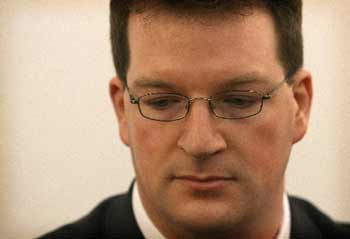
Stephan Letter
Serial killer Olaf Däter
Serial killer · Germany · 2001
Olaf Däter (born September 25, 1969 in Bremerhaven) was a German serial killer…
5 victims
Olaf Däter
Serial killer · Germany · 2001
Olaf Däter (born September 25, 1969 in Bremerhaven) was a German serial killer…
5 victims
 Bruno Lüdke
Serial killer · Germany · 1928
Bruno Lüdke (3 April 1908 – 26 April 1944) was an alleged German serial killer.…
84 victims
Bruno Lüdke
Serial killer · Germany · 1928
Bruno Lüdke (3 April 1908 – 26 April 1944) was an alleged German serial killer.…
84 victims
 Georg Karl Grossmann
Serial killer · Germany · 1913
Georg Karl Grossmann, who commonly called himself just Karl Grossman (also give…
50 victims
Georg Karl Grossmann
Serial killer · Germany · 1913
Georg Karl Grossmann, who commonly called himself just Karl Grossman (also give…
50 victims
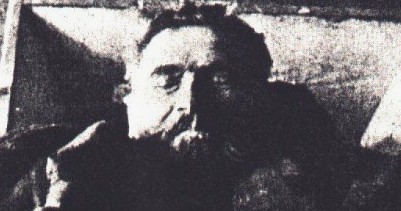 Karl Denke
Serial killer · Germany · 1909
Karl Denke (August 12, 1870 – December 20, 1924) was a serial killer from Germa…
30 victims
Karl Denke
Serial killer · Germany · 1909
Karl Denke (August 12, 1870 – December 20, 1924) was a serial killer from Germa…
30 victims
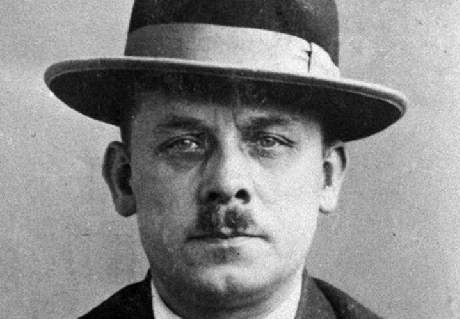 Friedrich Haarmann
Serial killer · Germany · 1918
Friedrich "Fritz" Haarmann (October 25, 1879 – April 15, 1925) was a serial kil…
27 victims
Friedrich Haarmann
Serial killer · Germany · 1918
Friedrich "Fritz" Haarmann (October 25, 1879 – April 15, 1925) was a serial kil…
27 victims
 Rudolf Pleil
Serial killer · Germany · 1946
Rudolf Pleil was convicted in connection with manslaughter in the axe killing o…
25 victims
Rudolf Pleil
Serial killer · Germany · 1946
Rudolf Pleil was convicted in connection with manslaughter in the axe killing o…
25 victims
 Ynobe Matthews
Serial killer · USA · 1999
Ynobe Matthews was convicted of capital murder in June 2001 and was sentenced t…
6 victims
Ynobe Matthews
Serial killer · USA · 1999
Ynobe Matthews was convicted of capital murder in June 2001 and was sentenced t…
6 victims
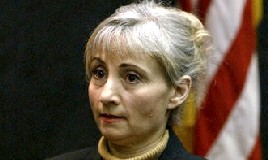 Nancy Seaman
Murderer · USA · 2004
Nancy Seaman was born on May 13, 1952. She was a teacher at Longacre Elementary…
1 victim
Nancy Seaman
Murderer · USA · 2004
Nancy Seaman was born on May 13, 1952. She was a teacher at Longacre Elementary…
1 victim
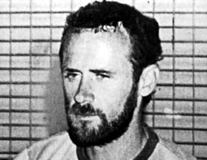 John Lewthwaite
Murderer · Australia · 1974
John Lewthwaite murdered five-year-old Nicole Hanns in 1974 after breaking into…
1 victim
John Lewthwaite
Murderer · Australia · 1974
John Lewthwaite murdered five-year-old Nicole Hanns in 1974 after breaking into…
1 victim
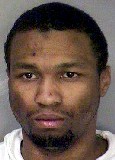 Shannon Johnson
Murderer · USA · 2006
Shannon Johnson (Black male) was executed by lethal injection in Delaware on Ap…
1 victim
Shannon Johnson
Murderer · USA · 2006
Shannon Johnson (Black male) was executed by lethal injection in Delaware on Ap…
1 victim
- Gender
- male
- Country
- Germany
- Location
- Sonthofen, Bavaria, Germany
- Date of birth
- September 17, 1978
- Age at first offence
- 25
- Characteristics
- nurse, drug addict, poisoner, the bodies were never found, motive unclear, torture, abuse
- Victim profile
- Men and women ( patients aged between 40 and 94 )
- Method of murder
- Poisoning ( by injecting a cocktail of drugs )
- Date(s) of murder
- 2003 - 2004
- Years active
- 2003–2004
- Date of arrest
- J uly 2004
- Status
-
Life imprisonment
Sentenced to life in prison on November 20, 2006
Case overview
Stephan Letter was a German serial killer who was known to be responsible for the killings of at least 29 elderly patients while he was working at a hospital as a nurse in Sonthofen, Bavaria.
Background
Letter was described as a shy but not reclusive man who remained a mystery to the community.
His lawyer presented him as a mercy killer tormented by the suffering of others. During trial, his defence lawyer, Juergen Fischer, presented Letter as a complex, disturbed man.
The account of Letter’s childhood and development included that his coordination had been poor as a child and that his plainly disturbed mother had become convinced that he was mentally handicapped; over a period of several years she took him from one doctor to another. His first ambition was to be a casualty doctor but mediocre school marks meant that he had to settle for nursing.
At one hospital he fell in love with a female nurse who was suffering from a borderline personality disorder. Juergen Fischer had ordered a psychological examination of the young woman, to show how a crime could evolve from a relationship between two psychologically damaged people. Juergen Fischer said he was disappointed that the judge had not taken into account all the mitigating circumstances.
Letter worked for the Red Cross and attended a nursing college in Ludwigsburg before taking up a post at Sonthofen. One of his earlier jobs was described as driving elderly patients from their homes to a clinic for treatment; they were described as being covered in sores and dirty, and although their condition improved while they were in the clinic, they would “came back again in the same condition”.
The offence
Letter was responsible for deaths of elderly patients at the Sonthofen Clinic while he worked the night shift.
Letter killed patients by injecting a cocktail of drugs, and police and prosecutors described a cocktail that included tranquilisers and muscle relaxants. Investigators also referred to the killer drug Lysthenon. Unsealed vials of medicines were found at his apartment, and investigators compared the times when patients died with the hours he worked.
At least 16 elderly patients were said to have been killed using a lethal cocktail of drugs, and exhumation orders were issued for 42 bodies. Prosecutors said there were insufficient evidence of evil intent for murder at the time, but the later trial found him guilty of murder and other counts as set out below.
Victims and victim ages
The patients were aged between 40 and 94, though most were older than 75.
Waltraud Schoenberger, 55-year-old mother of two, welcomed the sentence. Her 79-year-old mother, Beata Giehl, was taken to the Sonthofen Clinic on April 30, 2003 with a suspected heart attack, and she died by 10 o’clock that evening.
Mrs Giehl was described as being chatting cheerfully with her daughters by late afternoon.
Letter’s “last victim” was described as a 73-year-old Spanish woman, Pilar Del Rio Peinador, who had been admitted to hospital with breathing problems and was said to have been already well enough to be planning a holiday in her homeland when she was fatally injected in July 2004.
One victim described as a 40-year-old woman and another described as a 47-year-old woman were said to be gravely ill, though authorities also said that not all were seriously sick.
Investigators charged him in connection with the deaths of 17 female and 12 male patients aged from 40 to 94.
A 90-year-old woman who was admitted with bronchitis appeared to have escaped death only because she pleaded with relatives to stay at her bedside.
A 72-year-old farmer was described as being released six weeks after Letter began work in the clinic; he said: “I had pneumonia.” He also said: “If I’d got it six months later someone might have finished me off at night.”
Petra Reindl, 48, described her 79-year-old mother Gertrud as having died suddenly in February the previous year.
Mrs Reindl’s mother was admitted suffering from gallstones. The next day she telephoned her son in distress and said: “They want to kill me! I want to get out of here”. The next day she was dead. Doctors attributed her death to intestinal complications, but police investigations later suggested that she was a victim of Letter.
Investigation
In 2004, doctors suspected that Letter had been fatally injecting patients with a cocktail of tranquilisers and muscle relaxants. A massive process of exhumation began when doctors first suspected this in 2004, and over 40 bodies were examined. Exhumation orders were issued for 42 bodies.
Following Letter’s arrest, police exhumed and ordered post-mortem examinations on the bodies of 42 people who had died at the clinic in the 17 months he was employed there.
Investigators tracked down Letter by investigating reports that drugs were missing and comparing the times when patients died with the hours he worked. Prosecutors said police found unsealed vials of the medicines at his apartment.
Most of the corpses bore traces of muscle relaxants and the killer drug Lysthenon, which Letter had given to other victims. Police said they had the strongest suspicions that all 42 of the disinterred were killed by the accused.
Police were unable to check the causes of death of 38 other patients who were at the hospital during the same period because their bodies were cremated.
So far 100 witnesses were questioned, and the exhumation of the 25th body was completed at the weekend.
Andreas Ruland, the director of the clinic, emphasised that “the missing medicines did not come under the dangerous drugs law and they have to be freely available for medical personnel in case of emergency”.
Arrest
Letter was arrested in July 2004 following a police inquiry into missing medication at the clinic in Sonthofen, where he worked.
Letter was arrested on July 10, and it had been known for months beforehand that large quantities of tranquilliser and muscle relaxant were disappearing from the surgical cabinets.
Confession and retraction
Before trial, Letter admitted killing some people in his care, and he told the court that his actions “cannot be justified under any circumstances” but said he had acted out of compassion.
Letter retracted statements after telling police at the time of his arrest that he had killed 12 patients by lethal injection and that he could not remember other cases. He retracted the statements and refused to say how many deaths he accepted responsibility for.
“I confessed to killings which I did not commit,” he told the court.
He also admitted that he “took the rest of [the patients'] lives away without being asked, and took away what human dignity they had left”.
When confronted by police after staff compared the clinic’s duty rota with the dates on which the drugs were removed, Letter admitted that he had used the drugs to kill at least 16 patients and told police: “There may be more.”
Charges and trial
Letter faced a nine-month trial.
During the trial in Bavaria, Judge Harry Rechner found Letter guilty on multiple counts: murder in 12 cases, manslaughter in 15, and killing on demand in another, as well as attempted manslaughter and causing grievous bodily harm.
On the opening of the trial, Letter testified that he had killed patients but could not remember how many; he said he acted out of compassion.
Letter asked the court to convert the 16 murder counts he faced to manslaughter, which carries a lesser penalty. He also faced 12 manslaughter counts, one of killing on demand and two of attempted manslaughter.
At the time of an earlier prosecutorial decision, Bavarian state prosecutors decided to bring only manslaughter charges. They said there was insufficient evidence of evil intent to warrant a trial for murder because he had no “malice aforethought”.
The chief police investigator, Wolfgang Huber, said: “Many people are surprised that Letter has not been charged with murder...”
Letter’s lawyer, Wilhelm van Eckert, said: “He wanted to liberate their souls. For him, his patients were trapped in their sick bodies.”
Sentencing
On November 20, 2006, Letter was sentenced to life imprisonment.
The broad shoulders of male nurse Stephan Letter, Germany’s Angel of Death, quivered as he was sentenced to life imprisonment for killing 28 patients, described as making him the country’s worst serial killer since the war.
He turned first to his lawyer and then to the public gallery where relatives of the dead had come to see justice done. He seemed to mouth four short words in their direction: “Es Tut Mir Leid” - I’m sorry.
Judge Harry Rechner ruled that no upper limit should be placed on the life sentence, ensuring that Letter could not be released after 15 years for good behaviour.
Appeals
Letter was considering an appeal.
The appeal related material included Juergen Fischer saying he was disappointed that the judge had not taken into account all the mitigating circumstances.
Outcome
Stephan Letter was found guilty and sentenced to life in prison on November 20, 2006.
Other details
The victims’ families expressed outrage over earlier charges limited to manslaughter and wanted him tried for murder.
Petra Reindl said: “Letter should be charged with murder, not manslaughter. He was trying to play God by deciding whether patients should live or die.”
Petra Reindl’s mother’s death was described as occurring after she telephoned her son in distress and said: “They want to kill me! I want to get out of here”.
A police spokesman said: “We have the strongest suspicions that all 42 of the disinterred were killed by the accused,”
Mayor, Hubert Buhl, said: “Families have a right to know if the patient died a natural death or if they were deliberately killed,”
Lawyer Wilhelm Seitz, acting for the families of 11 of the dead, said: “He acted relatively indiscriminately and aimlessly. "Not all of the patients were seriously ill, and he had no contact at all with some of them.”
One member of staff said: “It was incomprehensible for all of us. He killed right before our eyes.”
Relatives of Letter’s victims were described as being legally represented at his trial and pressing for charges to be raised to murder, while demanding an investigation of the German hospital system over alleged sloppy ward practices and exhausted staff.
Spotted an error, or have more information about this case?