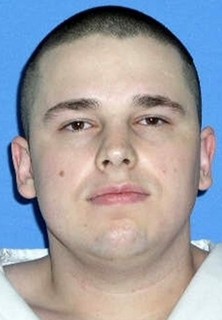
Ryan Dickson
Murderer Brian Kevin Rosenfeld
Murderer · USA · 1985
Brian Kevin Rosenfeld Brian Kevin Rosenfeld was sentenced to three concurrent l…
23 victims
Brian Kevin Rosenfeld
Murderer · USA · 1985
Brian Kevin Rosenfeld Brian Kevin Rosenfeld was sentenced to three concurrent l…
23 victims
 Russell Ellwood
Murderer · USA · 1991
Russell Ellwood was a former taxi driver. Authorities suspected him of killing…
20 victims
Russell Ellwood
Murderer · USA · 1991
Russell Ellwood was a former taxi driver. Authorities suspected him of killing…
20 victims
 Robert Martines Perez
Murderer · USA · 1994
Name: Robert Martines Perez · Other name used in proceedings: Robert Martinez P…
15 victims
Robert Martines Perez
Murderer · USA · 1994
Name: Robert Martines Perez · Other name used in proceedings: Robert Martinez P…
15 victims
 Billy Frank Vickers
Murderer · USA · 1993
Billy Frank Vickers Vickers was executed by lethal injection in Texas on Januar…
14 victims
Billy Frank Vickers
Murderer · USA · 1993
Billy Frank Vickers Vickers was executed by lethal injection in Texas on Januar…
14 victims
 Troy Leon Gregg
Murderer · USA · 1973
Troy Leon Gregg (age 25) was the appellant in Gregg v. Georgia and was also des…
2 victims
Troy Leon Gregg
Murderer · USA · 1973
Troy Leon Gregg (age 25) was the appellant in Gregg v. Georgia and was also des…
2 victims
 Esad Landzo
Murderer · Bosnia · 1992
Esad Landzo was born on 7 March 1973. During the war, he was a guard at the Cel…
3 victims
Esad Landzo
Murderer · Bosnia · 1992
Esad Landzo was born on 7 March 1973. During the war, he was a guard at the Cel…
3 victims
 Adrienne Hickson
Murderer · USA · 2005
Adrienne Emily Hickson was a 24-year-old law student and had been a student at…
1 victim
Adrienne Hickson
Murderer · USA · 2005
Adrienne Emily Hickson was a 24-year-old law student and had been a student at…
1 victim
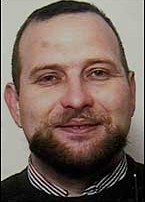 Mauro Antonello
Mass murderer · Italy · 2002
Mauro Antonello was a 40-year-old construction worker, former security guard an…
7 victims
Mauro Antonello
Mass murderer · Italy · 2002
Mauro Antonello was a 40-year-old construction worker, former security guard an…
7 victims
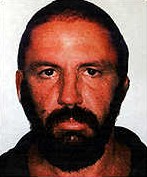 Robert Paul Long
Mass murderer · Australia · 2000
Robert Paul Long was an itinerant fruit-picker who lived in Australia and was d…
15 victims
Robert Paul Long
Mass murderer · Australia · 2000
Robert Paul Long was an itinerant fruit-picker who lived in Australia and was d…
15 victims
- Gender
- male
- Country
- USA
- Location
- Potter County, Texas, USA
- Date of birth
- November 11, 1976
- Age at first offence
- 18
- Characteristics
- armed robbery, rape
- Victim profile
- Carmelo Surace, 61, and his wife Marie Surace, 60 (store owners)
- Method of murder
- Shooting ( sawed-off .22-caliber rifle)
- Date(s) of murder
- November 27, 1994
- Years active
- 1994
- Date of arrest
- —
- Status
-
Executed
Executed by lethal injection in Texas on April 26, 2007
Case record: Ryan Dickson
Status
Ryan Dickson was executed by lethal injection in Texas on April 26, 2007.
Background
Ryan Heath Dickson was a street gang member who was scheduled for execution after 6 p.m. Thursday, April 26, 2007. He was 30 years old at the time of execution and was pronounced dead at 6:17 p.m., eight minutes after the lethal drugs began running through his veins. He spoke rapidly when asked if he had anything to say, expressing love to his family and apologizing to the relatives of his victims. He said: “I am sorry for what I did, and I take responsibility for what I did,” and later: “I do apologize,” and: “I am responsible for them losing their mother, their father, their grandfather and grandmother. I never meant for them to be taken. I am sorry for what I did and take responsibility for what I did.”
No witnesses from his family or the victims’ family attended the execution. The execution was witnessed by the prison chaplain, three journalists and several prison officials.
Dickson had frequent run-ins with the law as a juvenile, including burglary and assault arrests. He was on probation at age 9 for stealing bikes and served time with the Texas Youth Commission. While living at a residential facility for youth, Dickson punched a female staffer in the face when she confronted him about peeking into a girl’s room, and charges were filed but he was allowed to return to the facility. After another incident when Dickson was confronted by a staffer about a prank, Dickson stabbed the staffer in the chest.
Dickson fathered a daughter at age 15.
At the time of the crimes, Dickson was just two weeks past his 18th birthday.
Dickson described himself as cooperative with Texas prison officials. He wanted no witnesses of his own to watch him die and said: “It’s part of the circus and I refuse to be part of the circus,” and: “I ain’t got no choice about being there, but I ain’t gonna bring any of my people into it.”
He sent letters containing gang sayings and graffiti to a former girlfriend.
Prison records showed that in December 2006, Dickson stabbed a corrections officer in the eye.
He stated from death row: “I’m a fighter,” and: “It’s pretty much a given that I can’t beat the system, but I can create some difficulties for them after the fact. If they go ahead and kill me, that’s fine.”
His last meal request was fried chicken, fried eggs, french fries with white gravy, apple pie and ice cream, five biscuits, chili with jalapeno peppers and cheese, lemonade and five containers of milk.
The offence
Shortly before 6 p.m. on November 27, 1994, a customer walked into a small grocery store/bicycle repair shop in the San Jacinto area of Amarillo and found the bodies of the store’s owners, Carmelo and Marie Surace. Both were fatally shot.
The killings occurred during a robbery at the Surace Grocery, 2903 W. Amarillo Blvd., during an attempt to steal beer. Prosecutors said Dickson told authorities he hoped the killing would earn him a teardrop tattoo to impress his colleagues in a gang known as the Varrio 16 Locos, or “VSL,” as Dickson called it. Dickson’s brother stood guard at the door, and two other friends waited outside.
One witness recognized four boys running from the store on Nov. 27, 1994, as being from the neighborhood.
The account at trial included that Dickson entered the store and was armed with a .22-caliber sawed-off rifle. Carmelo Surace confronted him. Dickson told authorities: “I didn’t go in there and pull a gun and start shooting people,” and: “I’d like to say I love my mother, brother, sister, grandmother, cousins and nieces and my brothers and sisters I have never met,” and: “I do apologize to the Surace family.” Dickson later insisted: “I am responsible for them losing their mother, their father and their grandmother.
Another account described that Marie Surace placed all the store’s money on the counter and that prosecutors said she was on her knees with a phone in her hand when she was shot. Rebecca King, a former Potter County District Attorney, disputed Dickson’s story of the shootings, especially Marie Surace’s death, and said: “He came up after he shot the man.” King said: “She had a phone in her hand.” King said: “She was on her knees. He shot her. Totally cold.”
In his accounts, Dickson contended that the store owner must have spotted the weapon hidden in his jacket, tried to wrest it away from him and was shot in the fight. Dickson said: “I had a gun inside my jacket. The man came out from behind the counter. He walked in the aisle with me. He grabbed my gun, tipped the gun. ... When I jerked it back, I pulled the trigger. And that’s how he was shot. I didn’t go in there and pull a gun and start shooting people.” He also said: “Nobody would have gotten shot,” and: “I would have grabbed some beer and ran out. They would have been out about $20 and we’d be at home getting drunk. That’s what would have happened.” He insisted that Marie Surace was shot by accident as she reached under a counter for a gun.
Prosecutors said Dickson fled the store empty-handed. Another account said Dickson and others took the money and an unspecified amount of beer before going off to party with friends. The money described as taken was $52.
Investigation
After arriving at the crime scene, police officers were approached by a neighborhood resident who told officers she had seen four boys walking in the general direction of the grocery store and recognized one of the boys as someone she knew from the neighborhood.
Officers narrowed the focus to a group of young people, who were all taken in for questioning. After being given a Miranda warning, Ryan Dickson provided both a tape recorded statement and a written statement recounting the events that led up to the murders. In his interview, Dickson admitted he was responsible for the shooting deaths of both Carmelo and Marie Surace. His confession was corroborated by physical evidence and the statements of others.
Arrest
Police apprehended Dickson late that night after talking to witnesses, and Dane Dickson was picked up early the next morning. Dickson’s younger brother was Dane Dickson, and three other young people were involved and taken into custody for questioning.
Trial
Charges and verdict
Ryan Dickson was indicted for capital murder in the death of Carmelo Surace. A jury found him guilty of capital murder and the court assessed a sentence of death.
Later, on September 18, 2002, he was convicted of the capital murder of Marie Surace, under Tex. Penal Code Ann. § 19.03(a)(2). The trial judge sentenced him to death pursuant to the jury’s answers to special issues.
Trial length and court proceedings
The trial lasted more than 12 weeks.
On December 12, 1997, the jury sentenced Dickson to death after punishment-phase deliberations. Jurors deliberated for several hours over two days before deciding he should die by lethal injection.
In the first case, a 47th District Judge David Gleason cautioned spectators against any outbursts when the decision was handed down. As the verdict was read, Dickson lowered his head, turned quickly and walked into a secured chamber outside the courtrooms. A juror held his head in his hand and wept, and another juror softly patted his shoulder in support. Tears streamed down the faces of Dickson’s two aunts as they left the courtroom. Members of the Surace family sat on the front row throughout more than 12 weeks of the case.
Rose Surace said: “Well, we’re all tired, and we’re glad that this is finally over,” and: “As far as the verdict went today, I speak for my family. I believe that the death penalty and the verdict - however it was done - as victims here that this is our voice going out through the law.” She also said: “Either way, it doesn’t bring our parents back,” and: “There may be a trial for my mom, so we might have to do this again,” adding: “This is one decision that might make us not have to do this again. . . . If that helps, then it helps our family.” Anita Surace said: “Either way, it doesn’t bring our parents back.”
Evidence and arguments
Prosecution testimony centered on Dickson’s criminal background, affinity toward a local street gang, and letters containing gang sayings and graffiti that he sent to a former girlfriend. The prosecutor Rebecca King showed pictures of the Suraces and asked jurors to remember their guilty verdicts, and she presented a large display of Dickson’s past criminal and aggressive acts. She said: “Two capital murders and approximately 100 criminal offenses.”
Defense counsel Tim Pirtle presented four smaller display boards showing Dickson’s alleged abuse and neglect at the hands of his mother. Pirtle said: “I’ll try to paint you a picture of Ryan Dickson’s life so if you decide to take his life, you'll know what he's gone through,” and he said: “I don’t” commit violent acts in the last five years and isn’t a continuing threat to society.
Defense counsel Joe Dawson acknowledged Dickson’s past has been filled with bad behavior and asked: “But based on the past five years, do you think you have to kill him?”
Prosecutor Pat Murphy said defendants tell a sad story during the punishment phase and said: “You can’t just look back at one aspect of a person’s life and remove blame,” and: “Murphy cited the testimony of two doctors who said Dickson represents a threat of future dangerousness.” Murphy said: “His criminal history alone should tell you, and two doctors say he is not going to change,” and: “He executed her and there is nothing - not one shred of evidence - to excuse that conduct.”
In the federal habeas appeal record, the state court described evidence on weapon type and possible struggle, noting: “Evidence also suggested the weapon used was a single-shot, bolt-action, .22 caliber rifle, which had been sawed off.” It further said: “Some evidence was adduced showing that Mr. Surace might possibly have struggled with his assailant, might possibly have grabbed the barrel of the weapon, and might possibly have been shot as a result of the struggle,” and: “Evidence suggested that Mrs. Surace was probably shot after her husband.”
Jeremy Brown testified before trial and at trial as to Petitioner’s intent, and the record described that trial testimony indicated Dickson told Jeremy of intent to shoot “the two old people” before entering the store.
Juror issues and outside influence
In direct appeal, Dickson claimed juror Henderson withheld information during voir dire, arguing he would have used a peremptory strike if he had known Henderson had been convicted and sentenced to death in another case. The court held Henderson did not withhold material information and that the trial court did not abuse its discretion in denying a motion for new trial.
Dickson also claimed the jury had been subjected to outside influences because a juror from his prior trial, Carpenter, improperly communicated with jurors in this case. At the motion for new trial hearing, Carpenter testified he attended the majority of the trial to determine whether the jury in the prior case had received all available information and stated he spoke with jurors in this case while outside smoking during breaks. The court found the record reflected no particulars of the case were discussed and the trial court did not abuse its discretion in denying a motion for new trial.
Sentencing
The sentencing in the first case assessed a sentence of death for capital murder of Carmelo Surace.
For the capital murder of Marie Surace, the jury’s answers to special issues under Texas Code of Criminal Procedure Article 37.071 led the trial judge to sentence Dickson to death.
In December 1997, a six-man, six-woman jury decided Dickson should die by lethal injection after more than six hours of punishment-phase deliberations. The punishment for Carmelo Surace’s murder occurred first.
Dane Dickson received a 15-year prison term after pleading guilty to two capital murder charges. He served part of his sentence in juvenile facilities and was transferred to the state prison system.
Appeals
Direct appeal (state)
Dickson’s conviction and sentence for Carmelo Surace’s murder were affirmed on April 26, 2000 by the Texas Court of Criminal Appeals.
On June 28, 2000, the Court of Criminal Appeals denied a motion for rehearing.
On February 21, 2001, the Court of Criminal Appeals denied Dickson’s application for state habeas relief.
The Texas Court of Criminal Appeals opinion described five points of error and affirmed. It held:
- Henderson did not withhold material information during voir dire to warrant new trial.
- Improper communication by a juror from the previous capital murder trial did not warrant new trial because no particulars of the case were discussed and jurors were not influenced by knowledge of the prior jury service.
- The state death penalty scheme did not violate equal protection.
- A voir dire question asking a juror to state what a mitigating circumstance would be was improper.
- Trial counsel was not ineffective.
State and federal habeas timeline
On Nov. 6, 2001, Dickson filed a petition for writ of habeas corpus in the federal district court. On Mar. 23, 2005, the federal district court denied Dickson’s habeas petition. On Jun. 22, 2006, the 5th U.S. Circuit Court of Appeals granted a certificate of appealability. On Aug. 24, 2006, the Fifth Circuit denied Dickson’s appeal. On Sep. 22, 2006, the Fifth Circuit denied his motion for rehearing. On Dec. 22, 2006, Dickson petitioned the U.S. Supreme Court for certiorari review, and his petition was rejected.
A federal habeas appeal described Brady-related arguments concerning suppressed audiotapes. The Fifth Circuit affirmed denial of relief and denied the Brady claim.
Federal habeas: Brady claim regarding audiotapes
The Fifth Circuit described that prosecutors had not given defense access to two audiotapes containing potential impeachment evidence under Brady. The audiotapes concerned pretrial interviews with Jeremy Brown and Dane Dickson. The court described written statements that the young men had given to police and that prosecutors used written statements during interviews to confirm and refresh recollection.
The Fifth Circuit recounted that Brown’s written statement included: “I asked [Petitioner] if they were going to shoot them and he said, ‘yeah.’ ” The court also described a pretrial interview in which Brown equivocated. The record included a reassurance by prosecutors to Brown: “Otherwise, you would've been in deep trouble, okay? But I-again, I want you to know right now, I mean, I-you don't need to sit and worry that we're going to drag you into the capital murder, because it's pretty clear that you did not have anything to do with the capital murder.”
The record included that Dane Dickson retracted certain factual assertions in his written statement. In his pretrial interview, Dane Dickson stated he did not witness the shooting and described mistakenly “incorporated” what his brother told him into the written statement.
The state habeas court made findings and conclusions, including:
- It found evidence included that Carmel[l]o Surace and Marie Surace had both been shot during a robbery of their grocery store.
- It said Mrs.
- It said trial testimony indicated Dickson told Jeremy of intent to shoot “the two old people” before entering the store, and the first portion of Jeremy Brown’s tape was “not so conclusive.”
- It stated the trial testimony given by Dane Dickson was essentially the same as his tape recorded statement but still had differences.
- It concluded: “While the contents of the tape recorded interviews do not contain any directly exculpatory evidence, they do contain potential impeachment material.”
- It concluded: “Harm from the non-disclosure (even though not intentional) of such impeachment material may be presumed from the result obtained in this case.”
- It stated: “Had the trial testimony of Jeremy Brown been effectively impeached by the use of the recorded statement, the jury might have chosen to disregard or disbelieve Mr. Brown's trial testimony about Applicant's acknowledgment of intent, and, since this conviction is for the alleged capital murder of Carmel [l]o Surace, only, (the alleged capital murder of Marie Surace is a separate indictment which has not yet been tried), the jury might have reached a different conclusion.”
The Fifth Circuit held that the state appellate court’s determination that the undisclosed evidence was not material was not an unreasonable application of governing federal law and affirmed the denial of relief.
Outcome
Ryan Dickson was convicted of capital murder and sentenced to death in the capital murder cases involving:
- the death of Carmelo Surace, shot during a robbery of their family-owned store, with a death sentence assessed by the trial court and affirmed on direct appeal; and
- the capital murder of Marie Surace, for which he was convicted on September 18, 2002 and sentenced to death.
Dickson was executed by lethal injection in Texas on April 26, 2007.
Aftermath
At the time of execution, no witnesses from his family or the victims’ family attended. Dickson made statements to media and TDCJ representatives during the execution proceedings. He said: “I’d like to say I love my mother, brother, sister, grandmother, cousins and nieces and my brothers and sisters I have never met,” and: “I do apologize to the Surace family.” He also said: “I am responsible for them losing their mother, their father and their grandmother.
The execution followed last-day federal court challenges to the constitutionality of Texas’s lethal injection procedure, and those efforts were turned down by a federal judge in Amarillo and then the 5th U.S. Circuit Court of Appeals in New Orleans. Lawyers did not appeal to the U.S. Supreme Court.
People and places
- Ryan Heath Dickson — defendant; executed by lethal injection in Texas on April 26, 2007
- Carmelo Surace (61) — victim; store owner; fatally shot
- Marie Surace (60) — victim; store owner; fatally shot
- Dane Dickson — Ryan Dickson’s brother; pleaded guilty to two capital murder charges; received a 15-year prison term
- Rebecca King — former Potter County District Attorney; prosecuted the two capital murder cases; disputed Dickson’s account
- Pat Murphy — prosecutor
- Tim Pirtle — defense attorney
- Joe Dawson — defense attorney
- David Gleason — 47th District Judge
- Carpenter — juror from prior trial who communicated with jurors during the break
- Henderson — juror challenged during voir dire issue
- Jeremy Brown — witness; provided testimony regarding intent
- Freddie Medina — involved in attempt to steal beer
- Carmelo and Marie Surace’s store (Surace Grocery) — located at 2903 W. Amarillo Blvd.
- Amarillo — location of the crimes and court proceedings discussed
- San Jacinto area — area of Amarillo where the customer found the bodies
Timeline
- November 27, 1994 — Police were called to the Surace Grocery; Carmelo and Marie Surace were found fatally shot; Ryan Dickson and others were taken in for questioning.
- December 16, 1997 — A jury found Dickson guilty of capital murder and the court assessed a sentence of death.
- April 26, 2000 — The Texas Court of Criminal Appeals affirmed Dickson’s conviction and sentence.
- June 28, 2000 — The Court of Criminal Appeals denied Dickson’s motion for rehearing.
- September 22, 2000 — The trial court issued findings and conclusions as part of an Ex Parte habeas proceeding described in the federal appellate record.
- February 21, 2001 — The Court of Criminal Appeals denied Dickson’s application for state habeas relief.
- March 23, 2005 — The federal district court denied Dickson’s habeas petition.
- June 22, 2006 — The 5th U.S. Circuit Court of Appeals granted a request for a certificate of appealability.
- August 24, 2006 — The Fifth Circuit Court denied Dickson’s appeal.
- September 22, 2006 — The Fifth Circuit Court denied Dickson’s motion for rehearing.
- December 22, 2006 — Dickson petitioned the U.S. Supreme Court for certiorari review; his petition was rejected.
- April 26, 2007 — Dickson was executed by lethal injection in Texas; he was pronounced dead at 6:17 p.m.
Other details
The case involved two capital murder proceedings: one for Carmelo Surace and one for Marie Surace. The federal habeas discussion described that without multiple victims, the state had to prove that Dickson intentionally killed Carmelo Surace during the course of a robbery to establish capital murder under Texas Penal Code section 19.03(a)(2). The Fifth Circuit described the state’s theory that, for Carmelo Surace, there was a need to prove intent during the course of a robbery.
The Texas Court of Criminal Appeals noted on direct appeal that direct appeal to that court was automatic under Article 37.071 § 2(h). The Texas Court of Criminal Appeals affirmed and addressed voir dire, outside influence, ineffective assistance, and the death penalty scheme.
In addition to direct appeal and Brady-related federal habeas proceedings, the federal record referenced that the district court issued an order denying the petition and that Dickson appealed. The Fifth Circuit affirmed denial of relief under 28 U.S.C. § 2254.
Dane Dickson’s testimony and statements were described as consistent with the defense theory that Carmelo Surace was killed during a struggle. The state argued against this, including through testimony and ballistics described in connection with disputed accounts of how the shootings occurred.
Spotted an error, or have more information about this case?