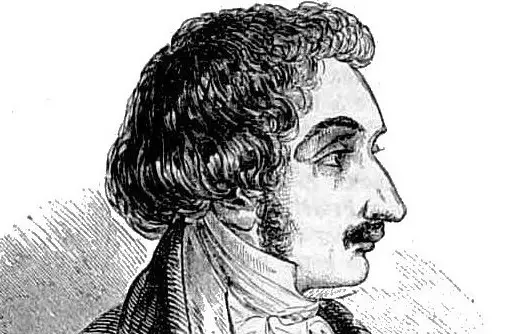
Pierre François Lacenaire
Murderer Albert Foulcher
Murderer · France · 1993
Albert Foulcher was described as a former insurance agent and a gun enthusiast.…
5 victims
Albert Foulcher
Murderer · France · 1993
Albert Foulcher was described as a former insurance agent and a gun enthusiast.…
5 victims
 Alfredo Stranieri
Murderer · France · 1997
Alfredo Stranieri (born July 30, 1956) was nicknamed "the killer ads." Alfredo…
4 victims
Alfredo Stranieri
Murderer · France · 1997
Alfredo Stranieri (born July 30, 1956) was nicknamed "the killer ads." Alfredo…
4 victims
 Antoine François Desrues
Murderer · France · 1777
Antoine François Desrues (1744–1777) was a French poisoner. Desrues was born at…
2 victims
Antoine François Desrues
Murderer · France · 1777
Antoine François Desrues (1744–1777) was a French poisoner. Desrues was born at…
2 victims
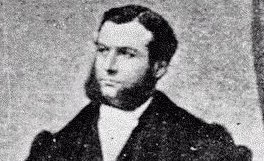 Edmond de la Pommerais
Murderer · France · 1862
Edmond de la Pommerais presented himself as a count and married a woman from a…
2 victims
Edmond de la Pommerais
Murderer · France · 1862
Edmond de la Pommerais presented himself as a count and married a woman from a…
2 victims
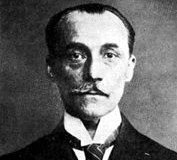 Henri Girard
Murderer · France · 1912
Henri Girard Henri Girard was a French killer-for-profit. He insured his victim…
2 victims
Henri Girard
Murderer · France · 1912
Henri Girard Henri Girard was a French killer-for-profit. He insured his victim…
2 victims
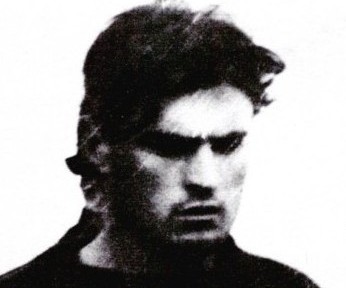 Jean-Laurent Olivier
Murderer · France · 1967
Jean-Laurent Olivier was born in 1944 in the Aisne. He was abandoned very early…
2 victims
Jean-Laurent Olivier
Murderer · France · 1967
Jean-Laurent Olivier was born in 1944 in the Aisne. He was abandoned very early…
2 victims
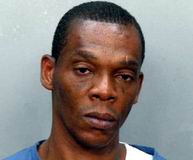 Reginald Smith
Murderer · USA · 1994
Reginald Smith was a suspected serial killer who pleaded guilty to the 1994 mur…
3 victims
Reginald Smith
Murderer · USA · 1994
Reginald Smith was a suspected serial killer who pleaded guilty to the 1994 mur…
3 victims
 Elliot Rodger
Mass murderer · USA · 2014
Elliot Rodger (July 24, 1991 – May 23, 2014) perpetrated a killing spree in Isl…
6 victims
Elliot Rodger
Mass murderer · USA · 2014
Elliot Rodger (July 24, 1991 – May 23, 2014) perpetrated a killing spree in Isl…
6 victims
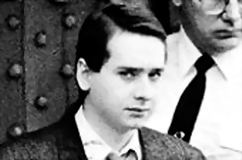 Robert Sartin
Homicide · United Kingdom · 1989
Robert Sartin was found to be unfit to stand trial and was being held in Moss S…
1 victim
Robert Sartin
Homicide · United Kingdom · 1989
Robert Sartin was found to be unfit to stand trial and was being held in Moss S…
1 victim
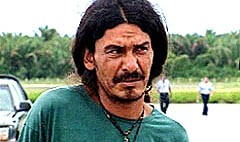 Jose Vicente Matias
—
Jose Vicente Matias fue descrito como un asesino en serie brasileño que se las…
Jose Vicente Matias
—
Jose Vicente Matias fue descrito como un asesino en serie brasileño que se las…
- Gender
- male
- Country
- France
- Location
- Paris, France
- Date of birth
- December 20, 1800
- Age at first offence
- 34
- Characteristics
- robbery
- Victim profile
- A man named Chardon (a slum-dwelling transvestite) and his mother
- Method of murder
- St abbing with a shoemaker's awl - Beating with a hatchet
- Date(s) of murder
- December 14, 1834
- Years active
- 1834
- Date of arrest
- February 2, 1835
- Status
-
Executed
Executed by guillotine on January 9, 1836
Case identification
Pierre François Lacenaire
Background
Pierre François Lacenaire was a famous French poet and murderer. He finished his education with excellent results and joined the army, eventually deserting in 1829 at the time of the expedition to the Morea. He became a crook and was in and out of prison, which he called his "criminal university". While in prison, Lacenaire recruited two henchmen, Victor Avril and François Martin, and wrote a song, "Petition of a Thief to a King his Neighbor", as well as "The Prisons and the Penal Regime" for a journal. While in prison awaiting his trial, Lacenaire held press conferences, entertained writers, allowed a phrenologist to measure the bumps on his head and make a life mask, and received countless letters from the public. Lacenaire spent his time writing poetry and reading the classics. According to Victor Hugo, he discussed serious literature with his jailer and Lacenaire went so far as to will the jailer his personal library (Wright, 1981, p. 31).
The offence
Lacenaire and an accomplice named Avril called on an acquaintance of Lacenaire named Chardon on December 14, 1834. As soon as they got into Chardon's apartment, Avril seized him by the throat and Lacenaire stabbed him in the back. Then Avril finished him off with a hatchet, while Lacenaire went into the bedroom and quickly killed the old woman with a shoemaker's awl. Their executions were carried out quietly and unannounced, on a cold and foggy morning in January 1836, just over a year after the murder of the Chardons.
Investigation
Eventually, Avril, who was imprisoned for another offence, came forward with information that led to Lacenaire's arrest for the murders. Lacenaire in turn gave a full confession which implicated Avril.
Trial
In 1835, Pierre-François Lacenaire was convicted of a double murder and an attempted third. Lacenaire turned his trial into a theatrical event and his cell into a salon. At the trial itself, Lacenaire took command of the proceedings by confessing all of his crimes in detail and stunned the courtroom with an improvised closing soliloquoy. Rumors circulated that he was to be pardoned after conviction and be made chief of a special branch of police. This sounded much like the familiar case of the bandit, Vidocq. In fact, Lacenaire claimed to have been inspired by Vidocq's memoirs. Reading Vidocq showed Lacenaire that the real "school of crime" was the nineteenth century prison. In order to learn from the best, Lacenaire got himself arrested for a minor crime and spent a year learning from the experts. Lacenaire's main goal was to become "the scourge of society." (Wright, 1981, p. 35)
His crimes were described as hardly those of one schooled in the art of murder. He and an accomplice were convicted of a brutal, amateurish butchery of a slum-dwelling transvestite and the latter's aging mother. The criminals committed the crime under the belief that there would be a huge monetary reward for their efforts, but Lacenaire was mistaken in his theory that the victims possessed a hoard of money. His second venture was described as even less professional than his first attempt. He lured a bank messenger to a false rendezvous, seeking to rob him and slit his throat. This job was completely botched, and again, Lacenaire was forced to flee empty-handed.
A French encyclopedia called him an " odieux assassin" , and devoted almost as much space to Lacenaire's career as to that of the famous general Lafayette. ( Grand Dictionnaire Universel, 1860)
Sentencing
After his conviction, Lacenaire wrote his memoirs and, with some of his poems, they were published after his execution and became a best-seller. Lacenaire was sentenced to a rendezvous with the guillotine.
Execution and aftermath
Lacenaire remained calm and polite and watched Avril's execution without flinching. The men had made up at the end. The night before the execution, Lacenaire called to his old accomplice: "The earth will be pretty cold tomorrow." "Ask to be buried in a fur coat," shouted Avril. When Lacenaire's head was on the block, there was an accident that would have broken another man's nerve. The blade of the guillotine dropped, then stuck halfway. As it was hauled up again, Lacenaire twisted his head to look up at the triangular blade. A moment later, it fell again.
Lacenaire was thirty-six years old when he died. Dostoevsky read about Lacenaire's case and it inspired him to write Crime and Punishment, in which Raskolnikov's crime was a copy of Lacenaire's almost down to the last detail. Lacenaire's name was lost for a while, and then resurrected in Marcel Carné's 1945 film, Les Enfants du Paradis. Lacenaire is portrayed in the epic movie Les Enfants du Paradis (Children of Paradise), directed by Marcel Carné. There is also a French film called Lacenaire starring Daniel Auteuil.
Foucault believed Lacenaire's notoriety among Parisians marked the birth of a new kind of lionized outlaw (as opposed to the older folk hero), the bourgeois romantic criminal, and eventually to the detective and true crime genres of literature. Rumors claimed that he died a coward, while his admirers claimed that he played out his heroic role to the end.
Other details
Lacenaire recruited two henchmen, Victor Avril and François Martin, while in prison. At the time of his execution for a double murder he wrote Memoirs, Revelations and Poems. He wrote "Petition of a Thief to a King his Neighbor" and "The Prisons and the Penal Regime" for a journal.
Spotted an error, or have more information about this case?