Cecil Maltby
Murderer Albert Burrows
Murderer · United Kingdom · 1920
Albert Burrows (also named Albert Edward Burrows): married farm labourer who to…
4 victims
Albert Burrows
Murderer · United Kingdom · 1920
Albert Burrows (also named Albert Edward Burrows): married farm labourer who to…
4 victims
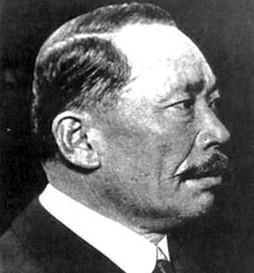 Lock Ah Tam
Murderer · United Kingdom · 1925
Lock Ah Tam was 54 when he killed his wife and two daughters. He had been a suc…
3 victims
Lock Ah Tam
Murderer · United Kingdom · 1925
Lock Ah Tam was 54 when he killed his wife and two daughters. He had been a suc…
3 victims
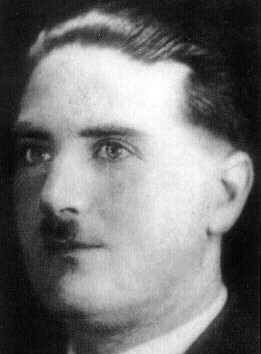 Alfred Arthur Rouse
Murderer · United Kingdom · 1930
Alfred Arthur Rouse (6 April 1894–10 March 1931) was a British murderer. It was…
1 victim
Alfred Arthur Rouse
Murderer · United Kingdom · 1930
Alfred Arthur Rouse (6 April 1894–10 March 1931) was a British murderer. It was…
1 victim
 Keydrick Jordan
Murderer · USA · 1991
Sentence vacated death; remanded for a new penalty-phase proceeding after the c…
2 victims
Keydrick Jordan
Murderer · USA · 1991
Sentence vacated death; remanded for a new penalty-phase proceeding after the c…
2 victims
 Andrew Cunanan
Spree killer · USA · 1997
Andrew Phillip Cunanan (August 31, 1969 – July 23, 1997) was an American spree…
5 victims
Andrew Cunanan
Spree killer · USA · 1997
Andrew Phillip Cunanan (August 31, 1969 – July 23, 1997) was an American spree…
5 victims
 Dominique Cottrez
Infanticide · France · 1989
Dominique Cottrez was a French woman aged 45. She was described as a nursing as…
8 victims
Dominique Cottrez
Infanticide · France · 1989
Dominique Cottrez was a French woman aged 45. She was described as a nursing as…
8 victims
 Kelly Lamont Rogers
Murderer · USA · 1990
Kelly Lamont Rogers was executed by lethal injection in Oklahoma on March 23, 2…
1 victim
Kelly Lamont Rogers
Murderer · USA · 1990
Kelly Lamont Rogers was executed by lethal injection in Oklahoma on March 23, 2…
1 victim
 William Boliek
Murderer · USA · 1983
In August 1983, William T. Boliek lived in Linda Turner’s home. Other residents…
1 victim
William Boliek
Murderer · USA · 1983
In August 1983, William T. Boliek lived in Linda Turner’s home. Other residents…
1 victim
- Gender
- male
- Country
- United Kingdom
- Location
- London, England, United Kingdom
- Date of birth
- 1875
- Age at first offence
- 47
- Characteristics
- domestic dispute, jealousy
- Victim profile
- Alice Hilda Middleton (his mistress)
- Method of murder
- Shooting
- Date(s) of murder
- August 24, 1922
- Years active
- 1922
- Date of arrest
- —
- Status
-
Died in custody
Committed suicide by shooting himself to avoid arrest on January 10, 1923
Case record: Cecil Maltby
People
- Cecil Maltby — 47-year-old tailor who lived alone in a flat above his shop.
- Alice Hilda Middleton — Maltby’s mistress; her husband was in the Far East serving with the Merchant Navy.
Background
Cecil Maltby lived alone in a flat above his tailoring shop. He had a liking for the bottle, and his business, which had already suffered heavily, deteriorated further. Maltby and Alice Hilda Middleton spent large amounts of time at race meetings and motorcycle jaunts, and also drank heavily.
Alice Middleton’s husband was in the Far East serving with the Merchant Navy. In the summer of 1922 she moved in with Maltby.
When Alice’s husband returned in December 1922, he attempted to find Alice. Being unsuccessful, he contacted the police and reported her missing. Enquiries determined that Alice had not been seen since the previous August.
Maltby had been associated with gambling and dissipation. His worst troubles were linked to his weakness for women. His wife left him, taking with her their five children. Maltby had a pattern of taking up with successive ladies, and he did not appoint a permanent housekeeper until he met Mrs. Alice Middleton.
Alice Middleton was the wife of a marine officer whose long absences at sea made it convenient for her to spend periods at Park Road.
Maltby became deeply in debt and did not dare to go out in day-time for fear of meeting the bearer of a writ or overdue bill. He made stealthy trips by night to his old haunts. Early in January, bailiffs waiting on the doorstep led him to prepare to withstand a siege. He barricaded the doors using heavy furniture, and nailed up the lower windows. His water, light, and gas were cut off, making his position hopeless.
The offence
A Coroner’s Jury returned a verdict of murder against Cecil Maltby.
In a bath in the kitchen, officers found the decomposing remains of Alice Hilda Middleton, wrapped in a sheet.
Maltby had put a gun in his mouth and pulled the trigger when police entered the premises on 10 January 1923. He died a few minutes later.
A note pinned to the sheet read:
'In memory of darling Pat, who committed suicide on 24 August 1992, 8.30am.'
Notes also appeared to explain a struggle over the gun after Alice had threatened suicide. This idea that Alice Middleton had committed suicide was not upheld by the pathologists report, which stated that she had been shot three times from behind.
Evidence of letters went to prove that Maltby committed his crime in a fit of jealousy. He objected to Alice staying with her sailor husband during his leave ashore, and he was most anxious that it should be thought she had died by her own hand.
Pinned to the bed linen in which the body was wrapped was another pencilled note which read:
"In loving memory of A. H. M. who committed suicide on August
Several other notes to the same effect were fixed to some of the doors.
Investigation
Police decided to keep watch on the shop after Maltby refused them access when police visited. Maltby never seemed to leave the flat.
The authorities obtained a health order on the grounds of the premises being in an unsanitary condition. This enabled the Medical Officer of Health and armed police to break into the shop.
On the day police forced entry, a large crowd was present, besides the bailiffs and the police. The police had learned of Maltby’s association with Mrs. Middleton and wished to interview him.
Maltby made one concession. Hanging out of an upper window at the back of the house, he held a shouted conversation with a detective. He explained that he had heard nothing of Mrs. Middleton since she had left him the previous June and that the only reason he had shut himself up was because he objected to bailiffs.
Police obtained a magistrate’s warrant to force entry, obtained through the sanitary inspector. Prior attempts had been unable to get into the house.
Arrest / entry / immediate events
Officers entered the premises from both front and rear of the building.
As they got to the first floor they heard a shot from the bedroom. Maltby had shot himself dead.
The officers had first attacked the door with a jemmy. When it did not move quickly, someone broke the glass panel and a thin policeman climbed in, quickly letting in colleagues. As they ran up the stairs, the sound of a revolver shot rang out.
Trial
- No trial is described as taking place.
Sentencing
- No sentencing is described.
Appeals
- No appeals are described.
Outcome
Cecil Maltby died after shooting himself on 10 January 1923 when police forced entry under a magistrate’s warrant enabled by a health order.
The Coroner’s Jury returned a verdict of murder against Cecil Maltby.
Police found Alice Hilda Middleton’s body in a bath in the kitchen, wrapped in a sheet.
Aftermath
The death of Cecil Maltby solved the mystery connected with “the red house with the yellow blinds,” identified as No. 24 Park Road, Regent’s Park, where the ground floor contained the once fashionable tailoring business of James Maltby.
Cecil Maltby had inherited the tailoring business upon the death of his father.


Spotted an error, or have more information about this case?