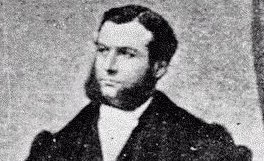
Edmond de la Pommerais
Murderer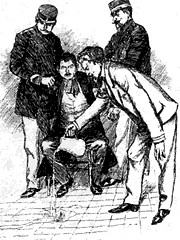 Pierre Voirbo
Murderer · France · 1868
Pierre Voirbo was a prime suspect after he had recently quarreled with the vict…
1 victim
Pierre Voirbo
Murderer · France · 1868
Pierre Voirbo was a prime suspect after he had recently quarreled with the vict…
1 victim
 Albert Foulcher
Murderer · France · 1993
Albert Foulcher was described as a former insurance agent and a gun enthusiast.…
5 victims
Albert Foulcher
Murderer · France · 1993
Albert Foulcher was described as a former insurance agent and a gun enthusiast.…
5 victims
 Alfredo Stranieri
Murderer · France · 1997
Alfredo Stranieri (born July 30, 1956) was nicknamed "the killer ads." Alfredo…
4 victims
Alfredo Stranieri
Murderer · France · 1997
Alfredo Stranieri (born July 30, 1956) was nicknamed "the killer ads." Alfredo…
4 victims
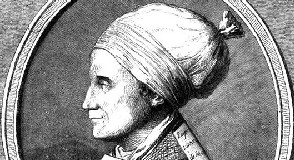 Antoine François Desrues
Murderer · France · 1777
Antoine François Desrues (1744–1777) was a French poisoner. Desrues was born at…
2 victims
Antoine François Desrues
Murderer · France · 1777
Antoine François Desrues (1744–1777) was a French poisoner. Desrues was born at…
2 victims
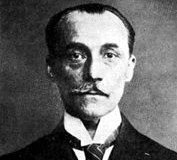 Henri Girard
Murderer · France · 1912
Henri Girard Henri Girard was a French killer-for-profit. He insured his victim…
2 victims
Henri Girard
Murderer · France · 1912
Henri Girard Henri Girard was a French killer-for-profit. He insured his victim…
2 victims
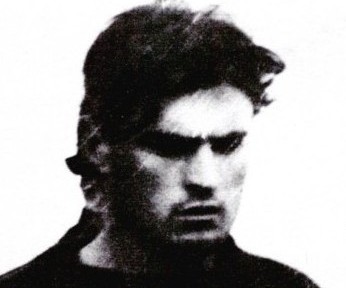 Jean-Laurent Olivier
Murderer · France · 1967
Jean-Laurent Olivier was born in 1944 in the Aisne. He was abandoned very early…
2 victims
Jean-Laurent Olivier
Murderer · France · 1967
Jean-Laurent Olivier was born in 1944 in the Aisne. He was abandoned very early…
2 victims
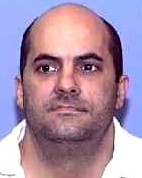 Daniel Clate Acker
Murderer · USA · 2000
Daniel Clate Acker; TDCJ Number 999381. Daniel Clate Acker was convicted of cap…
1 victim
Daniel Clate Acker
Murderer · USA · 2000
Daniel Clate Acker; TDCJ Number 999381. Daniel Clate Acker was convicted of cap…
1 victim
 Jacquelyn Greco
Murderer · USA · 1979
Jacquelyn Greco (also known as Jackie; formerly Jacquelyn Gaimari) — defendant;…
1 victim
Jacquelyn Greco
Murderer · USA · 1979
Jacquelyn Greco (also known as Jackie; formerly Jacquelyn Gaimari) — defendant;…
1 victim
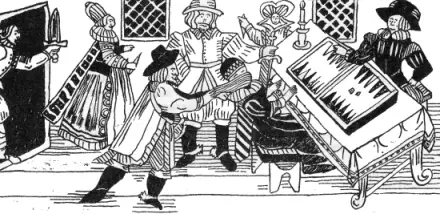 Alice Arden
Murderer · United Kingdom · 1551
Alice Arden (1516–1551) was the daughter of John Brigantine and Alice Squire. S…
1 victim
Alice Arden
Murderer · United Kingdom · 1551
Alice Arden (1516–1551) was the daughter of John Brigantine and Alice Squire. S…
1 victim
 David Smith
Spree killer · USA · 1980
David Smith was sentenced to death in 1983. Smith was angered because his girlf…
4 victims
David Smith
Spree killer · USA · 1980
David Smith was sentenced to death in 1983. Smith was angered because his girlf…
4 victims
 Scott Allen Hain
Homicide · USA · 1987
Scott Allen Hain was executed by lethal injection in Oklahoma on April3, 2003.…
2 victims
Scott Allen Hain
Homicide · USA · 1987
Scott Allen Hain was executed by lethal injection in Oklahoma on April3, 2003.…
2 victims
- Gender
- male
- Country
- France
- Location
- France
- Date of birth
- 1836
- Age at first offence
- 26
- Characteristics
- poisoner, to collect insurance money, inheritance
- Victim profile
- Madame Dubizy (his mother-in-law) / Madame de Pauw ( his former mistress)
- Method of murder
- Poisoning (digitalis)
- Date(s) of murder
- 1862 / 1863
- Years active
- 1862–1863
- Date of arrest
- —
- Status
-
Executed
Executed by guillotine on June 1864
Background
Edmond de la Pommerais presented himself as a count and married a woman from a family of means, Mademoiselle Dubiczy. He retained a mistress, a young widow named Séraphine de Pauw, after Pommerais had treated Séraphine’s ill husband. Pommerais was described as a spendthrift and gambler and was said to have bankrupted his wife’s estate. He was also described as having poisoned his wife’s mother to get the inheritance.
Séraphine de Pauw had a large life insurance policy in which Pommerais was the beneficiary. Pommerais was described as being in financial trouble at the time and as having been inspired by the failure to make a fortune with homeopathy to take a more sinister route to wealth.
Séraphine de Pauw confided to her sister that her “illness” was supposed to have been a pretense, part of an elaborate scheme to defraud the insurance company and enrich both Séraphine and her lover. The sister believed the scheme was a deception and that Pommerais had inserted himself into Séraphine’s will for his own purposes.
The offence
Pommerais persuaded Séraphine de Pauw to fake an illness in order to collect an insurance settlement, and to write a letter describing her phony problems. After that, he poisoned her with digitalis/digitalin.
Séraphine de Pauw died within hours, after one day she mysteriously fell ill.
Investigation
An anonymous note alerted police to foul play. The forensic pathologist Professor Ambroise Tardieu suspected poisoning from the victim’s odd symptoms, especially her racing heart. Tardieu injected several frogs with the extract he had obtained using the Stas method, as well as with a standard solution of digitalin/digitalis. The reactions from those frogs injected with the standard and those injected with the extract were exactly the same.
On the suspicion of poisoning, Tardieu requested that Séraphine’s body be exhumed. Testing for arsenic and antimony was negative. Tardieu faced the possibility that a poison had been used for which there was no test.
Tardieu performed further experiments based on the racing heart symptom. He took an extract from the victim’s organs and injected it into a large dog; after a few hours the animal vomited, lay down, and for the next 12 hours showed symptoms of a racing heart, but the animal survived.
Investigators also found poisons and drugs among Pommerais’s remedies, including digitalin for regulating the heart, which in high doses could be lethal. The “count” had purchased digitalin not long before the victim died, and investigators said it was clear that he had used up a considerable amount. In love letters that Séraphine had written, she mentioned taking this “remedy” for “stimulation.” Tardieu then injected the dog with digitalin from Pommerais’s stock; this time, the animal died from heart paralysis.
Tardieu tested traces of vomit from the victim’s room. Using three frogs, he conducted a test: one control, one receiving a pure extract of digitalin, and the other receiving an extract made from the vomit. The frog test subjects receiving the pure extract and the vomit extract both showed the same symptoms and both died in half an hour, while the control showed no symptoms. Over the course of 2 weeks, Tardieu repeated the experiment several times to be certain.
Tardieu also took specimens from floorboards from the victim’s room on which she had not vomited so as to deflect any suggestion that the floorboards themselves contained a toxic substance. This extract had no effect on the frogs.
Trial
The celebrated trial began in the spring of 1864. The defense attorney questioned Tardieu’s methods from every angle, focusing specifically on the lack of digitalin in Madame de Pauw’s body tissues and claiming it was ludicrous to compare the reactions of a frog with a human being.
Tardieu’s decision to extract the poison from the vomit won the day, trumping arguments about the lack of presence of digitalin in the body. The evidence held up in court, and the suspicious circumstances were described as giving further weight to the prosecution’s case.
Pommerais was convicted of murder.
Sentencing
Pommerais was executed.
Outcome
Pommerais was convicted of murder and executed.
Pommerais was convicted on June 9, 1864.
Other details
The murder was described as the murder of the young French widow, Madame de Pauw, whose alleged murderer was the homeopathic doctor Couty de la Pommerais, described as her lover.
Investigators supervised testing for arsenic and antimony and it was negative. Traces of vomit were scraped from the victim’s room. Tardieu supervised the testing and used the Stas method to obtain an extract.
A forensically significant part of the case was the method used to demonstrate digitalin through frog reactions and the Stas method extract. Tardieu’s logical, patient approach and his determination to support his intuitions with firm and repeatable methodology were described as becoming a standard for future forensic scientists.

Spotted an error, or have more information about this case?