Michael Wayne Hunter
Murderer Ervil LeBaron
Murderer · USA · 1972
Ervil Morrell LeBaron (1925 to August 16, 1981) was the leader of a polygamous…
35 victims
Ervil LeBaron
Murderer · USA · 1972
Ervil Morrell LeBaron (1925 to August 16, 1981) was the leader of a polygamous…
35 victims
 Brian Kevin Rosenfeld
Murderer · USA · 1985
Brian Kevin Rosenfeld Brian Kevin Rosenfeld was sentenced to three concurrent l…
23 victims
Brian Kevin Rosenfeld
Murderer · USA · 1985
Brian Kevin Rosenfeld Brian Kevin Rosenfeld was sentenced to three concurrent l…
23 victims
 Marvin Gray
Murderer · USA · 1975
Marvin Gray was convicted killer who claimed responsibility for 23 slayings and…
23 victims
Marvin Gray
Murderer · USA · 1975
Marvin Gray was convicted killer who claimed responsibility for 23 slayings and…
23 victims
 Yahweh ben Yahweh
Murderer · USA · 1980
Yahweh ben Yahweh was born and legally named Hulon Mitchell Jr. (October 27, 19…
23 victims
Yahweh ben Yahweh
Murderer · USA · 1980
Yahweh ben Yahweh was born and legally named Hulon Mitchell Jr. (October 27, 19…
23 victims
 Russell Ellwood
Murderer · USA · 1991
Russell Ellwood was a former taxi driver. Authorities suspected him of killing…
20 victims
Russell Ellwood
Murderer · USA · 1991
Russell Ellwood was a former taxi driver. Authorities suspected him of killing…
20 victims
 John O'Shaughnessy
Murderer · United Kingdom · 1996
John O'Shaughnessy was born in 1965 in Chester, England. He was 31 at the time…
1 victim
John O'Shaughnessy
Murderer · United Kingdom · 1996
John O'Shaughnessy was born in 1965 in Chester, England. He was 31 at the time…
1 victim
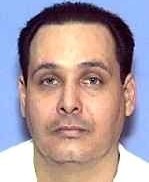 Richard Hinojosa
Murderer · USA · 1986
Richard Hinojosa was convicted and sentenced to death for the capital murder of…
2 victims
Richard Hinojosa
Murderer · USA · 1986
Richard Hinojosa was convicted and sentenced to death for the capital murder of…
2 victims
 Sulejman Talovic
Mass murderer · USA · 2007
Sulejman Talović Sulejman Talović (October 6, 1988 – February 12, 2007) was a B…
5 victims
Sulejman Talovic
Mass murderer · USA · 2007
Sulejman Talović Sulejman Talović (October 6, 1988 – February 12, 2007) was a B…
5 victims
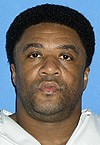 Lonnie Earl Johnson
Murderer · USA · 1990
Lonnie Earl Johnson was executed by lethal injection in Texas on July 24, 2007.…
2 victims
Lonnie Earl Johnson
Murderer · USA · 1990
Lonnie Earl Johnson was executed by lethal injection in Texas on July 24, 2007.…
2 victims
 Kimveer Gill
Murderer · Canada · 2006
Kimveer Gill carried out the Dawson College shooting on September 13, 2006, at…
1 victim
Kimveer Gill
Murderer · Canada · 2006
Kimveer Gill carried out the Dawson College shooting on September 13, 2006, at…
1 victim
- Gender
- male
- Country
- USA
- Location
- Pacifica, California, USA
- Date of birth
- 1958
- Age at first offence
- 23
- Characteristics
- parricide, revenge
- Victim profile
- Jay and Ruth Hunter ( his father and stepmother )
- Method of murder
- Shooting
- Date(s) of murder
- December 28, 1981
- Years active
- 1981
- Date of arrest
- —
- Status
-
Life imprisonment
Sentenced to death in May 1984; commuted to life without the possibility of parole after a retrial in February 2002
Case information
Name: Michael Wayne Hunter Born: 1958 Age at the time of the offenses: 23 Prison status described: death row prisoner and writer at San Quentin State Prison Family: Married to Teresa "Terri" Hunter; divorced in 1989 Legal reference: HUNTER v. CALIFORNIA, 498 U.S. 887 (1990) (petition for certiorari denied); People v. Hunter (1989) 49 Cal.3d 957
STATUS and procedural history
Michael Wayne Hunter was sentenced to death in May 1984. After a retrial, his sentence was commuted to life without the possibility of parole in February 2002.
Timeline
- November 1981 — Hunter told his friend, Thomas Henkemeyer, of plans to kill his father and stepmother and discussed possible alibis, motive, and methods of transporting and concealing a rifle or shotgun.
- Late November 1981 — Hunter’s father instructed his attorney to delete from his will any inheritance for Hunter.
- December 12 to December 14, 1981 — Hunter brought a shotgun and shells to Henkemeyer’s residence in Sacramento and left them with Henkemeyer.
- December 20, 1981 — Henkemeyer left Sacramento to spend the Christmas holidays with his family in Minnesota after driving his car (a brown Toyota Corolla) to Hunter’s house in Mountain View for safekeeping.
- Evening of December 28, 1981 — Jay and Ruth Hunter were shot to death in the bedroom of their home in Pacifica.
- December 29, 1981 — The bodies of Jay and Ruth Hunter were discovered after police were alerted that the front door was wide open and a window on the side of the door was broken out.
- New Year’s Day (1982) — Henkemeyer returned home to Sacramento and found that the shotgun Hunter had left was missing.
- January 3, 1982 — Jeffrey Luther received a telephone call from Hunter and the two arranged to meet at a restaurant in San Ysidro.
- February 2002 — After a retrial, Hunter’s death sentence was commuted to life without the possibility of parole.
Background
Michael Wayne Hunter was a death row prisoner and a writer at San Quentin State Prison. He was incarcerated for murdering his father and stepmother in 1981. Prior to committing his crime, he served four years in the United States Navy. He was married to Teresa "Terri" Hunter, but divorced in 1989.
Hunter’s father and natural mother, June Hunter, had separated and divorced in 1973. June Hunter died of cancer in 1979. Following the divorce, Jay Hunter married Ruth Chatburn Hunter.
Hunter’s sister, who was the administrator of her mother’s estate, asked Ruth, a lawyer, to handle the probate. Ruth eventually removed herself from the case because of an argument with Hunter sometime in 1980. Hunter felt that he had been cheated of his share of the estate. A former roommate testified that the dispute became so acrimonious that it caused a rupture of all contacts between Hunter and his father.
A second source of animosity stemmed from an incident in October 1981, when Hunter entered his parents’ home in Pacifica while they were on vacation. Mrs. Hunter reported the burglary to the police, who questioned Hunter. Mrs. Hunter also apparently searched Hunter’s residence in Mountain View while Hunter was absent. Hunter became angered and upset with his stepmother and told his roommate that if he went to jail for burglary his father "would be dead." The acrimony was apparently mutual.
Only a month before the murders, in late November 1981, Hunter’s father instructed his attorney to delete from his will any inheritance for Hunter. Mr. Hunter indicated the matter was not urgent and could wait until the new year. At the time of the murders in late December, the will had not been changed.
The offence
On the evening of December 28, 1981, Jay and Ruth Hunter, Hunter’s father and stepmother, were shot to death in the bedroom of their home in Pacifica, California.
November 1981 planning and motive (as described at trial)
In November 1981, about a month before the homicides, Hunter told his friend, Thomas Henkemeyer, of plans to kill his father and stepmother. Henkemeyer testified that Hunter laid out several scenarios for possible alibis, including taking out a hiking permit in Yosemite National Park and then returning to commit the murders, or going down to San Diego where friends would purportedly provide an alibi.
Henkemeyer concluded that Hunter’s motive was to take "revenge" for perceived grievances, including:
- an incident in which Hunter’s stepmother had reported him for breaking into his parents’ home while they were away on vacation; and
- his stepmother’s handling of his natural mother’s will, which Hunter believed resulted in his being cheated out of his inheritance.
Hunter also discussed possible methods of transporting and concealing a rifle or shotgun.
December 12–14 1981 preparation
Several weeks later, between December 12th and 14th, Hunter brought a shotgun and shells to Henkemeyer’s residence in Sacramento. Hunter told Henkemeyer that he planned to use the shotgun to kill his parents during the spring or summer of 1982. Hunter left the shotgun and shells with Henkemeyer.
Before he left Sacramento on December 20th, Henkemeyer drove his brown Toyota Corolla to Hunter’s house in Mountain View for safekeeping, and he gave Hunter the keys to the car and the keys to his residence in Sacramento.
Evening of December 28 1981 events around the shootings
After hearing shots from the direction of the Hunter residence, a neighbor of Jay and Ruth Hunter was awakened by a loud "bang or shot" and heard four more shots in quick succession.
On or about the same evening in late December, Philip Eldred was walking two dogs a short distance from the Hunter residence when he encountered a man wearing a leather jacket and a motorcycle helmet. Eldred refused after being told to leave the area. The man pointed a long object (which Eldred realized was a shotgun) at Eldred’s face, kicked him in the thigh, retreated behind a cyclone fence several feet away, fired a shotgun blast in Eldred’s direction, entered a small, burgundy-colored car parked nearby, and drove away. Eldred stated that the man appeared to be in his early 20’s and of medium build.
Hunter was 23 at the time of the offenses.
Discovery of bodies on December 29 1981
The bodies of Jay and Ruth Hunter were discovered the following day, December 29, 1981, after the police were alerted that the front door was wide open and a window on the side of the door was broken out.
Police found both bodies in the master bedroom:
- Jay Hunter’s body was on the bed.
- Ruth Hunter’s body was lying against the far wall, on top of the telephone receiver.
Eight expended shotgun casings were found on the floor.
Autopsies revealed:
- Ruth Hunter died of two shotgun wounds to the head, either of which was sufficient to cause death.
- Jay Hunter suffered four shotgun wounds.
- One shot to the upper chest that had apparently caused death was fired from a distance.
- Three other shots, to the neck, abdomen and left knee, had been fired from much closer range and were consistent with having been inflicted where the victim lay.
Statements and conduct after the killings
During the next several days, Henkemeyer received two telephone calls from Hunter:
- In the first call, Hunter told Henkemeyer that he had killed his mother and father and was trying to decide what to do.
- In the second call, a day or two later, Hunter said that he had spoken with a lawyer, was preparing to leave the country, and asked him to sell some of his belongings. Hunter also indicated that he had been seen by a stranger after the killings but doubted that an identification could be made because he was wearing a helmet.
When Henkemeyer returned home to Sacramento on New Year’s Day, he found that the shotgun Hunter had left was missing.
Hunter also spoke with Jefferson Schar. Hunter told Schar that his parents had been killed and that he had "a lot to do with it." Hunter told Schar, however, that he had merely accompanied another, unidentified man who had committed the murders. Hunter described events immediately preceding the shooting to Schar. Hunter said he entered the house, awakened his father, and told him that his entry proved he could "get to [him] at any time." Hunter’s father responded: "You don’t have the balls enough to do anything of that nature." Hunter became angered and told the unidentified gunman to "go ahead and shoot him." The gunman complied. Hunter’s mother awakened, said, "No, Mike, don’t," and the gunman shot her too.
The day after his conversation with Schar, Hunter told Henkemeyer that he was trying to leave the country and asked him to sell some of his belongings. At Hunter’s request, Schar drove Hunter to San Jose airport. On the way, Hunter stopped at a barbershop and had his beard and moustache shaved off. Hunter asked Schar to obtain a phony birth certificate for him under the name John Dunne. At the airport Hunter purchased a ticket to San Diego under a false name. While waiting for the flight, Hunter told Schar he was involved in the killings but was not the shooter. Hunter explained that after the incident he disposed of the murder weapon by breaking it into pieces and throwing it into the bay. Hunter said he planned to contact a friend named Jeffrey Luther in San Diego and instructed Schar to forward the phony birth certificate to him there.
Luther received a telephone call from Hunter on January 3, 1982, and the two arranged to meet at a restaurant in San Ysidro, near the U.S.-Mexican border. At the restaurant, Hunter told Luther he was "wanted for murder" and explained the circumstances of the shootings. Hunter told Luther he had entered his parents’ home carrying a shotgun and wearing a motorcycle helmet. Hunter confronted his father and threatened to shoot him. Hunter’s father responded, "[Y]ou don’t have the balls." In response, Hunter told Luther, he "pumped four slugs into him."
After the conversation in San Ysidro, Luther saw Hunter again in a hotel in Las Playas, Mexico. Luther agreed to purchase some items for Hunter. After the meeting in Mexico, Luther contacted the police and was advised not to meet Hunter again in Mexico but to lure him back across the border. Luther arranged to meet Hunter again at the restaurant in San Ysidro where they had met earlier. When Hunter appeared at the restaurant, he was arrested.
Following his arrest, Hunter was incarcerated in the San Mateo County jail.
Investigation and evidence
Joseph Lauricella, Hunter’s cellmate, testified that Hunter gave him a number of descriptions of how the murders occurred. Hunter also told Lauricella that he had been turned in by a Navy buddy (Luther) and offered Lauricella $1,000 to have him killed.
Even as Hunter fled to Mexico, the police investigation focused on him as the prime suspect. A search of Hunter’s house and two vehicles uncovered a cleaning bill for a leather jacket stating "pre-spot for blood." Police found a shirt with blood on it and a black motorcycle helmet. Glass fragments found inside a pair of Hunter’s socks and gloves matched glass fragments from the broken window of the Hunter residence.
Arrest
Hunter was arrested when he appeared at the restaurant in San Ysidro after Luther arranged to meet him again. Following the arrest, Hunter was incarcerated in the San Mateo County jail.
Trial
Hunter’s case was tried after charges under the Penal Code.
Charges and findings described
Hunter appealed from a judgment of death following his conviction of the murders (§ 187) of Jay and Ruth Hunter. The jury also found true the allegation that Hunter personally used a firearm in the commission of the murders (§ 12022.5). The jury found the special circumstance allegation that Hunter was convicted, in this proceeding, of more than one murder (§ 190.2, subd. (a)(3)). The appellate court affirmed the judgment.
Defense case
The defense presented extensive testimony attempting to show that Hunter’s intense hatred of his father, stemming from emotional and physical abuse he had received as a child, obscured his reasoning to the extent that he was unable to harbor malice or deliberate and premeditate the crimes.
Former neighbors and family friends testified about Hunter’s relationship with his father. Joseph and Maxine Sonia DeHazes testified that Jay Hunter was abusive toward Hunter. Joseph DeHazes testified that Hunter had been verbally abused since he was an infant. Mrs. DeHazes testified she observed a clear difference between Jay Hunter’s relationship with his daughters and his sons and that Hunter’s father often hit Hunter. She recalled an incident in which he hit Hunter so hard that Joseph DeHazes had to intervene. Mrs. DeHazes testified that physical abuse turned to verbal abuse as Hunter grew older. She believed that Jay Hunter also abused his first wife; she frequently observed June to have bruises and had observed June with black eyes.
Two former neighbors testified that Jay was harsh toward Hunter and used excessive force.
Hunter’s brother, Tom, and his sister, Mary, testified about Hunter’s relationship with his father. Tom recalled that his father inflicted corporal punishment on Hunter on many occasions when he was a youth, and also was abusive toward Hunter’s mother. Tom described Jay as an abusive drinker, possibly an alcoholic, who often hit Hunter when drunk.
Mary testified for both the defense and the prosecution and stated she had never witnessed beatings by her father. She recalled speaking with Hunter on December 29, 1981, the day after the murders, and that Hunter said he had been to a funeral the previous day and was feeling depressed as a result.
Carol Lange, a roommate of Hunter’s girlfriend Judith Goldstein, testified that Hunter attended her mother’s funeral on the morning of December 28, 1981, the day of the murders.
Two psychiatrists testified on Hunter’s behalf:
- Dr. George Wilkinson treated Hunter while he was incarcerated in the San Mateo County jail. Dr. Wilkinson stated he had not observed evidence of psychosis, diagnosed Hunter as clinically depressed, and was unable to determine whether the depression predated incarceration.
- Dr. Donald Lunde examined Hunter on four occasions and concluded that at the time of the killings Hunter’s mental state limited his ability to premeditate and deliberate, and that it was "unlikely" Hunter had premeditated the murders. Dr. Lunde stated he did not detect evidence of schizophrenia or lack of capacity to obey the law, but believed there was "some diminution of his abilities or his capacity to have harbored malice at that time."
Penalty phase evidence
During the penalty portion, the prosecutor presented no additional evidence. The defense presented further testimony from Hunter’s brother, Tom, who asked the jury to spare Hunter’s life because Tom felt there was hope of Hunter’s "becoming a Christian." Tom stated that there had been enough death in the family and that killing his brother would do nothing more than hurt himself and his sisters.
Hunter made a lengthy, unsworn oral statement in allocution on his own behalf, not subject to cross-examination by the prosecutor. In this statement Hunter admitted committing several minor juvenile offenses. He stated he joined the Navy when he was 17 and described his naval training and experience. He explained he became disenchanted with the Navy when his superior officers allegedly delayed telling him of his mother’s death. He stated his performance in the Navy deteriorated and he was given a dishonorable discharge that was later upgraded to an honorable discharge.
Hunter stated his relationship with his father had not been good for several months preceding the killings, and his father became enraged when he learned Hunter had been invited to Tom’s high school graduation in June 1981, resulting in Jay refusing to attend.
Hunter stated he attended a funeral for Carol Lange’s mother on the day of the murders. He stated that while there he started to think of his own mother, who died of cancer just as she was getting her life in order. He said he began to feel it was unfair that his mother was dead and his father was alive.
Hunter admitted responsibility for the murders but denied that they were committed for money. He acknowledged there was no justification, especially for the murder of his stepmother, whom he did not remember being in the room. Hunter stated he had been receiving counseling and made steps toward becoming a different person. He felt that with his Naval training and continued counseling he could contribute to society.
Appeals and related proceedings
Hunter appealed and the appellate court affirmed the judgment in its entirety.
Judicially conferred immunity issue
Hunter contended the trial court erred in denying his request to grant "judicial" use immunity to his girlfriend, Judith Goldstein. The appellate court concluded the contention lacked merit and discussed the standards for judicially conferred immunity, including reference to Government of Virgin Islands v. Smith.
In the guilt phase, the district attorney charged Ms. Goldstein with being an accessory after the fact to the murders. Her case was pending at the time of Hunter’s trial. The defense called her to testify, but she refused to answer on the basis of the Fifth Amendment privilege against self-incrimination. Counsel renewed the request to grant use immunity. The trial court asked for an offer of proof. Counsel stated that earlier testimony established that on the morning of the murder, December 28, 1981, Hunter had accompanied Ms. Goldstein to the funeral of Carol Lange’s mother and counsel explained:
"It is my understanding that during the course of that [funeral] ceremony ... [defendant] made the statement to Judith Goldstein -- or a question, possibly -- 'Why is it the good people die and the bad still live.' [¶] I submit, Your Honor, that it is material to the question of the mental state of the defendant on the 28th day of December of 1981."
The trial court denied the request.
The appellate court addressed that the proffered testimony did not meet the requirement that the evidence be "clearly exculpatory and essential" and discussed that similar testimony regarding depression had already been presented.
Hunter also renewed the request at the penalty phase; the appellate court again concluded the trial court did not err and noted there was nothing in the record to demonstrate Hunter was denied highly relevant mitigating evidence or that the absence of Ms. Goldstein’s testimony prejudiced Hunter.
Jury instructions and issues discussed on appeal
The appellate court addressed multiple guilt phase and penalty phase claims, including:
- Instruction on CALJIC No. 8.75 and jury consideration of lesser offenses.
- Instruction on testimony of immunized witnesses and refusal to give the requested cautionary instruction verbatim.
- Transferred intent instruction (CALJIC No. 8.65) and its application.
- Response to jury inquiry about parole and commutation power, including quoting the court’s instruction and admonition to the jury:
- "Now as to the first and second questions, you are instructed that under the State Constitution, a governor is empowered to grant a reprieve, pardon, or communication after sentence, following conviction of a crime.
"Under this power, the governor may, in the future, commute or modify a sentence of life imprisonment without possibility of parole, to a lesser sentence. That would include the possibility of parole.
"A sentence of life imprisonment, without a possibility of parole, means that the defendant will spend the remainder of his natural life in prison. Therefore, the matter of parole is not to be considered by you in determining the punishment for the defendant.
"If, upon consideration of the evidence, you believe that life imprisonment, without possibility of parole, is the proper sentence, you must assume those officials charged with the operation of our prison system will perform their duties in that regard in a correct and responsible manner.
"It would be a violation of your duty, as jurors, if you were to fix the penalty at death because of a doubt that the prison authorities or the governor of the state will properly carry out their responsibilities.
"Therefore, you are limited to those matters that are properly before you in this case, which have been brought to your attention by the evidence and by the instructions of the Court, and are not to consider matters that are not properly before you by the evidence or the instructions of the Court.
"Now, I believe that those would cover the matters that are properly before you, and should aid and assist you in your decisions and your deliberations in these matters."
The jury note was quoted as:
- "One, under what circumstances could [defendant] be released from prison? [¶] Two, a change in the law and action of the Supreme Court? [¶] We know of several cases wherein the man convicted of sentencing to life [sic], without possibility of parole, is out on the streets: Why?"
- Alleged Brown error and arguments about scope of sentencing discretion.
- Extreme mental or emotional disturbance as a mitigating factor.
- Prosecutor’s comment concerning Hunter’s statement in allocution.
- Defendant’s background and character evidence instructions.
The appellate court affirmed the judgment in its entirety and stated that all concurred.
U.S. Supreme Court certiorari
Hunter also sought certiorari in the U.S. Supreme Court. In Hunter v. California, 498 U.S. 887 (1990), the petition for a writ of certiorari was denied. Justice MARSHALL dissented.
The dissent stated: "I have previously expressed my view that this Court should resolve the conflict of lower court authority on this question. See Autry v. McKaskle, 465 U.S. 1085 , 1087-1088, and n. 3, 1460-1461, and n. 3 (1984) (opinion dissenting from denial of certiorari). This petition underscores the importance of settling that conflict because it frames the issue in the most compelling possible setting: the penalty phase of a capital proceeding."
The dissent further stated: "Consequently, I dissent from the denial of certiorari. Adhering to my view that the death penalty is in all circumstances cruel and unusual punishment prohibited by the Eighth and Fourteenth Amendments, Gregg v. Georgia, 428 U.S. 153, 231 , 2973, 49 L. Ed.2d 859 (1976) (MARSHALL, J., dissenting), I would also grant the petition and vacate the death penalty in this case even if I did not regard the petition as presenting a question independently meriting this Court's review."
Other details
Trial-stage witnesses and quoted statements
- Defendant’s father responded to Hunter’s threat: "You don’t have the balls enough to do anything of that nature."
- Defendant later told Schar that his mother awakened and said, "No, Mike, don’t," before being shot.
- Hunter told Luther: "[Y]ou don’t have the balls."
- Hunter described to Luther that he "pumped four slugs into him."
- Defense counsel referenced Goldstein’s potential testimony statement:
- "Why is it the good people die and the bad still live."
- One of the records of the prosecutor and court discussion included statements about jury responsibilities and sentencing factors, including quoted prosecutorial remarks:
- "to apply the law. You were sworn to apply the law regardless of how distasteful a result may be to you."
- "After you make a determination as to the appropriate existence or nonexistence of the aggravating and mitigating circumstances in this case, then your choice is a real simple one. I don’t mean to be callous when I say that, believe me. Your choice is one of balancing. That’s the test. It’s just a balancing test, and, indeed, any one factor which you find to be persuasive and true can be the factor that you can rely upon in reaching your verdict, whether it be for death or whether it be for life without possibility of parole."
- Tom Hunter asked the jury to spare Hunter’s life because he felt there was hope of his "becoming a Christian."
Immunized witnesses described
The appellate opinion described that three prosecution witnesses—Thomas Henkemeyer, Gary Sayers, and Jefferson Schar—testified under a grant of immunity from prosecution and had been charged as an accessory after the fact in helping Hunter flee to Mexico. The trial court did not give the requested cautionary instructions in the verbatim form sought by Hunter.
Allocution and cross-examination issue
Hunter’s allocution statement was permitted and later referenced in closing argument. The trial court explained to the jury the nature of allocution and lack of cross-examination, stating: "[T]he court has allowed, in this case, the defendant to exercise what is known as a right of allocution ... it’s the matter by which a party may make a statement in these particular types of instances. The party, of course, who makes the statement is not under oath and, as a witness on the stand, of course, is not subject to direct cross-examination."
Spotted an error, or have more information about this case?