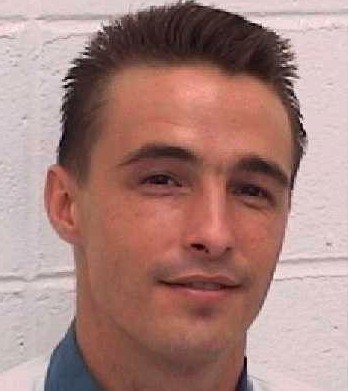
J. W. Ledford
Murderer Brian Kevin Rosenfeld
Murderer · USA · 1985
Brian Kevin Rosenfeld Brian Kevin Rosenfeld was sentenced to three concurrent l…
23 victims
Brian Kevin Rosenfeld
Murderer · USA · 1985
Brian Kevin Rosenfeld Brian Kevin Rosenfeld was sentenced to three concurrent l…
23 victims
 Russell Ellwood
Murderer · USA · 1991
Russell Ellwood was a former taxi driver. Authorities suspected him of killing…
20 victims
Russell Ellwood
Murderer · USA · 1991
Russell Ellwood was a former taxi driver. Authorities suspected him of killing…
20 victims
 Robert Martines Perez
Murderer · USA · 1994
Name: Robert Martines Perez · Other name used in proceedings: Robert Martinez P…
15 victims
Robert Martines Perez
Murderer · USA · 1994
Name: Robert Martines Perez · Other name used in proceedings: Robert Martinez P…
15 victims
 Billy Frank Vickers
Murderer · USA · 1993
Billy Frank Vickers Vickers was executed by lethal injection in Texas on Januar…
14 victims
Billy Frank Vickers
Murderer · USA · 1993
Billy Frank Vickers Vickers was executed by lethal injection in Texas on Januar…
14 victims
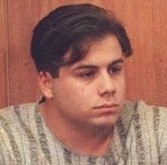 Anthony & Damian Clemente
Murderers · USA · 1995
November 6, 1995 — Anthony and Damian went to the 99 Restaurant; Anthony used a…
4 victims
Anthony & Damian Clemente
Murderers · USA · 1995
November 6, 1995 — Anthony and Damian went to the 99 Restaurant; Anthony used a…
4 victims
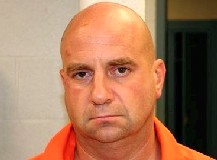 Steven Hayes
Murderer · USA · 2007
Steven Hayes Steven Hayes was sentenced to death in Connecticut on December 2,…
3 victims
Steven Hayes
Murderer · USA · 2007
Steven Hayes Steven Hayes was sentenced to death in Connecticut on December 2,…
3 victims
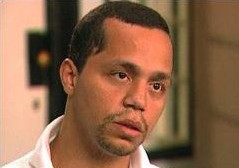 Matias Reyes
Homicide · USA · 1988
Matias Reyes was a juvenile at the time of the events described as part of a se…
2 victims
Matias Reyes
Homicide · USA · 1988
Matias Reyes was a juvenile at the time of the events described as part of a se…
2 victims
 Cindy Lou Beck
Murderer · USA · 2010
Cindy Lou Beck was 47 at the time of additional charges in Marion County. She w…
2 victims
Cindy Lou Beck
Murderer · USA · 2010
Cindy Lou Beck was 47 at the time of additional charges in Marion County. She w…
2 victims
 Julia Andrews
Murderer · USA · 2012
Julia Andrews was sentenced to 44 years in prison on August 8, 2013. A jury of…
1 victim
Julia Andrews
Murderer · USA · 2012
Julia Andrews was sentenced to 44 years in prison on August 8, 2013. A jury of…
1 victim
 Robert Gary Girts
Murderer · USA · 1992
Robert Gary Girts was a Poland Township native who worked at a funeral home in…
1 victim
Robert Gary Girts
Murderer · USA · 1992
Robert Gary Girts was a Poland Township native who worked at a funeral home in…
1 victim
- Gender
- male
- Country
- USA
- Location
- Murry County, Georgia, USA
- Date of birth
- 1971
- Age at first offence
- 21
- Characteristics
- armed robbery, burglary, kidnapping, rape?, torture, murder for hire
- Victim profile
- Dr. Harry Johnston Jr., 73 (a neighbor he had known all his life)
- Method of murder
- St abbing with knife
- Date(s) of murder
- January 31, 1992
- Years active
- 1992
- Date of arrest
- Same day
- Status
-
Sentenced to death
Sentenced to death on December 8, 1992
Case details
J. W. Ledford Jr. was convicted of the malice murder of Dr. Harry Buchanan Johnston, Jr., as well as two counts of armed robbery, one count of burglary, and one count of kidnapping Dr. Johnston's wife, Antoinette. The jury recommended that a sentence of death be imposed for the conviction of malice murder, and the trial court sentenced him to death. The trial court also sentenced the defendant to two consecutive life sentences and two twenty-year concurrent terms for the remaining offenses. The defendant and victims were neighbors. At the time of the murder, the defendant was 20 years old and Dr. Johnston was 73. Dr. Johnston was described in trial testimony as "rather feeble."
Timeline
- January 31, 1992 — J. W. Ledford went to the Johnston home and forced his way in at knife point.
- November 1992 — The defendant was sentenced to death in Murry County with a jury selected from Gordon County for the murder of a neighbor he had known all his life, Dr. Harry Johnston Jr. (J.W. Ledford Jr. was described as 25 in that sentencing narrative).
- December 8, 1992 — J. W. Ledford Jr. was sentenced to death.
- December 1995 — A state appeal challenging the fairness of his trial was pending.
- February 21, 1994 — LEDFORD v. THE STATE (Supreme Court of Georgia) was decided.
- May 14, 1993 — This appeal was docketed in the Supreme Court of Georgia.
- March 31, 1993 — The trial court denied the defendant's motion for new trial.
- November 9-14, 1992 — Trial occurred.
- November 13, 1992 — The jury returned its verdict in the guilt-innocence phase of trial.
- November 14, 1992 — The jury returned a verdict recommending that the death penalty be imposed for the conviction of malice murder.
- November 9, 1993 — The appeal was orally argued.
The offence
On January 31, 1992, the defendant came to the Johnston home, asking to speak to Dr. Johnston. Mrs. Johnston had previously seen her husband drive away in his truck with a passenger she was unable to identify. When she informed the defendant that Dr. Johnston was not at home, the defendant left but returned approximately ten minutes later. This time the defendant asked Mrs. Johnston to have her husband come to his home that evening. Approximately ten minutes after the second visit, the defendant returned and forced his way into the Johnston home at knifepoint.
Mrs. Johnston testified that he threatened to kill her and demanded money and guns. Mrs. Johnston gave him the money from her purse. The defendant then pushed her throughout the house gathering up a shotgun, rifle and two pistols. He forced her on the bed and bound her wrists with a rope he had in his pocket. When Mrs. Johnston heard the door close, she managed to get up from the bed in time to see the defendant driving away in her husband's truck. Because her wrists were loosely tied together, she was able to sever the rope and telephone the sheriff's office.
The jury found aggravating circumstances under OCGA 17-10-30(b) that the murder was committed while the defendant was engaged in the commission of armed robbery ((b)(2)); that the murder was committed while the defendant was engaged in the commission of aggravated battery ((b)(2)); that the murder was outrageously or wantonly vile, horrible or inhuman in that it involved torture to the victim prior to his death ((b)(7)); and that the murder was outrageously or wantonly vile, horrible or inhuman in that it involved aggravated battery to the victim prior to his death ((b)(7)).
The evidence also showed that the defendant's knife caused severe injuries. The victim's body was later found near a small building located on the Johnston property. According to the pathologist who performed the autopsy, the victim had suffered either "one continuous or two slices to the neck" which destroyed virtually all the muscle and tissue on the left side of his neck and nearly severed his head from his body. Additionally, the victim sustained a small knife wound in the back and a number of other knife wounds in the neck. There were no defensive wounds on the victim's hands.
The pathologist testified that it took "a significant amount of force" to inflict the wounds. He opined that the victim bled to death, but lived approximately eight or nine minutes after the injuries were inflicted, in "an extremely painful" condition. The defendant and victim shared the same blood type.
Investigation
After the defendant was apprehended later that afternoon, law enforcement officers subsequently discovered the body of Dr. Johnston near a small building located on the Johnston property.
A GBI forensic serologist testified that the blood found on the defendant's clothing and the knife in his possession at the time of arrest was consistent with the victim's blood and could not have come from the defendant, based on an enzyme analysis. The defendant and victim shared the same blood type, but based on an enzyme analysis, the forensic serologist concluded that the blood found on the defendant and knife was consistent with the victim and could not have come from the defendant.
Employees from two pawn shops identified the defendant as the person who pawned the shotgun and rifle shortly after the murder.
The day following his arrest, the defendant sent word to officers that he wished to make a statement. After receiving warnings pursuant to Miranda v. Arizona, 384 U. S. 436 (86 SC 1602, 16 LE2d 694) (1966), the defendant stated that he had gone to Dr. Johnston's house to ask for a ride to the grocery store. Once in the truck, Dr. Johnston accused the defendant of stealing from him. Dr. Johnston returned to his home and told the defendant he wished to show him something on the property. Dr. Johnston then struck the defendant and unsnapped a knife pouch on his belt. The defendant drew his own knife and "stuck" the victim in the neck.
The defendant stated:
"[a]s I was pulling my knife back from sticking him, it went over and cut the . . . out of him."
The defendant stated that he then dragged the body to the building where the victim was found and covered it up. He then went to Dr. Johnston's house, his knife still drawn, and demanded money from Mrs. Johnston. He tied her up, took money and four guns, and left in Dr. Johnston's truck.
Arrest and apprehension
The defendant was apprehended later that afternoon after Mrs. Johnston telephoned the sheriff's office. The state presented testimony that the pawn shops identified the defendant as the person who pawned the shotgun and rifle on the day of the murder.
Trial
The defendant was tried for the malice murder of Dr. Harry Buchanan Johnston, Jr., and the related armed robbery, burglary, and kidnapping charges.
At the guilt-innocence phase, the trial court instructed the jury that "the defendant may not be convicted of both malice murder and felony murder." The jury returned a verdict of "guilty" on the charge of malice murder and "not guilty" on the charge of felony murder.
Jury selection and venue matters were addressed on appeal. Prior to trial, the defendant filed a motion for change of venue. Pursuant to USCR 19.2 (B), the trial court ordered that the trial take place in Murray County where the crimes were committed, with a jury selected from Gordon County. The court also made remarks to the jury about a partial change in venue to assure a fair trial untainted by any pre-trial publicity, and admonished jurors not to "read, listen to or watch any media accounts of the case." The trial court did not unduly restrict the defendant's voir dire examination of Juror Jones. The record also addressed excusing certain jurors for opposition to the death penalty and qualifying other jurors for service.
During the state's presentation, a spectator spoke to a juror. The district attorney and defense counsel simultaneously brought this to the trial court's attention, and the court immediately sent the jury to the jury room. The court called the spectator to the witness stand and asked what she said to the juror in question. The spectator identified herself as the sister of the murder victim and stated she had asked the juror only whether she was able to hear. The spectator stated that the juror nodded, but did not say anything. The juror stated she was asked: "Honey, can you hear okay?" The juror stated she did not know the spectator and that this contact would not prevent her from being an impartial juror. The trial court ordered the spectator removed from the courtroom. The defendant moved for a mistrial, which was denied.
The trial included issues regarding photographic evidence of the victim, including a photograph of the victim while in life identified by the victim's wife, and a photograph following death depicting a hand positioning the victim's head for a camera angle of a wound. The trial also addressed autopsy testimony where the pathologist stated, "Well, I'm a pathologist and this is rather sickening." The defendant did not object to this testimony, and the pathologist later stated, "Well, I've seen a lot of really bad things in the numerous types of autopsies I've seen. . . ." The trial court interrupted the witness and instructed the district attorney to inform the witness that he should not compare the victim's wounds with other wounds he had seen. The defendant moved for a mistrial the following day, but the trial court denied the motion as untimely.
Sentencing
The jury recommended that a sentence of death be imposed for the conviction of malice murder, and the trial court sentenced the defendant to death.
The trial court also imposed two consecutive life sentences and two twenty-year concurrent terms for the remaining offenses.
In the sentencing phase, the trial court charged the jury that unanimity was required to find mitigating circumstances, and it also charged that the jury was not required to find any mitigating fact or circumstance in order to set the penalty at life imprisonment. The appellate discussion concluded that the trial court did not err in instructing the jury that its verdict as to the penalty must be unanimous.
Appeals
The defendant and the state litigated multiple issues in the direct appeal and on review.
The defendant challenged the fairness of his trial, including:
- Claims of vagueness in the indictment as to burglary and armed robbery counts.
- Claims about notice related to kidnapping acts.
- Challenges to the trial court's refusal to sever trials of offenses relating to separate victims.
- Claims regarding pre-trial publicity and venue after the trial was held in Murray County with a jury selected from Gordon County.
- Claims related to voir dire and juror qualification for death penalty impartiality, including Witherspoon and reverse-Witherspoon grounds.
- Claims about the presence of a GBI agent in the courtroom after sequestration was invoked.
- Claims about improper communication to a juror by a spectator, and denial of a motion for mistrial.
- Claims under the Unified Appeal Procedure affecting the defendant's right to remain silent.
- Claims about absence during bench conferences.
- Claims about the order of closing arguments (not raised at trial).
- Claims that the state withheld results of DNA testing under OCGA 17-7-211.
- Challenges to admission of photographs of the victim.
- Claims about the autopsy witness statements and denial of a mistrial.
- Claims about waiver from failure to object to expert testimony.
- Allegations of prosecutorial misconduct during cross-examination, opening and closing statements.
- Claims about a comment on the defendant's silence during argument at the conclusion of the penalty phase.
- Claims about sequential charging in light of Edge v. State.
- Claims about instructions on mitigating circumstances and unanimity in the sentencing phase.
- Challenges to aggravating circumstance findings, including contentions based on acquittal of felony murder, and arguments that aggravating circumstances were duplicative.
- Claims about statutory aggravating circumstance support and whether the death sentence resulted from passion, prejudice, or arbitrariness, and whether it was excessive or disproportionate.
The appellate discussion included the following key findings:
- A rational trier of fact could have found the defendant guilty of the crimes beyond a reasonable doubt.
- The record showed parties stipulated at a hearing that the armed robbery specified in Count 4 was the armed robbery in question.
- The defendant failed to show prejudice or misleading notice concerning kidnapping indictment allegations.
- The trial court did not abuse its discretion in refusing to sever the offenses relating to separate victims.
- Venue handling did not constitute reversible error under the standard for likelihood of prejudice.
- The trial court's jury selection decisions were supported by the record, including determinations regarding jurors excused for bias against the death penalty and the denial of challenges on reverse-Witherspoon grounds.
- Allowing GBI Agent Scott to remain in the courtroom after sequestration was not error.
- The communication between the spectator and juror did not warrant mistrial because it was inherently innocuous and the juror was unaware of the spectator's relationship to the murder victim, and the spectator was removed.
- The Unified Appeal Procedure did not violate the defendant's right to remain silent.
- The trial court did not err in denying motions and in charging matters considered on appeal.
- The appellate discussion concluded the evidence supported the jury's findings of statutory aggravating circumstances and that the death sentence was not the result of passion, prejudice or an arbitrary factor; it also concluded the death sentence was neither excessive nor disproportionate considering similar cases listed in the Appendix.
Outcome
The trial court imposed a sentence of death for malice murder and additional life and prison terms for the remaining offenses. The appellate discussion addressed and rejected the defendant's challenges to the convictions and sentence, including challenges to aggravating circumstances and claims that the death sentence was disproportionate or arbitrary.
Other details
On January 31, 1992, the crimes occurred. The defendant was arrested that same day and tried November 9-14, 1992. The jury returned its verdict in the guilt-innocence phase on November 13, 1992, and on November 14 returned a verdict recommending that the death penalty be imposed for the conviction of malice murder. The defendant's motion for new trial, filed December 4, 1992, was denied by the trial court on March 31, 1993. This appeal was docketed in this court on May 14, 1993 and orally argued on November 9, 1993. A state appeal challenging the fairness of his trial was pending since December 1995.
The Appendix listed similar cases: Bennett v. State, Taylor v. State, Gibson v. State, Hall v. State, Frazier v. State, Jefferson v. State, Westbrook v. State, Finney v. State, and Bowden v. State.


Spotted an error, or have more information about this case?