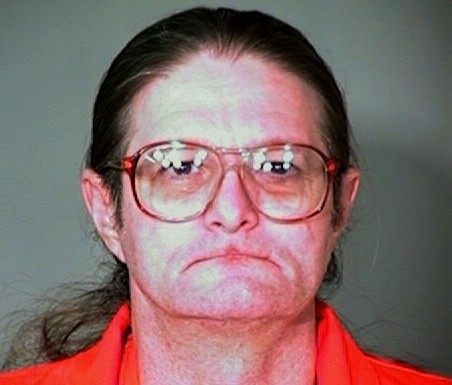
Joe Leonard Lambright
Murderer Ervil LeBaron
Murderer · USA · 1972
Ervil Morrell LeBaron (1925 to August 16, 1981) was the leader of a polygamous…
35 victims
Ervil LeBaron
Murderer · USA · 1972
Ervil Morrell LeBaron (1925 to August 16, 1981) was the leader of a polygamous…
35 victims
 Brian Kevin Rosenfeld
Murderer · USA · 1985
Brian Kevin Rosenfeld Brian Kevin Rosenfeld was sentenced to three concurrent l…
23 victims
Brian Kevin Rosenfeld
Murderer · USA · 1985
Brian Kevin Rosenfeld Brian Kevin Rosenfeld was sentenced to three concurrent l…
23 victims
 Marvin Gray
Murderer · USA · 1975
Marvin Gray was convicted killer who claimed responsibility for 23 slayings and…
23 victims
Marvin Gray
Murderer · USA · 1975
Marvin Gray was convicted killer who claimed responsibility for 23 slayings and…
23 victims
 Yahweh ben Yahweh
Murderer · USA · 1980
Yahweh ben Yahweh was born and legally named Hulon Mitchell Jr. (October 27, 19…
23 victims
Yahweh ben Yahweh
Murderer · USA · 1980
Yahweh ben Yahweh was born and legally named Hulon Mitchell Jr. (October 27, 19…
23 victims
 Henry Julius Jacoby
Murderer · United Kingdom · 1922
Henry Julius Jacoby was executed by hanging at Pentonville Prison on 5th June 1…
1 victim
Henry Julius Jacoby
Murderer · United Kingdom · 1922
Henry Julius Jacoby was executed by hanging at Pentonville Prison on 5th June 1…
1 victim
 Levi Jaimes Jackson
Homicide · USA · 1992
Levi Jaimes Jackson was a defendant in a carjacking case involving the 40-year-…
1 victim
Levi Jaimes Jackson
Homicide · USA · 1992
Levi Jaimes Jackson was a defendant in a carjacking case involving the 40-year-…
1 victim
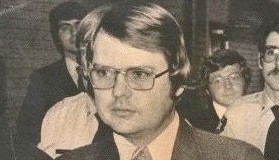 Francis Nemechek
Serial killer · USA · 1974
Francis “Don” Nemechek killed women and a small boy in multiple incidents in we…
5 victims
Francis Nemechek
Serial killer · USA · 1974
Francis “Don” Nemechek killed women and a small boy in multiple incidents in we…
5 victims
 Gary Ploof
Murderer · USA · 2001
Gary W. Ploof was a U.S. Air Force Staff Sergeant stationed with his wife, Heid…
1 victim
Gary Ploof
Murderer · USA · 2001
Gary W. Ploof was a U.S. Air Force Staff Sergeant stationed with his wife, Heid…
1 victim
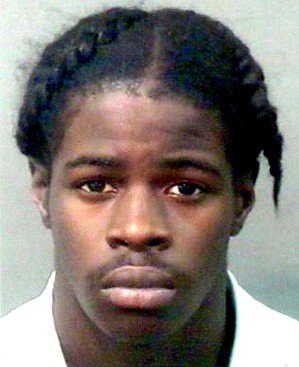 Demarcus Ralls
Murderer · USA · 2002
Demarcus Ralls Demarcus Ralls was 21 during his trial and testified in the pena…
4 victims
Demarcus Ralls
Murderer · USA · 2002
Demarcus Ralls Demarcus Ralls was 21 during his trial and testified in the pena…
4 victims
- Gender
- male
- Country
- USA
- Location
- Tucson, Arizona, USA
- Date of birth
- September 3, 1947
- Age at first offence
- 33
- Characteristics
- rape, hitchhiking, alcohol
- Victim profile
- Sandra Owen, a young woman with mental problems
- Method of murder
- H itting her in the head with a large rock
- Date(s) of murder
- March 1980
- Years active
- 1980
- Date of arrest
- —
- Status
-
Life imprisonment
Sentenced to death on May 27, 1982; commuted to life in prison, 2007
Defendant
Joe Leonard Lambright was a defendant in a joint trial with Robert Douglas Smith and was convicted of first-degree murder, kidnapping, and sexual assault.
Victim
Sandra Owen was a young woman with mental problems who was hitchhiking in the Tucson area.
Defendant and victim were described as Caucasian.
Timeline
- Sometime between March 11 and March 14, 1980 — Lambright, Robert Douglas Smith, and Kathy Foreman picked up Sandra Owen while she was hitchhiking in the Tucson area.
- March 25, 1982 — Trial began.
- March 30, 1982 — Verdict.
- May 27, 1982 — Sentencing: death sentence.
- 2007 — Death sentence was commuted to life in prison.
The offence
Sometime between March 11 and March 14, 1980, Lambright, Robert Douglas Smith, and Kathy Foreman picked up Sandra Owen, a young woman with mental problems, who was hitchhiking in the Tucson area.
Smith raped Ms. Owen twice. The group took her to a remote area in the mountains outside Tucson. After that, Lambright and Smith killed the victim by choking her, stabbing her, and hitting her in the head with a large rock. They concealed her body by covering it with rocks.
The body was not discovered until 1 year later.
Background
Lambright and Smith were traveling across the country with Lambright's girlfriend, Kathy Foreman.
Smith was troubled by the fact that while Lambright and Foreman had intercourse in his presence, he did not have anybody along to satisfy him.
Lambright thought that he "would like to kill somebody just to see if he could do it. "
They decided that both desires could be fulfilled, and they set out with Foreman to find a victim. They found Sandy Owen and kidnaped her.
Smith raped Owen on the way to a mountain site. The three got out of the car and Smith raped Owen again as Lambright and Foreman had intercourse.
What happened next was that Smith began choking Owen, and Lambright declared that she must be killed. Lambright took Foreman's knife out of its sheath and began stabbing the victim in the chest and abdomen, twisting the knife around inside of her. Smith held one of the victim's arms while she was being stabbed, and Foreman held the other arm.
Smith unsuccessfully tried to break Ms. Owen's neck by twisting her head. Then Lambright, Foreman or both began cutting deeply into the victim's neck with the knife. The victim remained alive, and was at least semiconscious, as she attempted to raise herself up on one arm.
Lambright picked up a large rock and hurled it at her head.
Foreman testified that as he threw the rock he yelled Die, bitch.
The three then drove off in a celebratory mood, playing the piece "We Are the Champions" as they went. Once caught, the trio's song changed.
Foreman turned state's evidence and testified against her erstwhile lover and his friend in exchange for a grant of immunity.
Lambright confessed, but deemed Smith to be the worst of the three. Smith also confessed, but dubbed Foreman and Lambright as the real killers.
Investigation
Foreman turned state's evidence and testified against Lambright and Smith in exchange for a grant of immunity.
Trial
Lambright and Smith were tried in a joint trial before two separate juries.
The presiding judge was Michael J. Brown. The prosecutor was James D. Himelic.
Start of trial was March 25, 1982. Verdict was March 30, 1982.
Aggravating circumstances were especially heinous/cruel/depraved. Mitigating circumstances were none.
Sentencing
Sentencing occurred on May 27, 1982, when Lambright was sentenced to death.
The trial judge found only one aggravating circumstance, that the crime was especial cruel or heinous, and said the lack of mitigating factors essentially tied his hands and required the death sentence.
Lambright's lawyer spent only five hours preparing for the penalty phase of the 1982 trial.
Lambright's defence attorney Carmine Brogna called a Pima County jail guard who testified that he had no problems with Lambright during the six months he supervised him and that he had "always been respectful, courteous, and cooperative."
Brogna did not ask for leniency, but only asked the judge to impose a life prison term.
Appeals
Lambright v. Lewis was cited as 932 F. Supp. 1547 (9th Cit. 1996).
A federal appeals court overturned the death sentence of Lambright. The appeals court ordered a new sentencing phase of the trial to be held.
The appeals court found that Brogna's performance was "deficient and prejudicial" and ordered a new sentencing phase.
The appeals court stated that the defence attorney failed to present evidence that might have convinced a judge to choose a lesser sentence, despite knowing about Lambright's long history of mental health problems, two prior suicide attempts, and a related stay in a psychiatric hospital.
The appeals court noted that Brogna did not raise Lambright's possible post-traumatic stress syndrome related to his service in Vietnam, his drug abuse problem, or the abuse he suffered as a child at the hands of his mother.
Brogna disputed the appeals court's characterization that the matters were not raised at trial. He said that much of the information was contained in a psychiatrist's report and brought up in other parts of the trial.
Brogna said, "There was an extensive psychiatric workup done that was presented to the court. There was no basis for a PTSD defense," and that he traveled to Texas to interview the defendant's family members before the trial.
Brogna also said, "I do know that during my interviews with witnesses not an awful lot was gathered that would be helpful," and, "It's just irksome that 28 years later this thing is still knocking around and comes back."
Outcome
A federal appeals court overturned Lambright's death sentence.
Lambright's death sentence was later commuted to life in prison, 2007.
Lambright and Smith remained on Arizona's death row at the time of the federal appeals court decision.
Aftermath
A decision on whether to seek the death penalty again would be made after review.
An Arizona Attorney General's Office spokeswoman said they had not reviewed the opinion and would refrain from commenting.
Other details
Related opinions
State v. Lambright, 138 Ariz. 63, 673 P.2d 1 (1983) was published. Lambright v. Lewis, 932 F. Supp. 1547 (9th Cit. 1996) was an appellate matter.
People involved
Kathy Foreman was Lambright's girlfriend and was also a participant in picking up the victim and killing her; Foreman testified against Lambright and Smith after turning state's evidence and receiving immunity.
Robert D. Smith was Lambright's co-defendant and committed the rape acts described, including raping Sandra Owen twice.
Recorded quotes
" There was no basis for a PTSD defense," Brogna said, "I do know that during my interviews with witnesses not an awful lot was gathered that would be helpful," Brogna said, "It's just irksome that 28 years later this thing is still knocking around and comes back." The jail guard testified that Lambright had "always been respectful, courteous, and cooperative." The trial involved a jury verdict on March 30, 1982, and a death sentence on May 27, 1982. The celebratory drive included the piece "We Are the Champions" played as they went.

Spotted an error, or have more information about this case?