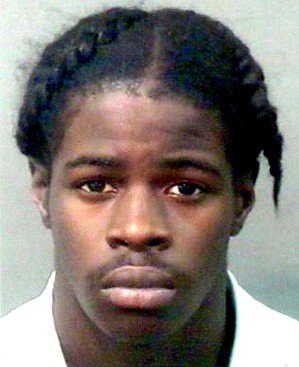
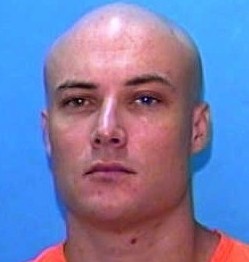
Demarcus Ralls
Murderer Robert Martines Perez
Murderer · USA · 1994
Name: Robert Martines Perez · Other name used in proceedings: Robert Martinez P…
15 victims
Robert Martines Perez
Murderer · USA · 1994
Name: Robert Martines Perez · Other name used in proceedings: Robert Martinez P…
15 victims
 Billy Frank Vickers
Murderer · USA · 1993
Billy Frank Vickers Vickers was executed by lethal injection in Texas on Januar…
14 victims
Billy Frank Vickers
Murderer · USA · 1993
Billy Frank Vickers Vickers was executed by lethal injection in Texas on Januar…
14 victims
 William Glenn Rogers
Murderer · USA · 1996
William Glenn Rogers was sentenced to death for the kidnapping, rape, and murde…
1 victim
William Glenn Rogers
Murderer · USA · 1996
William Glenn Rogers was sentenced to death for the kidnapping, rape, and murde…
1 victim
 Caroline Grills
Serial killer · Australia · 1947
Caroline Grills (born Caroline Mickelson; 1890 – October 1960), was an Australi…
4 victims
Caroline Grills
Serial killer · Australia · 1947
Caroline Grills (born Caroline Mickelson; 1890 – October 1960), was an Australi…
4 victims
 Dedrick Owens
Homicide · USA · 2000
Perpetrator: Dedrick Owens (born in 1993), a 6-year-old first grader. · Victim:…
1 victim
Dedrick Owens
Homicide · USA · 2000
Perpetrator: Dedrick Owens (born in 1993), a 6-year-old first grader. · Victim:…
1 victim
 Carl Morgan
Murderer · United Kingdom · 2004
Carl Morgan (born 1981) was a former producer of the rap group So Solid Crew. I…
1 victim
Carl Morgan
Murderer · United Kingdom · 2004
Carl Morgan (born 1981) was a former producer of the rap group So Solid Crew. I…
1 victim
- Gender
- male
- Country
- USA
- Location
- Oakland, California, USA
- Date of birth
- 1984
- Age at first offence
- 18
- Characteristics
- gang, armed robbery, kidnapping
- Victim profile
- Sunny Thach / Douglas Ware Jr. / Keith Mackie-Harris / Jerry Duckworth
- Method of murder
- Shooting
- Date(s) of murder
- 2002 - 2003
- Years active
- 2002–2003
- Date of arrest
- —
- Status
-
Life imprisonment
Sentenced to life in prison without the possibility of parole on July 7, 2006.
Name
Demarcus Ralls
Background
Demarcus Ralls was 21 during his trial and testified in the penalty phase that he believed his mother and grandmother were partially responsible for his crime spree. He said he had a miserable childhood moving from the homes of abusive family members to foster homes and that for many years he did not even know the identity of his father.
Ralls testified that his mother was a drug addict who gave birth to him while serving a jail sentence. He testified that his grandmother, who helped raise him, frequently beat him with "whatever she could get her hands on," including a frying pan and broom sticks.
In her opening statement in the penalty phase, Ralls' lawyer, Deborah Levy, told jurors that Ralls suffered through "an abhorrent upbringing" and he "spent his life trying to find someplace to belong." Levy told jurors that Ralls began committing crimes at the behest of his older half-brother, Gregory Colbert. She said Colbert ordered Ralls to murder a man who was having an affair with Colbert's wife while Colbert was in prison.
Ralls said he was barely responsive when prosecutor Darryl Stallworth asked whether he embarked on his crime spree on his own or did it just to go along with the "Nut Case" group. Ralls replied, "I don't know."
Ralls testified under cross-examination by Stallworth and said no one ever encouraged him to be a good person. Under cross-examination, Ralls was dressed in a yellow sweater and a brown shirt.
The offence
Ralls was one of a group of six people who called themselves the "Nut Cases." Authorities said they engaged in a crime spree that terrorized Oakland over a six-week period in late 2002 and early 2003 mainly for thrills. Some members of the group sported tattoos of the Planters "Mr. Peanut" logo. Ralls was guarded by seven bailiffs and dressed in a black shirt and a yellow sweater while sitting silently next to his two court-appointed attorneys as the clerk of Alameda County Superior Court Judge Jeffrey Horner read the guilty verdicts.
Jurors convicted Ralls of three counts of first-degree murder, one count of second-degree murder, two counts of attempted murder, 17 counts of robbery, one count of kidnapping, and one count of shooting into an inhabited dwelling. The verdicts included a special-circumstances allegation that the Thach killing was committed during a robbery, which provided prosecutors the basis to seek the death penalty.
Ralls' victims included Sunny Thach, whose killing was followed by a robbery and gunning down on the night of Jan. 6, 2003 after Thach and his wife returned to their apartment at 1914 Sixth Ave. after doing their laundry. Jurors also convicted Ralls of first-degree murder in the killings of Duckworth and Maki-Harris and of second-degree murder in the Ware killing. The sentencing reporting referenced additional names including Douglas Ware Jr., Keith Maki-Harris, and Jerry Duckworth.
Ralls denied a specific allegation that he shot at Thach's wife, Sylvia Tang, who survived the incident, because he did not want her to be a witness who could incriminate him for Thach's death. Ralls admitted that he shot at Tang but said he did not know why. When Stallworth asked if Ralls had any mercy for 31-year-old Sunny Thach, Ralls responded, "What do you mean?" When asked if Ralls was ready to accept responsibility for killing Thach, Ralls quietly answered, "If I did it, yeah." However, he said he did not remember shooting Thach.
Ralls said he did not care about his victims until his trial, stating, "At first I didn't, but now I do." He said he did not care about his victims until "When I was sitting at the (defense) table and hearing the people (witnesses) and the evidence."
When asked by Stallworth why he did not stop committing crimes, Ralls said, "I don't know. There's a lot of stuff I don't understand."
In his closing argument in the guilt phase, Ted Johnson suggested that another member of the "Nut Case" group might have killed Thach. During the sentencing reporting, prosecutor Darryl Stallworth said jurors could not conclude that Ralls fired the gun that killed Douglas Ware Jr., Keith Maki-Harris, or Jerry Duckworth in December 2002.
Investigation
Oakland police said several suspects told investigators that the gang often played the video game "Grand Theft Auto III," in which players are awarded points for committing crimes such as murders, robberies and carjackings.
Police said Ralls was among the most violent members of the gang that, according to members' own statements to police, killed and robbed simply for the thrill.
Trial
Ralls was the first of the "Nut Case" defendants to be prosecuted. The other five "Nut Case" defendants were expected to be tried later in the year and next year.
Ralls sat silently as the guilty verdicts were read by the clerk in front of Judge Jeffrey Horner.
The jury deliberated for the equivalent of eight full days spread over two weeks, and returned guilty verdicts.
Ralls' guilt-phase penalty-phase structure included a separate penalty phase beginning next week after jurors convicted him of multiple murder and committing a murder during the course of a robbery. At the conclusion of the penalty phase, the same jurors would choose between recommending either the death penalty or life in prison without parole. The penalty phase was expected to last two weeks.
In his closing argument two weeks before the penalty phase, Ted Johnson, one of Ralls' attorneys, told jurors that although Ralls was guilty of many crimes he should not be convicted of murder because he did not fire the fatal shots in any of the four murders he was accused of committing. Prosecutor Darryl Stallworth said, "the overwhelming weight of the evidence" supported convicting Ralls of the murder charges and all the other charges in the case.
A gag order was issued by Judge Jeffrey Horner barring the attorneys in the case from commenting on the case.
During the penalty phase testimony, Ralls said he had written letters to family members of his victims asking if they could forgive him for the things he had done, but he said he had not mailed them.
Ralls testified that when Stallworth asked him if he embarked on the crime spree on his own or did it just to go along with the "Nut Case" group, he replied, "I don't know." Ralls denied Stallworth's allegation regarding shooting Thach's wife, Sylvia Tang, stating that he shot at Tang but did not know why.
Ralls said, "At first I didn't, but now I do." when asked by Stallworth if he cared about the people he killed.
Ralls answered questions about mercy and responsibility by stating, "What do you mean?" and, "If I did it, yeah." He also said he did not remember shooting Thach.
Sentencing
A jury chose to sentence Ralls to life in prison without the possibility of parole.
Prosecutors had sought the death penalty. Ralls did not react as the verdict was read in an Oakland courtroom, but his attorney Deborah Levy put her arm around him. Ralls remained emotionless until Levy nudged him and looked into his eyes with a smile. He smiled back.
Deborah Levy said afterward, "I'm so ecstatic," adding that she and Ralls' family feared the jury would sentence him to death. Levy said, "Despite the despicable nature of these crimes, this young guy deserves a break. Clearly there was enough for the jury to have voted death." Levy also said, "He's not happy about the fact that he is facing life in prison, but it is better than the alternative."
Prosecutor Darryl Stallworth said he was comfortable with the jury's decision. Stallworth said he spoke with jurors and that they said their decision not to sentence Ralls to death was made in part because Ralls was a minor heavily influenced by his older brother when the two of them killed Joseph Mabrey in October 2002. Stallworth said jurors told him they could not conclude that Ralls fired the gun that killed Douglas Ware Jr., Keith Maki-Harris or Jerry Duckworth in December 2002. Stallworth said, "I saw things somewhat differently." He said, "But I am happy there is some closure. I'm trusting the families are happy we have some closure at this phase. There were a tragic, tragic number of events that still resonate with a lot of pain. It is a reminder of how fragile life is and how important it is to bring these cases to justice."
Ralls was formally sentenced by Alameda County Superior Court Judge Jeffrey Horner on July 7.
Appeals
No appeal information was provided.
Outcome
Ralls was convicted of three counts of first-degree murder, one count of second-degree murder, two counts of attempted murder, 17 counts of robbery, one count of kidnapping, and one count of shooting into an inhabited dwelling. The jury then sentenced him to life in prison without the possibility of parole.
Aftermath
Ralls' penalty-phase testimony continued Monday afternoon, and closing arguments were expected to be presented Tuesday or Wednesday.
Ralls was described as the youngest person on California's death row if he had been sentenced to death.
Police believe Ralls was among the most violent members of a gang that killed and robbed for the thrill.
Other details
Ralls was one of six people in the "Nut Cases" group. The others were related except for Leon "Twan" Wiley, 28, whom police called the ringleader of the group. The others included Ralls' half-brothers Joe Ralls, 29, and Jhomari "Corey" Sutton, 23, their cousin Deonte "Oink" Donald, 20, and their sister-in-law Aminah "Nay-Nay" Dorsey-Colbert, 28-year-old.
Prosecutors were seeking the death penalty for Joe Ralls and Wiley in addition to Demarcus Ralls.
When closing arguments were discussed in the penalty phase, they were expected to begin April 3.
In a separate summary context, Ralls was described as testifying that his mother and grandmother shared blame for his crimes, including that he had a difficult childhood after being born to a drug-addicted mother and that his grandmother frequently beat him with "whatever she could get her hands on," including a frying pan and broom sticks.

Spotted an error, or have more information about this case?