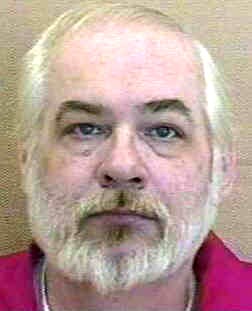
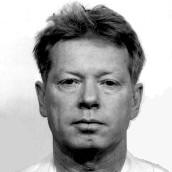
John Thomas Noland
Murderer Ervil LeBaron
Murderer · USA · 1972
Ervil Morrell LeBaron (1925 to August 16, 1981) was the leader of a polygamous…
35 victims
Ervil LeBaron
Murderer · USA · 1972
Ervil Morrell LeBaron (1925 to August 16, 1981) was the leader of a polygamous…
35 victims
 Brian Kevin Rosenfeld
Murderer · USA · 1985
Brian Kevin Rosenfeld Brian Kevin Rosenfeld was sentenced to three concurrent l…
23 victims
Brian Kevin Rosenfeld
Murderer · USA · 1985
Brian Kevin Rosenfeld Brian Kevin Rosenfeld was sentenced to three concurrent l…
23 victims
 Marvin Gray
Murderer · USA · 1975
Marvin Gray was convicted killer who claimed responsibility for 23 slayings and…
23 victims
Marvin Gray
Murderer · USA · 1975
Marvin Gray was convicted killer who claimed responsibility for 23 slayings and…
23 victims
 Yahweh ben Yahweh
Murderer · USA · 1980
Yahweh ben Yahweh was born and legally named Hulon Mitchell Jr. (October 27, 19…
23 victims
Yahweh ben Yahweh
Murderer · USA · 1980
Yahweh ben Yahweh was born and legally named Hulon Mitchell Jr. (October 27, 19…
23 victims
 Russell Ellwood
Murderer · USA · 1991
Russell Ellwood was a former taxi driver. Authorities suspected him of killing…
20 victims
Russell Ellwood
Murderer · USA · 1991
Russell Ellwood was a former taxi driver. Authorities suspected him of killing…
20 victims
 Jeffrey Landrigan
Murderer · USA · 1982
Jeffrey Landrigan In December 1989, Chester Dean Dyer was found dead in his apa…
2 victims
Jeffrey Landrigan
Murderer · USA · 1982
Jeffrey Landrigan In December 1989, Chester Dean Dyer was found dead in his apa…
2 victims
 Juliet Hulme
Homicide · New Zealand · 1954
Juliet Hulme was known as Juliet Marion Hulme and later as Anne Perry. Juliet H…
1 victim
Juliet Hulme
Homicide · New Zealand · 1954
Juliet Hulme was known as Juliet Marion Hulme and later as Anne Perry. Juliet H…
1 victim
 Benjamin Boyle
Murderer · USA · 1979
Benjamin Herbert Boyle was convicted for the murder of Gail Lenore Smith, and h…
2 victims
Benjamin Boyle
Murderer · USA · 1979
Benjamin Herbert Boyle was convicted for the murder of Gail Lenore Smith, and h…
2 victims
 Sara Ege
Murderer · United Kingdom · 2010
Sara Ege was convicted of murder and perverting the course of justice at Cardif…
1 victim
Sara Ege
Murderer · United Kingdom · 2010
Sara Ege was convicted of murder and perverting the course of justice at Cardif…
1 victim
 Jason Scott Byram
Murderer · USA · 1993
Jason Scott Byram — defendant · Julie Johnson — victim; elementary school teach…
1 victim
Jason Scott Byram
Murderer · USA · 1993
Jason Scott Byram — defendant · Julie Johnson — victim; elementary school teach…
1 victim
- Gender
- male
- Country
- USA
- Location
- Mecklenburg County, North Carolina, USA
- Date of birth
- J une 18, 1948
- Age at first offence
- 34
- Characteristics
- revenge, rape
- Victim profile
- Troy Milton and Cindy Milton (his estranged wife's father and sister)
- Method of murder
- Shooting
- Date(s) of murder
- February 21, 1982
- Years active
- 1982
- Date of arrest
- Same day
- Status
-
Executed
Executed by lethal injection in North Carolina on November 20, 1998
Case record: John Thomas Noland
Background
John Thomas Noland was executed in North Carolina by lethal injection on November 20, 1998.
John Thomas Noland and Susan Milton were married for nine years prior to their separation on March 3, 1981. The couple had two daughters and resided in Charlotte, North Carolina for the last eight years of their marriage. In the weeks immediately after their separation, Noland visited Susan and his daughters at least once a week and talked on the phone with them frequently. Noland constantly begged Susan to return to him. Later, he began making threats regarding their property. During this time, Noland’s parents arranged for him to receive psychiatric treatment.
A staff psychiatrist at the Mecklenburg Mental Health Center, Dr. Reback, evaluated Noland in April 1981 and recommended partial hospitalization at the Center. By May 1981, Dr. Reback was of the opinion that Noland was mentally ill and dangerous, and needed full, in-patient hospitalization. On May 21, 1981, a North Carolina state court ordered Noland committed to a state hospital, finding him to be "mentally ill and dangerous to himself" by clear and convincing evidence. The record did not indicate when Noland was released from the hospital.
In June 1981, Susan moved with the children to California to live with her older sister. She informed Noland by letter where she and the children were living. For the next several months, Noland maintained ongoing telephone contact with them. After approximately four months, Susan and the children moved again but did not give Noland the new address or phone number. She maintained periodic contact with Noland through her sister’s telephone. Every time Susan and Noland talked by phone, he asked her when she was coming back to Charlotte. She always replied that she did not know.
In November 1981, Noland began making threats against Susan’s family. Noland told her that he would kill her father, mother, and sister if she did not return to Charlotte with the children before Christmas. He said, "I'm going to kill Cindy[Susan's sister] first because she means more to you than anything. I'm going to kill your daddy and make your momma watch." Noland further specified that he would place a "gun between your daddy's eyes and blow his head off." Susan and the children did not return to Charlotte.
On February 5, 1982, Noland telephoned Susan and told her that he would kill her family if she did not return to Charlotte within two weeks. The following day, Noland called again and demanded her decision immediately. When Susan answered that she did not want to take the children out of school, Noland responded,"Well, you will come back; you'll have to come back, because I am going to kill your family."
The offence
On the evening of February 21, 1982, Cindy Milton, Susan’s sister, was watching television with two friends in the living room of her home in Charlotte. This house was the same one that had previously been occupied by Noland and Susan. Noland entered the house through the back door and chased Cindy into the laundry room yelling, "I told you not to get involved." As Cindy huddled behind the laundry room door, Noland shot Cindy in the back of the head, killing her.
Directly across a vacant lot from Cindy’s house lived her parents, Mary and Troy Milton. Noland left Cindy’s house and walked across the street to her parents’ home. Noland entered a bedroom and shot Troy Milton in the face while he slept, killing him. Noland pushed the door to a second bedroom open and told Mary Milton,"I told you I was going to kill all three of you. And, I've already killed Cindy and your old man. I'm going to get you." Mary lunged at Noland with a bar stool as he shot her at pointblank range, inflicting a nonlethal wound. She fell to the floor and remained very still.
After Noland left, Mary phoned Cindy’s house and discovered from her guests that Cindy had been shot; Mary then called the Charlotte Police Department.
Investigation
Charlotte police officers found Noland within one hour after the shootings. He was taken to the police department and properly advised of his Miranda rights. Noland invoked his right to have an attorney present during any further questioning by the officers. Later that night, Noland made the following unsolicited and voluntary comment to a police officer:
"Man, I just killed two people, man. Why are you being so nice to me?"
Arrest
Noland was taken to the police department after being found within one hour after the shootings and was properly advised of his Miranda rights.
Trial
In October 1982, a jury found Noland guilty of first degree murder in the deaths of Cindy and Troy Milton. The jury returned sentences of death for both murders.
The judgments were affirmed by the North Carolina Supreme Court. State v. Noland, 320 S.E.2d 642 (N.C. 1984), cert. denied, 469 U.S. 1230 (1985).
Sentencing
In October 1982, the jury sentenced Noland to death for both murders.
The federal court record later described the district court’s conditional grant of habeas relief regarding Noland’s sentence. The district court granted Noland’s petition with regard to his sentence, ordering the State of North Carolina to conduct a new sentencing hearing. It ruled that the jury was improperly instructed at the sentencing phase of Noland’s trial as to its consideration of mitigating circumstances, in violation of McKoy v. North Carolina, 494 U.S. 433 (1990). The district court rejected all of Noland’s other claims for relief. On appeal, the Court of Appeals for the Fourth Circuit reversed in part and affirmed in part.
Appeals
Fourth Circuit habeas corpus proceeding (No. 97-10; 97-11)
John Thomas Noland, Jr. filed a petition seeking a writ of habeas corpus pursuant to 28 U.S.C. § 2254 (1994). The case was before the United States Court of Appeals for the Fourth Circuit (No. 97-10; 97-11).
The Court of Appeals described the procedural history as follows: the district court conditionally granted the writ as to both convictions and sentences, and later the judgment was vacated and the case remanded for further proceedings, including allowing amendment to raise Teague as an affirmative defense to all of Noland’s claims. On remand, the district court ruled on nine issues, five of which were relevant to the appeal.
On the McKoy issue, the district court issued the writ as to Noland’s sentence, ordering the State to resentence him. The parties cross-appealed the district court’s decisions on these five issues.
The Court of Appeals held that the district court wrongly decided the McKoy issue and concluded that the writ should have been denied and the matter should be reversed in part and affirmed in part.
McKoy analysis and jury instructions
The Court of Appeals described McKoy v. North Carolina as striking down the North Carolina practice requiring a capital sentencing jury to find mitigating circumstances unanimously before they could be considered for sentencing.
The Court of Appeals stated that, in Noland’s trial, the trial court did not give the explicit unanimity instruction on mitigating circumstances that was struck down by McKoy. The Court of Appeals noted that the judge instructed the jury to answer four issues in reaching its decision at the penalty phase: whether the jury unanimously found, beyond a reasonable doubt, the existence of the aggravating circumstance; whether the jury unanimously found, beyond a reasonable doubt, that the aggravating circumstance was sufficiently substantial to call for imposition of the death penalty; whether the jury found one or more mitigating circumstances; and whether the jury unanimously found, beyond a reasonable doubt, that the aggravating circumstances outweighed the mitigating circumstances.
The Court of Appeals described additional context: the trial court also gave a general unanimity instruction just before releasing the jury to deliberate. The Court of Appeals quoted the instruction:
"After you have reached a unanimous decision as to each issue ... have your Foreman mark the appropriate place or places on the issues and recommendations forms." (J.A. at 1542 (emphasis added).)
Noland argued that this comment created a reasonable likelihood that the jury believed it must have found any mitigating circumstances unanimously. The Court of Appeals disagreed and concluded the comment did not constitute error under McKoy.
Other appellate claims rejected
The Court of Appeals rejected four other claims raised in Noland’s cross-appeal on issues involving both guilt-innocence and penalty phases.
Jury instructions on mental illness and intent
The Court of Appeals described Noland’s argument that jury instructions at the guilt-innocence phase prevented the jury from considering evidence of Noland’s mental illness in determining whether he possessed the proper intent for first-degree murder. The Court of Appeals addressed the relevant North Carolina law and federal precedent and held that the claim was barred by Teague v. Lane.
The Court of Appeals also discussed that the North Carolina Supreme Court had rejected a similar argument in State v. Mize, 315 N.C. 285, 337 S.E.2d 562 (1985), reasoning that the instructions reflected the order of issues submitted to the jury and did not direct the jury to disregard evidence of insanity as it related to premeditation, deliberation, and malice.
Miranda invocation and Doyle/Greenfield issues
The Court of Appeals addressed Noland’s argument that the prosecution used his post-arrest invocation of Miranda rights to rebut his affirmative defense of insanity, in violation of Doyle v. Ohio and Wainwright v. Greenfield. The Court of Appeals found no Greenfield error.
The Court of Appeals stated that the State elicited testimony from police officers that Noland understood his Miranda rights and exercised them, but the testimony was described as being in the context of the officers’ narratives regarding Noland’s apprehension and arrest, and that the prosecutor did not draw attention to Noland’s silence or invocation to an attorney. The Court of Appeals also stated that, in closing argument, the prosecutor did not suggest that Noland’s invocation of Miranda rights rebutted evidence of insanity.
The Court of Appeals concluded that trial testimony only made passing reference to Miranda and the prosecutor did not specifically exploit Noland’s exercise of his Miranda rights.
Ineffective assistance of counsel under Strickland
The Court of Appeals rejected Noland’s claim that his trial counsel rendered ineffective assistance at both phases of trial in violation of the Sixth Amendment. It summarized the Strickland v. Washington standard.
The Court of Appeals addressed allegations including:
- Trial counsel’s preparation for an insanity defense, including the decision not to present an expert witness to testify that he was insane at the time of the murders, described as a deliberate trial strategy. The Court of Appeals noted that defense counsel had petitioned for a psychiatrist to determine competency and mental state at the time of crimes; Dr. Billy Royal was unable to form an opinion as to sanity at the time of the crimes; and defense counsel presented Dr. Royal’s testimony about Noland’s history of mental illness and mental state at the time of the crimes.
- Counsel’s handling of competency during trial, including that defense counsel did not feel comfortable predicting Noland’s behavior and that this was argued as requiring counsel to challenge competency; the Court of Appeals concluded the evidence was insufficient to overcome the presumption of reasonable professional assistance.
- Penalty phase allegations about failure to present mitigating evidence, failure to consult with Noland, and opening the door to HAC argument.
- The specific issue about counsel including, in a list of explicit mitigating factors, a statement that Noland’s crime was not especially heinous, atrocious, or cruel, which allegedly opened the door for the prosecution to argue HAC. The Court of Appeals stated there was no reasonable probability the result would have been different and that the prosecutor did not emphasize HAC at closing argument. The Court of Appeals further stated that the absence of the HAC aggravating factor was only one of 17 mitigating factors submitted to the jury.
Competency to stand trial during trial
The Court of Appeals also rejected Noland’s due process argument that, although pretrial examination found him competent to stand trial, he became incompetent during the course of trial. It described that the district court found Noland was provided a full and fair hearing on this issue in state post-conviction and that a state court judge made a written factual finding.
The Court of Appeals quoted the state court’s written factual finding:
Noland "failed to establish that at the time of his trial he was ... unable to understand the nature and object of the proceedings against him, to comprehend his own situation with reference to them, or to assist in his own defense." (J.A. at 261.)
The Court of Appeals concluded the state court’s consideration adequately developed the material facts and provided a full and fair hearing.
Final appellate disposition
For the reasons articulated above, the Court of Appeals held that the district court erred when it granted Noland’s petition and ordered the State to resentence him. The Court of Appeals vacated the district court’s order granting the writ and remanded the matter to the district court for entry of an order denying the writ in its entirety.
The appellate disposition stated: REVERSED IN PART AND AFFIRMED IN PART.
Other details
Execution events and attendance
John Thomas Noland, Jr. was scheduled to be executed at Central Prison at 2 a.m. Friday, Nov. 20 by lethal injection.
The execution timeline included these events:
- Noland entered the execution chamber at 1:50 AM.
- The lethal drugs were administered at 2:01 AM.
- Noland was pronounced dead at 2:15 AM.
About 100 people attended a prayer service or candlelight vigil in Raleigh. Others protested in Charlotte, Davidson, and Wilmington, N.C.
The record also stated that Noland became the third condemned inmate to be put to death in North Carolina this year and the 11th overall since the state resumed executions in 1984. It also stated that Noland became the 58th condemned inmate to be put to death in the USA this year and the 490th overall since America resumed capital punishment on Jan. 17, 1977.
Execution communications and statements
Patty McQuillan, a state Department of Correction spokeswoman, stated that Noland was declared dead from a lethal injection at 2:15 a.m. and quoted Noland’s final statement.
Noland’s final written statement included:
"I'm 2 1/2 hours away from execution and I feel like the luckiest man alive, excuse the pun. It's the Love, Love surrounds me, comforts me, makes me very happy in my last hours. Love from our God, my family, members of Sisk Memorial Baptist Church, Binkley Baptist Church, People of Faith Against the Death Penalty, my brothers on death row, and thousands of others across the world. I've been lucky to get to know so many great friends and great people. To die knowing my two wonderful daughters love and forgive me makes my heart soar during a time when I should be full of fear, maximum fear. To the victim's family I love all of you and wish you peace and love, hope to see you in heaven where you will find out the factual truth about what happened on Feb. 21st 1982 not some cock & bull story from the prosecutors. Again I love you and hope find closure after my death. (sic) Seek out God and feel His Love. John Noland 12:10 AM / 11-20-98"
Noland’s oral statement, about 1 a.m., Nov. 20, 1998, included:
"Well, I made one final statement, but I just want to say that I'm sorry that I caused so many people so much pain, but it's weird that they've... So many people returned with love, that I caused a lot of people a lot of pain and other people gave me an awful lot of love. As I said in my statement, I feel like I'm a very lucky man."
Additional statement reproduced in the record as “Final comments to the warden” included:
Last meal and move to death watch
Noland’s last meal on Nov. 19, 1998 included a large pepperoni pizza, burrito supreme and six diet cokes.
Noland was moved from death row to Central Prison’s death watch area at 5:25 PM on Nov. 18, 1998. The death watch area was described as adjacent to the execution chamber and located in the prison’s custody control building.
Witnesses selected for the Nov. 20 execution
Raleigh - Central Prison Warden James French named six official witnesses and five media witnesses for the Nov 20 execution of John Thomas Noland. The official witnesses were Investigator Mark Corwin, Investigator William E. Ward, Jr., Major Paul A. Cash, Captain Roy J. Rivers, Ann Rhyne and Elizabeth A. Autry. The media witnesses were Gary Wright, The Charlotte Observer, Iris Carter Gross, The Madison Messenger, Steve Litz, WSOC-TV, Charlotte; Jon Repp, WBT Radio, Charlotte; and Estes Thompson of the Associated Press.
Under the Department of Correction policy, the district attorney and sheriff in the county of conviction nominated the six official witnesses, which may include members of the victim’s family. The record stated that a 1997 amendment to the state statute ensured the crime victim’s family the right to witness the execution. It also stated that the Radio Television News Directors of the Carolinas selected the broadcast reporters and the N.C. Press Association selected the two print reporters. After the execution, media witnesses were required to relate their experience to other reporters immediately in Central Prison’s visitors center.
Appellate caption and parties
The record included the caption for the Fourth Circuit case:
- John Thomas Noland, Jr., Petitioner-Appellee, v. James B. French, Warden, Central Prison, Raleigh, North Carolina, Respondent-Appellant.
- John Thomas Noland, Jr., Petitioner-Appellant, v. James B. French, Warden, Central Prison, Raleigh, North Carolina, Respondent-Appellee.
The record also stated:
- No. 97-10
- Federal Circuits, 4th Cir.
- January 7, 1998
- OPINION ERVIN, Circuit Judge.
Marriage-related context mentioned at execution
The record stated that Noland had been separated from his wife, Susan for several months when he went to the home of her sister, Cindy Milton, and shot her to death Feb. 21, 1982. It stated that he then crossed the street and killed her father, Troy Milton, as he slept and wounded her mother, Mary Milton.
The record stated that Noland said he was depressed at the time of the slayings because his wife had left him and taken their 2 young daughters with her to California, and that he blamed his in-laws for the marriage’s failure.
Appointment, legal counsel, and clemency language quoted
The record stated that death penalty opponents, including retired North Carolina basketball coach Dean Smith, pleaded unsuccessfully with Gov. Jim Hunt for a reprieve. It stated that Noland’s lawyer, Jim Cooney, said before Hunt’s refusal that his client wanted "to go out with dignity," and no other steps would be taken regardless of Hunt’s decision.
Spotted an error, or have more information about this case?