
Michelle Hall
Murderer Miranda Barbour
Murderer · USA · 2013
Miranda Barbour, 19, defendant. · Elytte Barbour, 22, defendant and husband of…
100 victims
Miranda Barbour
Murderer · USA · 2013
Miranda Barbour, 19, defendant. · Elytte Barbour, 22, defendant and husband of…
100 victims
 Tiffany Hall
Murderer · USA · 2006
Tiffany Hall was 24 when she was charged in September 2006. She later entered a…
5 victims
Tiffany Hall
Murderer · USA · 2006
Tiffany Hall was 24 when she was charged in September 2006. She later entered a…
5 victims
 Banita Jacks
Murderer · USA · 2007
Banita Jacks was a Washington, DC resident convicted of murdering her four daug…
4 victims
Banita Jacks
Murderer · USA · 2007
Banita Jacks was a Washington, DC resident convicted of murdering her four daug…
4 victims
 Holly Grigsby
Murderer · USA · 2011
Holly Grigsby was sentenced to life in prison without parole on July 15, 2014.…
4 victims
Holly Grigsby
Murderer · USA · 2011
Holly Grigsby was sentenced to life in prison without parole on July 15, 2014.…
4 victims
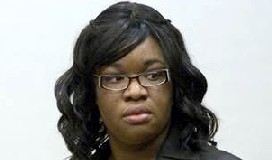 Jessica Tata
Murderer · USA · 2011
Jessica Tata was a Houston home day care owner who fled to Nigeria after a fire…
4 victims
Jessica Tata
Murderer · USA · 2011
Jessica Tata was a Houston home day care owner who fled to Nigeria after a fire…
4 victims
 Amanda Bennett
Murderer · USA · 2011
Amanda Bennett was an Indiana woman who shot her three children and set the fam…
3 victims
Amanda Bennett
Murderer · USA · 2011
Amanda Bennett was an Indiana woman who shot her three children and set the fam…
3 victims
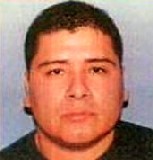 Gabriel Avila
Murderer · USA · 2003
Gabriel Avila was a 27-year-old Mexican national. Katie Sepich was 22 and from…
1 victim
Gabriel Avila
Murderer · USA · 2003
Gabriel Avila was a 27-year-old Mexican national. Katie Sepich was 22 and from…
1 victim
 Kathy Boudin
Murderer · USA · 1981
Kathy Boudin pleaded guilty. She was sentenced to 20 years to life in prison. S…
3 victims
Kathy Boudin
Murderer · USA · 1981
Kathy Boudin pleaded guilty. She was sentenced to 20 years to life in prison. S…
3 victims
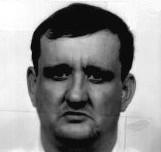 David Wayne Stoker
Murderer · USA · 1986
David Wayne Stoker (born October 26, 1987 referenced in the record as “David St…
1 victim
David Wayne Stoker
Murderer · USA · 1986
David Wayne Stoker (born October 26, 1987 referenced in the record as “David St…
1 victim
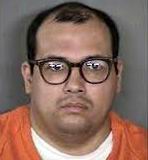 Humberto Leal
Murderer · USA · 1994
Name: Humberto Leal Relationship/role: Defendant Humberto Leal was a Mexican na…
1 victim
Humberto Leal
Murderer · USA · 1994
Name: Humberto Leal Relationship/role: Defendant Humberto Leal was a Mexican na…
1 victim
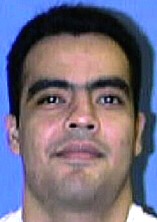 Anthony Guy Fuentes
Murderer · USA · 1994
Anthony Guy Fuentes Anthony Guy Fuentes was executed by lethal injection in Tex…
1 victim
Anthony Guy Fuentes
Murderer · USA · 1994
Anthony Guy Fuentes Anthony Guy Fuentes was executed by lethal injection in Tex…
1 victim
 Andre Bland
Murderer · USA · 1992
Andre S. Bland was convicted in the shooting death of Ontrain Sanders in the pa…
1 victim
Andre Bland
Murderer · USA · 1992
Andre S. Bland was convicted in the shooting death of Ontrain Sanders in the pa…
1 victim
- Gender
- female
- Country
- USA
- Location
- Sharpsburg, Coweta County, Georgia , USA
- Date of birth
- 1969
- Age at first offence
- 39
- Characteristics
- parricide, domestic dispute
- Victim profile
- John Britt Hall, 37 (her husband)
- Method of murder
- Shooting
- Date(s) of murder
- July 30, 2008
- Years active
- 2008
- Date of arrest
- Same day
- Status
-
Life imprisonment
Sentenced to life in prison on September 25, 2009; convictions and life sentence were reinstated after reversal by the Supreme Court of Georgia, with parole eligibility after 30 years
Case record: Michelle Hall
Background
Michelle Hall was a Coweta County woman. Her husband was John Britt Hall. The couple were under major financial stress.
On July 30, 2008, Michelle Garner Hall called 911 and said her husband had shot at her and then shot himself.
The offence
At trial, experts testified that John had been shot in the chest from at least six to eight inches away. John also had been shot in his thigh and the back of his left arm, according to testimony. A bruise behind his right ear was testified to.
Hall and her husband “got into an argument the evening of July 30, 2008.” Hall’s eight-year-old daughter from a previous marriage testified at trial.
The child testified that when she heard a vacuum cleaner slam to the ground, she ran upstairs to her bedroom. From there, the child testified she heard her stepfather say “put the gun down” and “Michelle, don’t do this.” The child testified she then heard about six gunshots.
The first officer on the scene testified that Michelle initially told him her husband had shot himself. She later told another investigator she had shot Britt but “didn’t mean to do it.”
Investigation
The first officer arrived on the scene and heard Michelle’s initial account that her husband had shot himself. Another investigator later received Michelle’s later statement that she had shot Britt but “didn’t mean to do it.”
Trial
A Coweta County Superior Court jury convicted Michelle of malice murder, felony murder based on aggravated assault, and aggravated assault. Michelle was convicted by a Coweta County Superior Court jury on Sept. 25, 2009. The jury took less than three hours Friday to find Michelle Hall guilty on all counts.
Closing arguments and quotations
Assistant District Attorney Kevin McMurry prosecuted the case. Defense counsel Michael Kam represented Hall.
After McMurry and Kam finished closing arguments Friday morning, the jury began deliberations around 11:30.
McMurry, after sentencing, said:
- “It was a tough case. We thank the jury for their service,”
McMurry also said:
- “I’m pleased with the verdict. I think it is a verdict that reflects what actually happened that night, and it has affected a lot of people’s lives,”
- “My heart goes out to all the kids and family members who will be affected. From my perspective, it is the right result, but it is going to be difficult for a lot of people.”
Kam did not respond to requests for comment.
In closing arguments, McMurry focused on inconsistencies in Hall’s story, and the improbability that things happened as she said they did. Kam focused on the fallibility of memory, and how confusing things can get in a stressful situation.
McMurry told the jury:
- “She can’t keep her story straight. It doesn’t make any sense,”
McMurry particularly focused on Britt Hall’s third wound. McMurry said that shot shattered the bones in his elbow. McMurry said Britt Hall, wounded in both the leg and the chest, crawled toward a nearby bathroom — a place he knew had a lock on the door. McMurry stated that Hall shot her husband the third time in the bathroom.
McMurry said:
- “She never even explained the third shot,”
McMurry said Kam had worked “to get that shot out of the bathroom — because he knows that shows the malice of that woman.”
McMurry said:
- “Britt doesn’t get to come in here and speak to you. Britt doesn’t get to hold his children.”
Kam said during closing arguments:
- “This case is all about the brain,”
Kam continued:
- “It is about memory, our reactions … about how we perceive things,”
Kam said:
- “This is about Michelle and Britt Hall; it’s also about the rest of us. I want you to be cognizant of some of the things that happened in this courtroom and why they happened.”
Kam said:
- “From the moment the investigators arrived on the scene, they decided this was murder,”
- “based on nothing other than the fact he was found in the bathroom. From that moment on, they decided that Michelle Hall was lying and everything she said was a lie.”
Kam offered an example about how stories can change, not because anyone is lying, but because of stress and the situation.
Kam said:
- “Let’s say you have a 2-year-old,”
Kam said:
- “They are rambunctious. They are hard to keep up with, and for some reason, when you run after them they think it is a game and they run.”
Kam described going to a store in Atlanta with the child, and said:
- “Say you go to a store in Atlanta with the child, he said.”
- “The child acts up and gets spanked.”
- “Then you take the child outside.”
- “You briefly look in a store window, turn around, and the child is running toward the road.”
- “You run after him; he keeps running, into the road, and is struck by a car.”
- “You make a 911 call.”
- “The operator asks what happened, “and you’re saying, I was just standing here, I didn’t let him out of my sight for a minute.””
Kam said:
- “Then when the investigator questions you and you give more details “the investigator says she changed the story,” Kam said.”
Kam said:
- “Then the police ask”
Sentencing
Coweta Superior Court Judge Jack Kirby sentenced Hall to life in prison for the murder convictions. Kirby also sentenced Hall to 20 years for aggravated assault.
The two murder charges were merged. Hall was sentenced to life for the murder charges and 20 years for aggravated assault. Hall became eligible for parole after 30 years.
Appeals
After Hall’s September 2009 conviction, Hall’s attorneys filed a motion for a new trial. When the motion was denied by Kirby, Hall’s attorneys announced they would appeal her conviction before the Supreme Court of Georgia.
Georgia Supreme Court (upholding convictions)
In a Supreme Court of Georgia decision released Monday (reported as made Monday), the Supreme Court of Georgia upheld Hall’s conviction. The Supreme Court of Georgia affirmed denial of Hall’s motion of a new trial. The Supreme Court stated:
- “Michelle Garner Hall was convicted of malice murder and aggravated assault in the shooting death of her husband, Britt Hall. She appeals for the denial of her motion of a new trial, contending the trial court erred by admitting similar transaction evidence and prior consistent statements and by failing to charge on involuntary manslaughter. Finding no error, we affirm.”
The state Supreme Court ruling was made Monday, according to Coweta Judicial Circuit District Attorney Pete Skandalakis.
Habeas corpus and order for a new trial
In September 2011, Hall filed a “petition for habeas corpus.” The habeas corpus proceeding allowed already convicted prisoners to challenge their conviction on constitutional grounds in the county where they were incarcerated. The proceeding was brought against the warden of the prison, and in Hall’s case the warden was Kathy Seabolt.
Hall’s sole contention before the habeas court was ineffective assistance of counsel. Hall argued that her attorney failed to object to the procedure used in taking her daughter’s testimony and failed to raise the same issue on appeal. The habeas judge found that Hall was denied her constitutional right to effective counsel because her daughter testified in another room via closed circuit TV, rendering Hall absent from the proceeding and unable to confer with her attorney during the child’s testimony. The habeas judge ruled that Hall’s attorney, who was the same for both trial and appeal, erred in failing to raise the issue on appeal because, if done, she would have been granted a new trial. The habeas judge also found Hall was denied her constitutional right to confront the witnesses against her because of the method of her daughter’s testimony.
A habeas hearing resulted in relief. In March 2002, the habeas court granted Hall’s relief, setting aside her convictions and sentence.
Senior Judge Robert B. Struble ruled on March 19 that Hall was entitled to a new trial based on a recent habeas corpus hearing presided over by Struble. The habeas corpus petition was filed by Hall’s current attorney and claimed that Hall received ineffective legal counsel from her Newnan attorney, Michael Kam, during the original trial. Any new trial was stated as not expected to take place for months and only after an appeal of Struble’s ruling had been heard. Hall remained in custody pending the outcome of the appeal.
A press release by District Attorney Peter John Skandalakis included additional details:
- Michelle Hall was tried and convicted by a Coweta County jury for the July 31, 2008, murder of her husband John Brit Hall.
- Senior Assistant District Attorney Kevin McMurry tried the case and presented the State’s evidence against Michelle Hall.
- After Hall was convicted and sentenced, she appealed her conviction to the Georgia Supreme Court.
- McMurry argued before the Georgia Supreme Court on behalf of the State.
- The Georgia Supreme Court issued a unanimous decision affirming Hall’s conviction.
- Hall filed a habeas corpus petition in Habersham County Superior Court.
- The Attorney General’s office represented the State at the habeas hearing.
- At the habeas hearing, Michelle Hall and her trial attorney Mike Kam testified.
- On March 19, 2012, Senior Judge Robert Struble issued an order granting Hall’s habeas corpus petition.
- The habeas court found Kam to have rendered ineffective assistance of counsel to Hall at trial.
- The Attorney General’s office announced it would appeal the habeas court’s ruling to the Georgia Supreme Court.
- The Attorney General’s position was that the habeas court applied the wrong legal standard and that Michael Kam was not legally ineffective.
- Skandalakis said: “Should the Georgia Supreme Court agree with the habeas court’s ruling, then Michelle Hall will be granted a new trial. However, the Attorney General is arguing that the habeas court applied the wrong legal standard and that Michael Kam was not legally ineffective. Should the Georgia Supreme Court agree with the State, the habeas court’s ruling could be reversed and Hall’s conviction will stand.”
- Skandalakis said: “we respectfully disagree with the habeas court’s ruling and believe the court erroneously applied the wrong standard under the law. The victim’s family has to continue to relive the trauma of their loss with this second appeal. We are optimistic that the Georgia Supreme Court will conclude that Hall was provided a legally sufficient defense by Michael Kam in this case.”
- Skandalakis also said: “The District Attorney’s office has notified the victim’s family and continues to inform them of developments in the case,” and “Skandalakis said.”
Georgia Supreme Court (reversing habeas relief and reinstating convictions)
The Supreme Court of Georgia later reversed the lower court’s ruling that threw out the convictions and life prison sentence. The Supreme Court’s unanimous ruling was written by Justice Harold Melton. The convictions and sentence were reinstated.
The case was listed as Seabolt, Warden V. Hall (S12A1632).
The Supreme Court concluded the habeas court conducted the wrong legal analysis in determining that ineffective assistance was prejudicial and that Hall was entitled to a new trial. The Supreme Court stated that under Strickland v. Washington a defendant had to show deficient performance by trial counsel and a reasonable probability of a more favorable outcome. The Supreme Court stated:
- “Hall has failed to make this showing,”
- “Her argument is that, had she been in the same room for her daughter’s questioning, she could have assisted her attorney by prompting him with specific information.”
During the habeas hearing, Hall was asked to specify what she could have relayed to her attorney. The Supreme Court stated:
- “As such, Hall has failed to show actual prejudice, and her claim of ineffective assistance of counsel should have been rejected,” according to the high court’s opinion.
Outcome
Michelle Garner Hall’s convictions and life prison sentence were reinstated after reversal by the Supreme Court of Georgia. Hall remained sentenced to life in prison, with eligibility for parole after 30 years.
Aftermath and related media
The case was featured on an episode of “Snapped,” a weekly TV program airing on the Oxygen Network.
District Attorney Pete Skandalakis stated during the Supreme Court of Georgia upholding the conviction:
- “I am thankful that we are able to bring some closure to the victim's family,”
- “Our office thanks the jury who found Michelle Hall guilty on these charges.”
- “We also thank the Coweta County Sheriff's Office for their investigation of these crimes.”

Spotted an error, or have more information about this case?