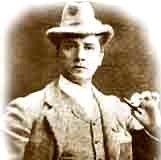
Richard Archer Prince
Homicide Mick Philpott
Homicide · United Kingdom · 2012
Michael “Mick” Philpott was an Englishman who had gained notoriety as a crimina…
6 victims
Mick Philpott
Homicide · United Kingdom · 2012
Michael “Mick” Philpott was an Englishman who had gained notoriety as a crimina…
6 victims
 Dyson Allen
Homicide · United Kingdom · 2012
Dyson Allen was convicted for starting a fire in a wardrobe in the children’s b…
4 victims
Dyson Allen
Homicide · United Kingdom · 2012
Dyson Allen was convicted for starting a fire in a wardrobe in the children’s b…
4 victims
 Robert Mone
Homicide · United Kingdom · 1967
Robert Francis Mone was born in 1948. He grew up with his parents and two siste…
4 victims
Robert Mone
Homicide · United Kingdom · 1967
Robert Francis Mone was born in 1948. He grew up with his parents and two siste…
4 victims
 Peter Bryan
Homicide · United Kingdom · 1993
Peter Bryan was a schizophrenic cannibal who was sentenced to closed psychiatri…
3 victims
Peter Bryan
Homicide · United Kingdom · 1993
Peter Bryan was a schizophrenic cannibal who was sentenced to closed psychiatri…
3 victims
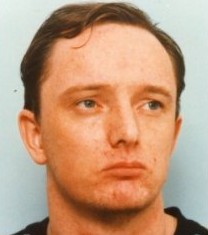 Robert Napper
Homicide · United Kingdom · 1992
Robert Clive Napper (born 25 February 1966) was a paranoid schizophrenic convic…
3 victims
Robert Napper
Homicide · United Kingdom · 1992
Robert Clive Napper (born 25 February 1966) was a paranoid schizophrenic convic…
3 victims
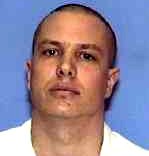 Charles Victor Thompson
Murderer · USA · 1998
Charles Victor Thompson was an American criminal. Thompson was born 13 June 197…
2 victims
Charles Victor Thompson
Murderer · USA · 1998
Charles Victor Thompson was an American criminal. Thompson was born 13 June 197…
2 victims
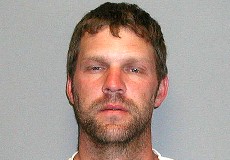 Edward Davidson
Murderer · USA · 2008
Edward Davidson “Fast Eddie”, “the Spam King” Edward “Eddie” Davidson (July 29,…
2 victims
Edward Davidson
Murderer · USA · 2008
Edward Davidson “Fast Eddie”, “the Spam King” Edward “Eddie” Davidson (July 29,…
2 victims
 David Maust
Serial killer · USA · 1974
David Edward Maust (April 5, 1954 - January 20, 2006) was an American serial ki…
5 victims
David Maust
Serial killer · USA · 1974
David Edward Maust (April 5, 1954 - January 20, 2006) was an American serial ki…
5 victims
- Gender
- male
- Country
- United Kingdom
- Location
- London, England, United Kingdom
- Date of birth
- 1858
- Age at first offence
- 39
- Characteristics
- revenge
- Victim profile
- William Terriss (actor)
- Method of murder
- St abbing with knife
- Date(s) of murder
- December 16, 1897
- Years active
- 1897
- Date of arrest
- Same day
- Status
-
Found “guilty, but according to the medical evidence, not responsible for his actions”; sent to Broadmoor Criminal Lunatic Asylum
Status and outcome
Richard Archer Prince was found “guilty, but according to the medical evidence, not responsible for his actions.” The judge sent him to Broadmoor Criminal Lunatic Asylum.
People
Richard Archer Prince
Richard Archer Prince was also known as William Archer Flint and William Archer. His real name was Richard Millar Archer. He was born on the Baldoran Estate near Dundee, Scotland in 1858. He aspired to become an actor and by 1887 he was appearing in bit-parts in London theatres. He became known as “Mad Archer” and was described as “soft in the head.” He became more mentally unstable over time and became destitute and desperate for work. After his arrest, he became involved in entertainment for inmates and conducted the prison orchestra while confined.
When captured, Prince told police:
“I did it for revenge. He had kept me out of employment for ten years, and I had either to die in the street or kill him.”
William Terriss
William Terriss was one of the leading actors of the time. He was born William Charles James Lewin in London on 20th February 1847. Before becoming an actor he tried occupations including silver mining in America and sheep farming in the Falklands. He met his wife while holidaying at Margate and they were married in 1868. They had a daughter, Ellaline, born while they were in the Falklands. Terriss established himself as a popular actor, including a first serious role on the stage in 1871 cast as Robin Hood in “Rebecca”, based on “Ivanhoe” by Sir Walter Scott. In December 1885, at age twenty-four, Jessie Millward joined Terriss in “The Harbour Lights,” and they became romantic leads together; the account stated they were lovers off-stage as well and toured the country and America together for many years before appearing together in “Harbour Lights.”
William Terriss died shortly afterwards after being stabbed outside the Adelphi Theatre.
Timeline
- 20th February 1847 — William Terriss was born in London as William Charles James Lewin.
- 1868 — William Terriss married his wife.
- 13 December 1897 — Prince was forcibly ejected from the foyer of the Vaudeville Theatre.
- 16th December 1897 — Prince stabbed William Terriss as Terriss entered the Adelphi’s stage door in Maiden Street.
- 13 January 1898 — Prince appeared at the Old Bailey.
- 6.35 — The jury retired to consider their verdict.
- About half an hour later — The jury returned and pronounced Prince “guilty, but according to the medical evidence, not responsible for his actions.”
The offence
During the run of “The Harbour Lights,” in which Terriss starred and Prince had a minor role, Terriss took offence to something Prince had said and dismissed Prince. It was said Terriss continued to try to find Prince acting work and sent small sums via the Actors’ Benevolent Fund.
By the end of 1897, Prince was described as destitute and desperate for work. On 13 December, he was forcibly ejected from the foyer of the Vaudeville Theatre. He had tried to obtain a complimentary ticket by showing his card reading “Richard Archer Prince. Adelphi Theatre,” which was refused when he confirmed he was not currently working there. After that refusal, he became abusive and had to be removed.
It was described that Prince and Terriss were seen to argue the next night in Terriss’s dressing room in the Adelphi Theatre. On 16th December, as Terriss was entering the Adelphi’s stage door in Maiden Street to prepare for the evening’s performance, Prince stabbed him in the back, side and chest. Another description stated that when Terriss felt in his pocket for the key, a man ran out of the shadows and plunged a kitchen knife into his back; the knife struck him again in the side and a third blow hit his chest. Prince was captured at the scene, and police found the bloody knife in his pocket.
Victim and injuries
William Terriss was stabbed and died shortly afterwards.
Investigation and arrest
After the stabbing, Jessie Millward heard Terriss arrive and then all went quiet. She ran down the stairs and with Lottie, her maid, saw Terriss leaning against the doorframe before he collapsed. She yelled for help and the company rallied around. Doctors and the police soon arrived. Harry Greaves had caught hold of the assailant, who had offered no resistance.
Police found a bloody knife in Prince’s pocket. Prince told police:
Trial
Prince appeared at the Old Bailey on 13 January 1898. He initially pleaded “guilty with provocation” but changed this on the advice of his counsel to not guilty.
The defence attempted to prove insanity, with doctors and even his mother giving evidence that he was of unsound mind. At 6.35 that evening the jury retired to consider their verdict. The jury returned half an hour later and pronounced Prince “guilty, but according to the medical evidence, not responsible for his actions.”
Sentencing
To Prince’s relief, the judge sent him to Broadmoor asylum (Broadmoor Criminal Lunatic Asylum).
Aftermath
While confined to Broadmoor asylum, Prince became heavily involved in entertainment for the inmates and conducted the prison orchestra.
Spotted an error, or have more information about this case?