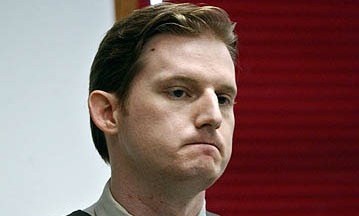
Christian Longo
Mass murderer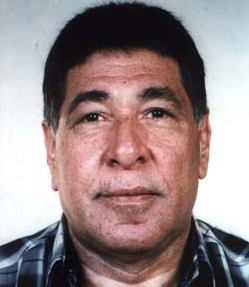 Gameel Al-Batouti
Mass murderer · USA · 1999
Gameel Al-Batouti (also rendered “Gamil ElBatouty” or “El Batouty” in U.S. offi…
216 victims
Gameel Al-Batouti
Mass murderer · USA · 1999
Gameel Al-Batouti (also rendered “Gamil ElBatouty” or “El Batouty” in U.S. offi…
216 victims
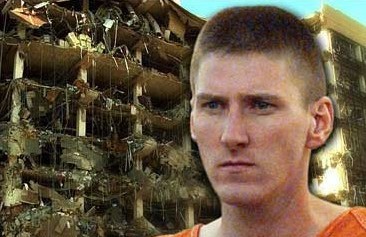 Timothy McVeigh
Mass murderer · USA · 1995
Timothy James McVeigh (April 23, 1968 – June 11, 2001) was a United States Army…
168 victims
Timothy McVeigh
Mass murderer · USA · 1995
Timothy James McVeigh (April 23, 1968 – June 11, 2001) was a United States Army…
168 victims
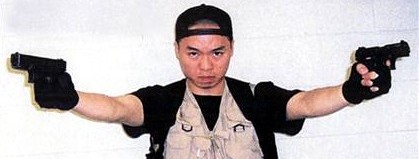 Seung-Hui Cho
Mass murderer · USA · 2007
Seung-Hui Cho was a mass murderer who shot and killed 32 people and wounded man…
32 victims
Seung-Hui Cho
Mass murderer · USA · 2007
Seung-Hui Cho was a mass murderer who shot and killed 32 people and wounded man…
32 victims
 George Jo Hennard
Mass murderer · USA · 1991
George Jo Hennard carried out a mass killing at a Luby’s Cafeteria in Killeen,…
23 victims
George Jo Hennard
Mass murderer · USA · 1991
George Jo Hennard carried out a mass killing at a Luby’s Cafeteria in Killeen,…
23 victims
 Eric Harris
Mass murderer · USA · 1999
Eric Harris committed suicide by gunshot to the roof of the mouth on April 20,…
13 victims
Eric Harris
Mass murderer · USA · 1999
Eric Harris committed suicide by gunshot to the roof of the mouth on April 20,…
13 victims
 Jiverly Wong
Mass murderer · USA · 2009
December 8, 1967 — Jiverly Antares Wong was born. · late 1980s — Wong first cam…
13 victims
Jiverly Wong
Mass murderer · USA · 2009
December 8, 1967 — Jiverly Antares Wong was born. · late 1980s — Wong first cam…
13 victims
 Elvin Jack Odom
Murderer · USA · 1937
Elvin Jack Odom was charged with Murder, a felony, in the Superior Court of the…
1 victim
Elvin Jack Odom
Murderer · USA · 1937
Elvin Jack Odom was charged with Murder, a felony, in the Superior Court of the…
1 victim
 Anne Stout
Murderer · USA · 2007
Anne Marie Stout was convicted following a three-week trial in 2008 of shooting…
1 victim
Anne Stout
Murderer · USA · 2007
Anne Marie Stout was convicted following a three-week trial in 2008 of shooting…
1 victim
 John Francis Roche
Serial killer · USA · 1953
John Francis Roche was a male inmate. He was described as a mass murderer. Roch…
5 victims
John Francis Roche
Serial killer · USA · 1953
John Francis Roche was a male inmate. He was described as a mass murderer. Roch…
5 victims
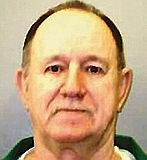 Charles Shuler
Murderer · USA · 1999
Charles O. Shuler was convicted of murdering his former girlfriend, her mother,…
3 victims
Charles Shuler
Murderer · USA · 1999
Charles O. Shuler was convicted of murdering his former girlfriend, her mother,…
3 victims
- Gender
- male
- Country
- USA
- Location
- Lincoln County, Oregon, USA
- Date of birth
- January 23, 1974
- Age at first offence
- 27
- Characteristics
- parricide, child abuse, fugitive, drugs
- Victim profile
- His w ife Mary Jane, 34, and the couple's three children — Madison, 2, Sadie, 3, and Zachery, 4
- Method of murder
- Strangulation - Drowning
- Date(s) of murder
- December 16, 2001
- Years active
- 2001
- Date of arrest
- January 12, 2002 (in Mexico)
- Status
-
Sentenced to death
Sentenced to death on April 16, 2003
Case record: Christian Longo
Background
Christian Longo was born on 1/23/74. He was a fugitive wanted on a Lincoln County, Oregon warrant charging him with multiple counts of aggravated murder in the deaths of his wife, Mary Jane, and their three children.
Longo grew up under strict Jehovah's Witness parents. He was actively involved in his church and received training at a young age to participate in the door-to-door ministry. Longo did not date until his late teens, and he was married at 19 to a woman seven years older, Mary Jane Baker, whom he first met in the church parking lot.
Longo began experiencing money problems when he bought Baker a three-and-a-half carat diamond engagement ring on a payment plan. One month, he did not have enough money to cover both the rent and the ring payment, so he stole $108 from the camera store where he worked. When employees were questioned about the missing money, Longo kept quiet. The next morning, he said his conscience got to him and he left a check for the missing money on the counter along with a letter of resignation, but rent did not get paid that month. His roommates, also Jehovah Witnesses, informed congregation elders of the incident and Longo was sanctioned, losing some of his responsibilities within the congregation. Mary Jane stood by him, but because of the sanctions the two were not able to get married in the Kingdom Hall. Longo said he was repentant and felt he had learned his lesson, stating: "I was determined that I would never do anything along those lines again; anything that was not only illegal, but immoral, unsavory."
Longo's admitted addiction to new cars, nice clothes, and tropical vacations tapped out most of his credit even before the birth of the couple's first child, Zachery. Things became harder financially after Mary Jane Longo stopped working to take care of the baby, and two more children came within the next two years. Longo said he could not go to his parents for help because of pride.
Christian Longo started a construction clean-up subcontracting business with another Jehovah's Witness. The business took off quickly, but despite a booming start it was soon in debt because of too rapid an expansion. The Longo family's credit cards were maxed out and nothing was coming in, but to their relatives and other church members, everything seemed fine. To keep up appearances, Longo exaggerated the success of his company so convincingly that his own father invested tens of thousands of dollars in the business. Soon after, Longo was showing off a boat and two jet skis he told friends he had won in a contest and bought two cars.
Longo later described being awoken to the noise of a tow truck in his driveway, repossessing his Ford Taurus. When their other car broke down, he made himself a fake driver's license, presented it to take a Pontiac Montana for a test drive, and never returned the car to the dealership lot. When his wife began asking why they had not received any billing statements in the mail for the new vehicle, Longo created bogus ones on his computer and mailed them to their address.
In May 2000, Mary Jane Longo called her sister, Sally Clark, saying she had discovered e-mails from her husband to another woman. When she confronted him about them, he allegedly told her she had not been any fun since having children and that he did not love her anymore. Mary Jane stayed with her husband but told elders in the congregation about the situation, and Longo was sanctioned by his church once again.
Longo used his computer to print false checks from companies that owed his business money and cashed them. Police became involved when the companies contacted police. Longo found himself in a courtroom for the first time in September 2000, when he pleaded guilty and received three years' probation. Because he exaggerated his income due to persistent concern for appearances, he was ordered to pay restitution payments far greater than he could handle. When elders from the congregation read about Longo's check forgeries in a local newspaper, Longo was disfellowshipped from the Jehovah's Witnesses. Longo claimed the incident led to a "watershed moment" with his wife, stating he promised her he would be truthful and that they would straighten out their finances, but he did so only after giving "one last present to each other"—corrective eye surgery for Mary Jane and scuba diving lessons for Longo.
With finances in shambles and their credit run out, Longo obtained a credit card in his father's name and amassed nearly $100,000 in debt in Joseph Longo's name without his knowledge.
The offence
Longo was wanted on a Lincoln County, Oregon warrant charging him with multiple counts of aggravated murder in the deaths of:
- his wife, Mary Jane; and
- their three children: Madison (2), Sadie (3), and Zachery (4).
The jury later found Longo guilty of the aggravated murders of two of his children, 4-year-old Zachery and 3-year-old Sadie.
During his testimony, Longo revealed for the first time his claim that it was his wife who murdered Sadie and Zachery, and that this prompted him to strangle Mary Jane and then kill his youngest child.
Longo testified to an all-night conversation with Mary Jane after he returned from work on Dec. 16, when he disclosed many things. He testified that Mary Jane berated him for 45 minutes, slapped him, and told him she would never be able to trust him again. Longo testified he left her in the bedroom and went to get a few hours of sleep on the couch, and he was woken up by a playful Zachery. When he returned to check on Mary Jane, he testified that she had vomited on the floor.
Longo testified that the morning of Dec. 17 he pleaded with his wife to let him stay home from work and offered to take care of the children so she could have time alone. He testified that she yelled at him that he had to get to work and that she eventually drove him there. He testified he kissed his children goodbye, and Madison reached up so that her Scooby-Doo toy could also give him a kiss before he left the van and went to work. He testified that after his shift ended, Mary Jane was in the parking lot waiting for him dressed in nothing but a bathrobe and barefoot, and that the children were not with her. He testified that she would not speak to him on the way home, and when the couple reached their apartment, Mary Jane began to hesitate and whimper. He testified he had to pick her up and help her inside the house where she slumped on the floor. He testified that he found Madison lifeless on the bed and then tried to shake an answer out of his hysterical wife, who told him: "You did this, you killed us," and told him the other two children were "in the water." He testified that he lost control and wrapped his hands around Mary Jane's neck, dropped her, picked her up, repositioned his hands, and squeezed until he was unable to hold her up any longer.
Longo testified that after Mary Jane was dead, he decided to dispose of the bodies in two large suitcases. He testified that when he went to his baby daughter he realized the child was still alive, and that "Even though she was breathing, I thought of her as dead at that point," so he began smothering Madison. He testified that he stopped, saw her breathing again, and gripped her throat. After she stopped breathing, he testified he felt as if the big suitcase was too big for her tiny body and he filled it with her clothes "to make it more comfortable." He testified he threw the suitcases in the water behind the condominium.
Investigation
On Dec. 19, 2001, a man in a Waldport RV park notified police about a gruesome find: the body of a small boy floating face down in the water near his lot. The boy's digitally enhanced photograph was quickly released to the news media. A couple who occasionally babysat the children came forward and told police the child in the photo looked like 4-year-old Zachery Longo.
Three days later, as divers searched the shallow slough where Zach was found, the body of a small girl was discovered weighed down with a rock in a pillowcase tied to her ankle. Both children were clad only in underwear.
On Dec. 27, divers searching local waterways found two suitcases under a dock at a marina adjacent to the condominium complex where the Longo family had been staying. One contained the tiny body of Madison (2), some clothing, and a dumbbell. Wisps of hair stuck out of the other, which contained the naked remains of Mary Jane Longo.
Autopsies later determined the four victims likely died of asphyxia, and there was evidence of blunt force trauma on the face of Mary Jane Longo. There was also some evidence, although disputed, that Zachery and Sadie died from drowning.
Police initially sought Christian Longo for questioning as a witness. By Dec. 28, the missing Longo had been charged with murdering his family. He made the FBI's Ten Most Wanted list.
A tip led authorities to the Mexican cabana where Longo was staying with a German photographer. Longo allegedly identified himself to the German photographer as Michael Finkel, a former travel writer for the New York Times.
A local man named Dick Hoch contacted authorities after he heard about the bodies found in the waters and reported he had encountered a man in a reddish minivan that stopped on the Lint Slough Bridge in the early morning hours of Dec. 17, 2001. Prosecutors contended this was when the bodies of Longo's two elder children were thrown into the water.
A couple staying at the same condo complex complained to management about loud "dragging" sounds coming from a nearby room.
Agent Dan Clegg testified to statements attributed to Longo, and prosecutors said Longo steadfastly refused to discuss with police how the deaths occurred. Prosecutors claimed Longo told Agent Dan Clegg, "I sent them to a better place."
Defense attorneys disputed that characterization and argued Clegg's statement that Longo told him, "I sent them to a better place," was untrue.
Arrest and transfer
Longo was arrested Sunday evening at about 6:20 PM Pacific time in the small town of Tulum, Mexico, accompanied by Mexican authorities and FBI agents. The arrest was without incident.
Longo and his FBI escort landed at the Houston, Texas airport at about 7:45 AM Pacific time on a Continental Flight that originated in Cancun. Charles Mathews, Special Agent in Charge of the FBI in Oregon, announced the transport of Longo back to the United States.
The woman who had called FBI Headquarters from the Montreal area had recently traveled to Cancun and recognized the photograph of Christian Longo. She said she arrived in Cancun on Dec. 27, 2001. That day she met a man named "Brad" at a Cancun hostel. He later told her his name was "Mike". She left the hostel on Dec. 29, 2001.
Additional information was received at the American Embassy in Mexico City that Longo had stayed at Hostel Mexico, a youth hostel in Cancun. Investigators determined he left the youth hostel on Jan. 7, 2002.
Publicity in Mexico helped investigators locate Longo at a beach camp in Tulum, where he was living under the name of Michael Longo. When approached by approximately 20 Mexican law enforcement officers and FBI agents, Longo confirmed his identity.
Over the course of the next few hours, he agreed to be transported back to Cancun and to board a plane to the United States early that morning. Upon landing in Houston, the FBI agents formally took Longo into federal custody.
Longo would go through the normal process for a fugitive, including questioning and fingerprinting. Later the same day, he would be booked into the Harris County, Texas jail where he would await an appearance before a federal magistrate. The magistrate would confirm Longo's identity and begin extradition proceedings.
Longo was wanted on an Oregon warrant charging multiple counts of aggravated murder and federal authorities had also charged him with Unlawful Flight to Avoid Prosecution.
Trial
A Lincoln County jury heard Longo's case.
Pretrial activity addressed the defense's claim that Longo had been "tricked" into returning to the United States after his capture. The defense claimed Agent Dan Clegg failed to inform Longo of his right to counsel. The defense said this would have assured Longo that Mexico would not extradite a criminal with the death penalty on the table. The defense also said Clegg told Longo that unless he returned voluntarily he would likely spend months in a Mexican prison, prompting Longo to quickly agree to accompany Clegg on his own volition.
Before boarding the flight at the Cancun airport, Longo signed a waiver of rights. The defense said the first time Longo learned that Oregon had the death penalty was reportedly on the flight to Houston, when Clegg casually said: "I don't think they'll give you the death penalty," according to the defense.
Longo's attorneys said they tried to bargain with prosecutors to avoid the death penalty but that the state would not negotiate.
Shortly before trial, Longo pleaded guilty to the murders of Mary Jane and Madison Longo without a deal. At that time, he refused to enter a plea on the charges of killing Sadie and Zachery, and the court entered a not guilty plea on his behalf.
The defense failed to convince Judge Robert Huckleberry to grant a change of venue. The defense claimed community sentiment made a fair trial impossible. Huckleberry ruled that, short of moving the trial out of state, it would be impossible to escape the effects of permeating media coverage.
The prosecution argued Longo was a cold-hearted killer who decided his family was too much of a burden. Prosecutors Steven Briggs and Paulette Sanders contended there was evidence Longo planned the murders months in advance. Investigators found information from a Web site called "Hitman Online," which offers advice on methods of murder. They also found obituaries with personal information scribbled in the margins, implying Longo was planning an identity change. Prosecutors said Longo ensured Mary Jane was isolated from her relatives, including by sending a card from her to her sister from another state to lay a false trail. Prosecutors said many personal belongings were ditched along the way, including family photos, clothing, and the children's baby books.
The prosecution said it had no direct evidence linking Longo with the killings, but cited Hoch's testimony placing Longo on the Lint Slough Bridge in the early morning hours of Dec. 17, 2001. Prosecutors also said a couple staying at the same condo complex reported loud "dragging" sounds coming from a nearby room. Prosecutors also cited Longo's own statements attributed to him.
The defense lawyers, Steven Krasik and Ken Hadley, argued there was only a single piece of evidence connecting Christian Longo in any way to the murders of his two older children: Hoch's testimony. They argued Hoch's photo identification was conducted in a questionable manner, and that the detectives' office was "a shrine" to the Longo family with pictures posted all over the room. The defense said Hoch identified Longo from the FBI wanted poster, stipulating it looked like the man he saw except for a fuller face and thinning hair. The defense argued this identification tainted any further testimony by Hoch.
The defense claimed the family was still alive on Dec. 17 and that they had visited Longo at work, but the defense said security tapes from Fred Meyer that could have proved that contention had already been recycled, destroying the only concrete proof that the prosecution's theory was erroneous. The defense argued the couple's reported loud noises likely were rambunctious guests returning from a Christmas party. The defense also pointed out that the bodies of Mary Jane and Madison were disposed in a different manner and location than Zachery and Sadie.
The defense argued that if the two older children drowned, that would set their deaths apart from Mary Jane's and Madison's. The defense questioned why Longo would kill two members of his family by asphyxiation yet leave Zachery and Sadie alive until he threw them into the dark slough.
The defense also denied that Longo's interviews with investigators were incriminating. They argued Clegg's statement that Longo told him, "I sent them to a better place," was untrue and inconsistent with Longo's religious upbringing as a Jehovah's Witness.
Two days into his testimony, Longo revealed his version of the events leading to the deaths of his wife and children.
Sentencing
On April 7, 2003, after approximately four hours of deliberation, the jury found Christian Longo guilty of the aggravated murders of two of his children: 4-year-old Zachery and 3-year-old Sadie. A juror commented that while the circumstantial evidence alone did not convince him, Longo's own testimony "did him in."
The same jury reconvened to hear testimony in the penalty phase to determine if Longo deserved the death penalty for all four murders.
In the penalty phase, the prosecution contended Longo was a professional con man who manipulated everyone he encountered. Prosecutors argued that if Longo were not confined to death row and eventually put to death, he would pose a clear danger to even the prison community.
Since his capture and incarceration in Lincoln County Jail while awaiting trial, Longo committed several infractions including chipping a hole in his cell window in a purported escape plan that included enlisting the help of a fellow inmate. Prosecutors said Longo sent letters to other inmates, including females ones. Prosecutors argued such behavior would pose a grave security risk if Longo were allowed into the general population.
The defense pointed out there was no evidence of violence in Longo's history. They argued he had no signs of being violent as a child, had never beat his wife, and never started fights behind bars. They argued his behavior during incarceration was generally good and infractions were minor and common. The defense said the "escape attempt" was simply an effort to make a small hole to see outside and that many prisoners had attempted to do so since the jail windows were sandblasted following community complaints that prisoners had better ocean views than town law-abiding citizens.
The defense also argued Joseph Longo, the man who raised Christian Longo, was his stepfather and adoptive father. They argued Christian Longo's biological father had been a violent alcoholic who abused Longo's mother Joy, including an outburst while she was pregnant with Christian. The defense said the biological father whipped his pregnant wife across the stomach with a bicycle chain in an attempt to make her miscarry. The defense stated the biological father occasionally beat Christian until Christian's parents split up.
On April 16, 2003, the same jury deliberated for six hours before sentencing Longo to death for all four killings.
Several jurors said someone with Longo's intelligence and people skills would be a threat—not a victim—in any situation, and that they therefore had no choice but to put him on death row. One juror had said at the time the trial first began that he thought authorities must have made a mistake when he saw the boyish, clean-cut young man sitting in the defendant's chair. By the time the final verdict was delivered, the jury agreed to "look Longo squarely in the eye" while the sentence was read to send him a message that he did not "fool" them and that he was no longer in control.
Outcome
Christian Longo was sentenced to death on April 16, 2003.
Other details
Longo's final paycheck and travel: After hearing reports on the news that the body of a little boy had been discovered, Longo picked up his final paycheck and drove to San Francisco. He applied for another Starbucks job there, left the country, and headed for Cancun, Mexico.
Longo's statements about Dec. 16: In a police interview after his arrest, Longo described standing on the balcony of his condo with his family sleeping inside, looking out over the dark bay. He said he knew they would soon have to leave the condominium but had not broken the news to his wife yet. Later, he described that night on Dec. 16, 2001, as "the beginning of the end."
Recounted travel and activities in Mexico: Authorities said that upon his arrival in Cancun, Longo rented a cabana, spent time with a group of young British travelers, smoked pot, toured ruins, and pretended to be a journalist. He was seen cuddling with an attractive travel photographer, Janina Franke. Authorities said he admitted to a federal agent that his looks and speaking skills had helped him get away with innumerable cons and crimes along the way, stating: "That's been my downfall."
Longo's co-workers and family: Longo told co-workers at the Starbucks Christmas party at a local pizzeria that his wife had left him for another man.
Longo's mother and a remark: Longo's mother said she told one federal agency, "Does somebody have to die before you do something?"
Missing-person reports and relatives: Mary Jane's siblings filed missing-person reports with authorities after Mary Jane drifted out of touch with her family.
Sally Clark's account: Her sister, Sally Clark, drove to Toledo, canvassed the area, and spotted their dog outside the building. Clark said she spoke to Mary Jane to make sure everything was all right, but Mary Jane refused to leave her husband and return to Michigan.
Longo's account of drinking and food: In his testimony, Longo said he had some wine and cheese while pondering his situation on Dec. 16.
Other named people in the case record:
- Charles Mathews, Special Agent in Charge of the FBI in Oregon (announced the transport)
- FBI Agent Dan Clegg (described in the defense's pretrial claims and cited by prosecutors)
- Steven Briggs and Paulette Sanders (prosecutors)
- Dick Hoch (witness whose report and testimony were central to the prosecution's case regarding the Lint Slough Bridge)
- Steven Krasik and Ken Hadley (defense lawyers)
- Judge Robert Huckleberry
- Joseph Longo (described by defense as stepfather/adoptive father; biological father described as violent alcoholic)
- Joy (Longo's mother, said by defense to have been abused)
- Mary Jane Baker (Mary Jane)
- Madison, Sadie, Zachery (children)
Victims and ages as presented:
- Mary Jane Longo (wife) (34-year-old mentioned in the case narrative)
- Madison Longo (2)
- Sadie Longo (3)
- Zachery Longo (4)
Places and locations as presented:
- Newport, Oregon (referenced in the discovery narrative)
- Waldport, Oregon (RV park notification and rental)
- Lincoln County, Oregon (jurisdiction for the warrant and trial)
- Toledo, Ohio (warehouse residence)
- Houston, Texas (airport landing)
- Harris County, Texas (jail booking)
- Mexico (Tulum and Cancun referenced)
- Tulum (arrest location; beach camp)
- Cancun (flight origin; boarding)
- Lint Slough Bridge (location referenced in Hoch's reported encounter)
- Fred Meyer (store referenced in security tapes and employment)
- Starbucks (store counter job and Christmas party referenced)
- House of Cards Raised in Ypsilanti Township, Michigan (stated upbringing narrative)
Spotted an error, or have more information about this case?