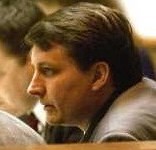
Byron Looper
Murderer Russell Ellwood
Murderer · USA · 1991
Russell Ellwood was a former taxi driver. Authorities suspected him of killing…
20 victims
Russell Ellwood
Murderer · USA · 1991
Russell Ellwood was a former taxi driver. Authorities suspected him of killing…
20 victims
 Robert Martines Perez
Murderer · USA · 1994
Name: Robert Martines Perez · Other name used in proceedings: Robert Martinez P…
15 victims
Robert Martines Perez
Murderer · USA · 1994
Name: Robert Martines Perez · Other name used in proceedings: Robert Martinez P…
15 victims
 Billy Frank Vickers
Murderer · USA · 1993
Billy Frank Vickers Vickers was executed by lethal injection in Texas on Januar…
14 victims
Billy Frank Vickers
Murderer · USA · 1993
Billy Frank Vickers Vickers was executed by lethal injection in Texas on Januar…
14 victims
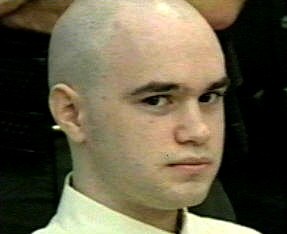 Brandon Wilson
Murderer · USA · 1998
Brandon Wilson was a drifter from Milltown, Wisconsin. He had no permanent plac…
1 victim
Brandon Wilson
Murderer · USA · 1998
Brandon Wilson was a drifter from Milltown, Wisconsin. He had no permanent plac…
1 victim
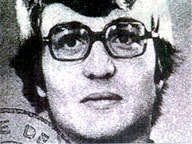 Christian Ranucci
Murderer · France · 1974
Christian Ranucci (April 6, 1954 – July 28, 1976) was one of the last people ex…
1 victim
Christian Ranucci
Murderer · France · 1974
Christian Ranucci (April 6, 1954 – July 28, 1976) was one of the last people ex…
1 victim
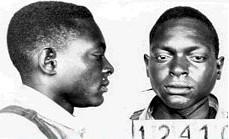 Charles Sanders
Murderer · USA · 1942
Charles Sanders was one of the defendants in a case involving Coy Collier Quall…
1 victim
Charles Sanders
Murderer · USA · 1942
Charles Sanders was one of the defendants in a case involving Coy Collier Quall…
1 victim
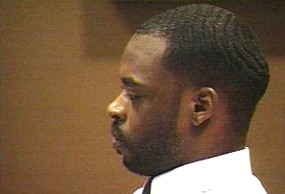 Timothy McKinney
Murderer · USA · 1997
Timothy McKinney was the defendant, convicted in Tennessee. · Don Williams was…
1 victim
Timothy McKinney
Murderer · USA · 1997
Timothy McKinney was the defendant, convicted in Tennessee. · Don Williams was…
1 victim
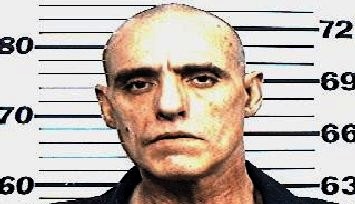 Karl Myers
Murderer · USA · 1993
Defendant/Appellant: Karl Lee Myers · Prosecution/Appellee: State of Oklahoma ·…
2 victims
Karl Myers
Murderer · USA · 1993
Defendant/Appellant: Karl Lee Myers · Prosecution/Appellee: State of Oklahoma ·…
2 victims
- Gender
- male
- Country
- USA
- Location
- Cumberland County, Tennessee, USA
- Date of birth
- September 15, 1 964
- Characteristics
- —
- Victim profile
- Tennessee State Senator Tommy Burks, 58 ( his election opponent )
- Method of murder
- Shooting
- Date(s) of murder
- October 19, 1998
- Years active
- 1998
- Date of arrest
- 4 days after
- Status
-
Died in custody
Sentenced to life in prison August 23, 2000; died in prison on June 26, 2013
Case record: Byron Looper
People
- Byron Looper (also “Byron (Low Tax) Looper”), a former Republican politician in Tennessee, was born Byron Anthony Looper on September 15, 1964, and legally changed his middle name from “Anthony” to “Low Tax”.
- Tommy Burks, an incumbent Tennessee State Senator and Byron Looper’s election opponent, was murdered on October 19, 1998. Burks was described as 58 and a legislator for 28 years.
- Wesley Rex, a farmhand, spoke with Burks shortly before Burks was killed and later identified Looper from a television photo as the driver of a black car.
- Joe Bond, a Marine recruiter, was Looper’s friend and was a key witness for the prosecution.
- Charlotte Burks, Burks’ widow, ran a write-in campaign and won the election.
- Ken Poston, Looper’s defense attorney, made an opening statement to the jury that included a quoted description of Looper’s campaign style.
- Lionel Barrett, Looper’s attorney, spoke with Looper and discussed his willingness to discuss the case with police.
- Doug McBroom, the Putnam County Executive and a Democrat, said he would support Charlotte Burks’ write-in candidacy.
- Patricia Hassler, owner of an antique shop in Monterey, said: “If he did it, they should string him up,” and also described Burks as “He was one of us. He was a good man, probably the only honest one we had.”
- Butch Burgess, the Sheriff of Cumberland County, said: “We feel real comfortable we've got the right person,” and investigators would not say what evidence linked Looper to the crime.
- Jack Phillips, the Mayor of Monterey, said: “It doesn't look good,” and also said: “It sure doesn't,” about Looper.
- Clinton Wright, who was visiting with the Mayor, was quoted by reference as part of the discussion about Looper.
- Max Looper, Looper’s uncle and a fellow Democrat, was described as a legislative aide relationship.
- John Lower Taxes Loew, was mentioned as a person who ran for Los Angeles County assessor in 2006 (contextual comparison); the name appeared in the merged narrative.
- Richard “Lowtax” Kyanka, an internet personality, adopted his nickname as a reference to Byron Looper; his writings about Looper were quoted.
- Bill Gibson, a District Attorney General, told the NBC “Today” show that Looper was charged with first-degree murder.
- Nancy Lewis, of the sheriff's department, said Looper was being held at the Cumberland County Jail.
- John Marshall School of Law, was named as an institution where Looper was listed as a student in Georgia (context described).
- Associated Press was referenced as reporting about Looper’s honorable discharge and age-related background.
Timeline
- October 12, 2004 — Looper made a court appearance requesting a new trial; the request was denied.
- October 19, 1998 — Authorities were called to investigate a likely murder at the Burks farm; Tommy Burks’ body was found with his head resting on the steering wheel of his pickup truck.
- March 1998 — Looper was indicted on 14 counts of official misconduct, theft of services and official oppression.
- June 26, 2013 — Looper died in prison.
- August 23, 2000 — Looper was sentenced to life in prison.
- January 1999 — Looper was removed from his tax assessor office.
- 1983-1985 — Looper attended West Point (described as “from 1983-85”).
- 1985 — Looper was described as receiving an honorable discharge after a knee injury forced him to take it.
- 1987 — Looper lost a race for the Georgia state House of Representatives as a Democrat.
- 1992 — Looper returned to Tennessee and became a staunch conservative Republican.
- 1994 — Looper lost a race for the state house in 1994.
- 1996 — Looper legally changed his middle name from Anthony to “(Low Tax)”.
- 1998 — Looper sought the Republican nominations for the 6th Congressional District of Tennessee and the Tennessee State Senate in the same primary; he lost the congressional nomination and won the state senate nomination by default.
Background
Byron Looper was described as a former Republican politician in Tennessee. In order to advance his political career, he legally changed his middle name from “Anthony” to “Low Tax”.
Looper was born Byron Anthony Looper in Putnam County, Tennessee, and attended the U.S. Military Academy at West Point for three years. He received an honorable discharge following a serious knee injury and moved to Georgia after his discharge. In 1987, he lost a race for the Georgia state House of Representatives as a Democrat. After this loss, he took a job as a legislative aide for an uncle and fellow Democrat, Max Looper.
In 1992, Looper returned to Tennessee and became a staunch conservative Republican. He lost a race for the state house in 1994. In 1996, he legally changed his middle name from Anthony to “(Low Tax)”. He was backed by the Tennessee Republican Party in a race for the nonpartisan post of Putnam County Tax Assessor, which he won, and he was described as the first Republican elected official at any level in Putnam County in over a century.
As tax assessor, Looper used his office’s equipment to flood state media with press releases and was described as repeatedly failing to file property tax valuations with the state government on time. Charges were made that he offered reduced tax assessments to local businesses in exchange for large political contributions, though few if any businesses actually responded.
The narrative described later litigation in which an ex-girlfriend sued him for child support and fraud, charging that he used his official position to steal her house. In March 1998, he was indicted on 14 counts of official misconduct, theft of services and official oppression. Looper claimed the charges were politically motivated due to Democratic control of Putnam County politics and the Tennessee General Assembly.
Looper was described as having obsession with conspiracy theories and allegations of political witch hunts by Putnam County Democrats who were “out to get him”. The Cookeville Herald-Citizen regularly reported the Republican Tax Assessor’s bizarre antics and public verbal assaults of Putnam County elected officials. The Tennessee Republican Party soon claimed no connection with Looper, though the narrative said campaign contributions and lists of paid political consultants proved otherwise.
The offence
Tommy Burks, the incumbent Tennessee State Senator, was found dead on October 19, 1998 at his farm. The body was found with his head resting on the steering wheel of his pickup truck. He had been speaking moments earlier with a farmhand, Wesley Rex, about work needed to be done on the farm.
Wesley Rex and another description in the narrative indicated that both men had seen a black car, driven by a man in sunglasses and black gloves, driving by the farm on multiple occasions that morning. The car later sped by Rex’s truck, allowing Rex to get a view of the driver. A news account also described that Burks was shot in the forehead on Monday at his 1,000-acre hog farm outside the little town of Monterey, not far from his pumpkin patch, and that the crime left one name on the ballot in the Nov. 3 election.
The narrative described the investigation finding no one with a plausible reason to murder Burks initially.
Investigation
After Rex saw the suspect identified by a later television photo of Looper, Rex called Burks’ widow, Charlotte, and told her that Looper was the man he had seen speeding away in the black car the morning of the murder. Looper had disappeared.
Looper had made it to Hot Springs, Arkansas, where he met with a friend, Marine recruiter Joe Bond. The narrative stated that Bond and Looper had been friends as children and that Looper had rekindled the friendship in the summer of 1998 on the basis of wanting Bond’s expertise in small arms. Bond later became a key witness for the prosecution. The narrative also stated that Looper stayed with Bond for a while, talking about how he had murdered his Senate opponent and how he needed to change the tires on the car used in the murder and hide the car.
A homicide investigation began after authorities were called, but the narrative stated no one with any plausible reason to murder Burks was found at first.
A news account said investigators had refused to call Looper a suspect earlier, saying they were only searching for him to question him. It stated that it was Looper’s absence that made people suspicious and that several days passed without a word from him.
Arrest
A news account described that Looper was arrested outside his house, which police were staking out, early on October 23, 1998. It said he was arrested without incident and was being held at the Cumberland County Jail. In that account, sheriff’s department personnel Nancy Lewis said Looper was in custody.
Another description in the narrative said Looper was arrested a few days after the murder for the murder of Tommy Burks and that he hid in Arkansas for a few days.
The narrative also described that Looper was removed from his tax assessor office in January of 1999.
Trial
Looper was arraigned at a hearing that featured Bond as a surprise witness for the state. During the pre-trial phase, Looper attempted to have his former friend disgraced and shuffled through at least six lawyers. One of the lawyers filed a sealed court document explaining why, for ethical reasons, he could no longer be Looper’s attorney.
The trial occurred in 2000. The narrative stated that by this time, inmate road crews had found the weapon apparently used by Looper to commit the murder. Wes Rex and Joe Bond were prominent witnesses for the prosecution. Two political consultants testified that they had been contacted at various times by Looper, who told them that he wanted to run a political race and felt the surest way to win would be to murder the opponent.
The narrative stated there was and remains controversy about a number of defense witnesses not being permitted to take the stand.
The narrative stated that Looper was convicted and sentenced to life in prison with no chance of parole. A news account also stated he was found guilty and sentenced to life without parole.
Sentencing
On August 23, 2000, Looper was sentenced to life in prison in Tennessee state prison with no chance of parole.
After sentencing, the narrative stated that Looper was transferred to Brushy Mountain State Penitentiary in Petros, Tennessee.
Appeals
The narrative said Looper made a court appearance on October 12, 2004 in which he requested a new trial, but the request was denied.
Outcome
The legal outcome was that Looper was convicted for the October 1998 murder of incumbent Tennessee State Senator Tommy Burks and was serving a life sentence.
Looper died in prison on June 26, 2013.
Aftermath
The narrative described a campaign following the murder. The narrative said that an obscure Tennessee state law required that a candidate’s name be removed from the ballot and not replaced if he died within 30 days of the election. It stated that Looper’s name was therefore the only one listed on the ballot and that for a few days it looked like he would win by default.
It said that several people tried to have Looper’s name stricken from the ballot, claiming that Looper’s arrest constituted moral turpitude.
To counter Looper’s potential election on a technicality, Charlotte Burks ran a write-in campaign for the seat. Dozens of volunteers helped her campaign, including several Republicans. On election day, Charlotte Burks, as a write-in candidate, won the seat with 30,252 votes compared to Looper’s 1,531 votes. It also stated that Charlotte Burks received several write-in votes for governor and for Congress. It said that among the first bills she sponsored was one to repeal the state law that almost allowed Looper to win.
Quotations
- Looper’s defense attorney, Ken Poston, said in his opening statement to the jury:
“He was the first Republican elected in Putnam County, at least in recent memory, and he made quite a name for himself, but not a good name. He had a bombastic campaign style, a way of offending anyone that was status quo, and he did it repeatedly.”
- Doug McBroom, the Putnam County Executive and a Democrat, said:
“It's hard to believe,” “This is supposed to be a system of the people, for the people,” “Something this bad, it strikes at the heart of that system.”
- Patricia Hassler, who owns an antique shop in Monterey, said:
“If he did it, they should string him up,” “He was one of us. He was a good man, probably the only honest one we had.”
- Sheriff Butch Burgess of Cumberland County said:
“We feel real comfortable we've got the right person,”
- Jack Phillips, the Mayor of Monterey, said:
“It doesn't look good,” “It sure doesn't,”
- Looper’s manner statement attributed to Max Looper? (no additional quote; omitted), while another quote from Looper’s statement after the former girlfriend filed suit was:
“left me with heart palpitations, a small box of memorabilia and a red G-string.”
- Bill Gibson, a District Attorney General, told the NBC “Today” show:
Byron (Low Tax) Looper was charged with first-degree murder in the death of Sen. Tommy Burks.
- Richard “Lowtax” Kyanka wrote:
“He was a very insane little man who legally changed his middle name to '(Low Tax)'.“
- Nancy Lewis of the sheriff's department said:
Burks, 58, a well-liked and respected legislator for 28 years, was shot in his pickup truck as he was preparing for a school group to visit a pumpkin patch at his hog farm in nearby Monterey. (And: “Looper is being held at the Cumberland County Jail.” is presented as part of the same quoted field in the narrative.)
- The narrative also included Clinton Wright and others being quoted by reference to the Mayor’s statements; no additional verbatim quotes were provided for Clinton Wright.
Other details
- Looper was described as under indictment in March 1998 on theft and misuse of office and as being the defendant in a paternity suit in the news account.
- The news accounts described Looper’s disappearance after the murder and his being seen missing since Sunday night, the night before Burks’ body was found.
- The narrative described that Looper’s campaign had a Tennessee state law about removing a dead candidate’s name from the ballot if death occurred within 30 days of the election.
- The narrative stated that Charlotte Burks was described as “a popular member of the State Senate.”
- The narrative said Looper made a court appearance on October 12, 2004 requesting a new trial, and it was denied.
- A mention of internet personality “Lowtax” and the adoption of his nickname was included as part of the narrative context.
- The narrative described that multiple towns were mentioned as places where residents were asking themselves if “simple politics was enough to motivate a murder,” including Hanging Limb, Muddy Pond and Lovejoy (as included in the merged news account).
Spotted an error, or have more information about this case?