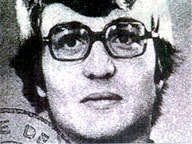
Christian Ranucci
Murderer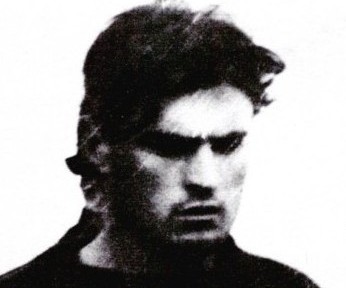 Jean-Laurent Olivier
Murderer · France · 1967
Jean-Laurent Olivier was born in 1944 in the Aisne. He was abandoned very early…
2 victims
Jean-Laurent Olivier
Murderer · France · 1967
Jean-Laurent Olivier was born in 1944 in the Aisne. He was abandoned very early…
2 victims
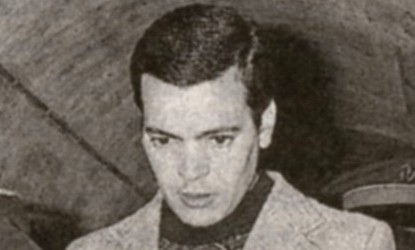 Hamida Djandoubi
Murderer · France · 1974
1968 — Hamida Djandoubi started living and working in Marseille, France, as a p…
1 victim
Hamida Djandoubi
Murderer · France · 1974
1968 — Hamida Djandoubi started living and working in Marseille, France, as a p…
1 victim
 Issei Sagawa
Murderer · France · 1981
Name: Issei Sagawa (佐川 一政, Sagawa Issei) Born: June 11, 1949 Age at offence: 32…
1 victim
Issei Sagawa
Murderer · France · 1981
Name: Issei Sagawa (佐川 一政, Sagawa Issei) Born: June 11, 1949 Age at offence: 32…
1 victim
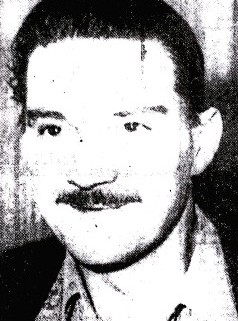 Jérôme Carrein
Murderer · France · 1975
Jérôme Carrein (1939 — June 23, 1977) was executed by guillotine in the yard of…
1 victim
Jérôme Carrein
Murderer · France · 1975
Jérôme Carrein (1939 — June 23, 1977) was executed by guillotine in the yard of…
1 victim
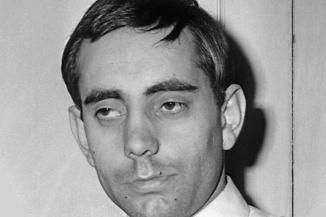 Lucien Leger
Murderer · France · 1964
Lucien Léger was a French national who lived in Landas (France). He was describ…
1 victim
Lucien Leger
Murderer · France · 1964
Lucien Léger was a French national who lived in Landas (France). He was describ…
1 victim
 Patrick Henry
Murderer · France · 1976
Patrick Henry was born on March 31, 1953 in Troyes (France). He was described a…
1 victim
Patrick Henry
Murderer · France · 1976
Patrick Henry was born on March 31, 1953 in Troyes (France). He was described a…
1 victim
 Clarence Nesbit
Murderer · USA · 1993
Clarence C. Nesbit was convicted of premeditated first degree murder in the Cri…
1 victim
Clarence Nesbit
Murderer · USA · 1993
Clarence C. Nesbit was convicted of premeditated first degree murder in the Cri…
1 victim
 Hugh Miller
Murderer · USA · 1995
Hugh Miller was sentenced to three consecutive life terms in prison on June 12,…
3 victims
Hugh Miller
Murderer · USA · 1995
Hugh Miller was sentenced to three consecutive life terms in prison on June 12,…
3 victims
 Eric Owen Mann
Murderer · USA · 1989
Defendant: Eric Owen Mann · Presiding Judge: John F. Kelly · Prosecutor: John W…
2 victims
Eric Owen Mann
Murderer · USA · 1989
Defendant: Eric Owen Mann · Presiding Judge: John F. Kelly · Prosecutor: John W…
2 victims
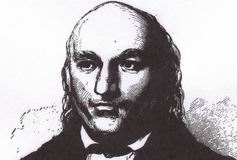 Rev. George Carawan
Murderer · USA · 1852
November 1853 — Carawan was convicted; immediately after the verdict he shot th…
1 victim
Rev. George Carawan
Murderer · USA · 1852
November 1853 — Carawan was convicted; immediately after the verdict he shot th…
1 victim
 Clayton Lockett
Murderer · USA · 1999
Clayton Lockett was convicted of first degree murder in Noble County, Oklahoma,…
1 victim
Clayton Lockett
Murderer · USA · 1999
Clayton Lockett was convicted of first degree murder in Noble County, Oklahoma,…
1 victim
- Gender
- male
- Country
- France
- Location
- Marseilles, France
- Date of birth
- April 6, 1954
- Age at first offence
- 20
- Characteristics
- rape, abduction, child abuse, torture, murder for hire
- Victim profile
- Marie-Dolorès Rambla, 8
- Method of murder
- St abbing with knife
- Date(s) of murder
- June 3, 1974
- Years active
- 1974
- Date of arrest
- 2 days after
- Status
-
Executed
Executed by guillotining at Baumettes prison in Marseilles on July 28, 1976
Background
Christian Ranucci (April 6, 1954 – July 28, 1976) was one of the last people executed in France. He was convicted of the abduction, sexual assault, and murder of a young girl, Marie-Dolorès Rambla.
There was some controversy regarding Ranucci's guilt. A book entitled Le Pull-over rouge disputed his involvement in the crime. The title referred to an article of clothing found near the victim's body similar to that worn by the abductor, who drove a car that did not belong to Ranucci, if the witnesses to the abduction identified the vehicle correctly. The sweater was not Ranucci's. The book became a film by Michel Drach in 1979.
In the late 1990s, some researchers claimed that Ranucci was guilty, and President Valéry Giscard d'Estaing told an interviewer that he feels no remorse about the Ranucci decision. In 2005, claims were made that Michel Fourniret had something to do with this case and could have been the real murderer.
The offence
Marie-Dolorès Rambla was an 8-year-old girl. She was abducted from a Marseilles housing estate in June 1974. Her body was found dumped in a creek. She was stabbed 15 times and bashed with rocks.
Investigation
A crusading writer, Gilles Perrault, dug out flaws about Ranucci's interrogation and found gaps or anomalies in the evidence against him and in the conduct of the trial.
The book Le Pull-over rouge referred to an article of clothing found near the victim's body similar to that worn by the abducter, and it also addressed a car issue. It said the abducter drove a car that did not belong to Ranucci, if the witnesses to the abduction identified the vehicle correctly. The sweater was not Ranucci's.
In the 2005 claims involving Michel Fourniret, the alleged lead was connected with Belgian police probing the past of Michel Fourniret, described as a woodcutter from Belgium's Ardennes region. The material stated that Fourniret was being held in France on charges of killing seven girls and raping or attempting to rape three others, in a long trail of killings on both sides of the border. It also stated that Belgian investigators believed Fourniret went on holiday in the Marseilles region every year from 1970 to 1974, the year Rambla was killed.
The material further stated that Fourniret also had a Peugeot 304, described as a car almost identical to Ranucci's Peugeot 304. It said the rear of both vehicles was very similar to the Simca 1100, the model of car implicated by two witnesses who said that the driver of this vehicle, on the day of Maria-Dolores's abduction, tried to coax children to get inside. It stated that the driver of this car wore a red pull-over that was later found by a roadside; the garment was several sizes too small for Ranucci, according to Perrault.
It also stated that Le Soir reported a discovery of a photo taken by a Marseille press photographer at the Aix courthouse in March 1976, where among the crowd there was a bearded man with glasses said to resemble Fourniret.
French prosecutors were described as saying they would diligently follow both tips. Their initial response was described as scepticism about whether Fourniret was in southern France at the key date, as they said they had yet to see the photo, and as they noted that the method of Rambla's murder was different from Fourniret's preferred style, described as strangulation.
Trial
Ranucci was tried in Aix-en-Provence in Southern France on March 9–10, 1976. He was sentenced to death.
His appeal for a second trial was overturned by a higher court on July 16.
Sentencing
He was sentenced to death on March 9–10, 1976.
Appeals
President Valéry Giscard d'Estaing refused his pardon for Ranucci ten days after the case's arrival to his office, much quicker than the usual clemency process.
Outcome
In the pre-dawn hours of July 28, 1976, Ranucci was woken at his cell in Marseilles Les Baumettes Prison. Refusing the final rituals—the glass of rum, the offer of a priest and a last cigarette—he went to the guillotine.
The material stated that his final words to his lawyer were: “Clear my name.” It also stated that thus Ranucci was beheaded.
The material described tabloid reaction as exulting that punishment had been exacted for the death of Maria-Dolores Rambla, but it stated that doubt later grew about Ranucci's guilt.
It also stated that only two more men were guillotined before President Francois Mitterrand scrapped capital punishment in September 1981 in one of his first acts in office.
It further stated that Perrault predicted calls for the Ranucci case to be reopened wouldn't get very far, quoting: “I can't see the police jumping up and down with enthusiasm about the prospect of delving into an inquiry which was botched by the Marseille police at that time. And don't forget that a President [Valery Giscard d'Estaing] who is still alive refused to issue a reprieve and Ranucci was sent to the guillotine. In my opinion, there will be a big temptation to drop it.”
Aftermath
The material stated that Perrault's book Le Pull-over Rouge was turned into a film of the same name and that they helped to destroy the death penalty in France. It also said that in the late 1990s some researchers claimed that Ranucci was guilty, and that President Valéry Giscard d'Estaing told an interviewer that he feels no remorse about the Ranucci decision.
It further stated that Michel Fourniret was described as having attended Ranucci's trial and watched as the young man was convicted and sentenced to death.
It also stated that the new lead was connected with Belgian investigators probing Fourniret's history and that French prosecutors planned to follow the tips.
Spotted an error, or have more information about this case?