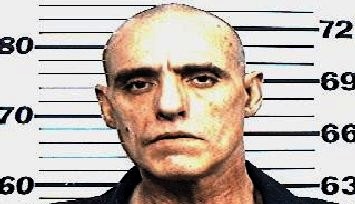
Karl Myers
Murderer Brian Kevin Rosenfeld
Murderer · USA · 1985
Brian Kevin Rosenfeld Brian Kevin Rosenfeld was sentenced to three concurrent l…
23 victims
Brian Kevin Rosenfeld
Murderer · USA · 1985
Brian Kevin Rosenfeld Brian Kevin Rosenfeld was sentenced to three concurrent l…
23 victims
 Russell Ellwood
Murderer · USA · 1991
Russell Ellwood was a former taxi driver. Authorities suspected him of killing…
20 victims
Russell Ellwood
Murderer · USA · 1991
Russell Ellwood was a former taxi driver. Authorities suspected him of killing…
20 victims
 Robert Martines Perez
Murderer · USA · 1994
Name: Robert Martines Perez · Other name used in proceedings: Robert Martinez P…
15 victims
Robert Martines Perez
Murderer · USA · 1994
Name: Robert Martines Perez · Other name used in proceedings: Robert Martinez P…
15 victims
 Billy Frank Vickers
Murderer · USA · 1993
Billy Frank Vickers Vickers was executed by lethal injection in Texas on Januar…
14 victims
Billy Frank Vickers
Murderer · USA · 1993
Billy Frank Vickers Vickers was executed by lethal injection in Texas on Januar…
14 victims
 Deryl Dedmon
Murderer · USA · 2011
Deryl Dedmon led a group of white teenagers who assaulted and killed James Crai…
1 victim
Deryl Dedmon
Murderer · USA · 2011
Deryl Dedmon led a group of white teenagers who assaulted and killed James Crai…
1 victim
 Earl Carl Heiselbetz
Murderer · USA · 1991
Name: Earl Carl Heiselbetz Execution offender identifier: #999014 Age at execut…
2 victims
Earl Carl Heiselbetz
Murderer · USA · 1991
Name: Earl Carl Heiselbetz Execution offender identifier: #999014 Age at execut…
2 victims
 John Avalos Alba
Murderer · USA · 1991
John Avalos Alba was convicted of capital murder and was sentenced to death in…
1 victim
John Avalos Alba
Murderer · USA · 1991
John Avalos Alba was convicted of capital murder and was sentenced to death in…
1 victim
 Jeyavani Vageswaran
Murderer · United Kingdom · 2014
Jeyavani Vageswaran committed suicide by hanging herself the same day. Jeyavani…
2 victims
Jeyavani Vageswaran
Murderer · United Kingdom · 2014
Jeyavani Vageswaran committed suicide by hanging herself the same day. Jeyavani…
2 victims
 Salvatore Perrone
Serial killer · USA · 2012
Salvatore Perrone was sentenced to 75 years to life in prison on March 4, 2016.…
3 victims
Salvatore Perrone
Serial killer · USA · 2012
Salvatore Perrone was sentenced to 75 years to life in prison on March 4, 2016.…
3 victims
 Victor Saldano
Murderer · USA · 1995
Victor Saldano, appellant. · In 1996, Victor Saldano was convicted of capital m…
1 victim
Victor Saldano
Murderer · USA · 1995
Victor Saldano, appellant. · In 1996, Victor Saldano was convicted of capital m…
1 victim
- Gender
- male
- Country
- USA
- Location
- Rogers County, Oklahoma, USA
- Date of birth
- March, 29 1948
- Age at first offence
- 45
- Characteristics
- serial rapist, rape, torture, abuse
- Victim profile
- Shawn Marie Williams / Cindy Marzano
- Method of murder
- Shooting / Strangulation
- Date(s) of murder
- April 16, 1993 / March 14, 1996
- Years active
- 1993–1996
- Date of arrest
- —
- Status
-
Sentenced to death
Sentenced to death in Oklahoma on March 7, 2000; conviction affirmed on appeal in 2006
Parties
- Defendant/Appellant: Karl Lee Myers
- Prosecution/Appellee: State of Oklahoma
Timeline
- April 16, 1993 — Shawn Williams’s body was discovered at Rocky Point on the Port of Catoosa.
- January 25, 2000 — Jury trial began in Rogers County District Court, Case No. CF 96-233, before the Honorable Dynda Post, District Judge.
- February 16, 2000 — Jury trial ended.
- January 25, 2000 through February 16, 2000 — The jury found Myers guilty of First Degree Murder while in the commission of a felony and found four aggravating circumstances; the jury set punishment at death.
- March 7, 2000 — Judgment and Sentence were imposed in accordance with the jury’s verdict.
- April 4, 2006 — The Oklahoma Court of Criminal Appeals decided Myers v. State, 2006 OK CR 12, 133 P.3d 312.
Background
Karl Lee Myers was tried in Rogers County District Court, Case No. CF 96-233, for First Degree Murder, with malice aforethought and/or in the alternative, First Degree Murder while in the commission of a felony based upon the underlying felony of rape by force or fear, in violation of 21 O.S.1991, § 701.7(A) or § 701.7(B).
The offence
Charged murder
The jury found Myers guilty of First Degree Murder while in the commission of a felony.
Underlying circumstances and evidentiary basis
Shawn Williams’s body was discovered at Rocky Point on the Port of Catoosa. Forensic examination showed five gunshot wounds, including a fatal gunshot wound to her chest that ruptured her aorta and caused her death. Williams had other injuries, including:
- abrasions to her chest and abdomen,
- a laceration on the back of her head,
- contusion and laceration to her left ear,
- abrasions to her knees,
- abrasions to her right hip,
- abrasions to her left buttocks.
The laceration on the back of her head was consistent with falling and striking her head on the ground. The contusion over her left ear was consistent with being struck by an object.
Sperm found in Williams’s vagina suggested she was sexually assaulted before she died. DNA testing on the sperm linked Myers to the murder.
Jailhouse statements and admissions
Myers later confessed to the crime to an inmate in the county jail and also bragged about disposing of Williams’s body to another witness prior to his arrest.
Investigation
- Forensic examination identified five gunshot wounds and injury patterns consistent with specific trauma mechanisms.
- DNA testing linked Myers to the murder through sperm found in Williams’s vagina.
Trial
Court and case number
- Court: Rogers County District Court
- Case No.: CF 96-233
- Trial judge: Honorable Dynda Post, District Judge
Jury selection issues
Prospective juror “S” (Proposition Eleven)
Myers claimed the trial court abused its discretion by refusing to remove prospective juror “S” for cause. Myers claimed prospective juror “S” would not consider life imprisonment as a punishment option.
Juror “S” stated he would have no difficulty considering all three possible penalties for first degree murder. When asked about life imprisonment, juror “S” replied, "[n]ot much," but later said he could give fair consideration to all three potential punishments. Juror “S” indicated he believed a life sentence “doesn’t mean a total life sentence,” and that it probably would be difficult to consider life imprisonment as a punishment. Juror “S” admitted it was “true” that he could not realistically give a complete, fair, open and honest consideration to a life sentence.
The prosecutor rehabilitated juror “S” by asking if he could consider a life sentence under any circumstances. Juror “S” responded that he thought he “could but I am not in favor of a life sentence,” and stated he would listen to the evidence and “would try” to give fair consideration to a life sentence. The trial court asked whether juror “S” would be able to consider life imprisonment as a punishment and juror “S” said, “yes.”
Defense counsel’s motion to remove the prospective juror for cause was denied.
On appeal, the Oklahoma Court of Criminal Appeals concluded the record did not show the trial court abused its discretion by denying the motion to remove juror “S” for cause.
First-stage issues (admission and identification evidence)
Testimony of cellmate/inmate witness Sydney Byrd (Proposition One)
Sydney Byrd was Myers’s cellmate while Myers was in the Rogers County Jail. Byrd claimed Myers confessed to him that he had raped and killed a woman.
The State provided notice of intent to produce Byrd as a witness. The trial court conducted an in camera hearing to determine whether Byrd’s statements were reliable and admissible. At the conclusion, Judge Post concluded Byrd’s testimony was admissible.
Myers argued on appeal that Byrd’s testimony was unreliable and untrustworthy. The court addressed jailhouse informant procedures and noted that nothing in the referenced procedure required exclusion simply due to inconsistencies, unbelievability, or self-serving testimony. The court held the trial court did not abuse its discretion by allowing Byrd to testify and characterized conflicts as issues for cross-examination.
Hearsay bolstering through Larry Elkin (Proposition Two)
After Byrd testified, the State asked Larry Elkin, over defense objection, whether the statement Byrd made to him in 1996 was consistent with Byrd’s testimony before the jury. Elkin testified it was consistent.
The court held Elkin’s testimony was admissible under 12 O.S.1991, § 2801(4)(a)(2), requiring:
- a suggestion the witness fabricated trial testimony or was unduly influenced, and
- establishment that the consistent statement was made before motive to lie or improper influence arose.
The court held the second requirement was satisfied because Elkin testified he interviewed Byrd in November 1996 while Byrd was in California, and no improper influence or motive to lie had been exercised at that time.
Identification testimony by Patricia Curry and conversation statements (Proposition Three)
Myers argued Patricia Curry’s identification and her testimony about a conversation violated his due process rights.
The trial court held a hearing on the reliability and accuracy of her out-of-court identification before trial and overruled the objection. At trial, renewed objection was overruled and treated as a matter for the jury.
Myers argued the identification was unreliable and tainted by impermissibly suggestive procedures, including:
- a one-man show-up,
- a suggestive pretrial photographic lineup where Myers was the only man pictured wearing an orange, collarless shirt rather than street clothes.
The appellate court did not find the photo lineup unduly suggestive or the circumstances of the news broadcast equivalent to a one-man show-up. It found Curry’s in-court identification could be independently reliable under the totality of the circumstances and affirmed admission.
Curry’s testimony at trial
Patricia Curry owned and operated a flower shop in Bristow, Oklahoma in 1996. She testified that she identified Myers as the man who came into her shop early one Saturday morning in July 1996. She described his statements:
- he told her he had been out drinking all night and wanted to purchase two roses for his wife,
- when she suggested she should be careful because someone might be slipping in the back door, he responded, “I will kill the bitch if anything like that would happen.”
- he said he would “kill the bitch and she was a whore and a slut and that he knew how to dispose of women.”
- he asked if she had heard of the woman that was missing and stated that the “investigators had their heads so far up their ass they could never find anybody there and they didn’t know what they were doing.”
Curry testified she felt threatened and her life was in jeopardy. She testified that when she finished preparing the roses Myers gave her a one hundred dollar ($100.00) bill. She handed the bill back to him and told him he could have the flowers and “to pass on the kindness.” Curry testified Myers told her to go to the back for change, and she refused; she said Myers took the flowers and walked out, and she locked the door when he left and watched him drive away.
Curry testified that she later saw the same man on a television news broadcast about an arrest at "Rocky Point." After the broadcast she called the Rogers County Sheriff’s Department, later wrote out a statement, and picked Myers out of a photographic lineup.
When questioned about her identification, Curry stated she did not pick him because of what he was wearing and said the orange shirt was “irrelevant…I didn’t even think of it. I wasn’t looking at his clothes, sir, I was looking at him.”
Curry testified she stood directly in front of Myers for twenty or thirty minutes, had a good opportunity to look at his face, and had no doubt the man in her shop was Myers.
The appellate court held the identification was sufficiently independently reliable and the trial court did not abuse its discretion by allowing the in-court identification.
Detective Larry Elkin’s testimony about Curry’s lineup selection (Proposition Four)
Myers argued Elkin’s testimony that Curry picked him out was improper bolstering.
The court found any objection preserved for appellate review concerned identification reliability, not improper bolstering, and reviewed for plain error. It also found the testimony cumulative and harmless beyond a reasonable doubt given Curry’s in-court identification and the reliability evidence.
Restrictions on defense questioning (Proposition Five)
Myers argued the trial court restricted defense counsel from:
- asking a witness whether Myers had a speech impediment, and
- establishing that Byrd could have learned about Myers’s crime from a source other than Myers.
Speech impediment question
Charles Maybe, an investigator for the Oklahoma Indigent Defense System, was the subject of the excluded question. Defense counsel asked Maybe whether, in his opinion, Mr. Myers had a speech impediment. The trial court sustained the State’s relevancy and competency objection. An offer of proof indicated the answer would be "yes."
On appeal, the appellate court found the trial court erred by sustaining the objection and restricting counsel from asking Maybe about Myers’s speech impediment. However, it concluded no relief was required because other factors supported Curry’s identification reliability and any evidentiary error did not materially affect the outcome.
Questioning Maybe about who testified and press coverage
Defense counsel sought to question Maybe about who testified at the preliminary hearing and what the press covered, arguing Byrd could have used press accounts to fabricate. The trial court sustained objections based on relevancy and “too speculative.” The appellate court agreed and found no error.
DNA expert testimony and cross-examination limits (Propositions Six and Seven)
DNA expert Eisenberg (Proposition Six)
Myers objected to testimony from DNA expert Eisenberg, claiming it was cumulative, improper bolstering, and not relevant. The trial court overruled the objection, noting the defense attacked credibility, certification, and accreditation of the DNA lab.
Eisenberg’s testimony included:
- methodologies used by OSBI DNA unit using RFLP analysis,
- OSBI lab validation completion,
- ongoing accreditation process with the American Society Crime Lab Directors,
- that accreditation process was lengthy and expensive,
- that fewer than half of forensic laboratories were accredited by ASCLD lab,
- Eisenberg remained as consultant until 1997, reviewing ongoing case work, testifying, and auditing.
Eisenberg reviewed a DNA consultant case review report of analysis of DNA evidence received from Myers and Shawn Marie Williams by OSBI lab.
The appellate court found the trial court did not abuse discretion by allowing Eisenberg to testify and found no prejudicial limitation on the scope of cross-examination after noting the trial court sustained objections properly under evidentiary rules and discretion.
Medical examiner opinion on rape probability (Proposition Seven)
Myers argued his statutory and constitutional rights were violated when medical examiner Dr. Ronald Distefano testified that injuries were consistent with forcible sexual assault and that she “was the victim of a homicide that a rape was probably also a part of …”
Defense counsel objected and moved for mistrial. The objection was overruled and mistrial denied.
The appellate court held the testimony did not invade the jury’s province because it was framed as expert opinion based on circumstances, was relevant to assist the jury, and the jury could reach its own conclusion. The court noted defense counsel thoroughly cross-examined Dr. Distefano, including eliciting that there was no physical evidence of forcible sexual intercourse and no vaginal injuries.
Other crimes evidence
The court discussed evidentiary rules on other crimes, wrongs, or bad acts and addressed Myers’s complaints about their admission and references.
Motion in limine and rulings during first stage
The trial court cautioned Sydney Byrd prior to testimony not to make statements indicating Myers killed more than one woman. During redirect examination, Byrd responded, “Oh well, absolutely. He was telling me about raping and murdering these women, yeah. You get excited.” Defense counsel objected and moved for a mistrial; the motion was denied. The trial court instructed the jury to disregard the last question and answer and not consider it.
Before Curry testified, defense counsel asked the trial court to prohibit Curry from stating that Myers told her “you can get rid of women there.” The trial court refused and stated it would be improper for her to “rewrite the words she is quoting as having been uttered by the defendant…”
Curry later testified Myers told her “he knew how to dispose of women” and, regarding Rocky Point, that “you could dispose of women there.”
The appellate court found differences between Byrd’s outburst and Curry quoting Myers’s admissions and held the trial court handled objections appropriately. It also found Myers failed to show Byrd’s statement was verdict determinative.
The appellate court also found Curry’s testimony about feeling threatened and locking the door was admissible to show state of mind and to explain later identification, and it was not evidence of other crimes under the discussed evidentiary rule.
Testimony naming Mark Marzano
Chemist Mary Long mentioned Mark Marzano when responding to a question about labels:
- “These two envelopes are labeled T98 Karl Myers. And the second one is labeled T108 Mark Marzano.”
The trial court sustained the objection, cautioned Long not to mention the name Marzano, and denied mistrial. The parties agreed no admonishment would be given.
The appellate court rejected Myers’s speculative argument that mention of the name Marzano would trigger juror recall and found no further relief required.
Prosecutor references during opening and closing statements
Myers complained about prosecutor references to disposing of bodies and “veil of innocence.” The court reviewed for plain error and found no plain error.
One prosecutor said in opening statement:
- “we anticipate a witness will come in and testify that the defendant has made comments to her about disposal of bodies at this Rocky Point area.”
In closing argument, the prosecutor referred to Curry’s testimony that Myers said “you could get rid of women there” and argued the “veil of innocence” had been lifted.
Prosecutorial misconduct
Voir dire reasonable doubt phrasing (Proposition Nine)
Myers argued the prosecutor’s questions used phrases like “beyond all doubt,” “a shadow of a doubt,” “all doubt,” or “any doubt,” and that the trial court erred by failing to sustain objections.
The appellate court held the prosecutor’s use of those phrases was not equivalent to improperly defining reasonable doubt and that it was not error to tell jurors to focus on the language in jury instructions.
“Veil of innocence” argument
Myers argued the prosecutor improperly argued the “veil of innocence has been removed from Karl Myers, that he sits there now as a guilty man …” There was no objection; the appellate court reviewed for plain error.
The court recognized it was error to argue a “cloak” of innocence has been stripped, but found the use of “veil” did not require reversal due to the evidence of guilt and found error harmless beyond a reasonable doubt.
DNA testing burden comments
Myers alleged the prosecutor improperly commented on his failure to independently test DNA evidence and shifted the burden of proof. Defense counsel objected only once and the objection was sustained; there was no admonition, and Myers did not object further to closing argument on the topic.
The appellate court found it permissible to comment on uncontroverted state evidence and found no constitutional shifting based on the trial circumstances.
Jury instructions
Instruction at conclusion of first stage (Proposition Ten)
Myers argued the trial court erred by giving Jury Instruction No. 2 (OUJI-CR 2d. 10-2) containing language:
- “It is your responsibility as jurors to determine the facts from the evidence, to follow the rules of law as stated in these instructions, to reach a fair and impartial verdict of guilty or not guilty based upon the evidence, and to determine punishment if you should find the defendant guilty as you have sworn you would do. You must not use any method of chance in arriving at a verdict, but must base your verdict on the judgment of each juror.”
The appellate court found no plain error because punishment was properly addressed in Jury Instruction No. 11 that punishment was “not before you at this time.” It held the instructions taken as a whole properly advised the jury. However, the appellate court prospectively modified OUJI-CR 2d. 10-2 by adding brackets around the punishment-determination phrase and directed that bracketed material be used only in non-bifurcated trials.
Requested modification ruling included in opinion
The prospective modification language included:
Ineffective assistance of counsel
Application for evidentiary hearing (Proposition Twenty)
Myers claimed ineffective assistance based on alleged failure to investigate and present:
- impeachment evidence relating to Sydney Byrd, and
- mitigation evidence.
Myers filed an Application for Evidentiary Hearing on Sixth Amendment Claims and submitted affidavits of Kristin Brown, Barry Rouw, and John Struchtemeyer, plus counsel’s affidavit.
Byrd psychiatric and criminal-history impeachment
Affidavits suggested Byrd was or could have been suffering from some psychiatric disorder and was or could have been medicated while he claimed Myers confessed. Appellate counsel argued Byrd’s prior criminal records would show a propensity to distort reality or lie.
The appellate court held trial counsel thoroughly and successfully attacked Byrd’s credibility and exposed his motive to fabricate, and it found the application did not show by “clear and convincing evidence” a strong possibility that trial counsel was ineffective for failing to identify or utilize the suggested evidence.
School records mitigation
Myers argued trial counsel failed to obtain Myers’s school records and use them as mitigation evidence. Counsel argued the school records would confirm Myers’s sister’s testimony about Myers’s childhood and corroborate Dr. Murphy’s testimony about mental deficits.
The appellate court found the school records evidence would have been cumulative to testimony already presented by Dr. Murphy and Myers’s sister, and declined to grant an evidentiary hearing, denying relief.
Sentencing
Aggravating circumstances found
The jury found four aggravating circumstances:
- the murder was especially heinous, atrocious, or cruel;
- the defendant was previously convicted of a felony involving the use or threat of violence;
- there was a probability that the defendant would commit criminal acts of violence that would constitute a continuing threat to society;
- the murder was committed for the purpose of avoiding arrest or preventing a lawful arrest or prosecution.
The jury set punishment at death, and the trial court imposed Judgment and Sentence on March 7, 2000.
Challenge to especially heinous, atrocious, or cruel (Proposition Fourteen)
Myers argued insufficiency of evidence to prove beyond a reasonable doubt that the murder was especially heinous, atrocious, or cruel. The appellate court agreed the evidence was insufficient and stated that such aggravating circumstances are limited to murders preceded by torture or serious physical abuse, including great physical anguish or extreme mental cruelty.
The appellate court concluded the circumstantial evidence did not support beyond a reasonable doubt that Williams’s murder was preceded by torture or serious physical abuse, particularly because it did not prove Williams was conscious and aware of the attack or conscious and alive suffering pain after the attack, and it did not prove she suffered extreme mental anguish in addition to that accompanied by the homicide.
The court found insufficient evidence to sustain the jury’s finding of the heinous, atrocious and cruel aggravating circumstance and therefore did not address the claim raised in Proposition Thirteen.
Continuing threat aggravator and instruction modification (Proposition Fifteen)
Myers argued the trial court refused to give his requested instruction relating to the “continuing threat” aggravator. The requested instruction included that he “functions well” in secure prison environment, had not misbehaved, and would not be a continuing threat “to others in a prison setting,” with language concerning “staff” that the State objected to.
The appellate court found omission of the “or staff” clause was not plain error because on cross-examination Davison admitted Myers had no physical contact with prison staff unless restrained. The trial judge modified the instruction accordingly, and the jury was instructed it “may decide that other mitigating circumstances exist, and if so, you should consider those circumstances as well.”
Evidence at second stage and unadjudicated acts
Myers raised issues about evidence introduced in the penalty stage including:
- testimony and evidence relating to Cindy Marzano’s murder used for continuing threat,
- admission of unadjudicated acts, including molestation and threats involving Stacey Fain.
The appellate court held evidence of prior unadjudicated violent acts could be relevant and admissible in the penalty phase to prove continuing threat aggravator, and declined to depart from precedent.
Mental retardation/Atkins claim (Proposition Sixteen)
Myers argued he could not be executed due to mental retardation and neurologic damage, citing Atkins v. Virginia. The appellate court reviewed Oklahoma’s capital definition and discussed prior proceedings in Myers’s earlier cases.
Dr. Philip Murphy testified at trial that:
- Myers’s full scale I.Q. was seventy-seven (77),
- verbal score was seventy (70),
- performance I.Q. was eighty-six (86),
- Murphy concluded Myers fell in a borderline range between normal functioning and mentally retarded functioning,
- Myers was dyslexic, suffered from aphasia, and exhibited indicators of organic brain damage.
The appellate court also discussed extra-record material and prior post-conviction proceedings where a jury determined Myers was not mentally retarded. The court concluded no further relief was warranted because the issue had been decided and affirmed on appeal, and it denied the motion to file notice of extra-record evidence.
Appeals and outcome
Direct appellate review: Myers v. State (2006 OK CR 12, 133 P.3d 312)
The Oklahoma Court of Criminal Appeals reviewed and denied relief on the propositions raised, including evidentiary, instructional, prosecutorial misconduct, and ineffective assistance claims, while addressing sufficiency of the heinous, atrocious, or cruel aggravator and other second stage issues.
Mandatory sentence review
The appellate court performed mandatory sentence review under 21 O.S.1991, § 701.13(C) and considered whether the death sentence was imposed under passion, prejudice, or any arbitrary factor and whether the evidence supported the statutory aggravating circumstances.
It discussed the invalidation of the heinous, atrocious, or cruel aggravator and described a reweighing approach when one aggravator is invalidated and other valid aggravators remain. It concluded:
- remaining aggravators were supported by substantial evidence,
- aggravating evidence outweighed mitigation evidence,
- the death sentence was not influenced by passion, prejudice, or any other arbitrary factor.
The court affirmed Myers’s Judgment and Sentence and ordered the mandate.
Other details
Jury trial details
- The jury trial for this case began on January 25, 2000 and continued through February 16, 2000.
- It was conducted before the Honorable Dynda Post, District Judge.
Instruction about disregarding an outburst
After Byrd’s outburst about “raping and murdering these women,” the trial court instructed the jury:
- “disregard the last question and answer of counsel and not consider it in your deliberations or in any other aspect.”
Quoted statements relevant to the case
The opinion included multiple verbatim statements from witnesses, including:
- Juror “S” responses:
- “[n]ot much”
- “doesn’t mean a total life sentence”
- “it probably would”
- “true”
- “could but I am not in favor of a life sentence”
- “would try”
- “yes”
- Curry’s statements attributed to Myers:
- “I will kill the bitch if anything like that would happen.”
- “kill the bitch and she was a whore and a slut and that he knew how to dispose of women”
- “the investigators had their heads so far up their ass they could never find anybody there and they didn’t know what they were doing”
- “to pass on the kindness”
- “you could get rid of women there”
- “he knew how to dispose of women”
- “irrelevant…I didn’t even think of it.
- Byrd’s outburst:
- “Oh well, absolutely. You get excited.”
- Envelopes labeling statement:
- Prosecutor’s “veil of innocence” phrasing:
- “veil of innocence has been removed from Karl Myers, that he sits there now as a guilty man …”


Spotted an error, or have more information about this case?