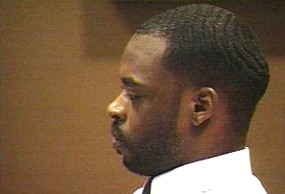
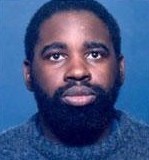
Timothy McKinney
Murderer Russell Ellwood
Murderer · USA · 1991
Russell Ellwood was a former taxi driver. Authorities suspected him of killing…
20 victims
Russell Ellwood
Murderer · USA · 1991
Russell Ellwood was a former taxi driver. Authorities suspected him of killing…
20 victims
 Robert Martines Perez
Murderer · USA · 1994
Name: Robert Martines Perez · Other name used in proceedings: Robert Martinez P…
15 victims
Robert Martines Perez
Murderer · USA · 1994
Name: Robert Martines Perez · Other name used in proceedings: Robert Martinez P…
15 victims
 Billy Frank Vickers
Murderer · USA · 1993
Billy Frank Vickers Vickers was executed by lethal injection in Texas on Januar…
14 victims
Billy Frank Vickers
Murderer · USA · 1993
Billy Frank Vickers Vickers was executed by lethal injection in Texas on Januar…
14 victims
 Antony Baekeland
Murderer · United Kingdom · 1972
Antony Baekeland lived with his mother, Barbara Baekeland, in a penthouse flat…
1 victim
Antony Baekeland
Murderer · United Kingdom · 1972
Antony Baekeland lived with his mother, Barbara Baekeland, in a penthouse flat…
1 victim
 Alexander Hamilton
Murderer · USA · 2005
Alexander Hamilton (20) was an Antioch man convicted in Contra Costa County for…
1 victim
Alexander Hamilton
Murderer · USA · 2005
Alexander Hamilton (20) was an Antioch man convicted in Contra Costa County for…
1 victim
 Roy Keough
Murderer · USA · 1989
Roy Keough was convicted of one count of premeditated first degree murder and o…
2 victims
Roy Keough
Murderer · USA · 1989
Roy Keough was convicted of one count of premeditated first degree murder and o…
2 victims
 Patrice Alègre
Serial killer · France · 1989
Patrice Alègre was 32 years old when he was arrested on September 5, 1997, in P…
5 victims
Patrice Alègre
Serial killer · France · 1989
Patrice Alègre was 32 years old when he was arrested on September 5, 1997, in P…
5 victims
 Wilbert Coffin
Murderer · Canada · 1953
Wilbert Coffin (1913 – February 10, 1956) was a Canadian prospector from York C…
3 victims
Wilbert Coffin
Murderer · Canada · 1953
Wilbert Coffin (1913 – February 10, 1956) was a Canadian prospector from York C…
3 victims
- Gender
- male
- Country
- USA
- Location
- Memphis, Tennessee, USA
- Date of birth
- 1974
- Age at first offence
- 23
- Characteristics
- altercation, alcoholic
- Victim profile
- Don Williams (police officer)
- Method of murder
- Shooting
- Date(s) of murder
- December 25, 1997
- Years active
- 1997
- Date of arrest
- Same day
- Status
-
Sentenced to death
Sentenced to death on July 15, 1999
Parties and key individuals
- Timothy McKinney was the defendant, convicted in Tennessee.
- Don Williams was a police officer and the victim who was shot and killed.
- Frank Lee was a police officer and Williams’ partner; McKinney was convicted of attempted murder in the second degree involving him.
- Bryan Robinson was named in connection with CourtTV.com coverage of the case.
- Jeff Gamble and Aldina Vazao Kennedy were named in connection with CourtTV.com coverage of the case.
- David Henry was a prosecutor who cross-examined McKinney during the sentencing hearing.
- Jerry Harris was a prosecutor who made closing arguments.
- James Ball was the defense attorney.
- Debra Kimble was McKinney’s girlfriend; she testified in a way that did not support McKinney’s account.
- Joyce Jeltz was an eyewitness to the shooting.
- John Ciocca was a clinical psychiatrist who testified for the defense during the penalty phase.
Timeline
- December 1997 — Don Williams was shot and killed after an altercation outside Crumpy’s Comedy Club in Memphis, Tennessee.
- 1991 — McKinney had a juvenile record of aggravated assault for firing at police officers during a separate incident.
- 1993 — McKinney pleaded guilty to aggravated robbery.
- 1997 — McKinney was on parole for an aggravated robbery conviction when Williams was killed.
- July 15, 1999 — Jurors found Timothy McKinney guilty of first-degree murder of Don Williams and guilty of attempted murder in the second degree of Frank Lee.
- July 15, 1999 — After deliberation, the jury imposed the death penalty.
- July 16, 1999 — CourtTV.com published coverage noting the death penalty verdict.
Background
Timothy McKinney was 25 years old and was a parolee at the time of the killing. He had been convicted of aggravated robbery, and he was on parole when Don Williams was shot.
The jury was told that McKinney never knew his biological father. The jury was also told that he had learning challenges, that he had only gone as far as the ninth grade in school, and that he received his GED while incarcerated for robbery. The jury was told that he never received treatment for his learning problems.
The offence
McKinney shot and fatally wounded Don Williams after an altercation outside the Memphis, Tennessee comedy club Crumpy’s Comedy Club in December 1997.
In the early morning hours, McKinney was thrown out of the club and was unable to locate his car. Thinking the car had been stolen, McKinney became involved in an altercation outside the club and began threatening the custodians. It was later revealed that one of McKinney’s friends had moved his car without McKinney’s knowledge.
Williams approached McKinney and asked him to leave or be arrested. Prosecutors described McKinney as responding, “I just got out of jail. Going to jail doesn't mean anything to me.”
Prosecutors described that McKinney left only to return a few minutes later, trying to get back into the club. Officers Williams and Lee thwarted his attempts. McKinney falsely accused Williams of throwing a punch at him. Prosecutors described that McKinney left a third time but returned and shot Williams at point-blank range from behind.
Prosecutors also described McKinney as returning three times to Crumpy’s Comedy Club after the initial confrontation with Williams and fatally wounding the off-duty officer that night.
In addition to first-degree murder, McKinney was convicted of attempted second-degree murder on Williams’ partner, Officer Frank Lee.
Investigation and trial
Jurors found Timothy McKinney guilty of first-degree murder in the December 1997 shooting death of Officer Don Williams outside a Memphis, Tennessee comedy club, after deliberating for approximately two and a half hours.
McKinney was also found guilty of attempted murder in the second degree of another officer, Frank Lee, who testified against the defendant during the trial.
Evidence, identification, and closing arguments
During closing arguments, prosecutor Jerry Harris called the killing a “cowardly act” and described it as the result of McKinney’s “vengeful state of mind.” Harris said: “The proof in this case is overwhelming.”
Harris stated that McKinney’s vengefulness prompted him to return three times to Crumpy's Comedy Club after the initial confrontation with Williams and fatally wound the off-duty officer that night.
The prosecution emphasized the testimony of Officer Lee, who chased the shooter down an alley after the crime and identified the shooter as McKinney, despite the fact that the killer’s face was partially covered.
The prosecution also emphasized the testimony of Joyce Jeltz, an eyewitness, who testified that the shooter wore dark pants, dark clothes, and a gold vest apparently worn by McKinney that night. Officer Lee did not remember seeing a vest on the shooter. The prosecution argued that eyewitnesses often focus on different items relating to the perpetrator and that this alone did not negate what they saw.
Defense attorney James Ball unsuccessfully attempted to put reasonable doubt in the minds of the jurors. Ball said: “My client is as innocent as anyone in this courtroom.”
Ball reminded the jurors that prosecutors had the burden of proving the case beyond reasonable doubt, which Ball claimed they had not done. Ball attacked Lee’s identification as weak because Lee saw the gunman in bad lighting after an intense gun battle. Ball noted conflicts between Jeltz and Lee about the gold vest and attacked Jeltz’s credibility because she had not spoken of the vest in her initial police statements.
Sentencing
McKinney requested life with parole so that he could prove his innocence, but a Tennessee jury imposed the death penalty.
Jurors deliberated for approximately fours hours between late Thursday and early Friday before announcing their verdict.
The jury’s sentence indicated that they did not believe that potential mitigating factors should spare McKinney’s life.
Penalty phase arguments and evidence
Defense attorneys unsuccessfully attempted to humanize McKinney and show that potential mitigating factors outweighed aggravating factors such as his previous criminal record for aggravated robbery in 1993.
The defense sought sentences including life in prison without parole or life in prison with the possibility of parole after 51 years, and defense attorneys used testimony from friends and relatives to show that McKinney could still be a benefit to society if spared the death penalty.
Defense attorneys had the defendant’s prior criminal history addressed during the penalty phase, and prosecutors focused on aggravating factors.
Prosecutors had to prove only one aggravating factor to get the death penalty: that McKinney had prior violent history. Prosecutors focused on his prior violent history, including:
- his guilty plea to aggravated robbery in 1993
- his prior juvenile record of aggravated assault for firing at police officers during a separate incident in 1991
Prosecutors also told jurors about McKinney’s second chance through parole in 1997 and that he “blew it.” Prosecutors argued that parole had done nothing to rehabilitate McKinney.
McKinney chose not to testify during the guilt phase of his trial but testified during his sentencing hearing. He testified that he was not Williams’ shooter and asked jurors to spare his life so that he could prove his innocence.
McKinney denied responsibility for his previous crimes of aggravated robbery and aggravated assault.
Cross-examination and alibi dispute
During cross-examination, prosecutor David Henry pointed out that McKinney pleaded guilty to crimes that he claimed he did not commit.
Henry also undermined McKinney’s alibi for Williams’ shooting. McKinney’s alibi was that he was sleeping at his girlfriend Debra Kimble’s house at the time of the shooting. Williams was shot at approximately 2:35 a.m. Kimble lived a short distance away from Crumpy’s Comedy Club. Prosecutors believed McKinney had enough time to leave the club, go to Kimble’s home, retrieve the murder weapon (which was never recovered), and return to shoot Williams.
McKinney insisted he was with Kimble during the shooting. He said he had sex with her shortly after arriving and then slept on the living room couch. McKinney said he left early that morning because his mother was paging him, and that he told Kimble he had to attend to the matter in person because she did not have a phone.
During the trial, Kimble did not support McKinney’s story. She did not mention having sex with McKinney and claimed he slept on the couch. She said he was gone by the time she woke up around 11:30 a.m. and she did not hear him leave her house. Kimble also testified in a way that indicated she did not want to be further involved in his case.
Henry also pointed out that McKinney hid his car in the back of Kimble’s house and took the plates off his car to avoid police. McKinney admitted taking the plates off his car because he knew police would be looking for him due to his previous altercation with Williams. Henry asked McKinney why he would run away from a crime scene if he did not do anything wrong.
Alcohol and marijuana issue during sentencing
Through defense witness clinical psychiatrist John Ciocca, suggestions were made that McKinney was under the influence of alcohol and marijuana at the time of the shooting.
McKinney admitted smoking marijuana that night but said he was only “a little tipsy” from alcohol. He denied being “stumbling drunk.” Prosecutor Henry pointed out that McKinney was sober and clear-minded enough to drive his car.
Proposed sentencing for attempted murder
McKinney faced three possible sentences for murder in the first degree: life in prison with the possibility of parole after 51 years; life in prison without parole; and death.
McKinney also faced a sentence of 6 to 12 years in prison for attempted murder in the second degree involving Officer Frank Lee. It was stated that he would be sentenced for that crime on a later date.
Outcome and verdicts
Jurors found Timothy McKinney guilty of:
- first-degree murder in the December 1997 shooting death of Officer Don Williams outside a Memphis, Tennessee comedy club
- attempted murder in the second degree of Officer Frank Lee
A Tennessee jury imposed the death penalty.
Other details
- During the trial, McKinney’s defense rested its case without calling any witnesses following the defendant’s decision not to testify in the guilt phase.
- The defense was expected to call witnesses in the penalty phase, including members of McKinney’s family, a psychologist, and a witness who would review McKinney’s school records.
- The prosecution expected to call a witness to testify to McKinney’s prior record.
- The state expected to introduce victim impact testimony from Williams’ family.
- McKinney’s murder weapon was never recovered.
Spotted an error, or have more information about this case?