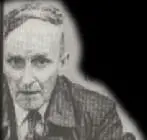
Harold Loughans
Murderer Alfred Charles Whiteway
Murderer · United Kingdom · 1953
Alfred Charles Whiteway was a serial rapist. Both girls had very deep stab woun…
2 victims
Alfred Charles Whiteway
Murderer · United Kingdom · 1953
Alfred Charles Whiteway was a serial rapist. Both girls had very deep stab woun…
2 victims
 Buck Ruxton
Murderer · United Kingdom · 1935
Buck Ruxton (21 March 1899, Bombay – 12 May 1936, Manchester) was also known as…
2 victims
Buck Ruxton
Murderer · United Kingdom · 1935
Buck Ruxton (21 March 1899, Bombay – 12 May 1936, Manchester) was also known as…
2 victims
 Miles Giffard
Murderer · United Kingdom · 1952
Miles William Giffard (1927 - 24 February 1953) twice played cricket for the Co…
2 victims
Miles Giffard
Murderer · United Kingdom · 1952
Miles William Giffard (1927 - 24 February 1953) twice played cricket for the Co…
2 victims
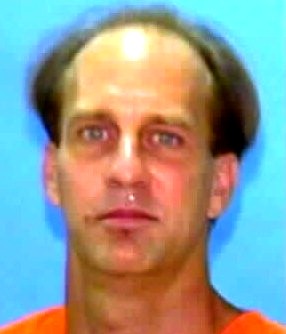 Jason Dirk Walton
Murderer · USA · 1982
Name: Jason Dirk Walton Date of birth: 10/09/58 Court: Sixth Judicial Circuit,…
3 victims
Jason Dirk Walton
Murderer · USA · 1982
Name: Jason Dirk Walton Date of birth: 10/09/58 Court: Sixth Judicial Circuit,…
3 victims
 Marilyn Plantz
Murderer · USA · 1988
Marilyn Kay Plantz was sentenced to death for the 1988 murder of her husband, J…
1 victim
Marilyn Plantz
Murderer · USA · 1988
Marilyn Kay Plantz was sentenced to death for the 1988 murder of her husband, J…
1 victim
 Jeremy Steinke
Murderer · Canada · 2006
Jeremy Allan Steinke was sentenced to three life sentences on December 15, 2008…
3 victims
Jeremy Steinke
Murderer · Canada · 2006
Jeremy Allan Steinke was sentenced to three life sentences on December 15, 2008…
3 victims
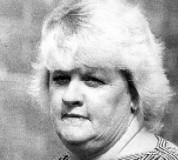 Valmae Beck
Murderer · Australia · 1987
Valmae Beck Valmae Beck was sentenced to life imprisonment with a non parole pe…
1 victim
Valmae Beck
Murderer · Australia · 1987
Valmae Beck Valmae Beck was sentenced to life imprisonment with a non parole pe…
1 victim
 Michael Lupo
Serial killer · United Kingdom · 1986
Michael Lupo was a former choir boy in his native Italy. He served in an Italia…
4 victims
Michael Lupo
Serial killer · United Kingdom · 1986
Michael Lupo was a former choir boy in his native Italy. He served in an Italia…
4 victims
- Gender
- male
- Country
- United Kingdom
- Location
- Portsmouth, Hampshire, England, United Kingdom
- Date of birth
- 1895
- Age at first offence
- 48
- Characteristics
- robbery, convicted rapist
- Victim profile
- Rose Ada Robinson, 63
- Method of murder
- Strangulation
- Date(s) of murder
- November 28, 1943
- Years active
- 1943
- Date of arrest
- 1 month after
- Status
-
Died in custody
Tried and found not guilty of the crime but later sold his confession to The People newspaper; died in 1965
Background
Harold Loughans was associated with Mrs Rose Ada Robinson’s pub, The John Barleycorn, in Portsmouth. Mrs Rose Ada Robinson ran the pub for over 40 years and was described as a 63-year-old widow.
Harold Loughans was tried for Mrs Robinson’s murder but was found not guilty. He later sold his confession to The People newspaper.
The offence
On 28 November 1943, Mrs Rose Ada Robinson was allegedly murdered by Harold Loughans. At 10.35pm on Sunday 28 November 1943, she emptied the cash registers as usual, the barman left, and she locked up for the night. The next morning her body was found in her bedroom; she had been strangled.
The place had been ransacked and there was no sign of previous nights takings. At the rear of the building a window had been forced, and on the ground nearby was a small black button.
Investigation
A month later in Waterloo Road, London, two policemen apprehended a poorly dressed man trying to sell a new pair of shoes in a cafe. When asked, the man said his name was Harold Loughans.
He confessed to several burglaries. He then confessed to a murder. He was taken to the police station where he made a statement admitting the murder of Mrs Robinson.
When the police looked at his coat, which he said he had been wearing on the night of the murder, they found all the buttons were missing. He said that he had pulled all the buttons off after finding that one was missing after the murder. Fibres found on the coat confirmed Loughans’ presence at the scene of the murder.
Arrest
Harold Loughans was apprehended in Waterloo Road, London, while trying to sell a new pair of shoes in a cafe. He was taken to the police station after he confessed to several burglaries and then to the murder.
Trial
Winchester trial (March 1944)
By the time the case came to trial, Harold Loughans had changed his tune and claimed he was innocent and that the police had put words into his mouth.
At his trial at Winchester in March 1944, the defence produced three witnesses who said they had seen Loughans in London on the night of the murder. The jury failed to agree a verdict.
Old Bailey retrial (Old Bailey)
A fortnight later his retrial took place at the Old Bailey. Sir Bernard Spilsbury appeared as part of the defence.
Harold Loughans had a deformed right hand, with the ends of the fingers missing. Spilsbury gave his opinion that Harold Loughans could not possibly have enough power and reach in his deformed hand to strangle the woman. This was enough for the jury and Harold Loughans was found not guilty.
The outcome was that the jury found him not guilty of the crime.
Aftermath
Harold Loughans was rearrested on a charge of attempted murder for a different incident, and he was sent to prison. In 1963 he was freed from prison and brought a libel action against The People newspaper.
In 1960 The People had published the memoirs of J.D. Casswell, the prosecuting counsel at his murder trials. The memoirs were described as virtually a replay of the two murder trials of almost twenty years before. In the libel action, the jury were not so easily convinced and found for the newspaper.
Three months later Harold Loughans walked into the offices of The People and confessed to the killing. He knew he could not be tried again for the crime and had found out that he was dying of cancer.
Harold Loughans died, aged 69, in 1965.
Other details
Harold Loughans was described as a brash habitual criminal and was linked with “another robbery” after his murder acquittal proceedings.
He was arrested on the steps of Old Bailey for another robbery and, after his 24th conviction, was sent to prison for seven years.
“It’s a relief to get it off my mind,” he told the police. “I didn’t mean to kill the old girl, but you know what it is when a woman screams .”
“I felt confident that I could not lose the case even if I conducted it standing on my head,” recalls Joshua David Casswell, who was the prosecutor in the court proceedings that followed.
“This is the most extraordinary case I’ve ever known,” said the judge.
“On the one hand a full confession, and on the other an unshakable alibi.”
“You are asked to try again a murder in the guise of a libel action,” his lawyer complained to the jury.
Spotted an error, or have more information about this case?