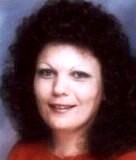
Marilyn Plantz
Murderer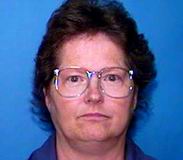 Bobbie Sue Terrell
Murderer · USA · 1984
Bobbie Sue Dudley Terrell was a Pinellas County nurse and worked as the night s…
12 victims
Bobbie Sue Terrell
Murderer · USA · 1984
Bobbie Sue Dudley Terrell was a Pinellas County nurse and worked as the night s…
12 victims
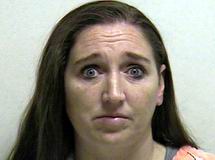 Megan Huntsman
Murderer · USA · 1996
Megan Huntsman was 40 at sentencing. She was a mother of three children who wer…
6 victims
Megan Huntsman
Murderer · USA · 1996
Megan Huntsman was 40 at sentencing. She was a mother of three children who wer…
6 victims
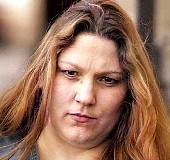 Angela Johnson
Murderer · USA · 1993
Angela Jane Johnson was convicted in federal court of aiding and abetting the m…
5 victims
Angela Johnson
Murderer · USA · 1993
Angela Jane Johnson was convicted in federal court of aiding and abetting the m…
5 victims
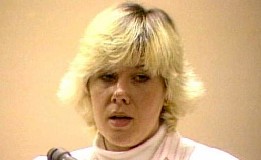 Catherine May Wood
Murderer · USA · 1987
Catherine May Wood was an American caregiver who worked at the Alpine Manor Nur…
5 victims
Catherine May Wood
Murderer · USA · 1987
Catherine May Wood was an American caregiver who worked at the Alpine Manor Nur…
5 victims
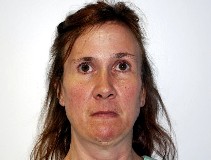 Michele Kalina
Murderer · USA · 1996
Michele Kalina pleaded guilty to murder for one of five infants she initially w…
5 victims
Michele Kalina
Murderer · USA · 1996
Michele Kalina pleaded guilty to murder for one of five infants she initially w…
5 victims
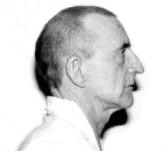 John Wheat
Murderer · USA · 1995
John Wheat was a church maintenance man who lived in the same apartment complex…
3 victims
John Wheat
Murderer · USA · 1995
John Wheat was a church maintenance man who lived in the same apartment complex…
3 victims
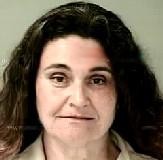 Gail Cutro
Murderer · USA · 1993
Gail Cutro (home daycare operator; appellant) Gail Cutro was convicted of killi…
2 victims
Gail Cutro
Murderer · USA · 1993
Gail Cutro (home daycare operator; appellant) Gail Cutro was convicted of killi…
2 victims
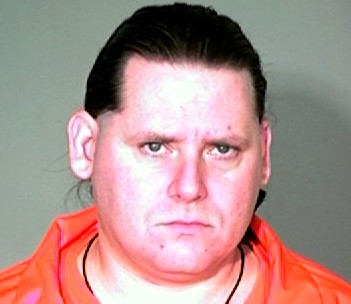 Darrel Pandeli
Murderer · USA · 1992
Darrel Pandeli was convicted of murder and sentenced to death, and his case ret…
2 victims
Darrel Pandeli
Murderer · USA · 1992
Darrel Pandeli was convicted of murder and sentenced to death, and his case ret…
2 victims
- Gender
- female
- Country
- USA
- Location
- Oklahoma City, Oklahoma, USA
- Date of birth
- October 19, 1960
- Age at first offence
- 28
- Characteristics
- parricide, murder for hire, to collect insurance money
- Victim profile
- James Plantz, 33 ( her husband )
- Method of murder
- Beating with baseball bats - Burn the corpse
- Date(s) of murder
- August 26, 1988
- Years active
- 1988
- Date of arrest
- 3 days after
- Status
-
Executed
Executed by lethal injection in Oklahoma on May 1, 2001
Case details
Marilyn Kay Plantz was sentenced to death for the 1988 murder of her husband, James Earl Plantz, 33.
Status and outcome
Marilyn Kay Plantz was executed on May 1, 2001, via lethal injection.
People involved
- Marilyn Kay Plantz — defendant; husband’s wife; beneficiary of life insurance
- James Earl Plantz (33) — victim; husband of Marilyn Kay Plantz
- William Clifford Bryson — co-defendant; sentenced to death and executed June 15, 2000
- Clinton Eugene McKimble — co-defendant; pled guilty and received a life sentence in exchange for testimony
- Roderick Farris ($40,000.00 offered) — offered by Bryson to kill the decedent
- Terry Norman — overheard Bryson speak about Appellant and the decedent
- Trina Plantz Wells (21) — daughter of Marilyn and Jim Plantz
- Karen Lowery — sister of Jim Plantz
- Sharon Cotton — sister of Jim Plantz
- Clovis Plantz — victim’s brother
- Earl Plantz — Marilyn Plantz’s former father-in-law (spoke about the case)
- Joyce Gilchrist — chemist for the Oklahoma City Police Department who testified at trial
- Charles Owens — Oklahoma County District Judge who ruled on trying defendants together
- Drew Edmondson — Oklahoma Attorney General
- Oklahoma Criminal Defense Trial Lawyers Association (OCDTLA) — called for a moratorium on executions in Oklahoma beginning with Plantz
Background
Marilyn Kay Plantz was a homemaker and Sunday school teacher, and she raised her 2 children in a quiet, Midwest City neighborhood.
The offence
On the morning of August 26, 1988, James Plantz left his job and headed home. He was insured for approximately two hundred ninety-nine thousand dollars ($299,000.00), and Plantz was the beneficiary.
In the northeast part of Oklahoma City, the decedent’s charred body was discovered inside his burned out pickup truck. The driver’s side door was open, and the decedent’s body was slumped behind the steering wheel with his left leg outside the pickup, his foot resting flat on the ground.
An autopsy later revealed that the decedent had died from a combination of a blunt force injury to the head and thermal injuries caused by the fire.
Prosecutors alleged that Plantz had paid someone to kill her husband to collect life insurance proceeds. Prosecutors also stated that the probable reason behind the murder was collection on two life insurance policies on James Plantz worth $319,000. Prosecutors stated that McKimble and Bryson were hired by Marilyn Plantz to kill her husband.
Plantz and her co-defendants attacked James Plantz with baseball bats provided by his wife. The decedent cried out for Plantz during the assault, and he was repeatedly struck because “he would not stay down”. After the beating, Bryson and McKimble placed him in his pickup and drove him to a deserted location, where he and the vehicle were set on fire, after gasoline was poured and a match was thrown.
Verbatim statements included in the proceedings included the account that the men were told “to burn him,” and that Plantz remarked that the decedent’s “head was busted open” and that it was not going to look much like an accident.
Details of the homicide plan and actions described at trial
Appellant had an ongoing personal relationship with Bryson and had previously attempted to have the decedent killed. Appellant indicated to Bryson that the decedent was abusive to her and that she wanted to get rid of him and collect on his life insurance policy. Appellant approached Bryson and Clinton McKimble about killing the decedent and collecting the life insurance proceeds.
Appellant suggested the men drive up on the side of his pickup and shoot him, or catch him coming home from work and beat him. McKimble was offered forty-five thousand dollars ($45,000.00) for his part, and at first McKimble indicated he was not sure he wanted to be a part of the plan before changing his mind.
With Appellant’s help, he and Bryson stole a car and waited for the decedent to get off work, aiming to drive up behind the decedent, bump his pickup so he would have to pull over and exit the vehicle, then kill him with baseball bats provided by Appellant. When the men lost the decedent’s pickup in highway traffic, the plan was abandoned.
Appellant subsequently gave Bryson a gun to shoot the decedent, but Bryson pawned it.
Bryson later offered Roderick Farris ($40,000.00) to kill the decedent. Terry Norman overheard Bryson say he had just talked to Appellant. Norman was upset because the decedent had physically assaulted her. When Farris asked why she just did not divorce the decedent, Bryson answered that she wanted to collect some money. Bryson indicated that if he had to kill the decedent by himself, he was going to catch the decedent coming home from work one morning, beat him with a baseball bat and set him on fire in his truck.
A week later, Farris encountered Bryson and Appellant at a local grocery store. Bryson offered Farris ten thousand dollars ($10,000.00) to kill the decedent. Bryson introduced Farris to Appellant as “the one I was telling you about that would kill your husband.” Appellant told Farris it would have to look like an accident.
Later that night, Bryson, Farris, and McKimble met at the Plantz home where they ate hamburgers and listened to music while waiting for the decedent to come home from work. When Farris heard someone at the front door, Appellant told him if it was the decedent to “take him out now”. Bryson picked up a hammer and McKimble a knife, but it was not the decedent. Farris was arrested and jailed on an unrelated charge two days later.
Two days after Farris’s arrest, Bryson picked Appellant up from work, where she had just quit her job. Bryson and McKimble drove around and went to a bank where Appellant withdrew money she subsequently spent on cocaine and beer. Arriving at the Plantz home later that evening, Appellant retired to her bedroom at approximately 10:30 p.m. Bryson and McKimble remained in the living room drinking beer and smoking cocaine until approximately 11:30 p.m., when they fell asleep.
Hours later, hearing a key in the front door, they hid on opposite sides of the house. The decedent entered whistling with a bag of groceries. Bryson struck first, hitting the decedent with the baseball bat, and McKimble joined in after the decedent cried out for Appellant. The men repeatedly struck the decedent because “he would not stay down”. The decedent finally crumpled to the floor. As he lay moaning, Bryson and McKimble picked him up and took him outside, setting him beside his pickup truck.
Appellant emerged from the house, handed the pickup keys to Bryson, and commented that the decedent’s “head was busted open” and that it was not going to look much like an accident. She told the men “to burn him.” The decedent was placed in the bed of his pickup. Bryson drove to a deserted location on the route the decedent would have taken to work, and McKimble followed in Appellant’s car.
The decedent was placed in the cab of the pickup behind the steering wheel, with his body slumped over to the side. McKimble placed a rag in the gas tank and lit it, but it failed to catch on fire. Bryson poured gasoline on the decedent and in the cab of the pickup, threw a match, and the pickup caught on fire. As the men drove away, they turned around and saw the decedent raise up.
Afterward, Bryson and McKimble returned to the Plantz home, where Appellant was cleaning up the blood. McKimble helped clean the floor while Appellant cleaned the baseball bats. Appellant directed the men to exchange their bloody clothes for clothes belonging to the decedent. She placed their bloody clothes in a sack and told them to get rid of the sack. The men left Appellant’s home, throwing the sack of bloody clothes in the river.
The men went to a convenience store and purchased sandwiches and drinks with money from the decedent’s trousers. They then went to a friends home, Michael Kendrick, where Bryson and McKimble told Kendrick about killing the decedent. When asked about Appellant’s two children, Bryson said they were asleep in their rooms at the time of the murder. Bryson phoned Appellant, asking if she was all right. Kendrick overheard Bryson say that they must stay close and that Appellant had purchased a rug to cover up blood stains.
Investigation and arrest
After the decedent was found dead in his pickup, investigators believed Plantz had paid someone to kill her husband. The following Monday after the victim was found dead, police arrested Marilyn Kay Plantz on a murder charge. William Clifford Bryson and Clinton Eugene McKimble were arrested the next day. On Wednesday, Marilyn Plantz, William Bryson and Clinton McKimble were all charged with first-degree murder, and prosecutors stated they would seek the death penalty.
Trial
Appellant Marilyn Kay Plantz was tried by jury and convicted for:
- Murder in the First Degree (Count I) in violation of 21 O.S.Supp.1982, § 701.7
- Third Degree Arson (Count II) in violation of 21 O.S.1981, § 1403(A)
- Solicitation to Commit Murder (Count III) in violation of 21 O.S.1981, §§ 701.7 and Conspiracy to Commit Murder (Count IV) in violation of 21 O.S.1981, §§ 421 in the District Court of Oklahoma County, Case No. CRF-86-4781.
The jury recommended as punishment the death penalty for Count I; fifteen (15) years imprisonment and ten thousand dollar ($10,000) fine in Count II; one hundred (100) years imprisonment for Count III; and ten (10) years imprisonment on Count IV. The trial court sentenced accordingly and the case came to appeal from this judgment and sentence.
Defense attorneys argued that Bryson and Plantz should have separate trials due to “inconsistent, mutually antagonistic, defenses”. Oklahoma County District Judge Charles Owens ruled that they would be tried together.
Joyce Gilchrist testified at trial. The proceedings described that the FBI studied eight cases on which Gilchrist had worked, finding serious errors in 75% of them.
At the trial in March 1989, jurors took less than three hours to find Plantz and Bryson guilty of the murder of James Plantz, of conspiracy to murder, of recruiting others to help, and of arson. The next day jurors deliberated for five hours before voting in favor of death sentences for both Marilyn Plantz and William Bryson.
The record included that they were each also sentenced to:
- 100 years for recruiting others to help in the murder
- 10 years for conspiracy to murder
- 15-year sentence for burning the pickup truck
Trina Plantz Wells, 21, asked the board to spare her mother’s life, and she cried throughout the hearing. In a videotaped statement, Trina Wells said:
“My father’s gone and we need a mom, whether or not she is in prison. We need to have a relationship with her. I really don’t want my mom to die -- that is my hope. I’ve had 13 years to think about it. I love my father. He was my hero. But it is not fair to me to have to go to another funeral and devastating death like this.”
Karen Lowery asked the board to let the execution take place, and she stated that Marilyn did not show remorse during the preliminary hearing or the trial. Lowery also stated that she believed the death penalty can deter criminals. In a barely audible voice, Plantz apologized to the families, mentioning each sibling, parent and child by name:
“It’s hard to think about living the rest of my life in prison. But now I have a reason to live. I want to live for my daughter and, hopefully, for my son.”
Sentencing
Marilyn Kay Plantz was convicted March 24, 1989, and sentenced to death March 31, 1989.
Appeals
Plantz v. State, 876 P2d 268 (Okla. 1994).
Plantz lost her final appeal to the U.S. Supreme Court on Feb. 26, with Oklahoma Attorney General Drew Edmondson requesting the scheduling of her execution immediately.
Execution scheduling and related events
On Thursday, April 26, the Oklahoma Criminal Defense Trial Lawyers Association (OCDTLA) called for an immediate moratorium on executions in Oklahoma, beginning with Marilyn Plantz. Attorney Jack Dempsey, spokesperson for the OCDTLA, said:
“If one juror was convinced to give the death penalty to Marilyn Plantz due to the testimony of Ms Gilchrist, Marilyn should not be executed next Tuesday.”
Vigils were held at approximately one dozen locations across the state, and around two dozen people attended a prayer vigil outside the gates of the penitentiary.
Execution
Marilyn Kay Plantz, 40, was executed on May 1, 2001, via lethal injection at Oklahoma State Penitentiary in McAlester.
Plantz was pronounced dead at 9:11 p.m. after being injected with a poisonous mix of drugs.
Aftermath and statements
Thirteen relatives and friends of Jim Plantz, including his two sisters, father and brother, were at the prison for the execution of Bryson earlier described as taking place June 15, 2000.
Karen Lowery said Bryson’s death did not mean a victory for her family, stating:
“It’s a no-win situation. Nobody is going to win in the end,”
Sharon Cotton said executing Bryson would provide partial closure for the family, stating that Marilyn Plantz and Clifford Bryson “have lived almost 12 years since Jim was murdered; that is 12 years longer than my brother lived.” She said:
“He didn’t think twice about taking my brother’s life,”
She also said:
“He didn’t think about the children or my brother’s family and how that would affect us for the rest of our lives.”
Oklahoma Attorney General Drew Edmondson stated:
“Marilyn Plantz orchestrated and participated in the brutal murder of her husband,”
and “My thoughts are with the Plantz family, and those who have been deprived of the company of James Plantz for more than a decade following his untimely and unnecessary death.”
On the day of Bryson’s execution, Clovis Plantz spoke:
“For the past 13 years, she’s been able to live, breathe and hope,”
“His last hope was when he was being beaten, when he called out to her for help.”
The proceedings described continuing questions about Joyce Gilchrist, described as being investigated amid allegations that she misidentified evidence and gave improper testimony. Attorney General Drew Edmondson stated that Gilchrist’s testimony was limited and had little impact on the case.
The procedures also described that Jim Plantz’s insurance policy eventually was awarded to his 2 children, Trina Plantz Wells and Chris Plantz.
Spotted an error, or have more information about this case?