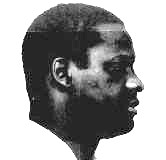
Charlie Livingston
Murderer Brian Kevin Rosenfeld
Murderer · USA · 1985
Brian Kevin Rosenfeld Brian Kevin Rosenfeld was sentenced to three concurrent l…
23 victims
Brian Kevin Rosenfeld
Murderer · USA · 1985
Brian Kevin Rosenfeld Brian Kevin Rosenfeld was sentenced to three concurrent l…
23 victims
 Marvin Gray
Murderer · USA · 1975
Marvin Gray was convicted killer who claimed responsibility for 23 slayings and…
23 victims
Marvin Gray
Murderer · USA · 1975
Marvin Gray was convicted killer who claimed responsibility for 23 slayings and…
23 victims
 Yahweh ben Yahweh
Murderer · USA · 1980
Yahweh ben Yahweh was born and legally named Hulon Mitchell Jr. (October 27, 19…
23 victims
Yahweh ben Yahweh
Murderer · USA · 1980
Yahweh ben Yahweh was born and legally named Hulon Mitchell Jr. (October 27, 19…
23 victims
 Russell Ellwood
Murderer · USA · 1991
Russell Ellwood was a former taxi driver. Authorities suspected him of killing…
20 victims
Russell Ellwood
Murderer · USA · 1991
Russell Ellwood was a former taxi driver. Authorities suspected him of killing…
20 victims
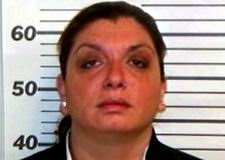 Brenda Nicholas
Murderer · USA · 2011
Brenda Nicholas was sentenced to 34 years in prison for the robbery and stabbin…
1 victim
Brenda Nicholas
Murderer · USA · 2011
Brenda Nicholas was sentenced to 34 years in prison for the robbery and stabbin…
1 victim
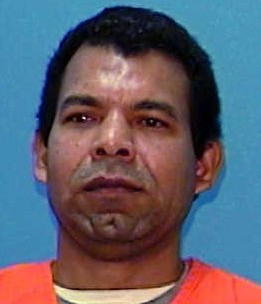 Pedro Hernandez-Alberto
Murderer · USA · 1999
Name: Pedro Hernandez-Alberto · Date of birth: 01/15/63 · Florida Supreme Court…
2 victims
Pedro Hernandez-Alberto
Murderer · USA · 1999
Name: Pedro Hernandez-Alberto · Date of birth: 01/15/63 · Florida Supreme Court…
2 victims
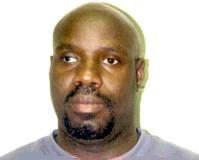 Matthew Steven Johnson
Serial killer · USA · 2000
Matthew Steven Johnson was arrested in Hartford on charges that he killed two w…
3 victims
Matthew Steven Johnson
Serial killer · USA · 2000
Matthew Steven Johnson was arrested in Hartford on charges that he killed two w…
3 victims
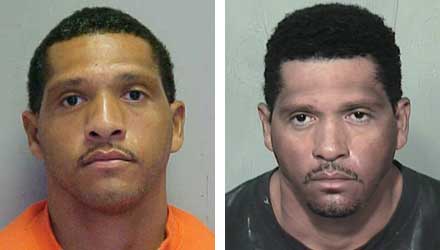 Mark Goudeau
Serial killer · USA · 2005
Mark Goudeau was a suspected serial killer from Phoenix, Arizona, who was charg…
9 victims
Mark Goudeau
Serial killer · USA · 2005
Mark Goudeau was a suspected serial killer from Phoenix, Arizona, who was charg…
9 victims
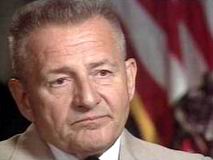 George Marecek
Murderer · USA · 1991
George Marecek was convicted of second-degree murder following a 2001 six-day t…
1 victim
George Marecek
Murderer · USA · 1991
George Marecek was convicted of second-degree murder following a 2001 six-day t…
1 victim
- Gender
- male
- Country
- USA
- Location
- Harris County, Texas, USA
- Date of birth
- February 14, 1962
- Age at first offence
- 21
- Characteristics
- robbery
- Victim profile
- Janet Caldwell (female, 38)
- Method of murder
- Shooting
- Date(s) of murder
- August 10, 1983
- Years active
- 1983
- Date of arrest
- Same day
- Status
-
Executed
Executed by lethal injection in Texas on November 21, 1997
Offender and status
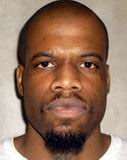
Charlie Livingston was executed by lethal injection in Texas on November 21, 1997. Livingston was a Texas death-row inmate.
Victim
Janet Caldwell was shot and killed. Caldwell was described as a 38-year-old mother of two.
The offence
On the evening of August 10, 1983, Janet Caldwell left her home and drove to the Weingarten's grocery store located at West 43rd Street and Oak Forest Drive in Houston, Texas. She parked her black Chevrolet pickup truck in the parking lot on the west side of the store. After she finished shopping, Caldwell left the store carrying two bags of groceries and a purse and walked through the parking lot to her truck. She was shot and killed in the parking lot moments later.
Several eyewitnesses testified to events they observed that night. Ernest Warren saw Caldwell as she was leaving the store between 8:00 and 8:45 p.m. that night. Lynne Coleman had pulled into the Weingarten's parking lot and was parked in front and to the left of Caldwell's truck when she observed the arms of two people struggling and heard a gunshot. Joe Cunningham was shopping at Weingarten's at approximately 8:30 p.m.; he shopped for about thirty minutes, left the store, and was placing his groceries in his car when he heard a woman screaming. He looked up and saw a struggle between a black male and a white female with light brown hair. Cunningham took a few steps toward the people struggling and whistled and yelled at them to try to stop the altercation. Cunningham then saw the black male push away from the female, or shove her back, pull out a pistol, and shoot the woman. Immediately thereafter, the black man spun around, fell forward on one knee, and then took off toward the west of the parking lot. Cunningham noticed that the man was wearing a white cloth over his face and dark clothing with white letters on the front of his shirt. The man had a gun and a purse when he ran from the scene.
Raul and Flor Monzon were in a car crossing the intersection of Oak Forest Drive and West 43rd Street when Flor heard a woman scream and a gunshot. Raul pulled the car into a Gulf Service Station across the street from the Weingarten's parking. They observed a black man running through the parking lot toward a dumpster. The man was wearing a white mask and carrying a gun and a lady's purse. He was wearing dark clothing with white lettering on the front of his shirt. Donald Austin was walking toward the entrance of Weingarten's when he heard a scream, turned around, saw nothing unusual, and proceeded walking. He heard another scream, turned around, ran toward the sound of the scream, heard a gunshot or shots, and saw the flash of a gun as it was fired. Austin saw a black man wearing dark clothes with lettering on the back of his shirt. The black man ran around the back of a truck toward Oak Forest Drive, tripped, appeared to drop something at a dumpster, and then turned north on Oak Forest Drive.
Jerry Thompson was working at the Gulf Station on Oak Forest Drive when he heard screams and a gunshot. He saw a black man back away from a pickup truck, run toward the station, and hide behind a dumpster. Thompson observed that the man was wearing dark clothes with something white over his face. The man was carrying a purse and a gun, which he pointed at Thompson and his co-worker, Donald McDaniel. The man then crossed the street, went behind the Gulf Station, and ran north on Oak Forest Drive into a residential subdivision. Lavern Morton went to Weingarten's between 8:00 p.m. and 9:00 p.m. After buying groceries, Morton heard two screams and shots when he was leaving the store. He looked toward the direction of the screams and saw a struggle between a black man and a white woman. The black man ran west, turned north on Oak Forest Drive, stopped at a dumpster to drop something, and then turned north on Oak Forest Drive and ran out of sight. At trial, Morton positively identified Livingston as the man he saw struggling with Caldwell.
Several other eyewitnesses either identified Livingston in court as the shooter or identified him as the shooter when he was brought to the crime scene on the night of the murder, or both.
Investigation and evidence
Police contact and arrest
Houston police officers James Curtis and Margie Curtis were on patrol on West 43rd Street when they stopped to check with officer David Cook who was conducting a routine traffic stop. An unknown man drove up and informed the officers that a shooting had occurred in the Weingarten parking lot. The officers left immediately for the scene.
Upon arriving at the scene, the Curtises noticed a black man in the dimly lit area behind the Weingarten store. When the man saw the police car, he began walking in the opposite direction. The officers approached him. James Curtis asked the man if he knew anything about the shooting at Weingarten's. The man denied any knowledge and claimed he had been shopping inside Weingarten's. He was not carrying any groceries, was sweating profusely, and his pants were ripped from his knee to his crotch. James Curtis asked the man for identification; the man replied that he had forgotten his wallet. At trial, both officers identified the man as Livingston. James Curtis asked Livingston if he would accompany the officers to the scene while they investigated the shooting; Livingston agreed. After a quick pat search he was placed in the back of the police car. The officers drove to the Weingarten parking lot.
Upon arriving at the scene, Margie Curtis exited the car and approached officer Cook. Cook was broadcasting a description of the suspect over police radio. Margie Curtis informed Cook that they had a man in the back of the patrol car matching the description. Several eyewitnesses viewed Livingston in the back of the patrol car and identified him as the shooter. The officers arrested Livingston and read him his Miranda rights.
A set of car keys was found in Livingston's pocket. Officer Troy Blando arrived at the scene and observed the victim lying on the parking lot face up with a gunshot wound to her throat. Blando observed a spent 9mm cartridge casing near Caldwell's body and a purse flap beneath her body. Blando found the remainder of the victim's purse near the dumpster at the west end of the parking lot. Blando found a piece of white cloth covering a 9mm pistol under a bush.
Additional investigation uncovered four footprints in the soil leading away from the crime scene near where the police stopped Livingston. A cast was made of one of the footprints and compared with Livingston's tennis shoes. At trial, Wesley Sheldon, a fingerprint examiner, testified that there was a high probability that Livingston's shoes made the imprint.
The officers took Livingston to the police department and attempted to run a trace metal test on his hands and chest. Livingston resisted vehemently and had to be physically restrained from rubbing his hands together. Officer J.K. Jones conducted the test and observed a purplish black pattern on Livingston's right hand. Due to an accident, however, the lights were temporarily turned off. Livingston took the opportunity to spit on his hands and chest, thereby ruining the trace metal test.
Identifications and suppression
A lineup was conducted just after midnight. Livingston occupied the center position of five persons. He was the stockiest of all the participants and was the only one wearing clothes similar to the ones worn by the assailant. Flor Monzon, Lawrence Morton, and Walter Koivula positively identified Livingston at the lineup. All other witnesses identified him tentatively.
Officer R.D. Anderson interviewed Livingston. Livingston claimed to have ripped his pants at work and denied any involvement in the murder. Later, Livingston confessed to the murder, but neither side introduced the confession at trial.
On August 10, 1983, Livingston was charged with the capital murder of Janet Caldwell. Counsel for Livingston sought a suppression hearing alleging that the showup and lineup were unduly suggestive and that during both Livingston lacked the presence of counsel. Following the hearing, the confession was not suppressed, nor were in-court identifications based on the showup. However, in-court identifications based on the lineup were suppressed because the state failed to show that Livingston was apprised of his right to counsel before the lineup. On federal habeas review, the district court found that the identifications had an independent basis from the lineup.
Joe Cunningham and Flor Monzon, among others, followed the officers back to their patrol car after they arrived at the crime scene and identified Livingston who was sitting in the back seat.
Trial
Charges and conviction
Livingston was prosecuted for capital murder in the 180th District Court of Harris County, Texas. A jury convicted him of capital murder on April 17, 1985, and subsequently returned affirmative answers to the special issues of former Tex. Code. Crim. Proc. Art. 37.071.
At the punishment phase, three special issues were submitted pursuant to Tex. Crim. Proc. Code Ann. art. 37.071(b):
- “Do you find from the evidence beyond a reasonable doubt that the conduct of the Defendant, Charlie Livingston, that caused the death of the deceased, Janet Caldwell, was committed deliberately and with the reasonable expectation that the death of the deceased or another would result?”
- “Do you find from the evidence beyond a reasonable doubt that there is a probability the Defendant, Charlie Livingston would commit criminal acts of violence that would constitute a continuing threat to society?”
- “Do you find from the evidence beyond a reasonable doubt that the conduct of the defendant, Charlie Livingston, in killing the deceased, Janet Caldwell, was unreasonable in response to the provocation, if any, by the deceased?”
The jury affirmatively answered all three special issues.
Counsel, strategy, and the confession
At trial, Livingston was represented by Richard Stephanow, lead counsel in the guilt-innocence phase, and Paul Licata, lead counsel in the punishment phase.
Counsel for Livingston sought suppression of identifications; the confession was not suppressed, and in-court identifications based on the showup were not suppressed. In-court identifications based on the lineup were suppressed because the state failed to show Livingston was apprised of his right to counsel before the lineup.
The district court found that trial counsel exercised reasonable diligence in attempting to secure and present witnesses to testify at the punishment phase and that counsel’s decision to forego presenting testimony of individuals suggested by Livingston’s mother was a matter of plausible trial strategy.
The district court found that during the guilt/innocence phase, trial counsel afforded reasonably effective assistance and during the punishment phase, trial counsel afforded reasonably effective assistance.
Witness identifications and testimony
Joe Cunningham’s trial testimony described the struggle between the shooter and the deceased and identified Livingston based on clothing and build after seeing the man in the patrol car:
“On August 10, 1983, he and his son and nephew went to the Weingarten's at the intersection of Oak Forest and West 43rd at approximately 8:30 P.M. and left the store at approximately 9:00 P.M.; after placing the two boys in his car, he heard some screams from a female and looked up and saw a female struggling with a black male about 30 paces from where he was standing; he saw the black male step away from the woman, pull a pistol out and shoot the woman; the black man then took off down the parking lot towards the dumpster; the black man had a white cloth over his face, dark T-shirt with white lettering on the front; the man was approximately 5'9" or 5'10", 175-180 pounds; the man ran holding a gun and a purse; approximately 10 minutes later he observed a black man in the patrol car wearing a dark shirt with white lettering on; the man he observed in the police car was [Livingston]; he didn't get a clear view of the shooter's face; he guessed identify the defendant's face; he could identify his clothing; he based his identification of the defendant on the clothing and build. (internal citations omitted).”
The federal appellate opinion also included findings that there was “no evidence that the jury in the applicant's trial disregarded the instructions found in the Court's charge that authorized a conviction for capital murder only if the jury found that the applicant ‘intentionally cause[d] the death of Janet Caldwell by shooting Janet Caldwell with a gun . . .’”.
Sentencing
Livingston received a capital murder conviction with an affirmative finding on the special issues described above.
Appeals
United States Court of Appeals for the Fifth Circuit
Livingston filed a petition in the United States Court of Appeals for the Fifth Circuit identified as No. 95-20758.
The appeal was from the United States District Court for the Southern District of Texas. The panel included DUHÉ, WIENER, and STEWART, Circuit Judges. CARL E. STEWART, Circuit Judge, issued the opinion.
The opinion stated:
“Charlie Livingston (‘Livingston’), a Texas death-row inmate, appeals the district court’s dismissal of his petition for a writ of habeas corpus under 28 U.S.C. § 2254 and requests a certificate of probable cause (‘CPC’) from this Court to appeal the district court’s decision. We treat Livingston’s request for CPC as a request for Certificate of Appealability (‘COA’). Livingston insists that his conviction and death sentence are rendered unconstitutional by a list of alleged errors, including ineffective assistance of counsel, the district court’s refusal to hold an evidentiary hearing, suggestive pretrial identification procedures, and various defects in the jury instructions. After a careful review of the applicable law, we conclude that the district court did not err in rejecting Livingston’s contentions. We therefore refuse to issue a CPC (now COA) and dismiss the appeal.”
Livingston raised four contentions: refusal to hold an evidentiary hearing, ineffective assistance of counsel during guilt-innocence or punishment phases, due process violations from suggestive pretrial identification procedures, and due process violations from the jury charge’s mens rea definition of “intent” and the refusal to instruct on felony murder.
The court denied the certificate and dismissed the appeal. The court concluded that the state habeas “paper hearing” was full, fair, and adequate, and rejected Livingston’s ineffective assistance of counsel claims. It also rejected the arguments regarding the showup and lineup identifications, the jury instruction on intent, and the refusal to instruct on felony murder.
Evidentiary hearing issue (paper hearing)
The appellate decision stated that Livingston “did receive a hearing during the state habeas proceedings” and that “he did receive a full, fair, and adequate hearing,” citing that hearing as not requiring live testimony and rejecting the argument that a federal court must hold a hearing if the state court decided factual issues without live testimony.
Ineffective assistance of counsel issue
The appellate court held Livingston received effective assistance of counsel at the guilt-innocence phase, describing counsel’s use of a mistaken identity defense as a reasonable, strategic decision based on the facts known at the time of trial. It also held Livingston received effective assistance of counsel at the punishment phase and upheld findings regarding counsel’s investigation and presentation of mitigating evidence.
It described findings including:
“The court finds that prior to trial, trial counsel made a reasonable attempt to investigate the applicant’s background for mitigating evidence to be presented during the punishment phase.”
It also stated that the district court applied the proper standards to Livingston’s ineffective assistance allegations and agreed with the denial of habeas relief on summary judgment.
Pretrial identification procedures
The appellate court held Livingston’s showup was not impermissibly suggestive and that, for the lineup, even though in-court identifications based on the lineup had been suppressed earlier due to right-to-counsel issues, the district court found that the identifications had an independent basis from the lineup, and the appellate court agreed.
The appellate court held:
- Cunningham’s and Monzon’s in-court identifications were of independent origin.
- Lavern Morton’s in-court identification was properly admitted. It referenced the district court’s application of the Neil v. Biggers factors in evaluating Morton’s reliability.
Jury charge issues
For the mens rea of “intent,” the appellate court held Livingston’s claim was procedurally barred for failure to make a contemporaneous objection at trial, and further held that even on the merits there was no due process violation.
For the lesser included offense, the appellate court rejected the argument that refusal to instruct on felony murder violated due process and held there was no constitutional error.
Conclusion of the Fifth Circuit
The appellate decision concluded:
“For the foregoing reasons, the application for Certificate of Probable Cause, treated here as an application for Certificate of Appealability, is DENIED, and the appeal is DISMISSED.”
State court procedural history
Livingston was tried and sentenced in the 180th District Court of Harris County, Texas. The Texas Court of Criminal Appeals affirmed Livingston’s conviction and sentence on October 21, 1987, in Livingston v. State, 739 S.W.2d 311 (Tex. Crim. App. 1987).
Livingston’s petition to the United States Supreme Court for a writ of certiorari was denied on June 20, 1988, in Livingston v. Texas, 487 U.S. 1210, 108 S. Ct. 2858 (1988).
A series of habeas steps followed:
- On June 9, 1989, Livingston’s June 13, 1989 execution date was postponed in order to allow the 180th District Court for Harris County, Texas, to consider Livingston’s state petition for habeas corpus.
- On November 15, 1994, Judge Patricia Lykos entered findings of fact and conclusions of law recommending denial of state habeas relief.
- On December 12, 1994, the Court of Criminal Appeals denied the writ application based on those findings and set Livingston’s date of execution for on or before sunrise, January 26, 1995.
- On January 19, 1995, Livingston filed his first federal petition with the United States District Court for the Southern District of Texas.
- On January 20, 1995, U.S. District Court Judge Ewing Werlein, Jr., granted Livingston’s stay of execution and reset the hearing date to respond to the motion on the merits.
- Following the respondent’s answer and motion for summary judgment, on June 13, 1995, the court granted the motion for summary judgment and denied Livingston’s habeas petition on the merits.
- On June 27, 1995, Livingston filed a timely motion pursuant to F.R.C.P. 59(e) to alter, amend, or in the alternative, to reopen the judgment; on August 29, 1995, the court denied that motion.
- Livingston then filed a timely notice of appeal to the Fifth Circuit.
Aftermath
Last statement and execution
Livingston’s last statement was:
“You all brought me here to be executed, not to make a speech. That’s it.”
Livingston was executed by lethal injection in Texas on November 21, 1997.
Other details
Offender details
Charlie Livingston was 35 (21) years old, with an age of 35 and an age reference of 21 included in the record excerpt. He was scheduled to be executed by lethal injection on November 21, 1997.
Prior charges and mitigating evidence context
The record described that Livingston had been arrested when he was only 21 years of age for the murder of a white woman in Harris County, Texas on August 10, 1983.
During the ineffective assistance analysis, the appellate opinion and findings discussed Livingston’s prior conviction for attempted murder. The opinion quoted findings that trial counsel made plausible trial-strategy decisions regarding how to address evidence of Livingston’s earlier extraneous offense of attempted murder, including circumstances described as breaking into a neighbor’s apartment and brutally and repeatedly knifing his neighbor and her companion over a $10 debt.
During the state habeas portion, Livingston’s mother testified that Livingston was a good son but that he had been greatly affected mentally by the death of his father. The appellate opinion also discussed affidavits submitted during state habeas proceedings alleging alleged abuse that Ernest Stewart, the boyfriend of Livingston's mother, inflicted upon Livingston as a child. The opinion referenced affidavits of Odessa Livingston, Irma Joseph, Shirley Livingston, Louise Killings, and Perry Killings.
Judge Patricia Lykos presided at Livingston’s trial and the state habeas proceeding. She entered findings of fact and conclusions of law concluding that:
“there are no controverted, previously unresolved facts material to the legality of the applicant’s confinement which require an evidentiary hearing.”
Trial counsel reputation and findings
The appellate opinion included findings that Messrs. Stephanow and Licata enjoyed an excellent reputation in the legal community for competency and professionalism. It stated:
“Mr. Stephanow, during his legal career prior to this appointment, had served as a district court judge in Harris County, Texas, and had prior capital murder trial experience as both judge and defense attorney.”
Spotted an error, or have more information about this case?