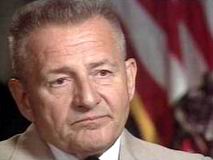
George Marecek
Murderer Brian Kevin Rosenfeld
Murderer · USA · 1985
Brian Kevin Rosenfeld Brian Kevin Rosenfeld was sentenced to three concurrent l…
23 victims
Brian Kevin Rosenfeld
Murderer · USA · 1985
Brian Kevin Rosenfeld Brian Kevin Rosenfeld was sentenced to three concurrent l…
23 victims
 Russell Ellwood
Murderer · USA · 1991
Russell Ellwood was a former taxi driver. Authorities suspected him of killing…
20 victims
Russell Ellwood
Murderer · USA · 1991
Russell Ellwood was a former taxi driver. Authorities suspected him of killing…
20 victims
 Robert Martines Perez
Murderer · USA · 1994
Name: Robert Martines Perez · Other name used in proceedings: Robert Martinez P…
15 victims
Robert Martines Perez
Murderer · USA · 1994
Name: Robert Martines Perez · Other name used in proceedings: Robert Martinez P…
15 victims
 Billy Frank Vickers
Murderer · USA · 1993
Billy Frank Vickers Vickers was executed by lethal injection in Texas on Januar…
14 victims
Billy Frank Vickers
Murderer · USA · 1993
Billy Frank Vickers Vickers was executed by lethal injection in Texas on Januar…
14 victims
 Christina Marcum
Murderer · USA · 2011
Christina Marcum was sentenced to 30 years in prison for her role in the murder…
1 victim
Christina Marcum
Murderer · USA · 2011
Christina Marcum was sentenced to 30 years in prison for her role in the murder…
1 victim
 The Bender family
Serial killers · USA · 1872
The Bender family was associated with serial killings in southeastern Kansas. T…
11 victims
The Bender family
Serial killers · USA · 1872
The Bender family was associated with serial killings in southeastern Kansas. T…
11 victims
 Billy Jack Crutsinger
Murderer · USA · 2003
Billy Jack Crutsinger was a white male. He was born on 10/05/1954 and was recei…
2 victims
Billy Jack Crutsinger
Murderer · USA · 2003
Billy Jack Crutsinger was a white male. He was born on 10/05/1954 and was recei…
2 victims
 James Glenn Robedeaux
Murderer · USA · 1978
James Glenn Robedeaux was charged with and convicted of first degree murder inv…
2 victims
James Glenn Robedeaux
Murderer · USA · 1978
James Glenn Robedeaux was charged with and convicted of first degree murder inv…
2 victims
 Alofa Time
Murderer · USA · 2006
Alofa Time was from Boise, Idaho. His wife was Theresa Lee Time, and his estran…
3 victims
Alofa Time
Murderer · USA · 2006
Alofa Time was from Boise, Idaho. His wife was Theresa Lee Time, and his estran…
3 victims
 Quintin Phillippe Jones
Murderer · USA · 1999
Name: Quintin Phillippe Jones TDCJ number: 999379 Date of birth: 7/15/1979 Race…
1 victim
Quintin Phillippe Jones
Murderer · USA · 1999
Name: Quintin Phillippe Jones TDCJ number: 999379 Date of birth: 7/15/1979 Race…
1 victim
- Gender
- male
- Country
- USA
- Location
- Fort Fisher, North Carolina, USA
- Date of birth
- ???
- Characteristics
- parricide, rape
- Victim profile
- His Thai wife, Viparet Marecek
- Method of murder
- Drowning
- Date(s) of murder
- June 3, 1991
- Years active
- 1991
- Date of arrest
- —
- Status
-
Released
Sentenced to 30 years in prison in 2001; paroled on August 11, 2003
Case record
Status and outcome
George Marecek was convicted of second-degree murder following a 2001 six-day trial. He was sentenced to 30 years in prison. He was paroled on August 11, 2003.
Timeline
- 3 June 1991 — George Marecek left for the beach at about 12:35 p.m.; he later told Deputy James Davis that his wife was at the cottage and that he became worried after 5:00 p.m. when she had not returned.
- 3 June 1991 — Deputy Davis took a missing person's report from George Marecek at about 8:00 p.m.
- 4 June 1991 — Henry Beeker and Kure Beach Police Chief Troy Hamilton responded to a radio call about a possible drowning at Fort Fisher and later found Viparet Marecek’s body in the marsh grass in the water, face down and naked.
- 4 June 1991 — Dennis Rood saw George Marecek in the general store area saying, “I found her, I found her.”
- 6 June 1991 — Susan Kirk drove to Fort Fisher to be with George Marecek after she learned Viparet was dead.
- 7 June 1991 — Detective George Landry recovered letters and documents written in a foreign language from George Marecek’s home after George Marecek gave permission to search.
- 10 January 1994 — George Marecek was indicted for first-degree murder of his wife.
- 1995 — George Marecek’s first trial ended in a hung jury and the court declared a mistrial.
- 27 January 1997 — A second jury trial began; it concluded with George Marecek’s conviction of second-degree murder.
- 10 July 2000 — A third jury trial began.
- 19 June 2000 — George Marecek moved for a continuance of the trial scheduled to begin on 10 July 2000.
- 19 July 2000 — The jury returned a verdict of guilty of second-degree murder.
- 3 September 2002 — The North Carolina Court of Appeals issued an opinion: it found no prejudicial error in the guilt-innocence phase but remanded for resentencing.
- August 11, 2003 — George Marecek was paroled.
Background
George Marecek was a highly decorated U.S. Army Green Beret. In 1991, he was retired after serving thirty-six years in the Special Forces at Fort Bragg and lived with his wife, Viparet Seawong Marecek, in Fayetteville.
In 1991, during their vacation at Fort Fisher in May and June, Viparet was beaten with an unidentified blunt object and drowned. The vacation included time at Davis Beach, reached by taking Fort Fisher Boulevard to Davis Road, and then continuing where “the pavement ends.”
George Marecek and Viparet vacationed at Fort Fisher near Cape Fear, North Carolina, to celebrate their ninth anniversary.
The offence
Viparet Seawong Marecek was beaten with an unidentified blunt object and drowned. The cause of death was drowning, to which head injuries contributed. The autopsy described tissue defects in the earlobes above the left eye and the left side of the lower lip consistent with marine animals after being in the water. Blunt-force injuries to the head were described as not fatal but potentially causing loss of consciousness. Defensive wounds were described on the victim’s arms and hands. Dr. Robert Thompson found no evidence of sexual assault and was unable to determine the time of death.
During the investigation and testimony, witnesses described that Viparet’s body was found face down and naked in the marsh grass in the water at the end of Davis Beach Road.
Investigation
Missing-person report and search
James Davis, a deputy with the New Hanover County Sheriff's Department, took a missing person's report from George Marecek at about 8:00 p.m. on 3 June 1991.
George Marecek told Deputy Davis that when he left for the beach at about 12:35 that afternoon, his wife was at the cottage, where she planned to do laundry and check on a fishing spot for the next day. George Marecek said that when he returned to the cottage, she was not there, and he began to worry after 5:00 when she had not returned.
Deputy Davis instructed George Marecek to leave the lights on and to leave a note on the front door so that he could be found if Deputy Davis found the wife.
Deputy Davis conducted a search, including the Davis Beach area, but found nothing. Deputy Davis passed George Marecek’s cottage ten or twelve times during the evening and noticed that the porch light was off and that George Marecek’s vehicle never moved. Deputy Davis checked for a note each time but did not see one.
Witness observations during the beach-day period
Dennis Rood, an electrician at Fort Fisher, drove past two pedestrians as he drove east on Fort Fisher Boulevard at about five miles per hour around 4:00 p.m. on 3 June 1991. He identified the two people as George Marecek and Viparet and stated that they were walking west toward the river. He described Viparet as wearing a reddish-colored blouse with shorts and stated that one of them was carrying beach equipment.
Tom and Beth Deleuw saw a white man and an “Oriental woman” crossing the road, carrying beach items, looking like they were coming from or going to the beach. Mr. Deleuw remembered that he told Beth: “Look, there's a retired air force colonel and his pie-faced wife.”
James Davis also took the missing-person report as noted above.
Statement by George Marecek and its admission into the record
On 4 June 1991, Detective George Landy of the New Hanover County Sheriff's Department, accompanied by Major Lanier and Detective Bill Simmons, went to George Marecek’s cottage to gather information about Viparet. George Marecek was completing a handwritten summary of events. Detective Landy read the statement into the record, including the following quoted testimony:
THE WITNESS: To whom it may concern: I, Colonel George Marecek--in parentheses NMI, meaning no middle initial--and my wife, Viparat Marecek, arrived here at Fort Fisher on Friday, 31 May 1991, for a one-week vacation that we have planned since February, 1991. Our daily schedule generally followed this routine: 6:00, four-mile morning run, light breakfast, 8:30 hours a.m. beach until 1430 p.m., showers, washing of beach towels and other items, preparing evening meal, and a short walk after dinner, one hour, watch evening news, local and international, select a short program of mutual interest and then retire for the night.
On 3 June, 1991, the day started just like all others, with the following differences: Viparat and I returned from the beach at 12:35 p.m., Viparat prepared a fresh salad and a small portion of low fat cottage cheese and we watched the noon news and a soap opera--in parentheses it says the word “Loving”--and a portion of--again in parentheses, “All My Children.” I suggested to Viparat that we return to the beach for a couple, three hours, but she told me to go by myself, that she has plenty of sun for now and she will wash all the towels and other items and, if she finish early, she may go and look for a good place to go fishing tomorrow. Also, she mentioned she would stop at the pier, and if she is up to go swimming, she will go to the base pool. She told me to be home by 1700 hours and if she is not here to remove the chicken from the refrigerator, remove the skin and prepare them for dinnerand that she would be home shortly after. We exchanged greetings and I left for the beach approximately 2:30 p.m. and returned back at 4:55 p.m. Viparat was not at home, but she washed all towels and other items and neatly folded them up and stored them in the cabinets. I showered and washed the towel I used when I noticed that there is a heavy rain outside. I looked at the watch; it was 5:20 p.m. I was concerned at this time, for the first time, about her absence and also considered to go with the car and look for her so she would not get wet. However, I decided to wait and give her some more time. Shortly, the rain stopped, and when she failed to return, I left the house and started to look for her. I looked everywhere, on base, off base, on the beach, with the reception center, talked to neighbors, other families staying in Fort Fisher. No luck, no one seen her. I went to the local police station, but nobody was there. I continued to look for her and, at 8:10 p.m., I called 911 from the reception center and requested assistance from the sheriff's department. While I was waiting for his arrival, Officer McDonald from the local police station arrived, obtained the necessary information on my wife Viparat and departed to see if he could locate her. He informed me that a sheriff will arrive shortly and will assist me. Shortly after McDonald departed, approximately 15 minutes, Sheriff Davis arrived and obtained all the necessary information on my wife and myself, completed a police form which I signed, and requested a picture of Viparat for identification. I gave him her North Carolina driver's license, since that is the only picture I have of Viparat here. He departed, informing me that he or the police officer will keep me informed. I continued to look for Viparat until 11:35 p.m., at which time I decided to organize a search plan for the following day, June 4th, 1991, the way I think Viparat would go looking for a new fishing place. I started early morning, checking the area left of the Fort Fisher pier. No luck in findinganything. Was hoping to get a national guard helicopter, but no luck. As soon as I finished that area, I noticed a sand bar area in a greater distance and decided that, after checking the immediate area around the snack bar, I would find a way there. Walking through the picnic area, I realized that the big dirt road may lead into the general area. I left for home, changed my clothing into something more protecting against the elements and started out with a search of the area right of the Fort Fisher pier. Prior of actually starting, I got my bearings from the Fort Fisher pier, when I noticed a person actually standing on the sand bar. This gave me more psychological motivation to drive on, thinking Viparat may have seen the same a day earlier. I followed the road until I reached a blacktop road on which I turned left and followed it until the river. A good area, much used for fishing and camping. When I entered the sand area, I noticed the person again on the sand bar at a greater distance, wearing a hat--or excuse me, wearing what looked like a dark blue jacket, with a beard, and it looked like he was fishing, but I am not sure. The important thing for me was that if he can stand there, I can follow the edge and check the area. I zigzagged back and forth on the river edge, losing site [sic] of the person. After a short time, I spotted something different, something that did not blend with the nature, it was my Viparat. The rest is very difficult to articulate in words. My subconscious mind must have taken control, and many things happened at once. I had no control over myself. I felt anger, outrage, hate. I took the shortest way back to Fort Fisher to call the authorities. I cannot complete--I cannot completely account for what happened during my run back or what actually happened when I arrived there.
Q And is there anything else? You mentioned a notation or a map on that document, is that correct?
A Yes, there is some writing back here, some names that he was giving us to contact, and plus an outline of the drawing of the river along Fort Fisher and the dirt trail from the actual air base over to Davis Road and down to the river.
Body recovery and forensic observations
Detective Larry Hines arrived at the Davis Beach area a few minutes after 1:00 p.m. on 4 June 1991. Detective Hines testified that it took three or four people to turn the body over. After the body was turned over, Detective Hines noticed injury to the lip and eye areas and marking or bruising in the neck area. Detective Hines searched the area and found several paths, including one that came out close to where the body was found. Detective Hines saw “quite a few” shoeprints, described as “tennis shoe type,” but could not identify the prints due to the sandy nature of the area.
Detective Hines and Detective Simmons spoke with George Marecek later that afternoon. Detective Hines testified that George Marecek explained that he and his wife had lunch, watched part of a soap opera described as “All My Children,” and planned to meet back at the cottage around 5:00. Detective Hines testified that George Marecek said he got back from the beach and she wasn’t there, so he got worried, looked for her, and contacted the sheriff’s department. Detective Hines testified that George Marecek said he continued looking that night and that the next day he went jogging. Detective Hines further testified that George Marecek said he tried to put his mind into the mind of Viparet to determine where she might go looking for a fishing place. Detective Hines testified that George Marecek said he observed a white male with a beard wearing a blue suit standing in the area north of the pier, and believed that if the man could get there and fish, then Viparet might have thought she could get there and fish. Detective Hines testified that George Marecek said he observed Viparet’s body floating in the water face down, approached it, attempted to turn her over and tried to turn her neck, and then turned the body over. Detective Hines testified that George Marecek said bubbles came out of Viparet’s mouth, and that he kissed her and then ran back to the base.
Additional evidence recovered from letters
On 7 June 1991, Detective Landry went to George Marecek’s home in Fayetteville to recover letters hidden in the victim’s sewing machine. George Marecek gave permission to search his residence, and Detective Landry retrieved letters and documents written in a foreign language.
Arrest
The case included George Marecek’s arrest after the discovery of Viparet Marecek’s body. He was charged with the killing of his wife with a blunt object and drowning her.
Trial
Charges and trial sequence
George Marecek was indicted for first-degree murder on 10 January 1994. His first trial ended in a hung jury in 1995 and the court declared a mistrial. A second jury trial began on 27 January 1997 and concluded with conviction of second-degree murder; on appeal, the conviction was reversed and remanded for a new trial. A third jury trial began on 10 July 2000. On 19 July 2000, the jury returned a verdict of guilty of second-degree murder.
Evidence presented at the third trial
At the third trial, the State presented evidence that George Marecek bought a life insurance policy in January of 1991 in the amount of $150,000 with an accidental death rider paying an additional $150,000.
Richard and Susan McCall testified that there was much tension between George Marecek and Viparet during the spring of 1991, compared to how their relationship had been earlier.
The State presented evidence suggesting involvement with a woman in the Czech Republic. State’s Exhibit 30 included an excerpt from a letter written in the Czech language to an unknown person signed “Jirka,” which was explained as a diminutive form translating to “George.” Hana Kucerova translated the letter. The letter excerpt included the following quoted translation:
“The ultimate thing for me now is to arrange for us to be together.” Square bracket, translator's note: punctuation mark is missing, square bracket. “The plan isready. I only need time and your help with it, for you to be good, to learn English and to take care of yourself. Everything else I will do myself. . . . . “Darling, have that new translation done immediately and send a copy. How was that trip to Decin [a city in the Czech Republic]? Is the car all right? Now you can sit down and answer my questions. I keep thinking of you all the time and I wish I were together with you over there, but it will be soon. Trust me. I have to rush. I am sending you a kiss and I love you terribly.
“See you soon. Yours faithful to you, Jirka.”
Susan Kirk testified that George Marecek made three trips to Czechoslovakia during the summer and fall of 1990, and that Viparet began calling Kirk with increasing frequency while George Marecek was in Czechoslovakia. After those trips, while George Marecek and Viparet were visiting Kirk, George Marecek showed slides he took in Czechoslovakia including images of George and Hana Marecek standing next to each other and/or touching. Kirk testified that Viparet elbowed her each time.
Viparet had discovered letters that she thought indicated George Marecek was having an affair with a woman in Czechoslovakia and wanted the letters translated by a woman who taught Czechoslovakian at the Special Forces school at Fort Bragg. Russell Preston, a friend of George Marecek, called George Marecek and told him in Czech that Viparet wanted letters translated for a divorce proceeding. The defense included a number of disputed matters involving Preston and prior allegations.
Ingeborg Shaw testified that Viparet was “very upset” and “very sad,” with “tears in her eyes,” and Viparet said: “Inge, if I don't come back--promise me this, Inge, if I don't come back from the beach, call the police. Don't let him get away with it.” Shaw testified she understood “him” to refer to George Marecek.
Implicated nightstick testimony
Evidence included testimony that George Marecek owned a billy club, blackjack, or nightstick and kept it in his car.
Susan Kirk’s later-typed name appears as a daughter witness; Russell Preston described an exchange where George Marecek pulled out a club and said: “I'm not worried about them, I got something for them.” Richard McCall testified that George Marecek handed him what he described as a billy club or blackjack and that he later saw it as “a powerful weapon” and returned it to George Marecek. The autopsy described blunt-force injuries inflicted with a blunt object and defensive wounds.
Testimony about exculpatory witnesses and continuance issues
George Marecek moved for a continuance on 19 June 2000, asserting his expert Walter Hendrick had not completed a drowning re-enactment study and report. The trial court denied the motion.
Defense counsel also asked for a continuance on the ground that a detective from Detroit might testify about a confession by a serial killer named Eric Armstrong in Detroit. Counsel stated he had reason to believe but had not seen the confession. The motion was denied.
Defence credibility evidence and proffers
Defense counsel attempted to elicit reputation testimony from Alphonso Woodall about George Marecek’s reputation for truthfulness and honesty, but the court sustained the State’s objection. There was no proffer. Defense counsel then made a proffer regarding Joseph Lupiak’s testimony; Lupiak testified before the jury about George Marecek’s military career and his opinion that George Marecek was law-abiding and truthful.
At trial, George Marecek did not testify. The prosecution introduced written statements made by George Marecek to police officers, and later evidence contradicted those statements.
Jury verdict
The jury deliberated and returned a verdict of guilty of second-degree murder. The sentence was 30 years in prison.
Sentencing
The trial court found an aggravating factor that George Marecek took advantage of a position of trust or confidence to commit the offense. The trial court found mitigating factors that George Marecek was honorably discharged from the military, had been a person of good character or had a good reputation in his community, and had an outstanding military career.
The court found that the aggravating factor outweighed the mitigating factors and sentenced George Marecek to thirty years imprisonment.
Appeals
George Marecek appealed his conviction and sentence for second-degree murder.
The North Carolina Court of Appeals opinion dated 3 September 2002 stated that it found no prejudicial error in the guilt-innocence phase of the trial but remanded for resentencing because of error in the sentencing aggravating factor.
In the appellate discussion, the Court of Appeals concluded that the trial court erred in finding the aggravating factor unsupported by the evidence. The appellate court held that George Marecek was entitled to a new sentencing hearing and remanded for resentencing.
Outcome
The conviction of second-degree murder remained affirmed through appellate review of the guilt-innocence phase, while sentencing was remanded for resentencing.
George Marecek was sentenced to 30 years in prison and was paroled on August 11, 2003.
Other details
Family and relationships referenced during the proceedings
Susan Kirk testified for the prosecution in the third trial.
The trial evidence referenced a marriage certificate containing the names George Marecek and Hana Marecekova dated 12 July 1992, and Kirk testified that Hana Marecekova was George Marecek’s cousin.
Witness testimony described the marriage as having tensions. Richard and Susan McCall testified to tension. In contrast, other witnesses described the relationship as affectionate or normal at times, including Gunther Monteadora, Christopher Cinkoske, Robert Holman, Alphonso Woodall (with the court sustaining an objection to his proposed opinion testimony), and Joseph Lupiak.
Life insurance and alleged motive for collection
Evidence included that George Marecek bought a life insurance policy on Viparet and that after Viparet’s death George Marecek told Kirk about collecting $300,000 due to the accidental death clause and intending to spend it on various family members.
Funeral and statement about “control”
After learning Viparet was dead, Susan Kirk accompanied George Marecek to a funeral home to pick up the box of Viparet’s cremated remains. Kirk testified that George Marecek patted the box of remains and said: “Now I have control of my little girl.”
While driving from the funeral home to the police station, George Marecek told Kirk about the life insurance policy and the intended collection amount.
Prior jury trials and appellate reversals mentioned in the opinion
The appellate court described:
- A mistrial in the first trial after a hung jury.
- A second jury trial beginning on 27 January 1997, ending in conviction of second-degree murder.
- Reversal and remand for a new trial after the second conviction on appeal.
- A third trial beginning on 10 July 2000.
Spotted an error, or have more information about this case?