
Matthew Steven Johnson
Serial killer Glen Edward Rogers
Serial killer · USA · 1993
Glen Edward Rogers was a spree killer whose cross-country rampage in 1994-95 le…
70 victims
Glen Edward Rogers
Serial killer · USA · 1993
Glen Edward Rogers was a spree killer whose cross-country rampage in 1994-95 le…
70 victims
 Ronald Dominique
Serial killer · USA · 1997
Ronald Joseph Dominique (born 1964) was an American serial killer from the Bayo…
23 victims
Ronald Dominique
Serial killer · USA · 1997
Ronald Joseph Dominique (born 1964) was an American serial killer from the Bayo…
23 victims
 Jeremy Jones
Serial killer · USA · 1992
Name: Jeremy Jones · Aliases/identities mentioned: John Paul Chapman · Age (as…
21 victims
Jeremy Jones
Serial killer · USA · 1992
Name: Jeremy Jones · Aliases/identities mentioned: John Paul Chapman · Age (as…
21 victims
 Desmond Jennings
Serial killer · USA · 1993
Desmond Jennings declined to make a last statement. Texas Attorney General John…
20 victims
Desmond Jennings
Serial killer · USA · 1993
Desmond Jennings declined to make a last statement. Texas Attorney General John…
20 victims
 John Eric Armstrong
Serial killer · USA · 1992
John Eric Armstrong was a former USS Nimitz sailor of Dearborn Heights, Michiga…
18 victims
John Eric Armstrong
Serial killer · USA · 1992
John Eric Armstrong was a former USS Nimitz sailor of Dearborn Heights, Michiga…
18 victims
 Maury Troy Travis
Serial killer · USA · 2001
Maury Troy Travis (born October 25, 1965; died June 10, 2002) was an American s…
17 victims
Maury Troy Travis
Serial killer · USA · 2001
Maury Troy Travis (born October 25, 1965; died June 10, 2002) was an American s…
17 victims
 Carroll Joe Parr
Murderer · USA · 2001
Carroll Joe Parr was convicted of capital murder and sentenced to death for the…
2 victims
Carroll Joe Parr
Murderer · USA · 2001
Carroll Joe Parr was convicted of capital murder and sentenced to death for the…
2 victims
 Miranda Barbour
Murderer · USA · 2013
Miranda Barbour, 19, defendant. · Elytte Barbour, 22, defendant and husband of…
100 victims
Miranda Barbour
Murderer · USA · 2013
Miranda Barbour, 19, defendant. · Elytte Barbour, 22, defendant and husband of…
100 victims
 Ramiro Felix Gonzales
Murderer · USA · 2001
Name: Ramiro Felix Gonzales · TDCJ Number: 999513 · Date of Birth: 11/05/1982 ·…
1 victim
Ramiro Felix Gonzales
Murderer · USA · 2001
Name: Ramiro Felix Gonzales · TDCJ Number: 999513 · Date of Birth: 11/05/1982 ·…
1 victim
 Mohan Kumar
Serial killer · India · 2005
Mohan Kumar was a former primary school teacher who was convicted in a third ca…
20 victims
Mohan Kumar
Serial killer · India · 2005
Mohan Kumar was a former primary school teacher who was convicted in a third ca…
20 victims
 Joe Ball
Serial killer · USA · 1936
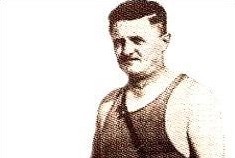
Joe Ball (January 6, 1896 – September 24, 1938) was an American serial killer.…
14 victims
Joe Ball
Serial killer · USA · 1936
Joe Ball (January 6, 1896 – September 24, 1938) was an American serial killer.…
14 victims
 Brenda Nicholas
Murderer · USA · 2011
Brenda Nicholas was sentenced to 34 years in prison for the robbery and stabbin…
1 victim
Brenda Nicholas
Murderer · USA · 2011
Brenda Nicholas was sentenced to 34 years in prison for the robbery and stabbin…
1 victim
- Gender
- male
- Country
- USA
- Location
- Hartford, Connecticut, USA
- Date of birth
- 1963
- Age at first offence
- 37
- Characteristics
- drugs
- Victim profile
- Aida Quinones, 33 / Rosali Jimenez, 33 / Alesia Ford, 37 ( prostitutes and drug addicts )
- Method of murder
- Beating - Strangulation
- Date(s) of murder
- 2000 - 2001
- Years active
- 2000–2001
- Date of arrest
- January 13, 2002
- Status
-
Life imprisonment
Sentenced to three consecutive life sentences, 2004
Case record: Matthew Steven Johnson
Background
Matthew Steven Johnson was arrested in Hartford on charges that he killed two women. He was described as a homeless drifter.
Johnson had a lengthy criminal record before the homicides. When he was 19, he was convicted of beating and attempting to rob a security guard inside the Cathedral of St. Joseph in Hartford's Asylum Hill neighborhood in 1982. He served four years of a 10-year sentence. In 1988, Johnson was convicted of forcefully restraining a woman on the street. About two years later, he was convicted and imprisoned for raping and beating another woman.
The offence
Johnson was charged with two counts of murder in connection with the April 2000 death of Aida Quinones and the death last July of Alesia Ford.
Johnson was later convicted in February 2004 of three counts of Murder for the slayings of three women who were found murdered in the Asylum Hill neighborhood of Hartford.
In the case of three women, the bodies were found within a one-half mile radius of one another. Two of the bodies were found outdoors, while one was found inside an abandoned building. Two of the bodies were found lying face up, while the other was found lying face down. All three women were found with their pants pulled down around one leg. The defendant's semen was found at different locations on the bodies of each of the three women. Drug paraphernalia was found by two of the bodies, and drugs were determined to be in the bloodstream of all three women. The medical examiner determined that the amount of force and injuries to all three women were similar.
Johnson told police he did not know the victims and couldn't be responsible for their deaths because he had not had sex with a woman since 1982. That contradicted testimony that Johnson's DNA was found in semen samples collected from the bodies of each of the victims.
Johnson was serving three consecutive life sentences for the beating and strangulation deaths of 33-year-old Aida Quinones, 33-year-old Rosali Jimenez, and 37-year-old Alesia Ford. Their bodies were found within a one-mile radius in a neighborhood near downtown Hartford in 2000 and 2001. The three victims were described by police and state science experts as prostitutes and drug addicts, each of whom had sexual contact with Johnson shortly before they were found dead.
Victims and locations
Aida Quinones:
- Body discovered April 16, 2000
- Location: 85 Laurel Street, Hartford
- Age: 33 (in the context of the Supreme Court description)
Rosali Jimenez:
- Body found August 29, 2000
- Location: 50-52 Cedar Street, Hartford
- Age: 33
Alesia Ford:
- Death described as “last July” at the time of the initial arrest narrative
- Body found July 22, 2001
- Location: 1 Myrtle Street, Hartford
- Age: 37
In addition, police described Aida Quinones's partly clothed body as discovered beneath a highway overpass in Hartford. Police described Alesia Ford's partially clad body as found near an abandoned building in Hartford.
Investigation
Johnson’s arrest resulted from an investigation by the Cold Case Unit, Connecticut State Police, the State Police Forensic Laboratory DNA Section, the State of Connecticut Department of Correction, and the Hartford Police Department into the deaths of nine women in the Hartford area over the course of seven years.
Five deaths occurred in a particular area of Asylum Hill, and three of the victims were tied to Johnson by DNA evidence.
A forensic scientist named Henry Lee testified during Johnson’s trial that the women were killed in similar ways and dumped in similar spots. Lee, a former Connecticut State Police commissioner and nationally known forensics expert, testified during Johnson’s trial.
Lee testified that:
- Their clothing also was disheveled and partially removed in the same way in each case
- Those factors convinced him a lone serial killer committed the homicides
- Johnson's DNA was found in semen samples collected from the bodies of each of the victims
Arrest and pretrial
Johnson was held on $2.5 million bond on Saturday and was scheduled to be arraigned.
Trial
The defendant was charged with murder in connection with the deaths of three women in the city of Hartford that occurred in April of 2000, August of 2000, and July of 2001.
The trial court consolidated the three cases for trial. A jury convicted the defendant of all three crimes.
Johnson was convicted in February 2004 of three counts of Murder.
Sentencing
Johnson was sentenced to three consecutive life sentences.
Appeals
Connecticut’s Supreme Court upheld Johnson’s life prison sentence. The court rejected Johnson’s argument that he should have had separate trials for the three deaths.
The court also rejected Johnson’s claim that it was unfair that jurors were swayed by Henry Lee’s description of the deaths as serial killings because of similar methods used by the killer.
Johnson also had an appeal in which he argued:
- The trial court improperly allowed evidence from each murder case to be considered in the other cases for the limited purpose of proof of a common scheme or plan
- The state showed only that there were some similarities between the crimes but not that there was a true scheme or plan by the defendant
- The common scheme or plan exception to the general rule barring evidence of uncharged misconduct was improperly merged with the identity exception
Johnson further argued on appeal that the trial court improperly allowed Henry Lee to testify that, based on his review of the autopsies, reports, and photographs of the three murder scenes, the same person committed all three crimes and that the crimes constituted serial killings.
Johnson argued such testimony was improper because it constituted an opinion on an ultimate issue that should have been decided by the jury and that it violated an earlier ruling by the court that evidence from each case was not admissible in the others to prove identity.
Johnson also argued that Henry Lee’s characterization of the crimes as serial killings was irrelevant and extremely prejudicial.
A case listing for the appeal included:
- STATE v. MATTHEW STEVEN JOHNSON, SC 17190
- Judicial District of Hartford Criminal
- Whether Evidence from one Murder Case was Properly Considered in Other Murder Case as Proof of Common Scheme or Plan; Whether Forensic Scientist's Testimony Constituted Opinion on Ultimate Issue to be Decided by Jury and Whether His Characterization of Murders as Serial Killings was Extremely Prejudicial
Outcome
The Supreme Court upheld the life prison sentence.
Aftermath
Johnson was serving three consecutive life sentences.

Spotted an error, or have more information about this case?