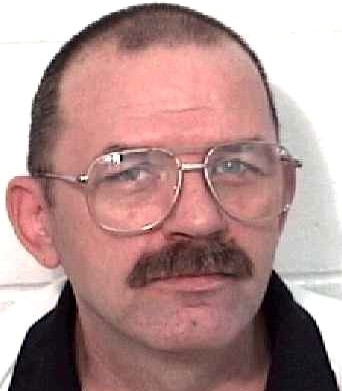
William Earl Lynd
Murderer Brian Kevin Rosenfeld
Murderer · USA · 1985
Brian Kevin Rosenfeld Brian Kevin Rosenfeld was sentenced to three concurrent l…
23 victims
Brian Kevin Rosenfeld
Murderer · USA · 1985
Brian Kevin Rosenfeld Brian Kevin Rosenfeld was sentenced to three concurrent l…
23 victims
 Yahweh ben Yahweh
Murderer · USA · 1980
Yahweh ben Yahweh was born and legally named Hulon Mitchell Jr. (October 27, 19…
23 victims
Yahweh ben Yahweh
Murderer · USA · 1980
Yahweh ben Yahweh was born and legally named Hulon Mitchell Jr. (October 27, 19…
23 victims
 Russell Ellwood
Murderer · USA · 1991
Russell Ellwood was a former taxi driver. Authorities suspected him of killing…
20 victims
Russell Ellwood
Murderer · USA · 1991
Russell Ellwood was a former taxi driver. Authorities suspected him of killing…
20 victims
 Robert Martines Perez
Murderer · USA · 1994
Name: Robert Martines Perez · Other name used in proceedings: Robert Martinez P…
15 victims
Robert Martines Perez
Murderer · USA · 1994
Name: Robert Martines Perez · Other name used in proceedings: Robert Martinez P…
15 victims
 Wade Frankum
Mass murderer · Australia · 1991
Wade Frankum Committed suicide by shooting himself the same day; in 1991 Wade F…
7 victims
Wade Frankum
Mass murderer · Australia · 1991
Wade Frankum Committed suicide by shooting himself the same day; in 1991 Wade F…
7 victims
 Anibal Canales
Murderer · USA · 1997
Anibal Canales, Jr. was convicted in Texas of capital murder and was sentenced…
1 victim
Anibal Canales
Murderer · USA · 1997
Anibal Canales, Jr. was convicted in Texas of capital murder and was sentenced…
1 victim
 Kimberly Cunningham
Murderer · USA · 2003
Kimberly Cunningham — defendant and killer of Coy Hundley. · Coy Hundley — alle…
1 victim
Kimberly Cunningham
Murderer · USA · 2003
Kimberly Cunningham — defendant and killer of Coy Hundley. · Coy Hundley — alle…
1 victim
 David Renz
Murderer · USA · 2013
March 14, 2013 — David Renz carjacked Liverpool librarian Lori Ann Bresnahan an…
1 victim
David Renz
Murderer · USA · 2013
March 14, 2013 — David Renz carjacked Liverpool librarian Lori Ann Bresnahan an…
1 victim
 Lindsay Robert Rose
Murderer · Australia · 1984
Lindsay Robert Rose was sentenced to five consecutive sentences of life impriso…
5 victims
Lindsay Robert Rose
Murderer · Australia · 1984
Lindsay Robert Rose was sentenced to five consecutive sentences of life impriso…
5 victims
- Gender
- male
- Country
- USA
- Location
- Georgia/Ohio, USA
- Date of birth
- January 1955
- Age at first offence
- 33
- Characteristics
- robbery, argument
- Victim profile
- Ginger Moore, 26 (his live-in girlfriend) and Leslie Joan Sharkey, 42
- Method of murder
- Shooting
- Date(s) of murder
- December 23-25, 1988
- Years active
- 1988
- Date of arrest
- December 31, 1988 ( surrenders )
- Status
-
Executed
Executed by lethal injection in Georgia on May 6, 2008
Case record: William Earl Lynd
Background
William Earl Lynd was convicted in Berrien County of kidnapping with bodily injury and murder, and sentenced to death for the murder. Lynd also received a life sentence for the kidnapping.
Lynd lived with his girlfriend, Virginia “Ginger” Moore, in her home in Berrien County.
Lynd later surrendered to Berrien County authorities.
In January 1989, after his surrender to Berrien County authorities, Lynd helped authorities find Ginger Moore’s body. He tried recalling where he had buried Moore on the night of Dec. 23 before authorities found her remains.
The offence
Murder of Virginia “Ginger” Moore
Following an argument three days before Christmas 1988, Lynd shot Ginger Moore in the face and then went outside to smoke a cigarette. Moore regained consciousness and followed Lynd outside. Lynd shot Moore a second time, put her into the trunk of his car, and drove away.
Hearing Moore “thumping around” in the trunk, Lynd got out, opened the trunk, and shot Moore a third time, killing her.
Lynd returned home, cleaned up the blood, and drove to Tift County, where he buried Moore’s body in a shallow grave.
Two accounts of what Moore’s condition was when she was placed in the trunk were presented:
- Prosecutors argued that Moore was still alive when Lynd put her in the trunk.
- Lynd’s lawyers argued there was no evidence that Moore was alive when she was put in the trunk.
A medical examiner, Wayne Tillman, testified that he believed Moore was alive when she was put in the trunk. In later proceedings, an affidavit by Tillman stated that, after looking at photos of the trunk that Tillman said he was not shown before he testified, Moore’s heart was “most likely not pumping when she was put in the trunk of the car.”
Lynd’s lawyers also argued that the killing was without premeditation and fueled by substance abuse, and that it was “Tragic —-yes. Cold-blooded —- no,” in their presentation to the state Supreme Court.
Murder of Leslie Joan Sharkey
Lynd drove to Ohio after the murder of Ginger Moore.
In Ohio, Lynd shot and killed Leslie Joan Sharkey, who died after telling police about the shooting.
Authorities said Lynd fled to Ohio, where he shot and killed another woman who had stopped along the side of the road to help him. Leslie Sharkey was shot on Christmas Day as she traveled to West Virginia for a family gathering. Authorities said Lynd was able to convince Leslie Sharkey that her car was damaged after attracting her attention by flashing his headlights at her. When she pulled her car over to the side of the road, Lynd attacked her and shot her three times. Leslie was able to drive away and tell police what happened before she died.
Lynd later pawned the gun he used to kill both women and traveled to Texas and Florida before eventually returning to Georgia to surrender to Berrien County authorities.
Investigation
The murder weapon used to kill Ginger Moore was recovered and identified by ballistics examination.
Moore’s body was located based on information provided by Lynd.
Arrest
Lynd was arrested on Dec. 31, 1988.
Trial
Jurisdiction and proceedings
Lynd’s special plea of incompetence was tried before a jury on October 23 through 25, 1989.
After a finding that he was competent to stand trial, the trial of the case-in-chief began on February 19, 1990 and concluded on February 27, 1990.
A motion for new trial was filed the next month and denied after hearing on March 5, 1991.
Charges and convictions
Lynd was convicted of kidnapping with bodily injury and murder.
Sentencing issues and aggravating factors
During trial, prosecutors argued that the murder was eligible for the death penalty based on statutory aggravating circumstances. The jury found:
- The offense of murder was committed while the offender was engaged in the commission of another capital felony, to wit: kidnapping with bodily injury.
- The offense of murder was committed while the offender was engaged in the commission of an aggravated battery.
The evidence included testimony that Lynd seriously disfigured Moore with his first shot beneath her left eye, supporting aggravated battery. Evidence about Moore regaining consciousness and protesting her confinement in the trunk before the third shot supported the kidnapping-with-bodily-injury finding.
Lynd argued on appeal that he did not commit kidnapping with bodily injury because the victim was unconscious after the second shot.
The record reflected that:
- Lynd’s jury found two aggravating factors that made the murder eligible for the death penalty, including kidnapping with bodily injury and aggravated battery.
- The trial court excused for cause a prospective juror who testified he was opposed to the death penalty and could not vote for a death sentence in any case regardless of the evidence.
- The trial court refused to disqualify another prospective juror for pro-death penalty bias after the juror testified he could consider and possibly vote for a life sentence after hearing all the evidence.
Counsel and competency-related rulings
An attorney was initially appointed for Lynd, after which Lynd retained an attorney.
At a hearing on March 24, 1989, the trial court questioned the two attorneys about their experience and qualifications, and the court told Lynd it was troubled by his attorneys’ lack of experience. The trial court required Lynd to either retain a more experienced attorney or accept the appointment of a more experienced attorney to act as lead counsel in the case.
At a hearing on May 19, 1989, the court announced for the record that Lynd’s original appointed attorney had been “relieved of any further responsibility in this case” and that another more experienced attorney had been appointed by the court to represent the defendant and act as lead counsel.
Later, when Lynd claimed he could retain an additional attorney, the court ruled that the appointed attorney would stay on the team until Lynd retained an additional attorney and presented him to the court.
Lynd refused to submit to an examination by mental health experts chosen by the state. The trial court excluded testimony of Lynd’s mental health experts where Lynd refused to submit to the state-selected examination.
Sentencing
The jury sentenced Lynd to death.
Lynd was sentenced to death in Berrien County for killing Ginger Moore. He also received a life sentence for the kidnapping.
Lynd was in death row after sentencing.
Appeals
Georgia Supreme Court / direct appeal outcome
Lynd v. State, 262 Ga. 58, 414 S.E.2d 5 (Ga. 1982): The defendant was convicted of kidnapping with bodily injury and murder, and sentenced to death, following jury trial in the Superior Court, Berrien County, W.D. Knight, J., and defendant appealed. The Supreme Court of Georgia affirmed. The Supreme Court held, among other things, that:
- The trial court properly excused for cause a juror opposed to the death penalty.
- The trial court properly refused to disqualify a juror with pro-death penalty bias.
- Enumerations of error not timely raised were waived except plain error.
- The trial court properly appointed counsel even though defendant had retained counsel.
- Evidence of subsequent murder was admissible.
- The sentence of death was not excessive.
The Supreme Court also addressed the statutory aggravating circumstances, including kidnapping with bodily injury and aggravated battery.
Federal habeas corpus
After affirmance of his capital murder and kidnapping convictions and sentences, and denial of his state court habeas application, Lynd sought federal writ of habeas corpus.
The United States District Court for the Middle District of Georgia denied the petition and granted a certificate of appealability (COA) on two claims.
The United States Court of Appeals reviewed two COA issues:
- Whether Lynd was deprived of the right to assistance from necessary and competent experts at his competency trial and at both phases of his capital trial.
- Whether Lynd was denied effective assistance of counsel, including claims that retained counsel advised him not to cooperate with a state mental health evaluation, that counsel failed to investigate his background, mental health, and substance abuse problems, that counsel failed to investigate adequately the State’s case, and that court-appointed counsel had a conflict of interest.
The appellate court denied Lynd’s petition. It held that:
- Federal review of Lynd’s Ake claim was precluded due to procedural default.
- The state courts’ exclusion of Lynd’s mental health expert testimony did not entitle him to relief.
- The court rejected multiple ineffective-assistance claims, including claims regarding advice about submitting to a state evaluation, investigation into his background, and investigation regarding whether the victim could have regained consciousness.
- The court rejected the conflict-of-interest challenge.
Outcome
Execution status and last meal
Lynd was scheduled for execution by lethal injection in Georgia on Tuesday, May 6, 2008 at 7:00 p.m.
He was executed by lethal injection and pronounced dead at 7:51 p.m.
Lynd declined to make a final statement and declined a prayer.
Lynd’s last meal consisted of:
- Two pepper jack BBQ burgers with crisp onions
- Two baked potatoes with sour cream, bacon and cheese
- One large strawberry milkshake from a local restaurant
Clemency
Lynd’s clemency request was denied by the state Board of Pardons and Paroles.
Execution procedure
A registered nurse put a line into each of Lynd’s arms; one line served as a back-up.
Aftermath
Georgia held multiple executions following the constitutional litigation over lethal injection.
Death penalty opponents staged vigils around the state on the night of Lynd’s execution. Signs included “End state killing” and “not in my name.”
Lynd’s brother and sister-in-law witnessed the execution while Lynd’s mother and other relatives waited elsewhere in the prison.
Prison spokesman Paul Czachowski stated Lynd spent much of his last day visiting with a sister and a girlfriend and requested a mild sedative to calm him before his death.
Lynd wrote on a prison website in 2005: “All friends and those I cared about over the last 16 years have all slowly drifted away and out of my life.” He also wrote that his age was incorrect by a decade, claiming he was 40 years old at a time when he would have been turning 50.
Other details
Lynd’s identity and custody details included:
- GDC ID: 0000437139
- DOB: 1/55
- RACE: WHITE
- GENDER: MALE
- HEIGHT: 5' 11"
- WEIGHT: 180
- EYE COLOR: BLUE
- HAIR COLOR: BROWN
- MOST RECENT INSTITUTION: GA DIAG & CLASS PRIS-PERM
- CASE NO: 255222
- OFFENSE: MURDER, KIDNAPPING
- CONVICTION COUNTY: BERRIEN COUNTY
- CRIME COMMIT DATE: 12/23/88
Media witnesses listed for the execution included: Shannon McCaffrey (Associated Press); Donna Branch (WTHO-FM, Thompson Georgia); Josephine Bennett (Georgia Public Broadcasting); Debbie Cole (The Berrien Press); and Macon Telegraph.
An execution media advisory listed Commissioner James E. Donald as Commissioner.
A quote attributed to a lethal injection expert, Deborah Denno, said: “It’s going to crank up again,” said lethal injection expert and Fordam Law School professor Deborah Denno. “Life is going back to the way it was” before executions nationwide were unofficially put on hold last October until the U.S. Supreme Court could rule on the constitutionality of lethal injection, the method of execution used in Georgia and 36 other states.
A quote attributed to Laura Moye, Chair of Georgians for Alternatives to the Death Penalty, said: “We will be taking a public stand against the state killing in our name as a futile and brutalizing exercise that we believe make us no less safe nor whole,” said Moye.
Another quote attributed to Claudia Bishop said: “They shouldn’t let so many years go by,” said Claudia Bishop. “I feel for the victim's family and for his family but not for him.”
A quote attributed to Tom Dunn said: “In my 20 years of capital defense work, except for DNA exonerations, I have never had a clearer factual basis for relieve,” Dunn said in a written statement. “No mincing of words. Just objective medical and physical evidence. Unfortunately, it came too late because of the lack of funds to hire the necessary experts.”
A statement attributed to Paul Czachowski said: Lynd was “somber,” and requested a mild sedative to calm him in the hours before going to his death.
A statement attributed to the Georgia Department of Corrections public affairs manager, Paul Czachowski, said: “The condemned declined to make a last statement or accept a prayer; he remained quiet and calm throughout the whole procedure,” he said.
A quote attributed to Tommy Floyd, chairman of the Prosecuting Attorneys’ Council of Georgia, said: “There's been no evidence in this state -- and I'm not aware of any in the country -- that any demonstrably innocent person has been put to death,” said Tommy Floyd, chairman of the Prosecuting Attorneys' Council of Georgia. “No prosecutor I know wants to execute an innocent person.”
Spotted an error, or have more information about this case?