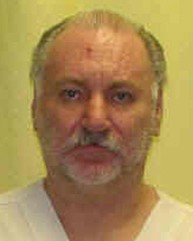
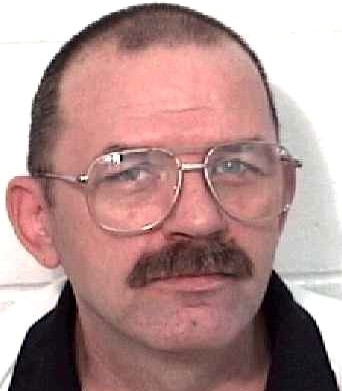
Jeffrey Lundgren
Murderer Brian Kevin Rosenfeld
Murderer · USA · 1985
Brian Kevin Rosenfeld Brian Kevin Rosenfeld was sentenced to three concurrent l…
23 victims
Brian Kevin Rosenfeld
Murderer · USA · 1985
Brian Kevin Rosenfeld Brian Kevin Rosenfeld was sentenced to three concurrent l…
23 victims
 Yahweh ben Yahweh
Murderer · USA · 1980
Yahweh ben Yahweh was born and legally named Hulon Mitchell Jr. (October 27, 19…
23 victims
Yahweh ben Yahweh
Murderer · USA · 1980
Yahweh ben Yahweh was born and legally named Hulon Mitchell Jr. (October 27, 19…
23 victims
 Russell Ellwood
Murderer · USA · 1991
Russell Ellwood was a former taxi driver. Authorities suspected him of killing…
20 victims
Russell Ellwood
Murderer · USA · 1991
Russell Ellwood was a former taxi driver. Authorities suspected him of killing…
20 victims
 Robert Martines Perez
Murderer · USA · 1994
Name: Robert Martines Perez · Other name used in proceedings: Robert Martinez P…
15 victims
Robert Martines Perez
Murderer · USA · 1994
Name: Robert Martines Perez · Other name used in proceedings: Robert Martinez P…
15 victims
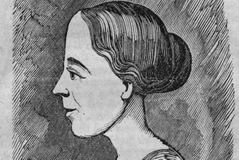 Mary Runkle
Murderer · USA · 1847
Mary Runkle was convicted of first-degree murder for the death of her husband,…
1 victim
Mary Runkle
Murderer · USA · 1847
Mary Runkle was convicted of first-degree murder for the death of her husband,…
1 victim
 Asher Weisgan
Spree killer · Israel · 2005
Name: Asher Weisgan · Birth–death: 1966 – December 22, 2006 · Nationality/occup…
4 victims
Asher Weisgan
Spree killer · Israel · 2005
Name: Asher Weisgan · Birth–death: 1966 – December 22, 2006 · Nationality/occup…
4 victims
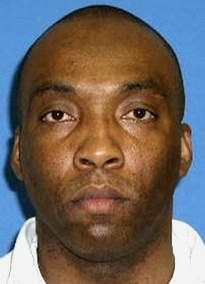 Farley Matchett
Murderer · USA · 1991
Farley Charles Matchett was executed by lethal injection in Texas on September…
2 victims
Farley Matchett
Murderer · USA · 1991
Farley Charles Matchett was executed by lethal injection in Texas on September…
2 victims
 Bryan Kim
Murderer · USA · 2006
Bryan Kim was 19 years old at sentencing and was described as a former Mount Sp…
2 victims
Bryan Kim
Murderer · USA · 2006
Bryan Kim was 19 years old at sentencing and was described as a former Mount Sp…
2 victims
 Joseph Young
Murderer · USA · 2005
Joseph (Joe Black) Young was a reputed hitman for the Bonanno crime family. He…
1 victim
Joseph Young
Murderer · USA · 2005
Joseph (Joe Black) Young was a reputed hitman for the Bonanno crime family. He…
1 victim
- Gender
- male
- Country
- USA
- Location
- Lake County, Ohio, USA
- Date of birth
- May 3, 1950
- Age at first offence
- 39
- Characteristics
- convicted rapist, mentally ill
- Victim profile
- Dennis and Cheryl Avery and their three daughters
- Method of murder
- Shooting ( .45 caliber semiautomatic weapon)
- Date(s) of murder
- April 17, 1989
- Years active
- 1989
- Date of arrest
- January 7, 1990
- Status
-
Executed
Executed by lethal injection on October 24, 2006 in Ohio
Case identity
Jeffrey D. Lundgren (INMATE #: A456727), Caucasian. Date of birth: 05/03/50. County: Lake County. Crime: Aggravated Murder (5 Counts). Sentence: Death.
Status of execution
Jeffrey Lundgren was executed by lethal injection in Ohio on October 24, 2006. The execution was confirmed by Ohio Department of Rehabilitation and Correction officials, with the execution taking place at the Southern Ohio Correctional Facility in Lucasville, Ohio. The Ohio Revised Code mandated lethal injection as the manner of execution.
Last meal
Turkey, potatoes and gravy, a salad, and pumpkin pie.
Final words
- January 5, 1990 — Jeffrey D. Lundgren was charged in a ten-count indictment with five counts of aggravated murder and five counts of kidnapping.
- August 23, 1990 — A jury trial commenced.
- August 29, 1990 — The jury returned a verdict of guilty on all counts.
- September 17, 1990 — The mitigation phase of the trial began.
- September 20, 1990 — The jury recommended that the sentence of death be imposed.
- September 21, 1990 — The trial court adopted the recommendation and sentenced Lundgren to death on counts one through five; it imposed an indefinite term of incarceration of ten to twenty-five years on counts six through ten, served consecutively.
- October 25, 1990 — Lundgren timely filed a notice of appeal to the Ohio court of appeals.
- January 16, 1991 — Lundgren filed a motion for a new trial pursuant to Crim.R. 33(A)(6) based on newly discovered evidence.
- February 4, 1991 — The motion for a new trial was denied.
- February 27, 1991 — Lundgren appealed from that decision.
- April 1, 1991 — The appeals were consolidated by the court.
- April 17, 1989 — The Avery family murders occurred.
- November 1987 — Lundgren and his group moved to a farmhouse on Chardon Road after he was fired from his tour guide position at the Kirtland Temple.
- October 1989 — The group disbanded in West Virginia after local authorities became suspicious of their connection to the Kirtland investigation.
- January 7, 1990 — Federal authorities arrested Lundgren in California.
- May 1999 — Lundgren filed a petition for a writ of habeas corpus in federal district court.
- November 2001 — The federal district court denied the habeas petition without an evidentiary hearing.
- December 2001 — Lundgren appealed to the U.S. Court of Appeals for the Sixth Circuit.
- February 2003 — A panel vacated the decision and remanded for individual treatment of claims.
- June 2004 — The Court of Appeals reversed in part and granted a certificate of appealability on named claims.
- October 18, 2006 — A news release confirmed the execution was set for October 24, 2006 at 10:00 AM.
- October 24, 2006 — Lundgren was executed; lethal injection syringes were administered and officials announced a time of death of 10:26 a.m.
"For my last words I'd like to profess my love for God, my family, my children and my beloved wife. ... I am because you are," Lundgren said just before he was executed.
Timeline
The offence
Victims and family
Lundgren was convicted of shooting Dennis Avery (49), Cheryl Avery (41), and their daughters Trina Avery (15), Rebecca Avery (13), and Karen Avery (7) in 1989. The victims were murdered while standing in a pit dug inside Lundgren’s Kirtland barn.
Group and planning
Lundgren and a group of followers broke away from the Reorganized Church of Jesus Christ of Latter Day Saints, now called the Community of Christ. Lundgren’s group believed doomsday was near. Lundgren formed a cult after he was fired as a lay minister of the Reorganized Church of Jesus Christ of Latter Day Saints. The Avery family moved from Missouri in 1987 to follow Lundgren’s teachings. Lundgren believed the Averys were disloyal for not pooling their finances into a common church fund. Lundgren invited Dennis Avery, Cheryl Avery, and their three daughters over for dinner. After dinner, each Avery family member was led individually out to the barn, where each was bound and gagged by a group of men. After the Avery family members were placed into the pit, Lundgren shot each person two or three times with a .45 caliber semiautomatic weapon, and the men filled the pit with dirt and stones. Afterward, Lundgren and the others went back to the farmhouse and held a prayer meeting.
Method and burial
After each victim was bound and gagged, the men placed them into the pit. The pit was then filled with dirt and stones. Lime was spread over their bodies to enhance decomposition. The pit was piled with rocks and dirt and covered with garbage and old appliances. In his unsworn statement, Lundgren related that this method of burial was necessary pursuant to passages in the Old Testament books of Isaiah and Deuteronomy, and he believed “darkness” meant “death” in Hebrew.
Specific shooting details
Dennis Avery was attacked with a stun gun, wrestled to the ground, and bound with silver duct tape with his eyes left uncovered. He was carried over a pile of garbage and shot twice in the back by Lundgren. Mrs. Avery (Cheryl Avery) was led to the barn, attacked with a stun gun, wrestled to the ground, bound with duct tape, carried over the pile of garbage, dropped into the pit, and shot once in the back by Lundgren. Trina Avery was retrieved and, after being bound and dropped into the pit, was shot and killed by Lundgren. Becky Avery and Karen Avery were carried to the pit, bound, and shot and killed by Lundgren. Becky Avery was shot once from behind and once from the front; Karen Avery was shot once (head and chest described in the factual summary of bodies found).
Investigation and arrest
Pre-arrest inquiry and wilderness trip
The next day after April 17, 1989, police officers and FBI agents visited the Lundgren farm to investigate reports about a planned temple assault. Everyone interviewed said they were at the farm voluntarily and denied knowing anything about plans to assault the temple. The FBI left without arresting anyone, and the group drove away on a wilderness trip.
Discovery of the pit and bodies
On January 3, 1990, Kirtland police began digging out the pit in the barn and found Dennis Avery’s body. Police uncovered the other Avery family members’ bodies the next day. The coroner found silver duct tape wrapped around the victims’ heads, hands, and feet. The origin of two damaged bullets found at the scene was unknown. Police discovered that a .45 caliber semiautomatic weapon belonging to Lundgren had fired all of the other bullets they recovered. Lundgren bought the weapon in 1987 and sold it in West Virginia in October 1989.
Arrest in California
On January 7, 1990, federal authorities arrested Lundgren in California. After the arrests, the Bureau of Alcohol, Tobacco and Firearms (BATF) searched motel rooms where Lundgren had been staying and found the group’s collection of weaponry along with a roll of silver duct tape. Two guns sought by the Kirtland Police Department were later discovered in West Virginia. The murder weapon, a .45 automatic combat elite semi-automatic, was recovered from Mr. Charles Judy, who had purchased the gun from Paxton’s Sports Shop in Elkins, West Virginia. The second gun, a .45 caliber gold cup, was obtained from Dr. Steven Lester, who had purchased the weapon from Mountaineer Sports Center in Elkins, West Virginia.
People involved
Lundgren’s group and followers (participants mentioned)
Alice (Lundgren’s wife; referred to in background and execution-cell narrative as his wife, and separately as a principal accomplice in sentencing information). Kevin Currie and Richard Brand moved in with Lundgren and family after the initial residence. Sharon Bluntschly spent a great deal of her time at the Lundgren residence. Daniel Kraft, Gregory Winship, Ronald Luff, Damon Lundgren (Lundgren’s son), Danny Kraft, Tonya Patrick, Larry Keith Johnson, and Kathryn R. Johnson are referenced in the accounts of group membership, dissension, and events surrounding the group’s movements.
Accomplices and their sentencing
The accomplices’ sentences were listed as:
- Alice Lundgren — Aggravated Murder (5 counts), Kidnapping (5 counts); 150 years to Life.
- Damon Lundgren — Aggravated Murder (4 counts), Kidnapping (4 counts); 120 years to Life.
- Ronald Luff — Aggravated Murder (5 counts), Kidnapping (5 counts); 170 years to Life.
- Daniel Kraft — Aggravated Murder (5 counts), Kidnapping (3 counts); 50 years to Life.
- Gregory Winship — Murder (5 counts); 15 years to Life.
- Richard Brand — Murder (5 counts); 15 years to Life.
- Sharon Bluntschly — Conspiracy to Aggravated Murder; 7-25 years.
- Deborah Olivarez — Conspiracy to Aggravated Murder; 7-25 years.
- Susan Luff — Conspiracy to Aggravated Murder; sentenced to 7-25 years.
- Kathryn R. Johnson — Obstructing Justice; 1 year.
- Dennis Patrick — Obstructing Justice; 18 months, sentence suspended and placed on 1 year probation.
- Tonya Patrick — Obstructing Justice; 18 months, sentence suspended and placed on 1 year probation.
Trial
Charges and plea
On January 5, 1990, Lundgren was charged in a ten-count indictment with five counts of aggravated murder and five counts of kidnapping. Each aggravated murder count included specifications that:
- the offense was part of a course of conduct involving purposeful killing of or attempt to kill two or more persons, and
- the offense was committed while committing, attempting to commit, or fleeing immediately after committing or attempting to commit kidnapping, and either Lundgren was the principal offender or, if not the principal offender, committed the aggravated murder with prior calculation and design. Lundgren entered a plea of not guilty at arraignment.
Verdict and sentencing recommendation
A jury trial commenced on August 23, 1990, and on August 29, 1990, the jury returned a verdict of guilty on all counts. Mitigation phase began on September 17, 1990, and concluded on September 20, 1990, when the jury recommended death be imposed. On September 21, 1990, the trial court adopted the recommendation and sentenced Lundgren to death on counts one through five and an indefinite term of incarceration of ten to twenty-five years on counts six through ten, each count served consecutively.
Trial evidence and jury deliberation references
Lundgren testified in court that passages in the Bible told him to kill the Avery family. Nearly 17 years later, he told a parole officer he had realized he misinterpreted some things in the Bible. During penalty phase, the court heard testimony including a psychologist, Dr. Nancy Schmidtgoessling, who testified in Lundgren’s behalf and addressed probation and employment conflicts. Former employers were called for rebuttal regarding theft allegations. A witness Shar Sprague testified during the penalty phase regarding Lundgren’s plans to take over the Kirtland Temple.
Specific verbatim quote during later court passage
Lundgren stated in his unsworn statement:
- improper and inflammatory testimony from state's witness Richard Brand,
- admission of decayed clothing and irrelevant gruesome testimony on victims’ stomach contents,
- admission of evidence about an unrelated conspiracy charge that had been dropped and numerous weapons not used in the crimes,
- erroneous instructions at the guilt and penalty phases,
- limiting defense voir dire on mitigating factors,
- prosecutorial misconduct at both guilt and penalty phases and during voir dire,
- challenges involving the kidnapping specification attached to each aggravated murder count,
- juror religious views influencing sentencing,
- admission of inflammatory and gruesome photographs, videotape and testimony,
- denial of motions for change of venue and new trial,
- failure to dismiss his defective capital indictment,
- denial of jury view of the Kirtland Temple,
- proportionality and proportionality process,
- the constitutionality of Ohio’s capital statutory scheme,
- and jury selection and venire issues.
“I cannot say that God was wrong. I cannot say that I am sorry I did what God commanded me to do in the physical act.” and also: “I am a prophet of God. I am even more than a prophet. I am not a false prophet; therefore, I am not worthy of the [death] penalty.”
Appeals
Direct appeal: issues raised
Lundgren filed a direct appeal and raised multiple assignments of error, including claims regarding:
Assignment of error regarding rebuttal evidence on criminal history (verbatim excerpts)
- procedural default rules and state-court treatment did not excuse defaults in a manner granting merits review,
- restrictions placed on cross-examination of accomplices did not violate the right to present mitigating evidence,
- refusal to allow a jury view did not violate the right to present mitigating evidence,
- state postconviction court’s review decisions permitted habeas review of otherwise procedurally barred claims in at least one context,
- counsel’s strategic decision not to present insanity defense was not deficient performance,
- counsel’s failure to object did not prejudice the defendant as required for ineffective assistance,
- the state court’s decision on prejudice was not unreasonable application of federal ineffective assistance law,
- and the state court did not unreasonably apply federal law in determining prosecutorial misconduct comments were harmless based on independent reweighing without improper inference. The judgment was Affirmed.
“The other problem with his statement yesterday, ladies and gentlemen, is, you heard the Judge [ sic ] remarks about it, you have heard Ms. Kowall mention it, that statement yesterday was given not under oath. Now, is it because the Defendant is not familiar with an oath?
Ladies and gentlemen, during the course of testimony, during the post-phases of the trial, the indication to you that the Defendant made Kevin Currie swear an oath and if he violated that oath, he was to die. He had the naked dancing women swear an oath as they returned to their husbands with their soiled undergarments and he had their humiliated husbands swear an oath of allegiance to him dressed in full military gear after the conclusion of that dancing ceremony.
Ladies and gentlemen, the statement given by the Defendant yesterday, the prophet of God, you heard an oath administered by Judge Parks to each and every witness who came into this courtroom that is they swore and/or affirmed that the testimony that I am going to give to you, the jury, is the truth as you shall answer to God.
The Defendant, ladies and gentlemen, did not take such an oath. You are permitted, ladies and gentlemen, to consider that fact as you consider his testimony.”Court actions and execution date scheduling after affirmance
The judgment of the trial court was affirmed. A certified copy of the document constituted the separate opinion as to findings under R.C. 2929.05(A). Pursuant to R.C. 2953.07, after the date for execution having passed, the court set the date of December 1, 1993, for the execution of the death sentence.
Habeas corpus proceedings
Case style and disposition
Lundgren v. Mitchell, 440 F.3d 754 (6th Cir. 2006) (Habeas). The U.S. Court of Appeals held that:
Background facts cited in habeas narrative
The habeas narrative included details of Lundgren’s upbringing and religious involvement, including:
- Lundgren’s birth in Missouri and upbringing in the Reorganized Church of Jesus Christ of Latter Day Saints (RLDS),
- his marriage to Alice,
- unsuccessful college attendance,
- joining the Navy and serving in the Vietnam War in the early 1970s,
- and after honorable discharge in 1974, holding jobs in Missouri. It also stated that Lundgren’s religious beliefs formed the foundation of the case, including scripture interpretation using the “chiastic method.” The habeas narrative recounted that Lundgren solicited and kept contributions received from temple visitors, that the church removed him as a religion teacher, and that he was fired and evicted. It recounted that the RLDS had excommunicated Lundgren and described later movements and dissension within the group. It also recounted murders, including preparation for digging a pit, inviting the Averys to dinner, binding and gagging, shooting with a .45 caliber semiautomatic weapon, and the group’s later movements to mountain campsites near Davis, West Virginia, and then to Missouri and California before arrests.
Specific mental health and expert testimony mentioned
A psychologist, Dr. Nancy Schmidtgoessling, testified for the defense and determined Lundgren suffered from a mixed personality disorder with features of narcissism, paranoia, and antisocial traits. The habeas narrative included that at the time of the offenses Lundgren did not have a mental disease or defect. Lundgren’s IQ of 124 was described as above average, and he was described as not schizophrenic or manic depressive.
Verbatim insanity-related statements attributed within habeas discussion
The habeas narrative included discussion of Lundgren’s unsworn statement and a quote on insanity defense eligibility by Dr. Jeffrey L. Smalldon:
“should have been seen as eligible ··· for a defense of not guilty by reason of insanity.” It also quoted an observation about Dr. Schmidtgoessling: “I don't believe he was insane” and an assertion about her being unable to provide a legal opinion: “legal, as opposed to psychological opinion, something she was not qualified to give.”
Execution details: last 24 hours narrative
Arrival to death house and personal effects
Lundgren arrived at the death house at 9:44:47 a.m. Monday and received a review of personal effects. When asked about what should be done with his personal Bible, gym shorts, socks, underwear, and address book after death, Lundgren said they were to be destroyed. At 9:53:40 a.m., he was strip-searched, given state-issued clothing (dark blue pants and a white V-neck pullover shirt), and told he had unlimited collect phone calls. At 10:06:16 a.m., he requested a special meal that included turkey (white meat), mashed potatoes with gravy, yeast rolls, salad with tomatoes and radishes with Wishbone French Dressing, Pepsi, and pumpkin pie with whipped cream for dessert. At 10:10:22 a.m., the execution team leader asked if he needed anything. At 10:10:42 a.m., he requested a paper cup for some water. Five minutes and 16 seconds later, at 10:15:02 a.m. and related sequence, he opened his Bible and began to read. At 10:18:02 a.m., when asked if he needed anything else to eat or drink, Lundgren said he was "OK."
Family calls, medications, and behavior
No family visited him during his final 24 hours in Lucasville. He spent about four and one-half hours watching TV, mostly laying in his bed, sometimes covered by a blanket, and none after learning his stay of execution had been lifted. He also spent time reading his Bible. At 8:13:25 a.m. Monday, a medical staff member gave Lundgren doses of three medications to control high blood pressure and blood sugar levels. At 8:35:46 a.m., he took a call from his attorney; he resumed conversation with his wife at 8:41:47 a.m. At 8:51:25 a.m., a call from his attorney let him know the governor had denied him clemency and the Supreme Court had denied his stay of execution. Lundgren called his wife one last time at 8:52:24 a.m., and the two disconnected at 9:15:38 a.m.
Rev. Gary Sims and praying
The Rev. Gary Sims arrived at 4:34:45 p.m. and was present while Lundgren prayed and held prayer with him from 9:29:41 a.m. to 9:34:11 a.m. The Rev. Sims left at 9:42:22 a.m. Lundgren began praying by himself at 9:44:47 a.m.
Death warrant and heparin locks
At 10:00:00 a.m., the warden approached Lundgren’s holding cell to read him his death warrant. Lundgren laid on his bed to be prepared with heparin locks at 10:01:39 a.m., viewed on a monitor by the execution witnesses. At 10:15:02 a.m., he rose with help from team members and began the 17 steps to the execution chamber eight seconds later.
Injection procedure
A final statement at 10:17:22 a.m. professed his love for God, his family, his children and his wife. At 10:17:33 a.m., a secret signal began the injection process. Syringes of Thiopental Sodium were injected at 10:17:42 a.m. and 10:18:25 a.m., followed by a full flush at 10:19:08 a.m. Syringes of Pancuronium Bromide were injected at 10:20:13 a.m. and 10:21:14 a.m., followed by another full flush at 10:22:10 a.m. The final syringe of Potassium Chloride was injected at 10:23:24 a.m., concluding the injection process at 10:25:17 a.m. At 10:27:21 a.m., the warden announced Lundgren’s time of death was 10:26 a.m. The witness curtain was closed at 10:27:36 a.m.
Other details
Group’s religious and financial beliefs described in the direct appeal narrative
Lundgren convinced followers to turn over their entire paychecks to him. He claimed he was a prophet of God and could interpret scriptures using a “chiastic” method. The narrative described his teachings as including that they would have to kill ten people to fulfill his prophecies, and it described beliefs drawn from the Book of Mormon and Old Testament teachings about death and destruction as judgment. The narrative described that he did not want the Averys to be a part of his group because in his view they were “lazy, wimpy, and socially unacceptable.” It also described that after the Averys arrived, he convinced Dennis Avery to turn over money and property to him.
Evidence about weaponry and duct tape
After the arrests, BATF searched the motel rooms and found weaponry along with a roll of silver duct tape. At the scene, silver duct tape was found wrapped around victims’ heads, hands, and feet.
Additional sentencing and clemency context included
The execution was delayed by a lawsuit that questioned the Constitutionality of Ohio’s use of lethal injection. A temporary stop on the execution was placed by U.S. District Court Judge Gregory Frost, and then a three-judge panel overturned Frost’s order. At 10:49:36 p.m., Lundgren received a call from the warden to let him know the stay had been lifted and the execution would continue. Lundgren was informed at 8:51:25 a.m. that the governor denied clemency and the Supreme Court denied his stay of execution.
Consent to destroy personal Bible, shorts, socks, underwear, and address book
When asked what should be done with his personal Bible, pair of gym shorts, socks, underwear and address book after his death, Lundgren said they were to be destroyed.
Spotted an error, or have more information about this case?