
Anibal Canales
Murderer Russell Ellwood
Murderer · USA · 1991
Russell Ellwood was a former taxi driver. Authorities suspected him of killing…
20 victims
Russell Ellwood
Murderer · USA · 1991
Russell Ellwood was a former taxi driver. Authorities suspected him of killing…
20 victims
 Robert Martines Perez
Murderer · USA · 1994
Name: Robert Martines Perez · Other name used in proceedings: Robert Martinez P…
15 victims
Robert Martines Perez
Murderer · USA · 1994
Name: Robert Martines Perez · Other name used in proceedings: Robert Martinez P…
15 victims
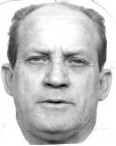 Billy Frank Vickers
Murderer · USA · 1993
Billy Frank Vickers Vickers was executed by lethal injection in Texas on Januar…
14 victims
Billy Frank Vickers
Murderer · USA · 1993
Billy Frank Vickers Vickers was executed by lethal injection in Texas on Januar…
14 victims
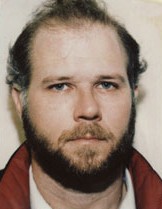 Glenn Barker
Murderer · USA · 1982
Glenn Haslam Barker was a basketball coach for the South Brunswick Family YMCA.…
3 victims
Glenn Barker
Murderer · USA · 1982
Glenn Haslam Barker was a basketball coach for the South Brunswick Family YMCA.…
3 victims
 Erik Hollie
Murderer · USA · 2009
Erik Hollie was sentenced to death on March 16, 2010, for a capital murder in W…
1 victim
Erik Hollie
Murderer · USA · 2009
Erik Hollie was sentenced to death on March 16, 2010, for a capital murder in W…
1 victim
 Beverley Allitt
Serial killer · United Kingdom · 1991
Beverley Allitt was a nurse who suffered from the mental illness Munchausen’s S…
4 victims
Beverley Allitt
Serial killer · United Kingdom · 1991
Beverley Allitt was a nurse who suffered from the mental illness Munchausen’s S…
4 victims
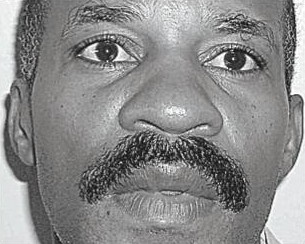 Walter Mickens
Murderer · USA · 1992
Walter Mickens was convicted of capital murder in the killing of Timothy Jason…
1 victim
Walter Mickens
Murderer · USA · 1992
Walter Mickens was convicted of capital murder in the killing of Timothy Jason…
1 victim
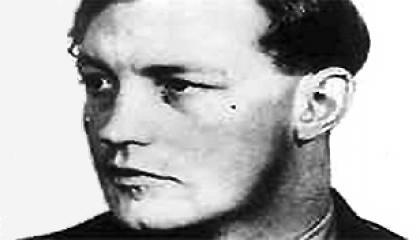 Neville Heath
Murderer · United Kingdom · 1946
Neville George Clevely Heath (1917–46) was born in Essex, England, and later li…
2 victims
Neville Heath
Murderer · United Kingdom · 1946
Neville George Clevely Heath (1917–46) was born in Essex, England, and later li…
2 victims
 Charles Howard Schmid
Murderer · USA · 1964
Charles Howard Schmid was born on 8 July 1942 and was adopted by Charles and Ka…
3 victims
Charles Howard Schmid
Murderer · USA · 1964
Charles Howard Schmid was born on 8 July 1942 and was adopted by Charles and Ka…
3 victims
- Gender
- male
- Country
- USA
- Location
- Bowie County, Texas, USA
- Date of birth
- December 1, 1964
- Age at first offence
- 33
- Characteristics
- convicted rapist, abuse
- Victim profile
- A 47 year old white offender in the victim's cell
- Method of murder
- Strangulation
- Date(s) of murder
- July 11, 1997
- Years active
- 1997
- Date of arrest
- —
- Status
-
Sentenced to death
Sentenced to death on November 1, 2000
Case identification
Anibal Canales, Jr. was convicted in Texas of capital murder and was sentenced to death.
TDCJ Number: 999366 Date of birth: 12/1/1964 Sex: male Race: Native County: Bowie County Hair color: black Eye color: brown Height: 6 ft 5 in Weight: 280
Timeline
- 7/11/1997 — Canales strangled to death a 47-year-old white inmate in the victim’s cell at the Telford Unit in Bowie County.
- 11/1/2000 — Canales was sentenced to death.
- 1/15/2003 — The Court of Criminal Appeals of Texas delivered the opinion on direct appeal, affirming the judgment.
Background
At the time of the capital murder, Canales was incarcerated in prison.
Evidence showed that Canales was one of approximately 106 members of the Texas Mafia, a criminal organization that carried on assorted criminal activities.
The offence
On 7/11/1997, while incarcerated in the Telford Unit in Bowie County, Canales strangled to death a 47-year-old white offender in the victim’s cell.
The evidence showed that Canales and another inmate murdered the victim based on orders from a Texas Mafia member because the victim had interfered with business dealings of the Texas Mafia.
Investigation
At trial, the prosecution presented evidence that Canales murdered the victim with the intent to participate in a combination.
A letter was admitted into evidence and described as being addressed from Canales in support of the prosecution’s theory of participation in the Texas Mafia.
Canales described the murder to another Texas Mafia member in a letter, writing:
Puff [the other inmate] put the hold on [the victim], and I [appellant] grabbed his arms. It went smooth. He lost consciousness right away, and struggled for a bit. I took the time to inform him who we were and why he's going to die. Puff told him, don't even fuck with the Texas mafia in hell. ha, ha, ha. Anyway, we made sure the dick sucker was dead, and I declared the hit complete. We put his shit smelling ass on the top bunk and went quietly out the door.
The prosecution used a prison record containing Canales’s known fingerprint to establish that a fingerprint found on the letter belonged to Canales. The record reflected that the letter was properly admitted into evidence.
Arrest
The record included procedural history reflecting Canales’s transfers and releases relating to prior federal and Texas custody, including releases on bench warrant and parole-related holds.
In 1983, Canales was confined for 6 months and released to Federal probation during 1983 after a Federal Correctional Institution sentence for 1 count of possession of stolen mail.
In June 1984, Canales returned as a Federal probation violator.
On 8/17/1984, Canales was released on bench warrant to Texas detainer.
A 15-year Texas Department of Criminal Justice sentence from Bexar County was referenced for 1 count of sexual assault.
On 6/25/1990, Canales was released on parole to a “hold” from US Marshall Office.
On 12/17/1993, Canales returned as a parole violator from Bexar County.
On 2/17/1995, Canales was released on mandatory supervision to a “hold” from Bexar County Sheriff’s Office.
On 2/3/1995, Canales returned from mandatory supervision on a 15-year sentence for 1 count of aggravated sexual assault.
Trial
The Court of Criminal Appeals of Texas framed the case as:
IN THE COURT OF CRIMINAL APPEALS OF TEXAS NO. 73,988 ANIBAL CANALES, Appellant v. THE STATE OF TEXAS ON DIRECT APPEAL FROM BOWIE COUNTY
Charges and legal basis for conviction
A jury convicted Canales of capital murder pursuant to Section 19.03(a)(5)(B), Texas Penal Code, which made it a capital offense for a person to knowingly or intentionally murder another person while incarcerated in a penal institution, with the intent to establish, maintain, or participate in a combination or in the profits of a combination.
At punishment, the trial court sentenced Canales to death pursuant to the jury’s answers to special issues submitted at the punishment phase.
Co-defendants and victim
The record identified co-defendants and the victim as:
- William Speer (co-defendant; race and gender were not provided in the record beyond the fragment “Co-defendants William Speer Race and Gender of Victim white male”)
- Victim: white male
- Age: 47 years old
- Placement: in the victim’s cell at the Telford Unit
Defence and alibi statement
Canales’s lawyer read into the record a statement by another inmate who was unavailable to testify at trial for medical reasons.
The statement was given on July 23 rd, 1997 and provided:
At the time that this incident was supposed to have happened [appellant] was sitting in front of his cell. I was sitting there talking to him. Someone came in and said something had happened on B-Pod, and we had been sitting together for over an hour talking. [Appellant] was on cell restriction, and was staying close to his cell. We sat and rapped for over an hour before we heard something had happened. Signed, Melvin Walker.
Appeal issues raised during direct appeal (and rulings)
Canales raised fifteen points of error in an automatic direct appeal. The Court of Criminal Appeals affirmed the judgment.
Point of error one: the trial court denied a mistrial motion after prosecutorial comment during closing jury arguments allegedly commented on Canales’s failure to testify; point of error one was overruled. In closing arguments, the record included:
[APPELLANT]: ...The only explanation is that they had [the recipient of the letter] solicit the letter from [appellant], with the understanding that [appellant] couldn't be prosecuted because he had an ironclad alibi, which he's got. He's got an ironclad alibi.
and: [PROSECUTION]: [Appellant's lawyer] says that appellant wrote the letter because he had an ironclad alibi. Really, was there any other way for [appellant] to explain the letter? I mean really, what do you do if you're sitting over there and you have to explain this letter?
Canales objected and the trial court responded:
[APPELLANT]: Objection, Your Honor, I will have a motion.
[TRIAL COURT]: Alright [sic], we'll take it up later.
[APPELLANT]: Take up at the conclusion.
[TRIAL COURT]: Yes, sir.
When Canales moved for mistrial, the trial court denied it.
Point of error two: denial of a mistrial motion based on alleged improper prosecutorial comments during voir dire; point of error two was overruled. During voir dire, the record included:
Q. [PROSECUTION]: [Veniremember], yes. Talk to me?
A. [VENIREMEMBER]: It wouldn't make a difference on whether or not [appellant] were guilty, but if the victim would have done something to provoke this, then it may make a difference on how the testimony is received.
Q. [PROSECUTION]: You bet. You bet. And any defenses , [veniremember], that [appellant] wishes to bring to you- he should bring , and have every right to bring. I say "should"-I'm not going to say what he should do - [APPELLANT]: Objection, Your Honor.
[PROSECUTION]: I apologize, I didn't mean to- [APPELLANT]: I have a motion to be heard outside the presence.
[TRIAL COURT]: I will take it up-we'll take it up later.
Q. [PROSECUTION]: I apologize. I misstated. [Appellant] doesn't have to say anything here in this case. What I meant to tell you was, he can do that if he wishes. Okay? And if he does, then you can hear about those. I want to be clear that I misstated that. There's nothing that says he should. That's his choice. Okay? (Emphasis Supplied).
Point of error three: challenge to legal sufficiency on the “combination” element based on asserted insufficient evidence that three or more persons collaborated in the victim’s death; point of error three was overruled. The Court discussed that “combination” was defined under Section 71.01(a), Texas Penal Code as:
"three or more persons who collaborate in carrying on criminal activities."
The Court stated:
- “Section 19.03(a)(5)(B) does not define ‘combination.’”
- The “combination” definition “was submitted to the jury in the court's charge without objection.”
- “We will apply this definition of ‘combination’ in this case.”
- It “agree[d]” with the State’s argument that appellant could act alone in the killing yet be guilty if he had the intent to participate in a combination, and that evidence showed three or more persons including appellant collaborated to kill the victim.
Point of error four: punishment charge should have charged the jury on parole eligibility; point of error four was overruled.
Point of error five: denial of a motion for continuance; point of error five was overruled.
Point of error six: motion in limine regarding admissibility of gang information; Sergeant Donna Johnson testified about Texas Mafia information; point of error six was overruled.
During testimony, the record included:
Q. [PROSECUTION]: Alright [sic]. Would you-now the Texas Mafia. Do you have knowledge about that group? Are you familiar with them?
A. [OFFICER JOHNSON]: I'm familiar with them, yes. They are a predominantly white group, that is made of convicts and ex-convicts that was in the Texas Department of Criminal Justice in the mid-80's, and their purpose is mainly for themselves. As it says in their rules, "if it isn't money, it isn't Texas Mafia." They are organized crime of the old school.
and:
Q. [PROSECUTION]: Okay. Do you know if there are at least three members of the Texas Mafia?
A. [JOHNSON]: Yes, sir.
Q. [PROSECUTION]: Okay. And you said if it's not about money-how did you say that-"if it's not money, it's not Texas Mafia"?
A. [JOHNSON]: That's one of the phrases that's in their rules. "If it's not money, it's not Texas Mafia."
During bench discussion, the record included:
ALL ATTORNEYS AT THE BENCH [APPELLANT'S LAWYER]: We are going to object to the philosophies of the gang, or specific instances of other parts of the gang are involved in. I'm going to at least object to the relevance, and maintain that [appellant] was not personally involved in it.
[APPELLANT'S OTHER LAWYER]: This is character evidence, Judge, without the proper predicate.
[TRIAL COURT]: I assume it's about the combination.
[PROSECUTOR]: We're setting up the combination, Judge.
[TRIAL COURT]: I think he's entitled to it. Let's just don't-yeah-overruled for now.
The record then included testimony about a tattoo:
Q. [PROSECUTION]: -well, let's don't go any further right now. Let's just take it one question at a time. And what is the answer to the question, does [appellant] have a Texas Mafia tattoo on his body?
Point of error seven: requiring appellant to display a Texas Mafia tattoo to the jury; point of error seven was overruled.
Point of error eight: failure to sustain an objection about Canales being present in court while wearing leg shackles; point of error eight was overruled. The trial court response included:
[TRIAL COURT]: Alright [sic], step forward.
and: [TRIAL COURT]: Okay. Thank you, Your Honor.
(The record specifically reflected that when Canales expressed concern, the trial court responded appellant would not have to stand before the jury and reveal or move his shackles; it further reflected that nothing indicated the jury saw or heard them.)
Point of error nine: denial of mistrial after allegedly improper offers of documents for admission forcing repeated objections; point of error nine was overruled.
In the mistrial motion, the record included:
[APPELLANT]: Comes now [appellant] in this case and moves the Court to declare a mistrial in that the State has offered a piece of evidence which they have a perfect chain of custody on. They have the recipient they have every way in the world to prove-this is one of the most critical pieces of evidence in this case. It has been delivered to us, we know which way it's coming in. The recipient is a State's witness, listed and here, and that evidence has been offered without any semblance of foundation simply for the purpose of making me object to it at this time in front of the jury, as to-as if I'm hiding something, and I think that is a tactic that's base, and it's certainly prejudicial. Move for a mistrial.
The court asked for response:
[THE COURT]: Would you like to respond, [prosecutor]?
The prosecutor responded:
[PROSECUTOR]: That's not what happened, Judge. We were offering this document-
and:
[THE COURT]: -are we talking about the letter now? Is that what we're referring to, [appellant]?
[APPELLANT]: Yes, sir, 25.
The prosecutor continued:
[PROSECUTOR]: This document is being offered because it has [appellant's] fingerprint on it, and we intend to show later that that is [appellant's] handwriting, and that it corresponds to other writings and documents which we do strongly care about being admitted in the case for their content. The content of this letter would be-possibly become important later in the trial. Maybe at punishment, but we're simply concerned about the fingerprint at this point. I certainly don't mind laying more predicate with someone else, but [appellant] is wrong in accusing me of what he was accusing me of. I had no malicious intent. We do intend to tie the fingerprinted letter to the letter-and other letters to [appellant].
The court denied the motion:
[THE COURT]: The motion is denied.
Point of error ten: failure to sustain an objection to reading the letter with unfairly prejudicial inflection; point of error ten was overruled.
Before the letter was read, the record included:
Appellant objected to the "prosecutor reading the letter, and inflect it whichever he wants to" because the jury could read it "and put emphasis on whatever they want to put the emphasis on."
The trial court ruled:
The trial court ruled that the prosecution could read the letter to the jury and further stated that "if there's objection as the way [the prosecution's] reading it, I guess I'll take it up, but I mean, just reading the letter."
Point of error eleven: admission of testimony about inmates defeating locking mechanisms on doors; point of error eleven was overruled.
The record included a question and answer:
Q. [PROSECUTION]: Lieu-Lieutenant, I'm sorry, have you ever heard of inmates defeating locking mechanisms on the doors?
A. Yes, sir.
The Court concluded it was relevant to a “future dangerousness” special issue in response to a defensive theory related to administrative segregation.
Point of error twelve: ruling sustaining the State’s objection to appellant’s proffered documentary evidence and failing to admit it; point of error twelve was overruled. During punishment, Canales unsuccessfully attempted to admit a June 2000 American Bar Journal article critical of the death penalty entitled “ Holdouts in the Global Village. ”
Point of error thirteen: motion to quash jury panel based on unconstitutional death qualification procedure of voir dire; point of error thirteen was overruled.
Point of error fourteen: objection to procedure for exercising peremptory challenges; point of error fourteen was overruled.
Point of error fifteen: objection that the death penalty violates the Eighth Amendment; point of error fifteen was overruled.
Sentencing
The jury convicted Canales of capital murder under Section 19.03(a)(5)(B) and sentenced him to death based on the jury’s answers to the special issues at the punishment phase.
Canales’s sentencing outcome was affirmed on direct appeal, and he remained sentenced to death.
Appeals
The Court of Criminal Appeals of Texas delivered its opinion on direct appeal.
The trial court’s judgment was affirmed.
Judges joining and concurring:
- Hervey, J., delivered the opinion of the Court in which Keller, PJ., Meyers, Womack, Keasler, Holcomb, and Cochran, JJ., joined.
- Price and Johnson, JJ., concurred.
Outcome
The Court of Criminal Appeals affirmed the trial court’s judgment convicting Canales and imposing a death sentence.
Other details
Canales’s education level was recorded as 10 when received and 11/1/2000 appeared as the education date field with an age when received of 35.
The record included references to Canales’s prior Federal Correctional Institution sentence and subsequent federal probation violations and returns to custody, as well as Texas sentences for sexual assault and aggravated sexual assault.


Spotted an error, or have more information about this case?