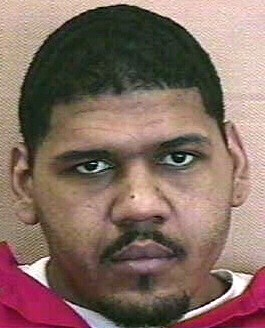
Robbie James Lyons
Murderer Brian Kevin Rosenfeld
Murderer · USA · 1985
Brian Kevin Rosenfeld Brian Kevin Rosenfeld was sentenced to three concurrent l…
23 victims
Brian Kevin Rosenfeld
Murderer · USA · 1985
Brian Kevin Rosenfeld Brian Kevin Rosenfeld was sentenced to three concurrent l…
23 victims
 Russell Ellwood
Murderer · USA · 1991
Russell Ellwood was a former taxi driver. Authorities suspected him of killing…
20 victims
Russell Ellwood
Murderer · USA · 1991
Russell Ellwood was a former taxi driver. Authorities suspected him of killing…
20 victims
 Robert Martines Perez
Murderer · USA · 1994
Name: Robert Martines Perez · Other name used in proceedings: Robert Martinez P…
15 victims
Robert Martines Perez
Murderer · USA · 1994
Name: Robert Martines Perez · Other name used in proceedings: Robert Martinez P…
15 victims
 Billy Frank Vickers
Murderer · USA · 1993
Billy Frank Vickers Vickers was executed by lethal injection in Texas on Januar…
14 victims
Billy Frank Vickers
Murderer · USA · 1993
Billy Frank Vickers Vickers was executed by lethal injection in Texas on Januar…
14 victims
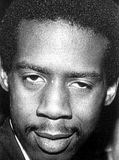 David Carty
Murderer · United Kingdom · 1984
David Carty was 18 years old and worked as an employee at Courier Display Syste…
2 victims
David Carty
Murderer · United Kingdom · 1984
David Carty was 18 years old and worked as an employee at Courier Display Syste…
2 victims
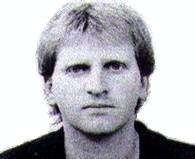 Gunter Ewen
Spree killer · Germany - France · 1999
Gunter Hermann Ewen committed suicide as police stormed his Luxembourg hotel ro…
5 victims
Gunter Ewen
Spree killer · Germany - France · 1999
Gunter Hermann Ewen committed suicide as police stormed his Luxembourg hotel ro…
5 victims
 Andrea Volpe
Murderer · Italy · 2004
The Beasts of Satan were a suspected satanic cult in Italy. Members of this gro…
3 victims
Andrea Volpe
Murderer · Italy · 2004
The Beasts of Satan were a suspected satanic cult in Italy. Members of this gro…
3 victims
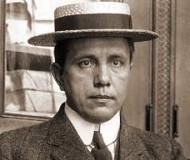 Harry Thaw
Murderer · USA · 1906
Harry Kendall Thaw (February 12, 1871 - February 22, 1947) was the son of Pitts…
1 victim
Harry Thaw
Murderer · USA · 1906
Harry Kendall Thaw (February 12, 1871 - February 22, 1947) was the son of Pitts…
1 victim
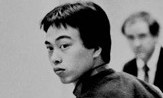 Benjamin Ng
Mass murderer · USA · 1983
Benjamin Ng participated in the killings at the Wah Mee gambling club in Seattl…
3 victims
Benjamin Ng
Mass murderer · USA · 1983
Benjamin Ng participated in the killings at the Wah Mee gambling club in Seattl…
3 victims
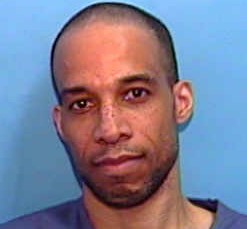 Vincent Rivera
Murderer · USA · 1990
Vincent Rivera was identified as the convicted killer who accused of killing se…
3 victims
Vincent Rivera
Murderer · USA · 1990
Vincent Rivera was identified as the convicted killer who accused of killing se…
3 victims
- Gender
- male
- Country
- USA
- Location
- Forsyth County, North Carolina, USA
- Date of birth
- J uly 10, 1972
- Age at first offence
- 21
- Characteristics
- robbery, drug addict, alcohol, mentally ill
- Victim profile
- Stephen Wilson Stafford, 48 (store owner)
- Method of murder
- Shooting
- Date(s) of murder
- September 25, 1993
- Years active
- 1993
- Date of arrest
- Next day
- Status
-
Executed
Executed by lethal injection on December 5, 2003 in North Carolina
Case record: Robbie James Lyons
People
- Robbie James Lyons (male, Black), death row inmate and defendant.
- Stephen Wilson Stafford (victim), owner of a small Winston-Salem market/store and a store known as Sam's Curb Market (Sam's).
- Derick Hall (accomplice), who turned himself in to police the day after the shooting and later testified against Lyons.
- Victoria Lytle (witness), who saw Lyons outside the store and witnessed events immediately before and after the shooting.
- Dwayne Stafford (victim’s family member).
- Stephanie Stafford (victim’s family member).
- Ramona Stafford (victim’s widow; victim’s family member).
- Robert Earl Stafford (victim’s family member).
- Clark Goldman (victim’s family member).
- David L. Hall (Assistant District Attorney).
- Theodis Beck (Correction Secretary).
- Marvin Polk (Warden).
- Mike Easley (Governor of North Carolina).
- Jesse Jackson (Rev.; sent a letter urging clemency to Mike Easley).
- Kirk Osborn (lawyer for Lyons).
- Ernest Conner (state-appointed lawyer for Lyons).
- George R. "Pete" Clary (court-appointed attorney referenced in appellate discussion).
- The psychologist who testified during sentencing (described as providing testimony about bipolar disorder, antisocial personality disorder, and substance abuse).
- Dr. Hoover (referenced in a National Coalition to Abolish the Death Penalty narrative; psychologist testimony described there).
- Paul Garber (media witness; Winston-Salem Journal).
- Pam Saulsby (media witness; WRAL-TV).
- Estes Thompson (media witness; Associated Press).
- ClarkProsecutor.org / North Carolina Department of Corrections (appearing as identifiers in the scraped material).
- R.C. Lee (respondent in federal habeas context), Warden, Central Prison, Raleigh, North Carolina.
Background
Robbie James Lyons was executed by lethal injection on December 5, 2003 in North Carolina. He was born 07/10/1972 and was described as 31 at the time of sentencing/execution in the narrative portions.
Lyons was scheduled to die by lethal injection at Central Prison in Raleigh at 2 a.m. on December 5, 2003 and was pronounced dead at 2:17 a.m. in the early morning of December 5, 2003.
Lyons’s death sentence was reviewed as part of a clemency process. Mike Easley reviewed pleas for clemency and met both with Lyons’s defense attorneys and members of Stafford’s family. The Rev. Jesse Jackson wrote to Mike Easley pleading for commutation. Easley declined to commute Lyons’s death sentence.
A series of arrests and releases in 1993 preceded the murder for which Lyons was later executed, including:
- conviction on 16 April 1993 on multiple charges of injury to property, larceny, and issuing forged checks, leading to a prison sentence of more than 17 months;
- improper release from prison on 17 May 1993;
- arrest about a month later on armed robbery charges under the alias Robby James Johnson, with a plea bargain and three years probation, and release again on August 10, 1993;
- arrest in September 1993 for failing to appear in court for a shoplifting charge, with a $50 bond and release;
- arrest and release in connection with these events shortly before the fatal robbery/murder.
During the sentencing phase discussion, a psychologist testified that Lyons suffered from bipolar disorder, antisocial personality disorder, and had a history of substance abuse from a very early age. The National Coalition to Abolish the Death Penalty narrative also described Lyons as having begun drinking alcohol at age 4, smoking marijuana at age 7, and using crack cocaine from ages 10–12.
A mitigating-affidavit narrative stated that Lyons’s mother would have testified that she was 18 when she gave birth to Lyons, did not know she was pregnant until her ninth month, and that Lyons grew up with an abusive grandmother who beat him with broom sticks, wire hangers, and switches, and that Lyons was exposed to illicit drugs at an early age and his great aunt regularly supplied him with moonshine.
A month prior to his execution, Lyons assaulted a prison guard and prison authorities placed him in solitary confinement for the final days of his incarceration.
The offence
The murder of Stephen Wilson Stafford occurred during an attempted/underlying robbery at Stafford’s store in Winston-Salem in Forsyth County, North Carolina.
On September 25, 1993, Stafford was shot and killed at his place of business Sam’s Curb Market (Sam’s).
- Victoria Lytle witnessed the shooting.
- Lytle testified she stopped at Sam’s, noticed two men across the street, saw Derick Hall enter the store, later noticed Lyons standing outside, heard gunshots after leaving her car door, saw Stafford fall forward over the counter and then back to the floor, and then saw Lyons run out of the store with a gun in hand.
- Hall testified he had a long-barreled .22-caliber gun in the morning and that when Hall and Lyons went to Sam’s, Lyons told Hall he needed money and was going to rob the store.
- After Lytle left Sam’s, Lyons entered and told Stafford to freeze and turn around, and Hall claimed he obeyed the command to demonstrate he had no part in the robbery.
- Hall heard five shots, saw Stafford lying on the floor, and testified Stafford was grunting and pushed the burglar alarm before collapsing.
- In addition to “attempted robbery” as described, witnesses and expert testimony referenced multiple gunshots and the forensic findings included:
- one bullet entered Stafford’s left hand and was recovered from his wrist; the wound was consistent with Stafford having grasped the gun and was not fatal in itself in the short term;
- two more bullet fragments were discovered in Stafford’s upper arm; the wound was also not fatal in the short term;
- Stafford was shot in the back, and that bullet went into Stafford’s chest through the lung and aorta and caused Stafford to bleed to death.
- Firearms expert testimony stated that two recovered bullets were .22 caliber, and other fragments were too deformed to yield a result.
In the federal appellate narrative, prosecutors said Lyons came into the store and fired four times with a .22-caliber pistol, hitting Stafford three times, once in the back. The Stafford shooting was described as part of a crime spree that included two armed robberies.
Investigation
Derick Hall turned himself into police the day after the shooting and later testified against Lyons.
Arrest and prior convictions (1993)
On April 16, 1993, Lyons was convicted of multiple counts of injury to property, larceny, and issuing forged checks, receiving a sentence of more than 17 months in prison. He was released improperly on May 17, 1993, according to court documents.
Five weeks after his release, Lyons was arrested on armed robbery charges under the alias Robby James Johnson. The narrative stated that authorities knew Lyons’s real name, but his prior arrest and improper release were overlooked. Lyons received a plea bargain and three years probation. Lyons was released again on August 10, 1993.
Authorities arrested Lyons yet again for failing to appear in court for a shoplifting charge in September 1993. Lyons posted a $50 bond and was released. Four days later, Lyons fatally shot Stafford during the robbery.
Trial
Lyons was convicted by a North Carolina jury of:
- first-degree felony murder, and
- attempted robbery with a dangerous weapon (attempted armed robbery), with the attempted armed robbery serving as the underlying felony for the felony murder theory.
At sentencing, the jury found one aggravating circumstance:
- that Lyons previously had been convicted of a felony involving the use or threat of violence to the person. Evidence supporting this aggravating circumstance included prior convictions for:
- an armed robbery, and
- common law robbery.
The jury found two statutory and four nonstatutory mitigating circumstances.
The jury unanimously found the aggravating circumstance was sufficiently substantial to call for the imposition of death when considered with the mitigating factors. The jury unanimously recommended, and the trial court imposed, a sentence of death.
Narratives in the scraped material described allegations of poor legal representation, including that Lyons’s trial attorneys put forward no evidence during the trial, and that Lyons’s primary attorney was primarily a real estate lawyer who had only met Lyons once before trial. Additional discussion stated that Lyons’s mother provided an affidavit that was not presented at trial, and trial proceedings included testimony by a psychologist about Lyons’s mental health and substance abuse history.
The federal appellate narrative stated that after exhausting available state remedies, Lyons filed two petitions for habeas corpus in the United States District Court for the Middle District of North Carolina:
- one challenging a separate 1993 state court conviction for common law robbery,
- and a second challenging the conviction and sentence for first-degree murder. The district court denied both petitions with prejudice and declined to issue certificates of appealability.
Sentencing
- 5/6/1994: Lyons was sentenced to death in Forsyth County Superior Court.
- The narrative portions also stated Lyons received a 30-year sentence for armed robbery in addition to the death sentence.
A psychologist testified during deliberations on Lyons’s sentencing about bipolar disorder, antisocial personality disorder, and substance abuse.
Appeals
North Carolina Supreme Court
- 4/4/1996: The North Carolina Supreme Court affirmed Lyons’s conviction and death sentence.
U.S. Supreme Court
- 10/6/2003: The U.S. Supreme Court denied Lyons’s petition for a writ of certiorari.
Federal habeas corpus / Fourth Circuit The federal appellate narrative described the appeal:
- Lyons’s application for a certificate of appealability was denied, and the appeal was dismissed.
- It identified the case as 316 F.3d 528 with caption: “Robbie James LYONS, Petitioner-Appellant, v. R.C. LEE, Warden, Central Prison, Raleigh, North Carolina, Respondent-Appellee.”
- The procedural posture stated: “Application for certificate of appealability denied and appeal dismissed by published opinion.”
- The narrative identified:
- argued October 28, 2002
- decided January 21, 2003
- and included that Judge WILLIAMS wrote the majority opinion, Judge LUTTIG joined, and Judge GREGORY wrote a concurring opinion.
Lyons sought to appeal four issues:
- whether he could challenge his common law robbery conviction in its own right,
- whether he could challenge his enhanced sentence for first-degree murder based on the ground that the prior common law robbery conviction was unconstitutionally obtained,
- whether jury instructions during the sentencing phase violated due process rights,
- whether North Carolina’s short-form indictment rendered the first-degree murder conviction and death sentence invalid under Apprendi v. New Jersey.
The federal appellate narrative stated:
- the claim challenging the common law robbery conviction in its own right was dismissed for lack of jurisdiction because Lyons was no longer “in custody” for that conviction when he filed his habeas petition,
- the challenge to the enhanced sentence based on allegedly unconstitutional prior conviction was dismissed under Lackawanna County Dist. Att’y v. Coss,
- the claim about mitigating circumstances instructions was rejected as lacking merit under McKoy,
- the short-form indictment challenge was rejected based on Apprendi’s non-retroactivity on collateral review.
The concurring opinion (Judge GREGORY) stated that he concurred with the majority’s finding that Lyons failed to make a substantial showing of the denial of a constitutional right, and separately discussed Lackawanna County Dist. Att’y v. Coss more broadly, including quoting a passage about failure to appoint counsel and Sixth Amendment issues.
Outcome
- Lyons was executed by lethal injection in North Carolina on December 5, 2003.
- He was pronounced dead at 2:17 a.m. at Central Prison in Raleigh.
- Multiple narratives identified the execution as carried out early Friday morning after Gov. Mike Easley denied clemency.
- The federal appellate narrative stated the habeas appeal was dismissed and the certificate of appealability was denied.
Timeline
- 4/16/1993 — Lyons was convicted of numerous counts of injury to property, larceny and issuing forged checks; he was sentenced to more than 17 months in prison.
- 5/17/1993 — Lyons was improperly released from prison.
- August 10, 1993 — Lyons was released again.
- September 1993 — Lyons was arrested for failing to appear in court for a shoplifting charge; he posted a $50 bond and was released.
- 9/25/1993 — Stephen Wilson Stafford was shot and killed in his store, Sam’s Curb Market, after an attempted robbery; Victoria Lytle witnessed the shooting.
- 10/06/93 — Lyons conviction was entered in Forsyth County (DOC narrative includes date of conviction).
- 5/6/1994 — Lyons was sentenced to death in Forsyth County Superior Court.
- 4/4/1996 — North Carolina Supreme Court affirmed Lyons’s conviction and death sentence.
- 10/6/2003 — U.S.
- 12/3/2003 — Witnesses named for Lyons’s execution.
- 12/5/2003 — Lyons was executed by lethal injection; he was pronounced dead at 2:17 a.m.
Other details
- Central Prison location: execution was scheduled at Central Prison in Raleigh, North Carolina.
- Execution procedure witnesses (named as official witnesses):
- David L.
- Ramona Stafford (victim’s family member)
- Media witnesses named:
- Paul Garber (Winston-Salem Journal)
- Pam Saulsby (WRAL-TV)
- Estes Thompson (Associated Press)
- Final meal: Pizza and lasagna, both with meat prepared in accordance with Islamic law, and a Pepsi.
- Final words:
- “If my death brings another person happiness, then I'm happy for them.”
- In another version of final words: “It is from Allah that I come and it is to Allah that I return.
- Prison discipline: narratives stated Lyons assaulted a prison guard, disobeyed an order, used profanity, and was placed in solitary confinement during the final days of incarceration.
- Prosecution and defense characterizations (as stated in narrative portions):
- Ramona Stafford characterized Lyons as showing no remorse and described him as violent.
- Assistant District Attorney David Hall described Lyons’s representation and described Lyons’s IQ as 110 and described him as violent and having disciplinary infractions.
- Defense lawyer Ernest Conner asserted Lyons had infractions and addressed circumstances around a solitary confinement episode.
- Juror and sentence details (from the federal appellate narrative):
- The jury returned a verdict finding Lyons guilty of attempted armed robbery and first-degree murder under the felony murder theory with attempted armed robbery as the underlying felony.
- The jury found one aggravating circumstance and multiple mitigating circumstances, unanimously recommended death, and the trial court imposed death.
- Abbreviation/identifiers included in scraped narrative:
- DOC Number: 0252465
- Race: BLACK
- Sex: MALE
- Execution pronounced dead at 2:17 a.m. on 5 December 2003.
- Federal appellate judges:
- Before LUTTIG, WILLIAMS, and GREGORY, Circuit Judges.
- Federal case arguments/decisions included in the narrative:
- “Application for certificate of appealability denied and appeal dismissed by published opinion.”
- “DISMISSED.”
Spotted an error, or have more information about this case?