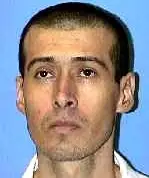
Virgilio Maldonado
Murderer Brian Kevin Rosenfeld
Murderer · USA · 1985
Brian Kevin Rosenfeld Brian Kevin Rosenfeld was sentenced to three concurrent l…
23 victims
Brian Kevin Rosenfeld
Murderer · USA · 1985
Brian Kevin Rosenfeld Brian Kevin Rosenfeld was sentenced to three concurrent l…
23 victims
 Russell Ellwood
Murderer · USA · 1991
Russell Ellwood was a former taxi driver. Authorities suspected him of killing…
20 victims
Russell Ellwood
Murderer · USA · 1991
Russell Ellwood was a former taxi driver. Authorities suspected him of killing…
20 victims
 Robert Martines Perez
Murderer · USA · 1994
Name: Robert Martines Perez · Other name used in proceedings: Robert Martinez P…
15 victims
Robert Martines Perez
Murderer · USA · 1994
Name: Robert Martines Perez · Other name used in proceedings: Robert Martinez P…
15 victims
 Billy Frank Vickers
Murderer · USA · 1993
Billy Frank Vickers Vickers was executed by lethal injection in Texas on Januar…
14 victims
Billy Frank Vickers
Murderer · USA · 1993
Billy Frank Vickers Vickers was executed by lethal injection in Texas on Januar…
14 victims
 Randall Loyal Smith
Murderer · USA · 1990
Randall Loyal Smith was born on 12/31/53. He was sentenced to death on 3/9/1992…
1 victim
Randall Loyal Smith
Murderer · USA · 1990
Randall Loyal Smith was born on 12/31/53. He was sentenced to death on 3/9/1992…
1 victim
 Awilda Lopez
Murderer · USA · 1995
Awilda Lopez was born on April 28, 1966. She was sentenced in relation to the b…
1 victim
Awilda Lopez
Murderer · USA · 1995
Awilda Lopez was born on April 28, 1966. She was sentenced in relation to the b…
1 victim
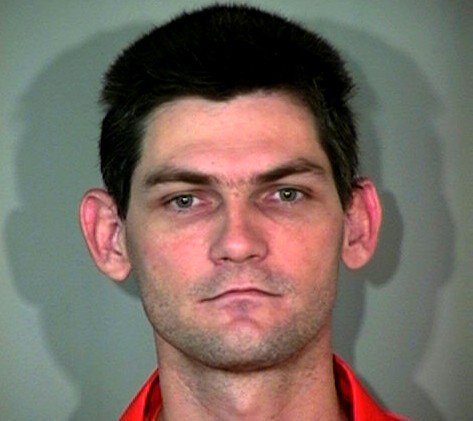 James Erin McKinney
Murderer · USA · 1991
James Erin McKinney was a defendant described as Caucasian. His half-brother wa…
2 victims
James Erin McKinney
Murderer · USA · 1991
James Erin McKinney was a defendant described as Caucasian. His half-brother wa…
2 victims
 Joseph Michael Lawrence
Murderer · USA · 2005
Joseph Michael Lawrence was convicted in connection with the murder of Jason Ga…
1 victim
Joseph Michael Lawrence
Murderer · USA · 2005
Joseph Michael Lawrence was convicted in connection with the murder of Jason Ga…
1 victim
- Gender
- male
- Country
- USA
- Location
- Harris County, Texas, USA
- Date of birth
- November 12, 1965
- Age at first offence
- 30
- Characteristics
- robbery, drugs
- Victim profile
- Cruz Saucedo
- Method of murder
- Shooting ( .45-caliber handgun)
- Date(s) of murder
- November 12, 1995
- Years active
- 1995
- Date of arrest
- April 25, 1996
- Status
-
Sentenced to death
Sentenced to death on December 18, 1997
Case information
Defendant: Virgilio Maldonado TDCJ Number: 999249 Date of Birth: 11/12/65 Age at receipt: 32 Education level: 12/18/97 Age at the offense: 30 Date received: 12/18/97 Date of offense: 11/12/95 County: Harris Race: Hispanic Gender: Male Hair color: Black Height: 5-8 Weight: 121 Eye color: Brown Native County: Native Native State: Prior occupation:** Michoacan Mexico Laborer Prior prison record: None Prior occupation: Michoacan Mexico Laborer
Timeline
- 11/12/1995 — Maldonado and one co-defendant went to the Hispanic male victim's apartment to rob him of marijuana and a handgun; the victim was shot three times in the back of the head and lay on his kitchen floor.
- Friday, November 11, 1995 — Augustin Saucedo dropped his father, Cruz Saucedo, off at his apartment after an evening playing volleyball.
- Tuesday (following weekend) — Augustin discovered the decomposing body of his father lying on the kitchen floor; Cruz Saucedo’s hands had been bound with the electric cord of a Black & Decker iron and he had been shot twice in the head with a .45-caliber semi-automatic weapon.
- April 24th of the following year — Police received information implicating Maldonado; Officer Jaime Escalante interviewed Maldonado at the Harris County Jail.
- Delivered: June 30, 1999 — The Court of Criminal Appeals delivered and published its opinion.
Background
After an evening playing volleyball, Augustin Saucedo dropped his father, Cruz Saucedo, off at his apartment. Augustin tried to contact his father that weekend, but received no response when he paged him (his father did not have a phone, only a pager). When Augustin still had not heard from his father, he contacted his sisters, Paula and Hericelda, who lived in the same apartment complex as their father. Paula provided Augustin with a key to their father’s apartment and accompanied him to the apartment.
Augustin then discovered the decomposing body of his father lying on the kitchen floor.
The offence
Maldonado and one co-defendant went to the Hispanic male victim's apartment to rob him of marijuana and a handgun. The victim was shot three times in the back of the head and lay on his kitchen floor. The incident resulted in a capital murder conviction.
The indictment alleged murder committed during the course of committing or attempting to commit robbery under Tex. Penal Code Ann. §19.03(a)(2).
Cruz Saucedo’s hands had been bound with the electric cord of a Black & Decker iron. He was shot twice in the head with a .45-caliber semi-automatic weapon. The police discovered four bricks of marijuana hidden in the apartment and recovered a pillow with two bullet holes soaked with “body fluids.” Augustin noticed his father was not wearing a necklace he normally wore. Investigators found several cans of air freshener in the apartment, which Augustin had not noticed before his father’s death. Investigators deduced the air freshener indicated someone stayed in the apartment for a period of time after the victim’s death and sought to mask the stench of decay.
Appellant’s recorded statement described the events leading to the murder:
- Appellant admitted entering the victim’s apartment with another man named Felix or Benito, while a third man, Adan, waited in the car.
- Appellant was carrying a .45-caliber pistol.
- The pair went to the apartment because Felix wanted to borrow a “cuerno” (AK-47).
- Appellant asked the victim to loan them a pistol; when the victim refused to give them a “cuerno” or a pistol, Felix bound the victim with the cord of the iron in the kitchen.
- Appellant and Felix demanded to know where the pistol was and demanded to know the location of some marijuana they believed the victim had in his possession.
- The victim told them the marijuana was under the bed and the pistol was in the vacuum cleaner.
- Felix retrieved these items, then told appellant to kill the victim.
- Appellant remembered shooting the victim three times in the head, using a pillow to muffle the sound.
- Appellant noted that Felix was giving the orders and Felix took the marijuana out to the car.
Investigation
On Friday, November 11, 1995, Augustin dropped Cruz Saucedo off at his apartment. After Augustin could not contact his father, he learned from Paula and Hericelda and gained access with a key to the apartment. Augustin discovered the decomposing body of Cruz Saucedo on the kitchen floor.
Investigators recovered marijuana and the pillow with bullet holes soaked with “body fluids.” They also found several cans of air freshener and deduced masking of decay.
On April 24th of the following year, the police received information implicating appellant.
Officer Jaime Escalante went to the Harris County Jail to interview appellant, who was incarcerated on unrelated charges. Escalante read appellant his Miranda rights in Spanish. Appellant was talkative, but refused to discuss the instant offense initially and asked Escalante to come back the next day and he would think about giving him a statement. When Escalante returned the following day, after reading constitutional rights again, appellant gave a tape recorded statement admitting his participation in this offense and others.
Arrest
Appellant was incarcerated on unrelated charges at the time Officer Jaime Escalante interviewed him, and Escalante read appellant his Miranda rights in Spanish during the jail interview.
Trial
Charges and conviction
Appellant was convicted in October 1997 of capital murder under Tex. Penal Code Ann. §19.03(a).
The appellate opinion discussed that the jury’s answers to the special issues set forth in Texas Code of Criminal Procedure art. 37.071 §§2(b) and 2(e) led to a death sentence.
Evidence presented
Augustin Saucedo testified and discovered the body. He provided testimony regarding the victim and his identification by names.
Officer Escalante’s interview resulted in appellant’s tape recorded statement.
The trial involved a suppression hearing and included expert testimony on sound recordings.
Dwight Cook, an expert on sound recordings, testified about anomalies in the recording, described as “over-records.” Cook described two anomalies:
- A four seconds total over-record over the original tape, consisting of a three second interval and a one second interval.
- Cook could not say whether the over-records were done intentionally and could not say what had transpired on the original tape underneath the over-recorded portions.
Cook testified:
- It was possible to stop the tape for an indefinite period, then place a short over-record over the tell-tale clicks on the tape.
- He heard nothing on this tape which would indicate that this trick had been performed.
- The flow of the conversation and the background noise on the tape was consistent before and after the over-records.
- There was no evidence of edits or other anomalies except these over-records and the tape was otherwise apparently reliable.
- The over-records could have occurred accidentally as the tape was being copied.
Appellant testified at the suppression hearing and asserted:
- Escalante had not informed him that he was being recorded.
- He never saw a tape recorder, although he saw something inside an envelope which could have been a small recording device.
- Escalante had promised to talk to the prosecutor about helping him out in some way (“a promise which does not appear on the tape”).
- He never saw Escalante stop a recorder.
Officer Escalante testified at the suppression hearing and stated:
- He informed appellant that he was recording their conversation and appellant consented to the recording.
- He remembered dropping the tape recorder at the beginning of the recording process and noted that the metal table top may have caused strange noises on the tape, but he could not explain the anomalies.
- He remembered that at least three people had taken the tape to listen to it or make copies and he admitted he had not removed the plastic tabs which permitted over-recording from the tape.
Escalante demonstrated how it was possible to accidentally slide the tape recorder into the “record” position when intending only to stop the tape.
Escalante adamantly denied making any promises of leniency to appellant or coercing appellant. He stated he continuously recorded his and appellant’s whole conversation, that he did not stop the tape during this process, and that no additional conversations were concealed by the over-records.
Voir dire and challenges for cause
Prospective juror Davis
Appellant alleged reversible error in failing to strike prospective juror Davis for cause after Davis stated he could not give the trial his full attention.
The relevant portion of venireman Davis’s responses was:
Q: [by the Prosecutor] I think we’ve talked about whether or not you have any problems in serving around the 29th. Oh, you did say -- you said yes?
A: Well, I run a business. But, I mean, it’s no different than anybody else’s problem. I’m sure everybody’s got them. I run a business.
Q: You think you can work around this without having any impact on your service?
A: I would definitely have to get some other personnel in there and everything else or it would be a hardship.
Q: Right.
A: Just as much as anybody.
Q: Could you devote your concentration to this trial while you’re there at the trial? . . . You think you could handle that with your business?
A: My mind’s going to be on my business. I’m going to have to be honest about that.
A: But I’ll do the best I can.
Q: What I’m saying: Everybody’s mind is on, you know, how they make a living?
A: Yes, sir.
Q: Could you also devote your full attention to the evidence that is before you?
A: I’ll say, I’ll do my best.
Q: And, I guess, from you saying you’re doing your best, you’re not going to do anything in this trial or -- or, you know, not listen to evidence or do anything like that because you’re so concerned about your business? You wouldn’t do that, you wouldn’t --
A: Not intentionally, no, sir. Not intentionally. * * *
Q: [by Defense Counsel] ... And just touching up on what [the Prosecutor] was talking about your job, and you said it was going to be a hardship for you, right?
A: Just -- yeah. I run -- own a business.
Q: Yeah. And because it’s a hardship, I believe you also said that your mind’s going to be on your job as well; is that right?
A: I’ll certainly do my best to, you know, be a good juror, if that’s what I need to do. But, yes, sir, I’m afraid in the back of my mind, that I’m going to be thinking about my business the whole time I’m gone. On the phone, every time I have a break, you know.
Q: Do you think that that would have some impact on your ability to sit for a week, maybe two weeks -- two-week trial listening to evidence and perhaps maybe that might have some impact on your ability to pay full attention to this trial here sir?
A: I would hope not. But it’s possible, yes, sir.
The trial court overruled appellant’s challenge for cause.
Prospective juror Jacobs
Appellant alleged error in refusing to grant his challenge for cause to prospective juror Jacobs after Jacobs said he would consider appellant’s decision not to testify.
The record described that Jacobs vacillated and gave contradictory answers, including stating he thought appellant’s decision not to testify might be “a missing link in the chain” and that he would have the fact in the back of his mind.
Jacobs’s statements included:
- The prosecutor explained the law to him and Jacobs hesitatingly conceded that if he were torn as to whether appellant were guilty, appellant’s failure to testify would not push him toward guilt.
- After defense counsel probing, Jacobs admitted the fact that appellant chose not to testify “would be in the back of [his] mind.”
- In a hypothetical, Jacobs said the fact defendant did not testify would not take away his reasonable doubt: “No, ma’am, I couldn’t do that to anyone.”
- Jacobs also stated he would not hold the fact that a defendant chose not to testify against that person.
The trial court denied the challenge for cause.
Prospective juror Carter
Appellant claimed error in denial of his challenge for cause to venireman Carter. Appellant alleged Carter said he would only consider facts and circumstances of the offense and would not consider appellant’s character and background in answering the second and third punishment issues.
The appellate opinion described that:
- Article 37.071 §2(e) required the jury to answer whether a sufficient mitigating circumstance existed to warrant life imprisonment instead of death, taking into consideration “all of the evidence, including the circumstances of the offense, the defendant’s character and background, and the personal moral culpability of the defendant.”
- After contradicting himself and expressing confusion, Carter told the prosecutor he would consider all evidence at the punishment phase, including evidence of character and background, in deciding how to answer the mitigation question.
- Because the juror vacillated and later expressed willingness to consider character and background evidence, the trial court did not abuse discretion in denying the challenge for cause.
Prospective juror Kegans
Appellant alleged reversible error in refusal to strike venireman Kegans for cause. Appellant claimed Kegans would be predisposed toward answering the punishment questions in a way that would produce a death penalty after finding guilt.
Kegans indicated that after a guilty verdict and after answering affirmatively the first punishment question regarding future danger, he would tend to be predisposed toward the death penalty. He repeatedly stated he would consider all of the evidence in answering each punishment question and his decision would depend on the particular circumstances.
The trial court did not grant the challenge for cause.
Sentencing
Pursuant to the jury’s answers to the special issues set forth in Texas Code of Criminal Procedure art. 37.071 §§2(b) and 2(e), the trial judge sentenced appellant to death (Article 37.071 §2(g)). Article 37.071 §2(h) provided that direct appeal to the Court was automatic.
The sentencing date and status indicated a death sentence on December 18, 1997.
Appeals
Direct appeal
Appellant’s direct appeal was automatic and addressed eleven points of error.
The appellate opinion identified the procedural posture as:
- IN THE COURT OF CRIMINAL APPEALS OF TEXAS
- NO.72,986
- VIRGILIO MALDONADO, Appellant v. THE STATE OF TEXAS
- ON DIRECT APPEAL FROM HARRIS COUNTY
- Meyers, J., delivered the opinion; Price, J., filed a concurring opinion with Johnson, J., joining; Womack, J., delivered a concurring opinion with McCormick, P.J., and Mansfield and Keller, JJ., joining.
- Delivered: June 30, 1999; Publish.
Points of error and rulings
- Point of error one: Appellant argued the verdict could not be supported under the theory of law and fact submitted to the jury because his recorded statement did not admit personally taking part in the theft of the victim’s property, and he claimed no parties theory of liability instruction was given. The appellate court analyzed legal sufficiency under Jackson v. Virginia and affirmed. Point one was overruled.
- Points of error two and three: Appellant argued the trial court erred in admitting the tape recorded statement and transcription because the tape recording was not accurate due to “skips” in two places, claiming inadmissibility under Article 38.22 §3 and Edwards v. State. The appellate court held the trial judge did not abuse discretion in refusing to suppress at guilt/innocence and punishment phases. Points two and three were overruled.
- Point of error four: Appellant argued the trial court failed to instruct the jury to disregard the audio-taped statement and transcription if the jury found it inaccurate or altered, citing Article 38.23(a). The appellate court overruled the point, holding the jury instruction requirement did not apply because the skips/over-records did not indicate evidence was obtained in violation of constitutional or state/federal law; inaccuracies were for the trial judge. Point four was overruled.
- Point of error five: Appellant argued the trial court failed to instruct the jury to disregard the statement if he had not been advised of his right to contact the Mexican Consulate before making a statement. The appellate court held trial evidence did not show appellant was a Mexican citizen and therefore he was not entitled to an instruction under Article 38.23. Point five was overruled.
- Point of error six: Appellant argued the trial court should have suppressed the recorded statement because it was not freely and voluntarily made due to an alleged promise by Officer Escalante to help him with the prosecutor. The appellate court held the trial court did not abuse discretion, deferring to credibility determinations. The court also included quoted testimony:
And he told me not to be stupid, because if not, he was going to take me down. And he told me that if I would talk, that he was going to talk to the prosecutor so that they could help me out some way.
"I would never make a promise like that."
Point six was overruled. - Point of error seven: Appellant argued evidence was insufficient due to an alleged mismatch between the victim’s name as “Cruz C. Saucedo” in the indictment and the victim’s real name “Primo Correa Saucedo.” The appellate court cited Article 21.07 and held Augustin testified the father was known as Cruz C. Saucedo, so no fatal variance existed. Point seven was overruled.
- Point eight: Appellant alleged reversible error in failure to strike prospective juror Davis for cause. Point eight was overruled.
- Point nine: Appellant complained of improper denial of challenge for cause to prospective juror Jacobs based on Jacobs’s statements about considering appellant’s decision not to testify. Point nine was overruled.
- Point ten: Appellant argued improper denial of challenge for cause to venireman Carter regarding consideration of character and background in answering mitigation questions during punishment. Point ten was overruled.
- Point eleven: Appellant argued reversible error in refusal to strike venireman Kegans for cause due to alleged predisposition toward death. Point eleven was overruled.
The appellate court affirmed the judgment of the trial court.
Outcome
The Court of Criminal Appeals affirmed the trial court’s judgment. Appellant remained sentenced to death, with the sentencing indicated as December 18, 1997.
Other details
Names and roles mentioned
- Victim: Hispanic male victim; appellate opinion referenced the victim as Cruz Saucedo, and also discussed another name, Primo Correa Saucedo.
- Victim’s son: Augustin Saucedo.
- Victim’s sisters: Paula and Hericelda.
- Officer: Jaime Escalante.
- Expert witness on sound recordings: Dwight Cook.
- Co-defendant(s): Benito Chanocva; co-defendant named Felix or Benito in appellant’s statement; Adan waited in the car.
- Prospective jurors: Davis, Jacobs, Carter, Kegans.
Physical evidence and factual details
- Weapon: .45-caliber semi-automatic weapon (also .45-caliber pistol mentioned in appellant’s statement).
- Binding method: electric cord of a Black & Decker iron.
- Marijuana: four bricks of marijuana hidden in the apartment.
- Pillow evidence: pillow with two bullet holes soaked with “body fluids.”
- Air fresheners: several cans of air freshener found in the apartment.
- Missing item: necklace the victim normally wore was missing.
- Tape recording issues: anomalies described as “over-records” with a total of four seconds recorded over the original tape (a three second interval and a one second interval), plus discussion of “skips” and that the anomalies did not occur in the portion of the tape where appellant admitted killing the victim.
Witness and procedural notes included in the opinion
- The jury did not see or hear part of the statement discussed as “different crime” during the guilt/innocence phase.
- The audio tape itself was not included with the record on appeal.
- The opinion discussed rules regarding admissibility and jury instructions, including Article 38.22 §3(a)(3), Article 38.23(a), and Article 37.071 §2(e) and §2(g), and addressed arguments tied to constitutional and treaty issues regarding consular notification rights.
Spotted an error, or have more information about this case?