Theresa Antonini
Murderer Anna Zwanziger
Murderer · Germany · 1808
Anna Margaretha Zwanziger was executed by a sword in Nuremberg on September 17,…
3 victims
Anna Zwanziger
Murderer · Germany · 1808
Anna Margaretha Zwanziger was executed by a sword in Nuremberg on September 17,…
3 victims
 Sabine Hilschenz
Murderer · Germany · 1988
Sabine Hilschenz was a German woman convicted of infanticide involving eight of…
9 victims
Sabine Hilschenz
Murderer · Germany · 1988
Sabine Hilschenz was a German woman convicted of infanticide involving eight of…
9 victims
 Sabine Radmacher
Murderer · Germany · 2010
Sabine Radmacher Sabine Radmacher was fatally shot by special police units the…
3 victims
Sabine Radmacher
Murderer · Germany · 2010
Sabine Radmacher Sabine Radmacher was fatally shot by special police units the…
3 victims
 Sophie Charlotte Elisabeth Ursinus
Murderer · Germany · 1798
Sophie Charlotte Elisabeth Ursinus Sophie Charlotte Elisabeth Ursinus was sente…
3 victims
Sophie Charlotte Elisabeth Ursinus
Murderer · Germany · 1798
Sophie Charlotte Elisabeth Ursinus Sophie Charlotte Elisabeth Ursinus was sente…
3 victims
 Grete Beier
Murderer · Germany · 1907
Marie Margarethe (Grete) Beier was executed by guillotine on July 23, 1908. She…
1 victim
Grete Beier
Murderer · Germany · 1907
Marie Margarethe (Grete) Beier was executed by guillotine on July 23, 1908. She…
1 victim
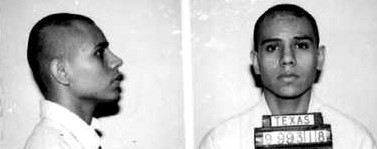 Michael Anthony Lopez
Homicide · USA · 1998
Name: Michael Anthony Lopez · TDCJ Number: 999318 · Date of Birth: 4/28/1981 ·…
1 victim
Michael Anthony Lopez
Homicide · USA · 1998
Name: Michael Anthony Lopez · TDCJ Number: 999318 · Date of Birth: 4/28/1981 ·…
1 victim
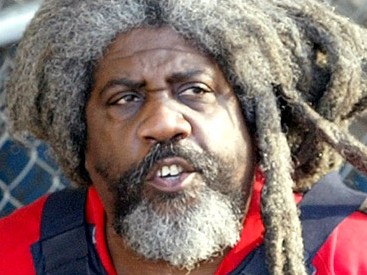 Marcus Wesson
Mass murderer · USA · 2004
Marcus Delon Wesson was born August 22, 1946. He was an American man convicted…
9 victims
Marcus Wesson
Mass murderer · USA · 2004
Marcus Delon Wesson was born August 22, 1946. He was an American man convicted…
9 victims
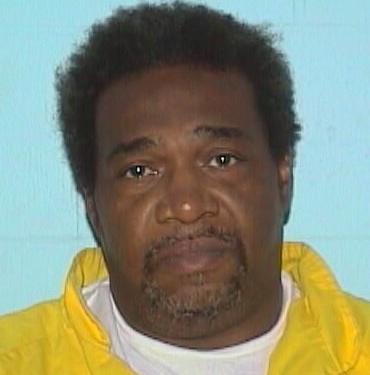 Milton Johnson
Serial killer · USA · 1983
Milton Johnson was an Illinois native born in 1951. He was convicted at age 19…
10 victims
Milton Johnson
Serial killer · USA · 1983
Milton Johnson was an Illinois native born in 1951. He was convicted at age 19…
10 victims
 Amanda Kelly
Murderer · Australia · 2012
Amanda Kelly was sentenced to life in prison with a 14-year minimum on December…
1 victim
Amanda Kelly
Murderer · Australia · 2012
Amanda Kelly was sentenced to life in prison with a 14-year minimum on December…
1 victim
 Samuel Manzie
Homicide · USA · 1997
Samuel Manzie was a 15-year-old charged as an adult in New Jersey for the killi…
1 victim
Samuel Manzie
Homicide · USA · 1997
Samuel Manzie was a 15-year-old charged as an adult in New Jersey for the killi…
1 victim
 Robert Zarinsky
Serial killer · USA · 1958
Robert Zarinsky (1940? – November 28, 2008) was a convicted murderer and suspec…
6 victims
Robert Zarinsky
Serial killer · USA · 1958
Robert Zarinsky (1940? – November 28, 2008) was a convicted murderer and suspec…
6 victims
- Gender
- female
- Country
- Germany
- Location
- Meitingen, Augsburg, Bavaria, Germany
- Date of birth
- 1 785
- Characteristics
- robbery, beheading, domestic violence, arsonist
- Victim profile
- Dorothea Blankenfeld, 24
- Method of murder
- Beating
- Date(s) of murder
- November 26, 1809
- Years active
- 1809
- Date of arrest
- Same day
- Status
-
Executed
Executed by the sword in December 1809
Background
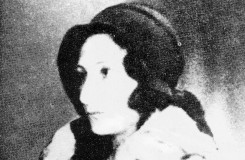
Theresa Antonini (1785-1809) was a Berlin-born career criminal who helped murder Dorothea Blankenfeld for her jewels and money while aboard a coach headed from Danzig to Vienna in 1809.
Theresa Antonini plotted with her husband, described as a pirate, to kill Dorothea Blankenfeld because she wore expensive clothes and valuable jewels. The pair became excited when they learned that the young woman was also carrying a substantial amount of money. Theresa Antonini was described as a wild, obstinate and vicious girl who, after marriage, became a partner in her husband’s evil deeds and shared his imprisonment. The pair were on their way south to Antonini’s native place in Messina, very short of money.
Dorothea Blankenfeld was described as a native of Friedland who started from Danzig in November 1809 on her way to Vienna to join her intended husband, described as a war commissary in the French service. She reached Dresden but halted there until her friends could find a suitable escort for the rest of the journey. She was described as young, barely twenty-four years old, remarkably good looking, of gentle disposition and spotless character. At Dresden, two French military postilions arrived and sought passports for Vienna, and it was said that it was easy to add the Fraulein Blankenfeld’s name in the route paper. She left Dresden with her escort, described as two people who had already doomed her to destruction. The two postilions were described as man and wife, one described as a woman in disguise. They gave their names as Antoine and Schulz, but they were described as the two Antoninis.
Theresa Antonini and her husband were also described as having been frequently imprisoned, twice in Berlin and once in Mayence with their wife, for he had married a woman named Marschall of Berlin. The man described as Antonini’s husband had been constantly denounced as a thief and incendiary. At Erfurt he was described as having broken prison and effected the escape of his fellow-prisoners.
Carl Marschall was described as the woman's brother, a boy barely fifteen years of age, who was taken along by the Antoninis. The scheme to make away with the girl involved recruiting Carl Marschall to join the plot, and it was said that Carl Marschall showed no reluctance to the act, hesitating only lest he should not be strong enough to complete it, while Theresa Antonini was described as helping as soon as the first blow was struck. He was tempted with the promise of a substantial gift.
The offence
The plan aimed to murder Dorothea Blankenfeld and conceal the crime. The money Dorothea Blankenfeld was said to carry included two thousand thalers sewed in her stays, a fact described as then unknown to her would-be murderers.
Multiple plans for murder and concealment were discussed and tried without success or without being executed. A plan was devised of stifling her with smoke in her bed, but the results were described as uncertain and it was not tried. At Berneck, between Hof and Bayreuth, the group lodged in a lonely inn at the foot of a mountain covered with wood, and it was described that the corpse might be buried during the night. It was said that Theresa Antonini had discarded her postilion’s disguise, and because two women had arrived, the departure of only one the next morning was expected to arouse suspicion. The following night the notion of choking the girl with the fumes of smoke was revived but was dismissed for the same reason because the result was doubtful.
The group was described as drugging Dorothea Blankenfeld, taking her keys from under her pillow, and opening and examining her trunks and finding more than enough to seal her doom. At Niirnberg, where it was described that many streams of water flowing through the city might help to get rid of the body, an opportunity was blocked by a sentry having his post just in front of the inn, affording protection to the threatened girl. At this time Carl Marschall proposed to mix pounded glass in her soup, but it was said that this scheme was rejected by Antoine/Antonini, described as declaring that he had often swallowed broken glass for sport without ill effects. At Roth, a suitable weapon was found in a loft, described as a mattock with three iron prongs, and a pool of water for concealment of the body was discovered in a neighbouring field, with the deed described as to be perpetrated there after administering another sleeping draught.
At Weissenberg and Donauwörth there were described as insurmountable objections, and by then the murder was described as seeming as if it might never be committed. The last station was said to be Maitingen near Augsburg, where Dorothea Blankenfeld was to leave the party. Her incautious admission that she carried a quantity of valuables on her person gave fresh incitement to guilty greed. It was said that Carl was to be the principal agent in the crime because it was thought that his youth would save him from capital punishment, described as an inevitable sentence for the others if convicted.
Carl Marschall hid a heavy roller in Theresa Antonini’s bedroom and dug a hole in the yard intended for the disposal of the body. Theresa Antonini bought candles, and on the pretence of using a foot bath, much warm water was prepared to cleanse the blood stains. At supper Dorothea Blankenfeld drank some brandy and water mixed with laudanum, and she was taken off to bed half stupefied.
About midnight the murderers viewed Dorothea Blankenfeld asleep and found her face turned to the wall. A change of plan was proposed to pour molten lead into her ears and eyes. On heating the fragments of a spoon over a candle, it was described that a drop which fell on the sheet merely scorched it, indicating that the metal cooled too quickly to destroy life. Another visit was paid at four o'clock, and Carl was ordered to strike the first blow, which fell with murderous effect; Dorothea Blankenfeld was described as able to raise herself in bed and plead piteously for her life. A fierce struggle was described as ensuing, with repeated blows rained upon her and she sank upon the floor in agony of death. Theresa Antonini was described as tearing at the money she still carried on her person. While Dorothea Blankenfeld was described as still breathing and groaning audibly, Theresa Antonini was described as savagely trampling and jumping on her body until life was extinct.
Afterward, the body was described as grievously bruised and swollen. The collar bone was described as broken, and there were described as nine wounds made by a blunt instrument on the brow and other parts of the head.
Investigation
The house was described as initially being disturbed by the piercing shrieks of Dorothea Blankenfeld, and the postmaster was said to have listened at her door but heard nothing more. It was described that the following morning, although the party was to have started at five o'clock, they were not ready to leave until nine.
The postmaster’s attention was described as being attracted by a curiously shaped bundle that the men dragged out of the house and flung into the carriage. It was described as something like the carcass of a dog, or it might have been a human being. The party entered the carriage and drove away, but it was observed that there was only one woman in the carriage instead of the two who had arrived on the previous evening.
The rooms upstairs were visited, and the murder was described as discovered. The walls, floor and bed were described as drenched with blood and it was said to be plain that an atrocious murder had been committed. Information was described as being at once given to the authorities.
Arrest and prosecution
The carriage was promptly pursued and it was overtaken at the gates of Augsburg. The culprits were described as seized and lodged in gaol. The suspicious bundle, wrapped up in a long blue cloak, was described as tied up behind the carriage and, when examined, it was found to contain the wounded and much battered corpse of a young woman.
In the course of protracted criminal proceedings, Carl Marschall was described as the first to confess his guilt. The Antoninis were described as obstinately reticent, but it was stated that after nineteen long examinations, Theresa Antonini, when confronted with her brother, also acknowledged her share in the deed. It was also described that Theresa Antonini was persistent in denial and sought continually to deceive the judge by a variety of lying statements, but that even he yielded at last and made a disjointed but still self-incriminating confession.
Trial and sentencing
Theresa Antonini and her husband were described as both convicted and sentenced by the court at Nurnberg to death by the sword.
Carl Marschall was described as condemned to ten years' imprisonment at hard labour, in consideration of his youth.
Outcome
Theresa Antonini was executed by the sword in December 1809.
Her husband was described as having died in prison and thus escaping the punishment he so well deserved. Theresa Antonini was described as not being fortunate and suffering the penalty of death upon the scaffold, hardened and unrepentant to the last.
Other details
Theresa Antonini was described as having shared her husband’s frequent imprisonments and criminal propensities. Her husband’s background was described as including being captured by Barbary pirates as a boy and released by a French warship; he was described as having been a drummer in a Corsican battalion, a laqnais de place, a sutler and lastly a French army postilion. His criminal propensities were described as developed early, and he was described as frequently imprisoned, twice in Berlin and once in Mayence, denounced as a thief and incendiary, and described as having broken prison at Erfurt and effected the escape of fellow prisoners.
Dorothea Blankenfeld was described as intended to join her intended husband, described as a war commissary in the French service. She was described as barely twenty-four years old. She was described as having been fashionably dressed, with her trunk full of linen and fine clothes. She was described as carrying two thousand thalers sewed in her stays. The post-house where the murder occurred was described as Maitingen near Augsburg.
It was also stated that a particularly horrible case was the doing to death of Dorothea Blankenfeld at the post-house of Maitingen near Augsburg by travelling companions who had accompanied her for many stages, ever thirsting for her blood, but constantly foiled for want of opportunity until the last night before arriving at their destination. The narrative also stated that investigators described many isolated instances of atrocious murders perpetrated on defenceless travellers, and that at the time, when the activities of the brigand and highway robber were not entirely suppressed, many atrocities had remained in obscurity.
Spotted an error, or have more information about this case?